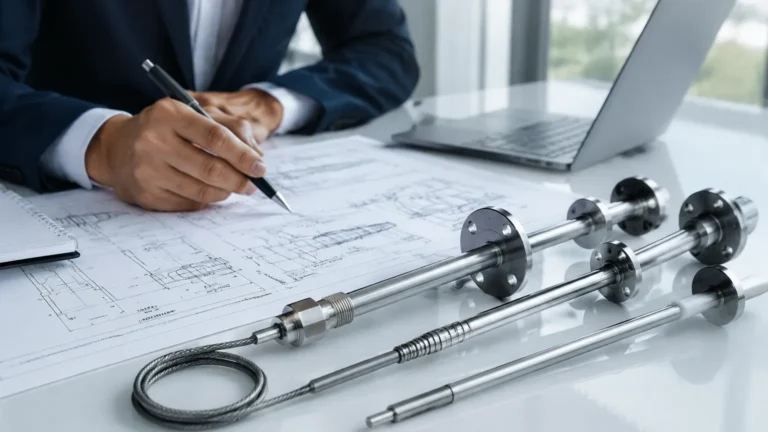
Surface Temperature Measurement
Surface Temperature Measurement
In industrial process control, surface temperature measurement serves as a critical diagnostic and operational parameter. Whether monitoring the exterior of a high-pressure reactor, tracking the heat loss of a steam pipe, or compensating for temperature-induced density changes in level measurement, the accuracy of these readings directly impacts safety and efficiency. For engineers and plant managers, selecting the right technology requires a deep understanding of the physical principles governing heat transfer and the environmental variables that can skew data.
Surface temperature measurement is distinct from immersion or bulk temperature measurement. While immersion sensors measure the internal thermal state of a fluid or gas, surface sensors must account for the thermal interface between the sensor and the object, as well as the influence of the surrounding atmosphere. This guide explores the fundamental principles, sensor types, and practical application strategies for industrial environments.
Principles of Surface Temperature Measurement
To effectively measure the temperature of a solid surface, one must utilize one of two primary heat transfer mechanisms: conduction or radiation.
Conduction-Based (Contact) Measurement
Contact measurement relies on the zeroth law of thermodynamics, which states that if two systems are in thermal equilibrium with a third system, they are in thermal equilibrium with each other. In practical terms, a contact sensor is placed against a surface until it reaches the same temperature as that surface. The efficiency of this method depends heavily on the thermal resistance of the interface. Factors such as surface roughness, contact pressure, and the use of thermal interface materials (TIMs) like silicone-based greases determine how quickly and accurately the sensor reflects the actual surface temperature.
Radiation-Based (Non-Contact) Measurement
Non-contact measurement utilizes the Stefan-Boltzmann Law, which relates the thermal energy radiated by an object to its absolute temperature. Every object above absolute zero emits infrared (IR) radiation. By capturing this radiation, sensors can calculate the temperature without physical contact. This is ideal for moving parts, hazardous materials, or surfaces that are electrically live. However, this method is sensitive to "emissivity"—the measure of a material's effectiveness in emitting energy as thermal radiation.
Core Technologies in Surface Temperature Sensing
Choosing the right sensor involves balancing accuracy, response time, and environmental durability. The following technologies are the standards in modern industrial automation.
Resistance Temperature Detectors (RTDs)
RTDs, typically made from platinum (such as Pt100 or Pt1000), operate on the principle that the electrical resistance of a metal increases as its temperature rises. For surface applications, RTDs are often housed in thin, flexible patches or flat-tipped probes. They offer the highest accuracy and stability over time, making them the preferred choice for laboratory-grade measurements and critical process monitoring.
Thermocouples
Thermocouples consist of two dissimilar metal wires joined at one end (the sensing junction). When there is a temperature gradient between the sensing junction and the reference junction, a voltage is produced (the Seebeck effect). For surface measurement, Type K (Chromel-Alumel) and Type T (Copper-Constantan) are common. They are highly durable, have a very fast response time, and can operate across extremely wide temperature ranges, though they are generally less accurate than RTDs.
Infrared (IR) Pyrometers
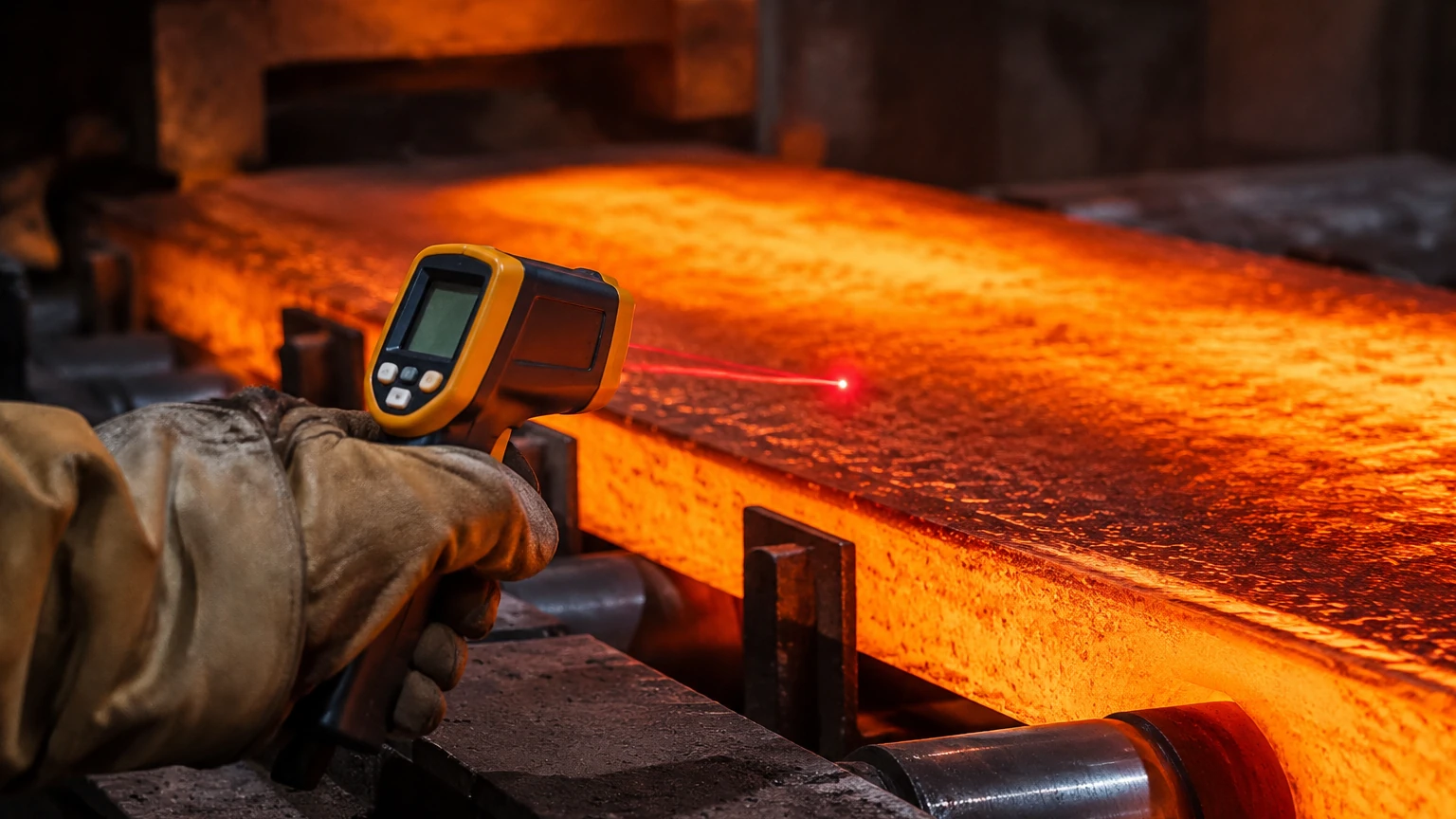
IR sensors provide a reading by focusing infrared light onto a detector, which converts the energy into an electrical signal. These are essential for high-temperature applications (above 1000°C) or where the surface is inaccessible. The primary challenge with IR measurement is the emissivity setting; shiny metals have low emissivity and reflect ambient heat, leading to false readings unless the sensor is properly calibrated or the surface is treated.
The Relationship Between Temperature and Level Measurement
In the context of industrial automation, surface temperature measurement is rarely an isolated task. It is often a critical input for accurate level measurement. As a professional manufacturer, Welk provides integrated solutions where these parameters intersect. You can explore these integrated systems on our Main Page.
Hydrostatic Level Transmitters
Hydrostatic level measurement relies on the formula $P = \rho gh$ (Pressure = Density × Gravity × Height). Because the density ($\rho$) of a liquid changes with its temperature, a surface or immersion temperature sensor is required to provide compensation data. Without accurate temperature inputs, the level reading will drift as the process fluid heats or cools.
Ultrasonic Level Sensors
Ultrasonic sensors measure the time it takes for a sound pulse to travel to the liquid surface and back. The speed of sound in air is highly dependent on temperature. If the air space in a tank is significantly warmer than the ambient environment due to the surface temperature of the liquid, the sensor must compensate for this change to maintain accuracy.
Radar Level Meters
While radar (microwave) signals are less affected by air temperature than ultrasonic waves, the physical integrity of the tank and the dielectric constant of the material can be temperature-dependent. Monitoring the surface temperature of the vessel helps in predicting thermal expansion of the tank walls, which may affect the zero-point calibration of the level meter.
Practical Selection Table
| Feature | RTD (Pt100) | Thermocouple (Type K) | Infrared (IR) Sensor |
| :— | :— | :— | :— |
| Measurement Range | -200°C to 650°C | -200°C to 1260°C | -50°C to 3000°C |
| Accuracy | Very High (±0.1°C) | Moderate (±1.1°C or 0.4%) | Variable (Depends on Emissivity) |
| Response Time | Slow to Moderate | Fast | Very Fast |
| Contact Required | Yes | Yes | No |
| Common Use Case | Precision chemical processing | High-heat furnace walls | Moving conveyors, molten glass |
| Cost | Moderate to High | Low | Moderate to High |
Installation Considerations for Surface Sensors
Proper installation is often more important than the sensor's theoretical accuracy. If a sensor is poorly mounted, it will measure the ambient air temperature rather than the surface temperature.
1. Surface Preparation: The target area must be cleaned of rust, scale, and oil. For contact sensors, a flat surface is required to maximize the contact area.
2. Thermal Interface Materials: Use a thin layer of thermal grease or a thermally conductive pad between the sensor and the surface. This fills microscopic air gaps that act as insulators.
3. Insulation (Lagging): In many cases, the back of the sensor should be covered with insulation. This prevents the ambient air from cooling the sensor, ensuring it reaches the true temperature of the surface.
4. Strain Relief: Industrial environments involve vibration. Ensure that lead wires are properly secured so they do not pull the sensor away from the surface over time.
5. Emissivity Alignment (for IR): If using non-contact measurement on a shiny surface, consider applying a small patch of high-emissivity black paint or specialized tape to the target area to ensure a reliable reading.
Limitations and Common Risks
Thermal Lag
Contact sensors have mass, and it takes time for that mass to reach thermal equilibrium with the surface. In processes with rapid temperature fluctuations, a contact sensor may lag behind the actual temperature, leading to delayed control responses.
Environmental Interference
For IR sensors, dust, steam, or smoke between the sensor and the target can scatter the infrared signal, resulting in lower-than-actual temperature readings. Similarly, high-intensity ambient light or nearby heat sources can cause "background reflection" errors.
Galvanic Corrosion
When a thermocouple or RTD sheath made of one metal is clamped to a surface made of a different metal in a moist environment, galvanic corrosion can occur. This can degrade the sensor and the surface, eventually leading to measurement failure.
Frequently Asked Questions (FAQs)
Q: Can I use a standard immersion probe for surface temperature measurement?
A: It is not recommended. Immersion probes are designed for heat transfer through their entire circumference. Using just the tip against a surface results in poor heat transfer and significant error. Always use a dedicated surface-mount sensor.
Q: How do I measure the temperature of a pipe with a small diameter?
A: For small pipes, use a "clamp-on" or "strap-on" sensor. These are designed with a curved contact block that matches the pipe's radius, ensuring maximum surface contact.
Q: Why is my IR thermometer giving different readings on the same tank?
A: This is likely due to emissivity variations. If one part of the tank is painted and another is bare stainless steel, the IR sensor will see them differently even if they are at the same temperature. You must adjust the emissivity setting for each surface type.
Q: How often should surface temperature sensors be calibrated?
A: In industrial B2B applications, annual calibration is standard. However, if the sensor is exposed to extreme vibration or temperatures at the edge of its range, semi-annual checks are advised.
Conclusion
Effective surface temperature measurement is a cornerstone of modern industrial safety and process optimization. By understanding the physics of heat transfer and the specific requirements of the application—whether it involves contact RTDs for precision or IR sensors for high-speed monitoring—engineers can ensure reliable data acquisition. When integrated with advanced level measurement technologies, these thermal insights allow for unprecedented control over complex industrial systems. For more information on selecting the right instrumentation for your specific project needs, visit our Main Page to review our full range of measurement solutions.