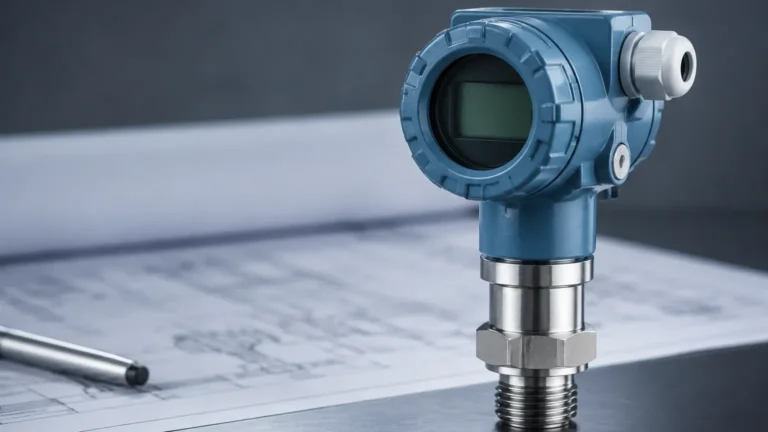
Suspended Solids Analyzer
Suspended Solids Analyzer
In industrial process control and wastewater management, the measurement of suspended solids is a critical parameter for ensuring effluent quality, optimizing chemical dosing, and protecting downstream equipment. A suspended solids analyzer is an automated instrument designed to provide real-time data on the concentration of insoluble particles within a liquid medium. Unlike laboratory gravimetric analysis, which is time-consuming and retrospective, online analyzers allow for immediate process adjustments.
Understanding the technical nuances of these instruments is essential for plant engineers and operators. This guide explores the measurement principles, selection criteria, and installation best practices for suspended solids analyzers in various industrial contexts.
Measurement Principles of Suspended Solids
Before selecting an instrument, it is vital to understand how the physical presence of particles is converted into a measurable electrical signal. Suspended solids analyzers primarily utilize optical or ultrasonic technologies, each suited to specific concentration ranges and fluid characteristics.
Optical Light Scattering and Absorption
Optical sensors are the most common technology used for Total Suspended Solids (TSS) measurement. They operate based on the interaction between an emitted light source (typically near-infrared to minimize color interference) and the particles in the fluid.
1. 90° Scattered Light (Nephelometry): This method measures light scattered at a right angle to the incident beam. It is highly sensitive and ideal for low concentrations, typically referred to as turbidity measurement (measured in NTU or FNU).
2. Backscatter (180°): For higher concentrations where the fluid becomes opaque, the sensor measures the light reflected back toward the source. This is the standard principle for sludge concentration and high-solids industrial processes.
3. Transmitted Light (Absorption): The sensor measures the attenuation of light as it passes through the sample. The reduction in intensity is proportional to the concentration of solids, following the Beer-Lambert law principles. This is often used in medium-to-high concentration applications.
Ultrasonic Attenuation
Ultrasonic suspended solids analyzers use high-frequency sound waves instead of light. As the sound wave travels through the medium, it is scattered and absorbed by the suspended particles. The degree of attenuation (signal loss) correlates with the mass concentration of the solids.
Ultrasonic sensors are particularly advantageous in applications where the media is extremely thick, opaque, or prone to heavy coating that would blind an optical lens. They are frequently used in primary sludge monitoring and mining slurries.
Key Evaluation Criteria for Selection
Selecting the right suspended solids analyzer requires a detailed analysis of the process conditions. A mismatch between the sensor technology and the application often leads to frequent maintenance or inaccurate data.
| Criteria | Optical (Scattered/Absorption) | Ultrasonic Attenuation |
| :— | :— | :— |
| Measurement Range | 0.001 mg/L to 50 g/L | 2 g/L to 200+ g/L |
| Sensitivity | Very High (low-end detection) | Moderate |
| Fluid Color | Minimal impact (with NIR light) | No impact |
| Particle Size Sensitivity | High (smaller particles scatter more) | Moderate |
| Fouling Resistance | Requires mechanical cleaning | Naturally more resistant |
| Common Applications | Effluent, Potable water, RAS/WAS | Primary sludge, Mining, Thickener underflow |
Material Compatibility
For chemical or corrosive applications, the wetted parts of the analyzer must be compatible with the process fluid. Standard sensors often feature 316L stainless steel bodies with sapphire or specialized glass windows. In highly aggressive media, plastic-bodied sensors (such as PVC or PEEK) or exotic alloys may be required.
Integration with Level Measurement
In many clarifier and tank applications, suspended solids measurement is performed in conjunction with level monitoring. While a suspended solids analyzer measures the density of the particles, instruments found on the Main Page of industrial instrumentation providers, such as radar or ultrasonic level meters, are used to track the overall liquid volume or the height of the sludge blanket. Integrating these two data points allows for precise control of sludge extraction cycles.
Installation Considerations
The physical placement of the sensor is as important as the technology itself. Improper installation is the leading cause of "drift" and measurement errors.
Flow Dynamics and Positioning
* Representative Sampling: The sensor must be placed in a zone where the fluid is well-mixed. Avoid "dead zones" or areas behind baffles where solids might settle out, leading to artificially low readings.
* Orientation: In pipe installations, sensors should ideally be mounted on the side (3 o'clock or 9 o'clock position). Mounting at the bottom leads to sediment buildup on the sensor face, while mounting at the top can lead to interference from trapped air bubbles.
* Velocity: A minimum flow velocity (typically 0.5 m/s to 1.0 m/s) is often recommended to maintain the solids in suspension and provide a degree of natural "scouring" to the sensor face.
Managing Air Bubbles and Ambient Light
Air bubbles are a significant source of interference for optical sensors, as they scatter light in a manner similar to solid particles. If bubbles are unavoidable, a stilling well or a de-aeration chamber should be used. For immersion-style sensors in open channels, ensure the sensor is deep enough to avoid interference from ambient sunlight, which can saturate optical detectors.

Common Risks and Limitations
Despite their advanced technology, suspended solids analyzers have inherent limitations that engineers must manage:
1. Particle Size and Shape Variation: Most analyzers are calibrated using a standard (like Formazin or a known sludge sample). If the process changes—for example, if a primary crusher in a mining operation fails and produces larger particles—the analyzer's output may shift even if the total mass concentration remains the same.
2. Biofouling and Scaling: In wastewater and cooling water applications, biological growth or mineral scaling on the sensor window will cause the reading to drift upward. High-quality analyzers include integrated cleaning systems, such as mechanical wipers, ultrasonic cleaners, or high-pressure air/water blasts.
3. Color Changes: While near-infrared (NIR) light reduces the impact of color, extreme changes in the fluid's color (e.g., in textile dye houses) can still affect optical absorption measurements.
Maintenance and Calibration
To maintain accuracy, a regular maintenance schedule is mandatory. This typically involves:
* Monthly Cleaning: Manually inspecting the sensor and cleaning the optical windows with a soft cloth and mild detergent, even if an automated cleaning system is present.
* Zero-Point Calibration: Periodically checking the instrument in filtered water to ensure the zero-baseline has not drifted.
* Slope Calibration: Comparing the analyzer's reading against a laboratory gravimetric analysis (Standard Method 2540D). Because industrial sludge varies by site, a "site-specific" calibration is almost always required for the analyzer to provide accurate mg/L or g/L values.
Frequently Asked Questions (FAQ)
Q: What is the difference between turbidity and suspended solids?
A: Turbidity is an optical property—a measure of how light is scattered by particles. Suspended solids (TSS) is a weight-based measurement of the actual mass of particles per volume of water. While they are related, the correlation changes if the particle size, shape, or color changes.
Q: Can a suspended solids analyzer measure dissolved solids (TDS)?
A: No. Suspended solids analyzers detect insoluble particles. Dissolved solids (like salt or sugar) do not scatter light or attenuate sound in the same way and must be measured using conductivity or refractometry.
Q: How often should the sensor be calibrated?
A: Initially, weekly comparisons with lab samples are recommended. Once the correlation is established and the sensor proves stable, the interval can often be extended to monthly or quarterly, depending on the criticality of the process.
Q: Is a wiper necessary for all applications?
A: In wastewater and any process containing fats, oils, or biological activity, a wiper or cleaning system is highly recommended. In clean water or high-velocity chemical lines, it may be unnecessary.
By carefully matching the measurement principle to the specific concentration range and ensuring a robust installation, a suspended solids analyzer becomes an invaluable tool for industrial automation. For comprehensive process control, these sensors should be used as part of a broader instrumentation suite, including the level and flow technologies detailed on the Main Page of professional measurement resource sites.