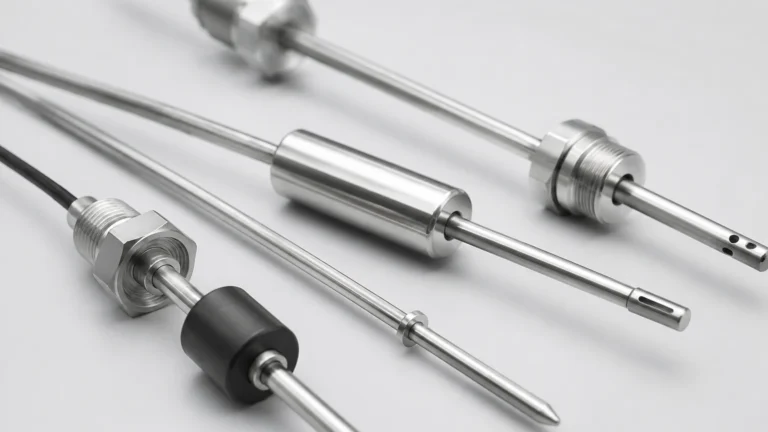
Tank Level Probes
Tank Level Probes
In the landscape of industrial automation, tank level probes are fundamental components used to monitor, control, and optimize the storage of liquids and solids. From water treatment facilities to complex chemical processing plants, the ability to accurately determine the volume of material within a vessel is critical for operational safety, inventory management, and process efficiency. Selecting the correct probe requires a deep understanding of the underlying measurement principles, the physical properties of the media, and the specific environmental conditions of the installation site.
As a professional manufacturer, Welk provides a comprehensive range of level measurement solutions, including radar level meters, ultrasonic sensors, and hydrostatic transmitters. This guide serves as a practical engineering reference for selecting and implementing tank level probes across various industrial applications.
Understanding Measurement Principles
Before selecting a tank level probe, it is essential to understand the physics behind the different technologies available. Each principle offers distinct advantages and faces specific limitations depending on the application environment.
Radar Level Measurement (GWR and Non-Contact)
Radar technology is widely considered the gold standard for high-accuracy level measurement. It operates on either the Guided Wave Radar (GWR) principle or the Non-Contact (Airborne) principle.
* Guided Wave Radar (GWR): These probes utilize Time Domain Reflectometry (TDR). A low-energy microwave pulse is sent along a physical probe (rod or cable). When the pulse hits the surface of the medium, a portion of the energy is reflected back to the transmitter. The device measures the time-of-flight to calculate the distance. Because the pulse is contained within a waveguide, GWR is exceptionally stable in the presence of foam, steam, or turbulent surfaces.
* Non-Contact Radar: These devices emit high-frequency microwave signals (typically 26 GHz or 80 GHz) through the air. The signal reflects off the material surface and returns to the sensor. This method is ideal for corrosive or hygienic applications where the probe should not touch the media.
Ultrasonic Level Sensors
Ultrasonic probes function by emitting high-frequency sound waves. The sensor measures the time it takes for the sound pulse to travel to the surface and return. While cost-effective and easy to install, ultrasonic sensors are sensitive to air temperature fluctuations, heavy vapors, and vacuum conditions, as sound requires a medium (air) to travel.
Hydrostatic Level Transmitters
Hydrostatic probes measure the pressure exerted by a liquid column. Based on the principle that pressure at the bottom of a tank is proportional to the liquid height ($P = \rho gh$), these sensors are submerged at the bottom or mounted to the side of the tank. They are highly reliable for water and fuel storage but require accurate knowledge of the liquid's density to maintain precision.
Magnetic Level Probes
Magnetic level probes typically involve a float containing a permanent magnet that moves along a guide tube. Inside the tube, reed switches or a magnetostrictive wire detect the float's position. This provides a continuous electrical output or local visual indication. They are robust and well-suited for high-pressure or high-temperature vessels where electronic components must be isolated from the process media.
Technical Selection Criteria
Selecting the right tank level probe involves evaluating the physical and chemical environment of the tank. The following table provides a comparison of common technologies used in industrial settings.
Technology Comparison Table
| Technology | Typical Accuracy | Max Range (Metric/Imperial) | Media Suitability | Key Advantage |
| :— | :— | :— | :— | :— |
| Guided Wave Radar | ±3 mm | 30 m / 98 ft | Liquids, Slurries, Solids | Unaffected by vapor or foam |
| Non-Contact Radar | ±2 mm | 100 m / 328 ft | Corrosive liquids, Solids | No contact with media |
| Ultrasonic | ±0.25% of range | 15 m / 49 ft | Water, Wastewater | Low cost, non-contact |
| Hydrostatic | ±0.1% to 0.5% | 200 m / 656 ft | Clean liquids, Oils | Simple installation, deep tanks |
| Magnetic | ±5 mm | 6 m / 20 ft | Fuels, Chemicals | High pressure/temp resistance |
Media Characteristics
When evaluating tank level probes, the dielectric constant ($ε_r$) of the material is a primary factor for radar and capacitance probes. Materials with low dielectric constants (like oils or plastic pellets) reflect less energy, requiring high-sensitivity probes or guided wave configurations. For hydrostatic sensors, the chemical compatibility of the diaphragm material (e.g., Stainless Steel 316L, Tantalum, or Hastelloy) must be verified against the process fluid.
Engineering Installation Considerations
The performance of a tank level probe is heavily dependent on its placement. Even the most advanced sensor will fail to provide accurate data if installed incorrectly.
1. Nozzle Dimensions: For non-contact radar and ultrasonic sensors, the nozzle height and diameter must be considered. If a nozzle is too long or narrow, it can create internal reflections (ringing) that interfere with the signal. Ideally, the probe should extend slightly past the bottom of the nozzle.
2. Obstruction Clearance: Probes should be installed away from internal tank structures such as agitators, ladders, heating coils, and inflow pipes. For radar systems, a "clearance zone" is required to prevent the beam from hitting these objects. If obstructions are unavoidable, many modern transmitters offer "False Echo Suppression" software to ignore these static reflections.
3. Turbulence and Foam: In tanks with high agitation, a stilling well or bypass chamber (bridle) should be used. This creates a calm surface for the probe to measure. Guided wave radar is particularly effective in these scenarios as the probe itself acts as a stilling well.
4. Positioning: Probes should generally not be mounted in the exact center of a domed tank, as this can concentrate reflected signals and cause errors. Conversely, mounting too close to the tank wall can result in signal interference from the wall itself.
Common Risks and Limitations
Engineers must be aware of the specific failure modes associated with tank level probes to ensure long-term reliability.
* Build-up and Coating: For contact probes (GWR, Capacitance), the accumulation of sticky or viscous media on the probe can lead to measurement errors. In such cases, non-contact radar or hydrostatic sensors are preferred.
* Vapor and Condensation: Ultrasonic sensors often struggle in tanks with heavy steam or chemical vapors, which can change the speed of sound and cause significant inaccuracies. Radar is generally immune to these effects.
* Vacuum Conditions: Because sound cannot travel in a vacuum, ultrasonic probes are unusable in vacuum-rated vessels. Radar and hydrostatic sensors remain functional in these environments.
* Minimum Blanking Distance: Every non-contact probe has a "dead zone" or blanking distance near the sensor face where measurements cannot be taken. This must be accounted for when determining the maximum fill level of the tank.
Maintenance and Calibration
While many modern tank level probes are designed to be maintenance-free, periodic verification is recommended, especially in regulated industries like food and beverage or pharmaceuticals.
* Zero and Span Calibration: Hydrostatic sensors should be checked for zero-drift periodically. This involves venting the sensor to the atmosphere and ensuring it reads zero pressure.
* Cleaning: For probes in contact with the media, regular inspection for corrosion or material buildup is necessary. If using a magnetic level gauge, the float chamber should be flushed to remove sediment that could pin the float.
* Signal Diagnostics: Advanced radar units provide signal-to-noise ratio (SNR) data. A declining SNR often indicates that the probe is becoming coated or that the antenna is damaged.
For more detailed technical specifications and to explore specific models tailored to your industry, you can visit the Welk Main Page for a full catalog of instrumentation.
Frequently Asked Questions (FAQ)
Q: Can I use one probe for both liquids and solids?
A: While some technologies like radar can measure both, the antenna design and software algorithms are often optimized for one or the other. Solids measurement typically requires higher power and specific beam angles to account for the "angle of repose" (the slope of the material pile).
Q: What is the difference between a level switch and a level probe?
A: A level switch provides point-level detection (e.g., "tank is full" or "tank is empty"). A level probe (or transmitter) provides continuous measurement, allowing the operator to see the exact percentage or volume at all times.
Q: How does temperature affect tank level probes?
A: Temperature affects different technologies in different ways. It changes the speed of sound (affecting ultrasonic), the density of the liquid (affecting hydrostatic), and can cause mechanical stress on the probe materials. Radar is the least affected by temperature fluctuations in the vapor space.
Q: Is it necessary to ground the tank level probe?
A: Yes. Proper grounding is essential for both safety and signal integrity. In many radar applications, the tank itself acts as part of the measurement circuit, and poor grounding can lead to significant signal noise.
Conclusion
Selecting the appropriate tank level probes is a critical step in industrial system design. By understanding the measurement principles—whether it be the electromagnetic precision of radar, the acoustic simplicity of ultrasonic, or the mechanical reliability of magnetic systems—engineers can ensure accurate data and safe operations. Always consider the chemical properties of the media and the physical constraints of the vessel before finalizing a selection. For further assistance in selecting the right instrument for your application, consult the technical resources available on our Main Page.