Tdlas Moisture Analyzer Datasheets Performance Specifications
Tdlas Moisture Analyzer Datasheets Performance Specifications
In the landscape of industrial process control, the precise measurement of moisture content in gas streams is critical for preventing corrosion, ensuring product quality, and protecting downstream equipment. Tunable Diode Laser Absorption Spectroscopy (TDLAS) has emerged as a leading technology for these applications due to its non-contact nature and high specificity. When evaluating technical documentation, understanding tdlas moisture analyzer datasheets performance specifications is essential for engineers to match the right instrument to their specific process requirements.
As industrial automation evolves, the integration of high-accuracy analytical instruments with standard level and flow systems becomes more common. For a comprehensive overview of industrial measurement technologies, professionals often consult the Main Page of specialized manufacturers to understand how different sensing technologies complement one another in a facility.
Measurement Principles of TDLAS
Before diving into the specifications, it is vital to understand the physics governing TDLAS. The technology relies on the principle of absorption spectroscopy. Every molecule, including water (H2O), absorbs light at specific, unique wavelengths—often referred to as its "spectral fingerprint."
The Beer-Lambert Law
TDLAS moisture analyzers operate based on the Beer-Lambert Law, which relates the attenuation of light to the properties of the material through which the light is traveling. The fundamental equation is:
A = ε · c · L
Where:
* A is the absorbance.
* ε is the molar absorption coefficient (a constant for water at a specific wavelength).
* c is the concentration of the moisture.
* L is the optical path length.
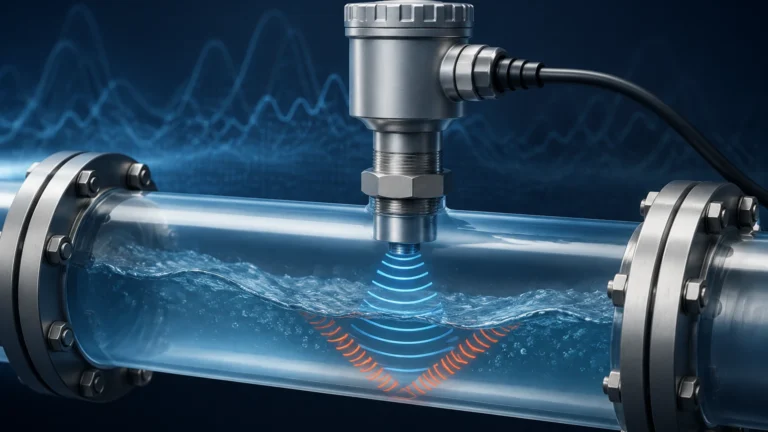
In a TDLAS system, a diode laser emits light at a very narrow wavelength range, which is tuned to scan across a specific absorption line of water. As the laser light passes through the gas sample, the water molecules absorb a portion of the energy. The photodetector on the opposite side measures the remaining intensity. By calculating the difference, the analyzer determines the exact concentration of moisture in the gas stream.
Decoding Performance Specifications in Datasheets
When reviewing tdlas moisture analyzer datasheets performance specifications, several key parameters define the suitability of the device for a given application. These specifications are not merely numbers but indicators of how the device will behave under fluctuating process conditions.
Lower Detection Limit (LDL) and Sensitivity
The Lower Detection Limit (LDL) defines the smallest concentration of moisture that the analyzer can reliably distinguish from background noise. For high-purity gas applications or natural gas pipeline monitoring, an LDL in the range of 0.1 to 1.0 parts per million by volume (ppmv) is often required. Datasheets should specify if the LDL is calculated at a specific confidence level (e.g., 2σ or 3σ).
Accuracy and Repeatability
* Accuracy: This represents how close the measured value is to the actual moisture content. It is typically expressed as a percentage of the reading or a fixed ppmv value (e.g., ±2% of reading or ±1 ppmv, whichever is greater).
* Repeatability: Often more critical for process control than absolute accuracy, repeatability indicates the consistency of the analyzer’s readings over multiple measurements of the same sample under identical conditions.
Response Time (T90)
The T90 response time is the duration required for the analyzer to reach 90% of its final value following a step change in moisture concentration. Because TDLAS is a non-contact optical method, the inherent sensor response is nearly instantaneous (milliseconds). However, the datasheet T90 usually includes the time for the gas to flow through the sample cell, which typically ranges from 1 to 30 seconds depending on the flow rate and cell volume.
Key Evaluation Criteria for Industrial Applications
Beyond the basic measurement metrics, engineers must evaluate how the analyzer performs in the presence of "interference gases." In many petrochemical applications, the gas stream contains methane, ethane, or carbon dioxide, which may have absorption lines near those of water.
Spectral Scanning and Background Compensation
Advanced TDLAS analyzers utilize sophisticated software algorithms to perform background subtraction. The datasheet should specify the analyzer's ability to handle varying background gas compositions without requiring manual recalibration. This is a significant advantage over quartz crystal microbalance (QCM) or capacitive sensors, which can be permanently "poisoned" by contaminants.
Pressure and Temperature Compensation
Since the density of gas changes with pressure and temperature, the number of water molecules in the optical path also changes. High-performance TDLAS datasheets will list integrated sensors for pressure and temperature compensation. Typical operating ranges might include:
* Operating Pressure: 0.8 bar to 2.0 bar (absolute) for the sample cell.
* Operating Temperature: -20°C to +50°C for the electronics enclosure.
Selection Table: TDLAS Specification Comparison
The following table provides a reference for typical performance specifications found in high-quality TDLAS moisture analyzer datasheets.
| Specification | Standard Performance | High-Sensitivity Performance | Application Impact |
| :— | :— | :— | :— |
| Measurement Range | 0–500 ppmv | 0–10 ppmv | Determines suitability for dry vs. wet gas. |
| Lower Detection Limit | 1.0 ppmv | 0.05 ppmv (50 ppbv) | Critical for pipeline quality specs. |
| Accuracy | ±2% of scale | ±1% of reading | Affects uncertainty in fiscal metering. |
| Response Time (T90) | < 10 seconds | < 2 seconds | Crucial for rapid process excursions. |
| Calibration Interval | 12–24 months | 24+ months | Impacts long-term maintenance costs. |
| Optical Path Length | 0.4 meters | 0.8 to 2.0 meters | Longer paths increase sensitivity. |

Installation Considerations and Sample Conditioning
Even the most advanced TDLAS analyzer will fail to provide accurate data if the installation and sample conditioning system (SCS) are poorly designed. The goal of the SCS is to deliver a representative, clean, and dry (if necessary) gas sample to the analyzer at the correct pressure and flow rate.
1. Particulate Filtration: TDLAS is an optical measurement. While the laser does not touch the gas, the windows of the sample cell must remain clean. Datasheets often specify a filtration requirement (e.g., 0.1 micron).
2. Phase Preservation: If the gas is high-pressure, a pressure reduction regulator is required. This must be a "heated" regulator if there is a risk of hydrocarbon or moisture condensation due to the Joule-Thomson effect.
3. Materials of Construction: To prevent "lag" in moisture readings, all sample wetted parts should be 316L stainless steel with electropolished internal surfaces. Materials like rubber or certain plastics absorb and desorb moisture, leading to sluggish response times.
Limitations and Challenges
While TDLAS is robust, it is not a universal solution for every moisture measurement challenge. Engineers should be aware of the following limitations often noted in the fine print of tdlas moisture analyzer datasheets performance specifications:
* High Particulate Loading: Excessive dust or aerosols can scatter the laser light, leading to a "low signal" alarm. Regular maintenance of the filtration system is required.
* Extremely High Moisture Levels: If the gas is saturated (100% RH), water may condense on the optical windows. TDLAS is generally used for "trace" moisture (ppm levels) rather than high-percentage humidity measurement in saturated streams.
* Cost: The initial capital expenditure for TDLAS is typically higher than for electrochemical or capacitive sensors. However, the total cost of ownership (TCO) is often lower due to reduced calibration and sensor replacement needs.
Frequently Asked Questions (FAQ)
Q: Does a TDLAS moisture analyzer require field calibration?
A: Most TDLAS analyzers are calibrated at the factory using NIST-traceable gas standards. Because the measurement is based on fundamental physical constants, the "zero" and "span" are highly stable. Many users only perform a yearly validation rather than a full calibration.
Q: Can TDLAS measure moisture in liquid streams?
A: No, TDLAS is a gas-phase measurement technology. To measure moisture in liquids, the moisture must first be stripped into a carrier gas or measured using alternative technologies like Karl Fischer titration or specialized microwave sensors.
Q: How does the optical path length affect the datasheet specs?
A: A longer optical path length (L) increases the amount of light absorbed by the moisture (A). Therefore, analyzers designed for very low concentrations (ppbv) usually have longer or multi-pass sample cells to increase the signal-to-noise ratio.
Conclusion
Selecting the correct moisture measurement solution requires a rigorous analysis of tdlas moisture analyzer datasheets performance specifications. By focusing on the Lower Detection Limit, accuracy, and the robustness of the sample conditioning system, engineers can ensure long-term reliability in demanding environments like natural gas processing or chemical manufacturing.
While TDLAS focuses on gas composition, it is often part of a broader instrumentation strategy that includes level, pressure, and flow monitoring. For more information on integrating various measurement technologies into your process, reviewing the Main Page of industrial instrumentation experts can provide the necessary context for a complete system design.
Download Tdlas Moisture Analyzer Datasheets Performance Specifications as a PDF