Toroidal Conductivity
Toroidal Conductivity
In industrial process control, monitoring the ionic concentration of liquids is essential for ensuring product quality, managing waste streams, and protecting equipment from corrosion or scaling. Conductivity measurement serves as a primary indicator of these ionic concentrations. While contacting electrode sensors are common in high-purity water applications, many industrial environments involve aggressive chemicals, high solids content, or fibrous slurries that quickly degrade or foul traditional sensors. This is where toroidal conductivity measurement, also known as inductive or electrodeless conductivity, becomes the preferred engineering solution.
Understanding the Principle of Inductive Conductivity Measurement
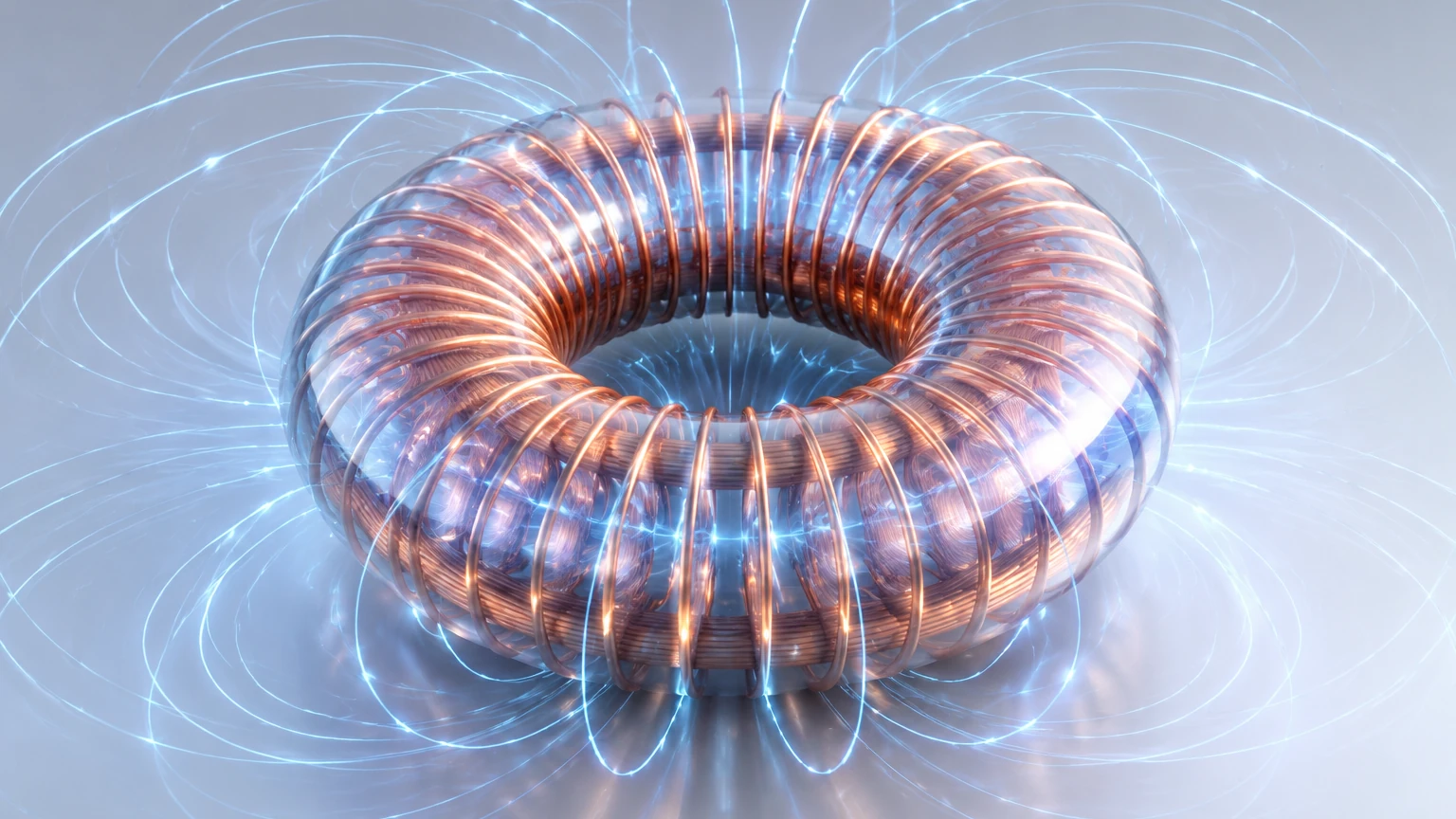
Before selecting a sensor, it is critical to understand the physics of toroidal conductivity. Unlike contacting sensors that rely on metal electrodes in direct contact with the process fluid, toroidal sensors use electromagnetic induction.
The sensor head typically contains two wire-wound toroids (coils) encased in a chemically resistant plastic or fluoropolymer housing. These are the "drive" coil and the "receive" coil.
1. Induction of the Liquid Loop: The transmitter applies an alternating voltage to the drive coil, which generates a magnetic field. This magnetic field induces an electrical current in the surrounding conductive liquid. The liquid essentially acts as a single-turn secondary winding of a transformer.
2. Current Measurement: This induced current in the liquid loop flows through the center of the sensor and, in turn, induces a secondary magnetic field.
3. Signal Detection: The receive coil detects this secondary magnetic field and generates an electrical signal proportional to the current flowing through the liquid.
Because the magnitude of the current flowing through the liquid is directly proportional to the liquid's conductivity, the transmitter can calculate the exact conductivity of the medium. Since the coils are completely encapsulated, there is no electrical path between the electronics and the process fluid, eliminating issues related to polarization or electrode coating.
Toroidal vs. Contacting Sensors: Choosing the Right Technology
Selecting between toroidal and contacting conductivity depends largely on the conductivity range and the nature of the fluid.
Contacting sensors are generally more sensitive at very low conductivity levels, such as deionized water or boiler condensate (0.01 µS/cm to 1,000 µS/cm). However, they are prone to errors if the electrodes become coated with oil, scale, or biological growth.
Toroidal conductivity sensors excel in the mid-to-high range, typically from 100 µS/cm up to 2,000 mS/cm (2 S/cm). They are the standard choice for:
* Concentrated Acids and Bases: Such as 98% sulfuric acid or 50% caustic soda.
* Brine and Saline Solutions: High salt concentrations that would corrode standard electrodes.
* Wastewater and Slurries: Fluids with suspended solids that would bridge or foul electrode gaps.
* Clean-in-Place (CIP): Monitoring the concentration of cleaning agents in food and beverage processing.
Key Evaluation Criteria for Industrial Applications
When specifying a toroidal conductivity system, engineers must evaluate several technical parameters to ensure long-term reliability. The following table provides a general selection framework based on common industrial materials.
| Feature | Polypropylene (PP) | PEEK (Polyetheretherketone) | PFA (Perfluoroalkoxy) |
| :— | :— | :— | :— |
| Chemical Resistance | Moderate (Acids/Bases) | High (Most Chemicals) | Excellent (Aggressive Solvents) |
| Max Temperature | 80°C (176°F) | 125°C – 150°C (257°F – 302°F) | 180°C – 200°C (356°F – 392°F) |
| Max Pressure | 7 bar (100 psi) | 20 bar (290 psi) | 10 bar (145 psi) |
| Typical Application | Water treatment, cooling towers | Food & Beverage, CIP, Pulp & Paper | Chemical processing, strong acids |
Temperature Compensation
Conductivity is highly temperature-dependent; for most aqueous solutions, conductivity increases by approximately 2% per degree Celsius. Therefore, an integrated temperature sensor (usually a Pt100 or Pt1000 RTD) is mandatory within the toroidal sensor body. The transmitter must use this temperature data to provide a "normalized" conductivity reading, typically referenced to 25°C (77°F).
Installation Guidelines and Best Practices
The physical installation of a toroidal sensor significantly impacts its accuracy. Because the measurement relies on a "liquid loop" passing through and around the sensor, the surrounding environment must be considered.
1. Wall Effect: The magnetic field generated by the sensor extends beyond the plastic housing. If the sensor is placed too close to a pipe wall or a tank surface, the field can be distorted. Generally, a minimum clearance of 25 mm to 50 mm (1 to 2 inches) from any wall is required. If installed in a small-diameter pipe, a specific pipe-tee calibration or a "wall factor" correction must be applied in the transmitter software.
2. Orientation: The sensor should be installed where the liquid is always flowing and the sensor is fully submerged. In horizontal pipes, the sensor should be mounted from the side or the bottom to prevent air bubbles from trapping in the center bore, which would cause false low readings.
3. Flow Velocity: While toroidal sensors are robust, extremely high flow velocities can cause vibration or erosion of the plastic coating. Conversely, very low flow in heavy slurries might allow solids to settle inside the sensor bore. A moderate flow helps maintain a self-cleaning effect.
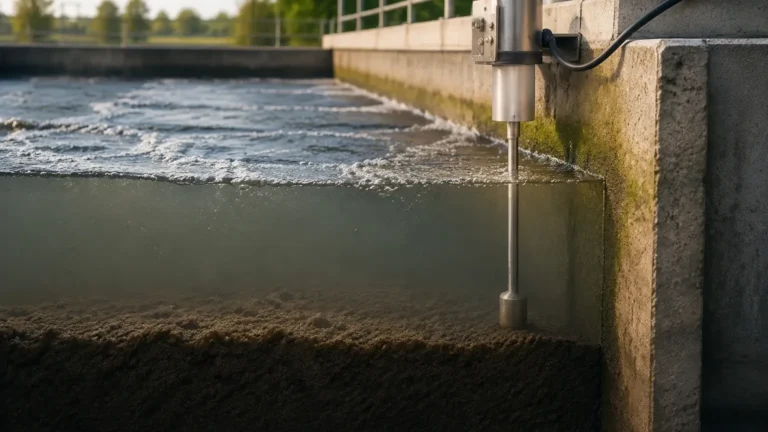
4. Submersion Depth: For tank installations, the sensor should be placed deep enough to avoid surface foam but high enough to avoid settled sludge at the bottom.
Managing Risks: Limitations and Maintenance
While toroidal conductivity sensors are "low maintenance," they are not "no maintenance." Engineers should be aware of the following risks:
* Air Bubbles: Since air is non-conductive, any bubbles passing through the center of the toroid will displace the liquid and result in a lower conductivity reading than actual. This is common in aerated wastewater or near pump inlets.
* Scaling in the Bore: Although the sensor is electrodeless, a heavy buildup of non-conductive scale (like calcium carbonate) inside the center hole can restrict the liquid loop and reduce the signal. Periodic visual inspection and cleaning with a soft brush or weak acid solution are recommended.
* Interference: Because these are inductive devices, they can be sensitive to electromagnetic interference (EMI) from large motors or variable frequency drives (VFDs) if the signal cable is not properly shielded or if the sensor is mounted too close to high-power equipment.
Integrating Conductivity with Level Measurement Solutions
In most industrial tanks and vessels, conductivity is rarely monitored in isolation. It is part of a broader process control strategy that includes level, pressure, and temperature. For example, in a chemical blending tank, conductivity is used to verify the concentration of the mixture, while level sensors ensure the tank does not overflow or run dry.
Integrating these data points into a centralized PLC or SCADA system allows for automated dosing and inventory management. For engineers looking to optimize their tank monitoring systems, it is helpful to consult comprehensive resources on primary instrumentation. Reviewing the Main Page of specialized manufacturers like Welk provides insights into how radar level meters or ultrasonic sensors can be paired with analytical sensors to create a complete automation package.
For instance, in a water treatment facility, a hydrostatic level transmitter provides the volume of the storage tank, while a toroidal conductivity sensor monitors the total dissolved solids (TDS) to determine when a blowdown cycle is required. This synergy between level and analytical measurement is the foundation of modern industrial efficiency.
Frequently Asked Questions (FAQ)
Q: Can toroidal sensors measure ultrapure water?
No. The sensitivity of inductive sensors is generally insufficient for the extremely low conductivity of ultrapure water (0.055 µS/cm). For these applications, a contacting sensor with a low cell constant (e.g., K=0.01 or 0.1) is required.
Q: How often should a toroidal sensor be calibrated?
Toroidal sensors are remarkably stable because they do not suffer from electrode degradation. In many clean applications, calibration checks are only needed every 6 to 12 months. In harsh chemical environments, a quarterly check is advisable. Calibration is typically performed using a standard solution or a "loop resistance" method where a precision resistor is passed through the sensor bore.
Q: What is the maximum cable length between the sensor and the transmitter?
Because the raw signal from the coils is relatively weak, the distance is usually limited to 30 to 60 meters (100 to 200 feet) unless a pre-amplifier is used at the sensor head. Using high-quality, manufacturer-specified shielded cable is essential to prevent signal loss and noise.
Q: Are toroidal sensors suitable for food and beverage applications?
Yes, provided they are made from FDA-approved materials like PEEK and feature a sanitary mounting (such as a Tri-Clamp). They are ideal for monitoring the transition between product and water or between cleaning chemicals and rinse water during CIP cycles.
Conclusion
Toroidal conductivity measurement offers a rugged and reliable solution for challenging industrial environments where contacting sensors fail. By eliminating direct electrical contact with the process fluid, these sensors provide long-term stability in concentrated chemicals and high-fouling liquids. When combined with accurate level measurement from the Main Page of your instrumentation provider, toroidal sensors enable precise control over chemical concentrations, waste reduction, and process safety. Proper material selection and adherence to installation clearances remain the most critical factors in achieving successful measurement outcomes.