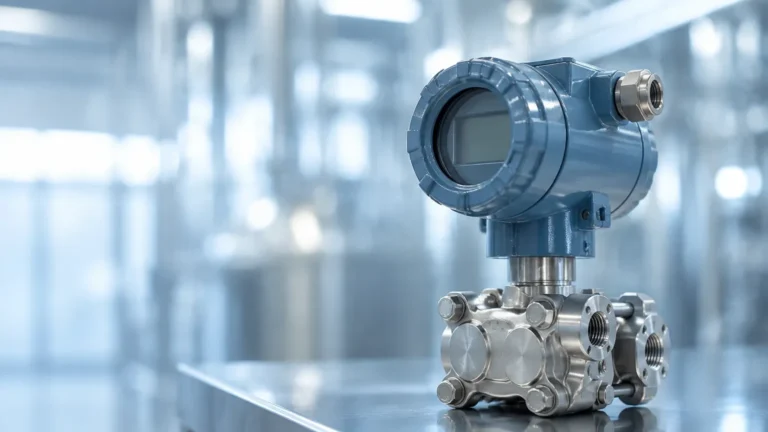
Tsi Rpm20
Tsi Rpm20
In the landscape of industrial automation and environmental control, precision measurement of pressure and level is fundamental to operational safety and efficiency. Whether managing the delicate atmospheric balance of a cleanroom or monitoring the volume of caustic chemicals in a storage tank, the underlying physics of pressure measurement remain a constant. The TSI RPM20 Remote Pressure Monitor represents a specialized application of these principles, focusing on low-differential pressure in critical environments. However, for engineers and facility managers, understanding how these principles translate into broader industrial applications—such as hydrostatic level measurement—is essential for comprehensive site management.
Measurement Principles: From Differential Pressure to Hydrostatic Level
Before selecting instrumentation like the TSI RPM20 or an industrial level transmitter, it is vital to understand the physics of the measurement. Pressure-based measurement generally falls into two categories: differential pressure and hydrostatic pressure.
Differential Pressure (dP)
Differential pressure is the difference in pressure between two points. In the context of the TSI RPM20, this usually involves measuring the pressure difference between a protected room (like an operating theater or a laboratory) and an adjacent reference space. This ensures that air flows in the desired direction, preventing contamination. The formula is simply:
$$\Delta P = P_1 – P_2$$
Hydrostatic Level Measurement
In industrial liquid storage, pressure is used to infer the level of a fluid. Hydrostatic pressure is the pressure exerted by a fluid at equilibrium at a given point within the fluid, due to the force of gravity. The relationship is defined by the formula:
$$P = \rho \cdot g \cdot h$$
Where:
* P is the hydrostatic pressure (Pa).
* \rho (rho) is the density of the liquid ($kg/m^3$).
* g is the acceleration due to gravity (approximately $9.81 m/s^2$).
* h is the height of the liquid column (m).
By measuring the pressure at the bottom of a tank and knowing the liquid's density, the height (level) can be calculated with high accuracy. This principle is the foundation for many of the solutions found on the Welk Main Page, where hydrostatic transmitters are a core offering.
Technical Overview of the TSI RPM20 Remote Pressure Monitor
The TSI RPM20 is a specialized instrument designed for high-stakes environments where even a minor fluctuation in pressure can compromise safety or product integrity. It is primarily used in healthcare facilities, laboratories, and semiconductor manufacturing cleanrooms.
Key Features of the TSI RPM20:
* High Sensitivity: Designed to measure very low differential pressures, often in the range of -0.25 to +0.25 inches of water column (approx. -62 to +62 Pa).
* Visual and Audible Alarms: Provides immediate local feedback if pressure thresholds are breached.
* Integration Capability: Supports communication protocols like Modbus® RTU, allowing it to interface with Building Automation Systems (BAS).
* User Interface: Features a clear display for real-time monitoring of room status (e.g., "Safe" or "Alarm").
While the TSI RPM20 excels at atmospheric monitoring, industrial processes often require more ruggedized versions of these pressure-sensing technologies to handle liquids, high temperatures, and corrosive environments.
Industrial Applications: Integrating Pressure Monitoring into Level Control
In industrial settings, the precision seen in the TSI RPM20 is mirrored in hydrostatic level transmitters. These devices are used across various sectors to provide reliable, continuous level data.
Water and Wastewater Treatment
In large open reservoirs or deep wells, hydrostatic submersible transducers are used to monitor water levels. Unlike ultrasonic sensors, which may be affected by foam or surface turbulence, hydrostatic sensors measure the weight of the water above them, providing a stable reading regardless of surface conditions.
Chemical Processing
For closed tanks containing volatile or corrosive chemicals, differential pressure transmitters are employed. One side of the sensor measures the liquid pressure at the bottom, while the other side (the reference side) measures the gas pressure at the top of the tank. This subtracts the vapor pressure from the total pressure, leaving only the hydrostatic pressure of the liquid.
Oil and Gas
In the oil and gas industry, accuracy is paramount for inventory management. High-precision pressure sensors, similar in sensitivity to the technology found in the TSI RPM20 but built with explosion-proof housings, ensure that storage levels are monitored within millimeters of accuracy.
Selection Criteria for Pressure and Level Instrumentation
Choosing the right instrument requires a balance between environmental requirements and technical specifications. The following table compares common technologies used for monitoring pressure and level in industrial and controlled environments.
| Feature | TSI RPM20 (Room Pressure) | Hydrostatic Level Transmitter | Radar Level Meter |
| :— | :— | :— | :— |
| Primary Metric | Differential Air Pressure | Hydrostatic Liquid Pressure | Time-of-Flight (Distance) |
| Typical Range | -62 to +62 Pa | 0 to 200 meters (H2O) | 0 to 70+ meters |
| Accuracy | ±0.5% of Full Scale | ±0.1% to ±0.5% | ±1 mm to ±3 mm |
| Environment | Cleanrooms, Labs | Tanks, Wells, Reservoirs | Corrosive, High Temp, Dust |
| Installation | Wall-mounted | Submerged or Flange-mount | Top-mounted (Non-contact) |
| Key Advantage | High local visibility | Cost-effective for deep wells | Unaffected by density changes |
Installation Guidelines and Engineering Best Practices
To ensure the longevity and accuracy of pressure-sensing equipment like the TSI RPM20 or industrial level sensors, specific installation protocols must be followed.
1. Mounting Position: For air pressure monitors, the unit should be mounted away from direct air drafts (e.g., HVAC vents). For liquid level sensors, the probe should be located where turbulence is minimal, such as away from tank inlets.
2. Atmospheric Venting: Hydrostatic sensors require a vent tube in the cable to compensate for changes in atmospheric pressure. If this tube is blocked or kinked, the sensor will provide inaccurate readings.
3. Chemical Compatibility: Ensure that the wetted materials of the sensor (e.g., Stainless Steel 316L, Hastelloy, or PTFE) are compatible with the process fluid. While the TSI RPM20 is designed for air, industrial transmitters must withstand acids, bases, or hydrocarbons.
4. Calibration: Regular calibration is essential. For the TSI RPM20, this often involves NIST-traceable calibration to meet healthcare regulations. Industrial level meters should be zeroed and spanned annually to account for sensor drift.
Operational Limitations and Troubleshooting
No measurement technology is universal. Understanding the limitations of your equipment prevents costly downtime.
* Density Sensitivity: Hydrostatic level measurement assumes a constant liquid density. If the temperature of the liquid changes significantly, the density changes, leading to a level error. In such cases, temperature compensation or a non-contact radar meter may be a better choice.
* Clogging and Fouling: In wastewater or slurry applications, the sensing diaphragm of a pressure transmitter can become coated with solids. Using a flush-diaphragm design or a non-contact ultrasonic sensor can mitigate this risk.
* Overpressure Events: Every sensor has a burst pressure limit. Exceeding this limit—due to pump surges or rapid valve closures—can permanently damage the sensing element.
* Signal Interference: For digital monitors like the TSI RPM20, electromagnetic interference (EMI) from nearby heavy machinery can disrupt communication. Using shielded cabling and proper grounding is mandatory.
Frequently Asked Questions
Q: Can the TSI RPM20 be used for liquid level measurement?
A: No. The TSI RPM20 is specifically designed for low-pressure air differential monitoring in rooms. For liquid level, a dedicated hydrostatic or radar level transmitter from the Main Page should be used.
Q: How often should pressure sensors be calibrated?
A: Most manufacturers recommend an annual calibration. However, in critical healthcare or pharmaceutical applications, semi-annual calibration may be required by regulatory bodies.
Q: What is the difference between a pressure switch and a pressure transmitter?
A: A pressure switch (like those used for high-level alarms) provides a simple on/off signal when a setpoint is reached. A transmitter, such as the TSI RPM20 or a hydrostatic probe, provides a continuous signal (e.g., 4-20mA or Modbus) representing the actual pressure value.
Q: Does humidity affect pressure measurement?
A: For air pressure monitors like the TSI RPM20, high humidity can lead to condensation within the sensing lines if not properly managed. For industrial liquid sensors, humidity is generally not an issue as long as the cable venting system includes a desiccant dryer.
Conclusion
Whether you are implementing a TSI RPM20 for a sterile laboratory or deploying a fleet of radar level meters for a chemical plant, the goal remains the same: accurate, reliable data. By understanding the principles of pressure, selecting the appropriate material and technology for the environment, and adhering to strict installation standards, engineers can ensure long-term stability in their monitoring systems. For more detailed technical specifications on industrial-grade level and pressure solutions, professionals are encouraged to review the comprehensive resources available on the Welk product site.