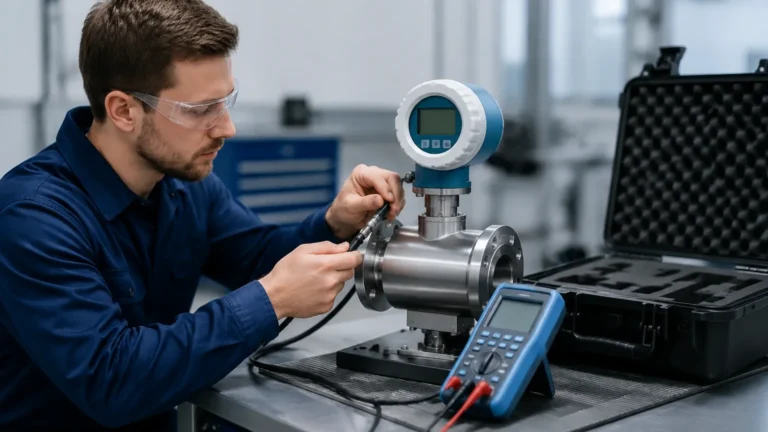
Tunable Diode Laser Spectrometer
Tunable Diode Laser Spectrometer
In the landscape of industrial process control, the ability to measure gas concentrations with high precision and rapid response times is critical for safety, efficiency, and environmental compliance. The tunable diode laser spectrometer (TDLS) has emerged as a leading technology for these requirements. While often categorized alongside gas analyzers, TDLS is frequently integrated into broader process automation frameworks where level measurement and gas composition monitoring work in tandem.
For engineers managing complex tank farms or chemical reactors, understanding how a tunable diode laser spectrometer operates and how it complements existing instrumentation—such as radar or ultrasonic sensors found on the Main Page—is essential for optimizing plant performance. This article provides a technical overview of TDLS technology, its measurement principles, selection criteria, and practical installation considerations.
Measurement Principles of TDLS
The fundamental operation of a tunable diode laser spectrometer is based on absorption spectroscopy, specifically the Beer-Lambert Law. This law states that there is a logarithmic relationship between the transmission of light through a substance and the product of the absorption coefficient of the substance, the distance the light travels (path length), and the concentration of the substance.
The Laser Source and Tuning
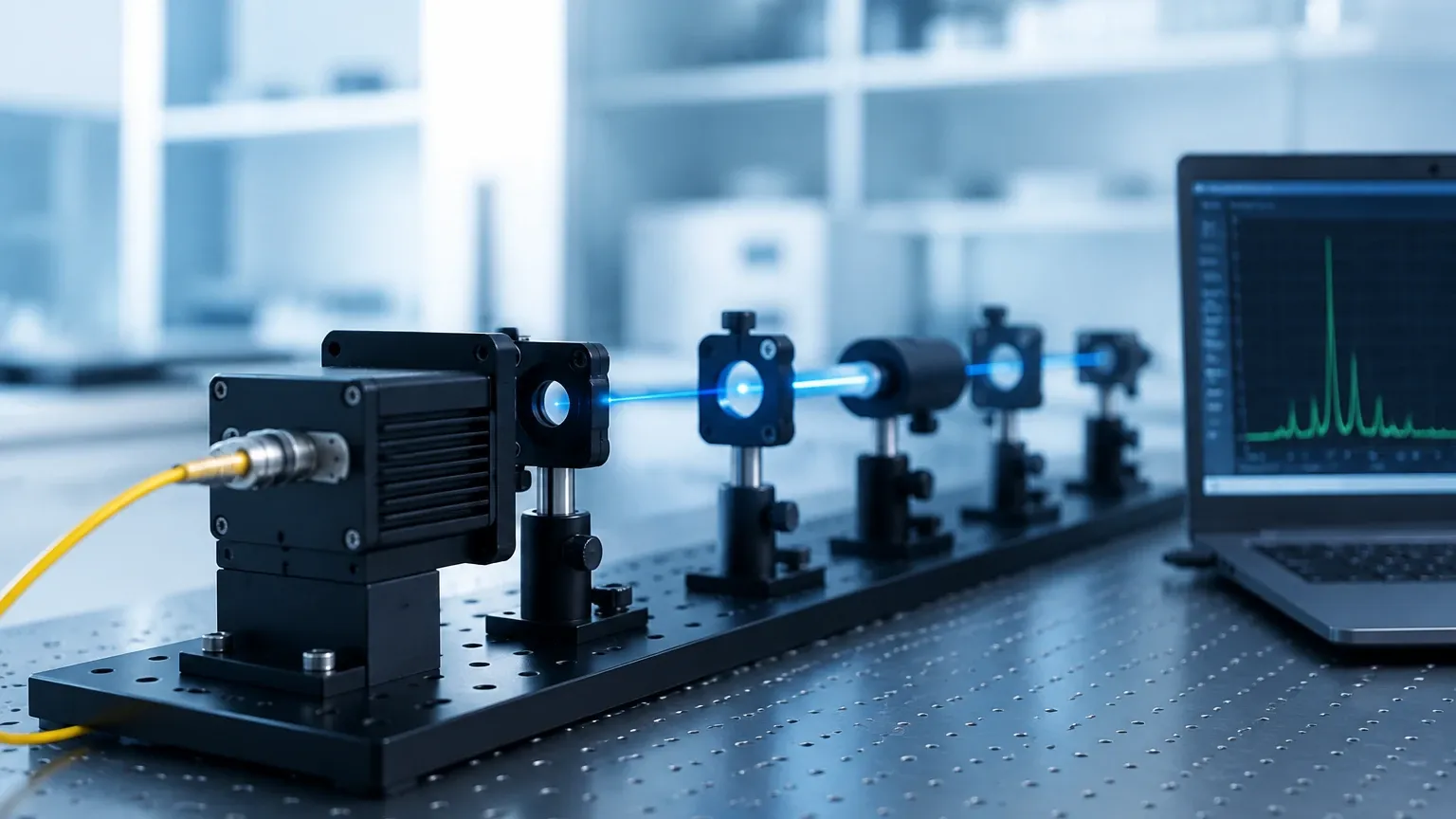
At the heart of the system is a semiconductor laser diode. Unlike standard lasers that emit a fixed wavelength, the diode in a TDLS system can be "tuned" by varying its internal temperature or the injection current. This allows the laser to sweep across a very narrow range of frequencies that correspond exactly to the absorption line of a specific target gas, such as Oxygen (O2), Ammonia (NH3), Moisture (H2O), or Carbon Dioxide (CO2).
The Absorption Process
When the laser beam passes through the process gas, the molecules of the target gas absorb the laser energy at specific wavelengths. The detector on the opposite side (or reflected back) measures the reduction in light intensity. Because the laser's linewidth is significantly narrower than the absorption line of the gas, the spectrometer can achieve extremely high selectivity, virtually eliminating interference from other gases present in the stream.
Signal Processing
Modern TDLS units often use Second Harmonic Detection (2f) or Wavelength Modulation Spectroscopy (WMS). By modulating the laser frequency at a high rate and detecting the signal at twice that frequency, the system can filter out background noise and provide a much higher signal-to-noise ratio, allowing for the detection of gas concentrations in the parts-per-million (ppm) or even parts-per-billion (ppb) range.
System Configurations and Designs
Depending on the application requirements, a tunable diode laser spectrometer can be configured in several ways. Choosing the right configuration depends on the physical constraints of the vessel or pipe and the environmental conditions.
Cross-Stack (In-Situ) Configuration
This is the most common industrial setup. The transmitter is mounted on one side of a pipe or stack, and the receiver is mounted on the opposite side. The laser beam travels directly through the process gas. This configuration offers the fastest response time (often less than 2 seconds) because it measures the gas in real-time without the need for a sampling system.
Probe-Style Configuration
In applications where only one access point is available, a probe-style TDLS is used. The laser and detector are housed in a single unit, and the beam is reflected back from a mirror at the end of a probe inserted into the process. This is particularly useful for tank headspace monitoring where mounting on opposite sides of a large vessel is impractical.
Extractive Systems
In cases where the process gas is too hot, too pressurized, or contains too many particulates for a direct laser path, an extractive TDLS is used. A sample is drawn from the process, conditioned (cooled or filtered), and then passed through a measurement cell where the laser analysis takes place.
Synergy with Level Measurement Technologies
In many B2B industrial environments, a tunable diode laser spectrometer does not operate in isolation. It is part of a multi-layered safety and process control strategy.
Tank Blanketing and Safety
In chemical storage, tanks are often "blanketed" with nitrogen to prevent the formation of explosive atmospheres. While a radar level meter or a magnetic level gauge (available via the Main Page) monitors the volume of the liquid, the TDLS monitors the oxygen concentration in the vapor space (headspace). If the oxygen level rises above a safety threshold, the TDLS triggers an increase in nitrogen flow. Combining accurate level data with real-time gas analysis ensures that the vessel is neither overfilled nor at risk of ignition.
Reactor Optimization
In pressurized reactors, monitoring the rate of a reaction often requires knowing both the liquid level to manage volume and the concentration of gaseous byproducts. The integration of hydrostatic level transmitters with TDLS gas analyzers allows for a comprehensive mass balance calculation in real-time.
Selection Criteria for TDLS Systems
Selecting a tunable diode laser spectrometer requires a detailed analysis of the process conditions. The following table provides a comparison of TDLS against traditional gas sensing technologies to assist in the evaluation process.
| Feature | TDLS Spectrometer | Electrochemical Sensors | Paramagnetic Analyzers |
| :— | :— | :— | :— |
| Selectivity | Excellent (No cross-interference) | Moderate (Subject to cross-sensitivity) | High (Specific to O2) |
| Response Time | Very Fast (< 2 seconds) | Slow (30-60 seconds) | Moderate (10-30 seconds) |
| Maintenance | Low (No moving parts) | High (Frequent calibration/replacement) | Moderate (Requires clean gas) |
| Calibration | Annual or bi-annual | Monthly | Quarterly |
| Installation | In-situ or Extractive | Extractive only | Extractive only |
| Initial Cost | High | Low | Moderate |
Key Evaluation Factors:
1. Gas Type and Range: Ensure the laser diode is tuned to the specific absorption line required for your concentration range (e.g., 0-25% O2 vs. 0-100 ppm NH3).
2. Path Length: In cross-stack applications, the distance between the transmitter and receiver must be within the instrument's capability (typically 0.5m to 20m).
3. Process Temperature and Pressure: TDLS can handle high temperatures (up to 600°C or more with specialized windows), but the absorption line shape changes with pressure and temperature, requiring the spectrometer to have built-in compensation sensors.
4. Dust and Particulates: While TDLS is more robust than other optical methods, extreme dust loads can attenuate the laser signal. Check the transmission limit (e.g., can the unit operate with 90% signal loss?).
Installation and Maintenance Considerations
Proper installation is paramount for the long-term reliability of a tunable diode laser spectrometer. Unlike level switches or simple transmitters, TDLS involves sensitive optics.
Optical Alignment
For cross-stack installations, the two flanges must be precisely aligned. Even a few degrees of misalignment can cause the laser beam to miss the detector, especially over long path lengths. High-quality mounting hardware with fine-tuning adjustment bolts is recommended.
Purging Systems
To protect the optical windows from fouling, condensation, or corrosive process gases, a continuous purge of clean, dry air or nitrogen is usually required. The purge flow must be maintained at a pressure slightly higher than the process pressure to ensure a "curtain" of clean gas stays in front of the window.
Vibration Management
In environments with heavy machinery or high-velocity gas flow, pipe vibration can disrupt the optical alignment. Using flexible bellows or reinforced mounting structures can mitigate these effects.
Maintenance Requirements
One of the primary B2B advantages of TDLS is the low cost of ownership. Since there are no consumable reagents or moving parts, maintenance is generally limited to:
* Checking and cleaning optical windows (if the purge fails).
* Verifying alignment.
* Annual validation using a certified span gas cell.
Limitations and Challenges
Despite its advantages, the tunable diode laser spectrometer is not a universal solution for every gas measurement task.
1. Background Gas Interference: While TDLS is highly selective, extremely high concentrations of a background gas with an overlapping absorption spectrum can occasionally cause minor errors. This must be modeled during the engineering phase.
2. Pressure Limits: At very high pressures (typically above 10-15 bar), gas absorption lines broaden and overlap, making it difficult for the spectrometer to distinguish the target gas signal.
3. Opaque Media: If the process medium is completely opaque to the laser wavelength (e.g., very thick black smoke or heavy liquid mist), the signal will be lost.
4. Cost: The initial capital expenditure for a TDLS system is significantly higher than for electrochemical or catalytic bead sensors. The ROI is usually realized through reduced maintenance and improved process uptime.
Frequently Asked Questions (FAQ)
Q: Can one TDLS unit measure multiple gases?
A: Generally, one laser diode is dedicated to one gas species because the tuning range is very narrow. However, some advanced units can house multiple diodes in a single enclosure to measure two or three gases (e.g., CO and O2) simultaneously.
Q: How does TDLS compare to NDIR (Non-Dispersive Infrared)?
A: NDIR uses a broad-spectrum infrared source and filters, which are much more susceptible to interference from other gases and water vapor. TDLS is significantly more accurate and selective due to the narrow linewidth of the laser.
Q: Is calibration required in the field?
A: Most industrial TDLS systems are designed for "calibration-free" operation for extended periods. Instead of a full calibration, users typically perform a "validation" using an internal or external gas cell to confirm the system is still within factory specifications.
Q: What is the typical lifespan of the laser diode?
A: In industrial-grade spectrometers, laser diodes are typically rated for 10 years or more of continuous operation, provided the internal temperature control (TEC) is functioning correctly.
Conclusion
The tunable diode laser spectrometer represents a significant leap forward in gas analysis technology, offering the speed and reliability required for modern industrial automation. By understanding the principles of laser absorption and the importance of proper installation, engineering teams can significantly improve the safety and efficiency of their operations.
When designing a complete process monitoring system, it is vital to source all instrumentation from reliable manufacturers. Whether you are looking for advanced gas analysis or the robust level measurement solutions found on the Main Page, selecting the right technology for the specific application environment is the key to long-term operational success. As industries move toward more automated and precise control, the integration of TDLS with traditional level and pressure sensing will continue to be a best practice in process engineering.