Deethanizer
Deethanizer
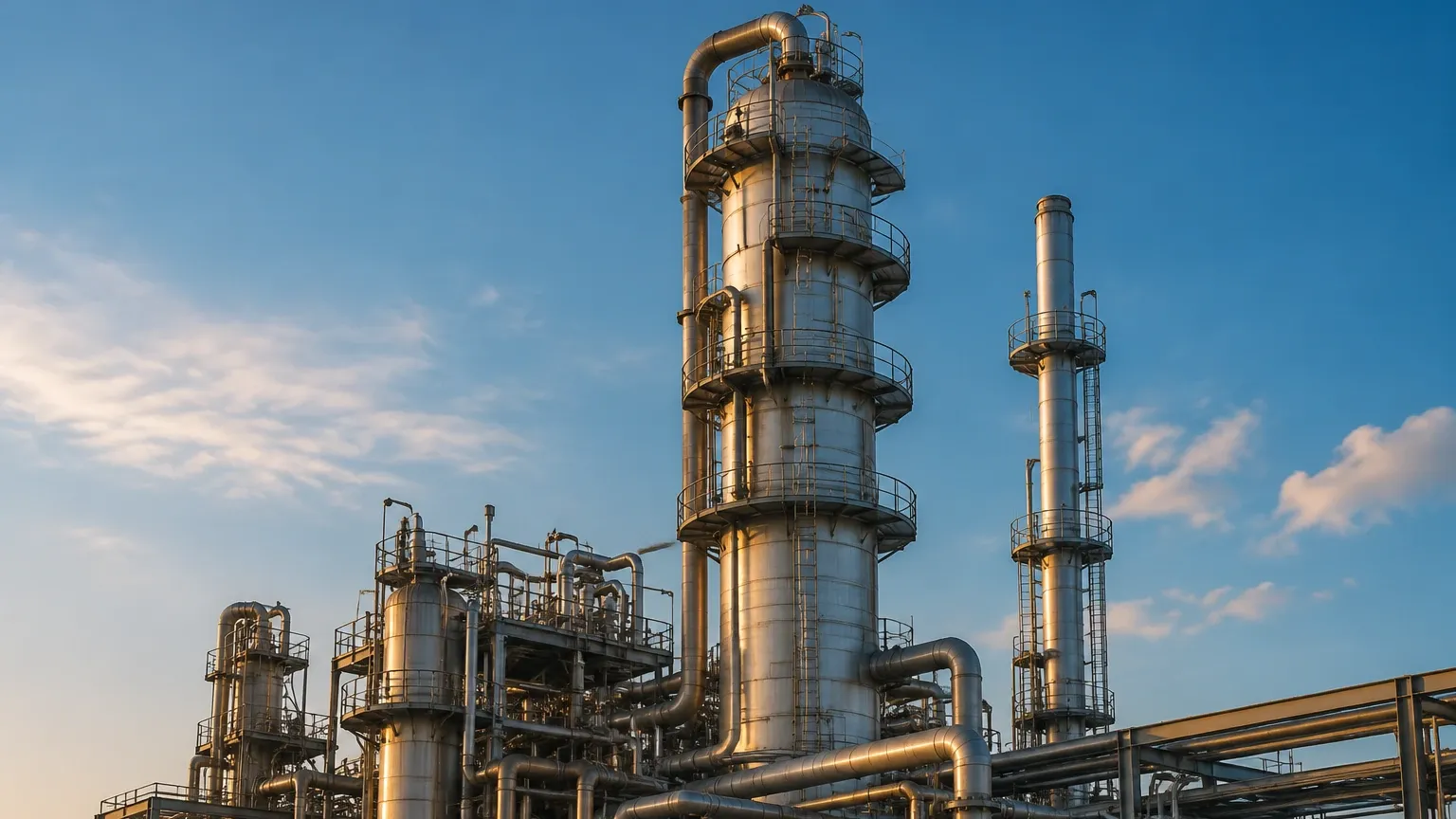
In the complex landscape of natural gas processing and petrochemical refining, the deethanizer stands as a critical fractionation component. Its primary function is the separation of ethane (C2) from heavier hydrocarbons, typically propane (C3), butanes (C4), and heavier natural gas liquids (NGLs). As global demand for high-purity petrochemical feedstocks—particularly for ethylene production—continues to rise, the operational efficiency of the deethanizer has become a focal point for process engineers. Reliable level measurement within this column and its associated vessels is paramount to maintaining product purity and ensuring plant safety.
The Role of the Deethanizer in NGL Fractionation
A deethanizer is a distillation column that typically follows a demethanizer or precedes a depropanizer in a fractionation train. The feed stream, consisting of a mixture of hydrocarbons, enters the column at a specific tray location. Through the application of heat at the bottom (via a reboiler) and cooling at the top (via a reflux condenser), the mixture is separated based on the boiling points of its constituents.
Ethane, having a lower boiling point than propane and heavier liquids, rises to the top of the column as vapor. This overhead vapor is condensed; a portion is returned to the column as reflux to enhance separation efficiency, while the remainder is collected as the ethane product. The heavier components, known as the "bottoms," are sent to the next stage of fractionation. Because ethane and propane have relatively close boiling points compared to methane and ethane, the control of the liquid-vapor interface and the inventory levels in the reflux drum and column sump must be exceptionally precise.
Critical Level Measurement Points
Within a deethanizer system, there are three primary areas where level measurement is essential:
1. Column Bottom (Sump): Monitoring the liquid level at the base of the column is vital to prevent the reboiler from running dry and to ensure that the liquid seal is maintained, preventing vapor from escaping through the bottoms outlet.
2. Reflux Drum (Accumulator): This vessel collects the condensed overhead ethane. Accurate level control here ensures a steady flow of reflux back to the column, which stabilizes the temperature profile and product purity.
3. Reboiler: In many configurations, the level in the reboiler (often a kettle type) must be monitored to ensure the heating tubes remain submerged, preventing localized overheating and equipment damage.
For engineers seeking high-performance instrumentation for these applications, a Main Page overview of available radar and magnetic technologies provides a starting point for system design.
Measurement Principles for Deethanizer Applications
Selecting the right technology for a deethanizer requires an understanding of the physical properties of the fluids involved. Ethane and propane are characterized by low dielectric constants (typically between 1.4 and 1.9) and are often handled at high pressures (20 to 30 bar / 290 to 435 psi) and varying temperatures.
Guided Wave Radar (GWR)
Guided Wave Radar operates on the principle of Time Domain Reflectometry (TDR). A low-energy electromagnetic pulse is sent down a probe (waveguide). When the pulse hits the surface of the liquid, a portion of the energy is reflected back to the transmitter due to the change in the dielectric constant (εr).
In deethanizer service, GWR is often the preferred choice because the probe guides the signal, minimizing energy loss. This is crucial when dealing with low-dielectric hydrocarbons. Even with a weak reflection, modern GWR units can accurately calculate the level by measuring the time-of-flight of the pulse. GWR is also largely unaffected by changes in vapor space density or pressure, which are common in high-pressure distillation.
Non-Contact Radar
Non-contact radar (FMCW – Frequency Modulated Continuous Wave) emits a high-frequency signal through the air toward the liquid surface. The difference in frequency between the emitted and received signal is proportional to the distance. While non-contact radar is excellent for avoiding corrosive or viscous media, in a deethanizer, the low dielectric constant of the liquid can make the surface reflection very faint. High-frequency units (e.g., 80 GHz) are typically required to focus the beam and maximize the return signal from the ethane or NGL surface.
Magnetic Level Gauges (MLG)
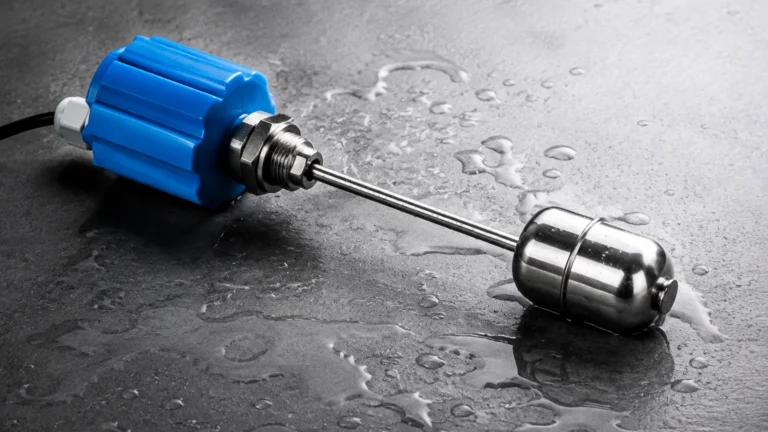
Magnetic Level Gauges utilize a float containing an internal magnet assembly that moves with the liquid level inside a bypass chamber. Outside the chamber, a series of magnetic flags or a follower indicates the level visually. For automated control, a magnetostrictive transmitter can be mounted to the outside of the chamber. This provides a robust, mechanical-electrical hybrid solution that offers a clear visual check for operators while providing a 4-20mA or digital output for the control system.
Differential Pressure (DP)
DP transmitters measure the hydrostatic head of the liquid column. While a traditional and cost-effective method, DP measurement in deethanizers is sensitive to changes in liquid density caused by temperature fluctuations. In high-pressure columns, the density of the vapor phase can also become significant, requiring complex compensation calculations to maintain accuracy.
Technical Comparison of Level Technologies
| Feature | Guided Wave Radar (GWR) | Non-Contact Radar (80GHz) | Magnetic Level Gauge | Differential Pressure |
| :— | :— | :— | :— | :— |
| Accuracy | ±2 mm | ±1 mm | ±5 mm | ±0.5% of span |
| Dielectric Sensitivity | High (handles εr > 1.2) | Medium (requires εr > 1.4) | None | None |
| Pressure Limits | Up to 400 bar | Up to 160 bar | Up to 250 bar | Limited by flange rating |
| Temperature Range | -196°C to 450°C | -60°C to 250°C | -196°C to 400°C | Process dependent |
| Maintenance | Low (no moving parts) | Lowest (non-contact) | Moderate (float cleaning) | Moderate (impulse lines) |
| Vapor Influence | Minimal | Can be significant | None | High (requires comp.) |
Installation Considerations for Deethanizer Service
Proper installation is as critical as technology selection. In deethanizer columns, several environmental factors must be addressed:
* Stilling Wells and Bypass Chambers: For both GWR and non-contact radar, using a stilling well or a side-mounted bypass chamber is highly recommended. This protects the sensor from the turbulence of the boiling liquid and the incoming feed, while also providing a stronger signal reflection in the case of GWR.
* Gas Phase Compensation: At high pressures, the speed of the radar signal through the vapor space can slow down, leading to a measurement error (the "vapor offset"). Advanced GWR transmitters include a reference pole or a known distance marker to automatically compensate for these changes in vapor density.
* Cryogenic Insulation: If the deethanizer operates at sub-zero temperatures (common in some recovery processes), the level instrument must be properly insulated. For MLGs, frost-resistant acrylic shields are necessary to ensure the flags remain visible.
* Interface Measurement: If there is a risk of water or glycol carryover, GWR is uniquely capable of measuring both the total level and the interface level between the hydrocarbon and the heavier aqueous phase.
Limitations and Risks
While modern instrumentation is highly reliable, certain risks remain in deethanizer level control:
* Foaming: Hydrocarbon mixtures can occasionally foam, especially during process upsets. Radar signals may be absorbed or scattered by foam, leading to a "lost signal" condition. Choosing a radar with high sensitivity and diagnostic capabilities is essential.
* Boiling Surfaces: The boiling action in the column sump can create a turbulent surface. This can be mitigated by using the aforementioned stilling wells or by increasing the damping (integration time) of the transmitter.
* Coating and Buildup: While ethane is clean, heavier NGLs can sometimes leave paraffinic deposits on GWR probes. Periodic inspection or the use of single-rod probes (which are less prone to bridging) can alleviate this.
Summary of Selection Criteria
When specifying a level meter for a deethanizer project, the following criteria should be confirmed:
1. Process Temperature and Pressure: Ensure the instrument housing and seals (e.g., FFKM or glass-to-metal) can withstand the extremes.
2. Minimum Dielectric Constant: Confirm the liquid's εr at operating temperature to ensure the radar signal will be sufficient.
3. Hazardous Area Certification: Deethanizers are located in Zone 0 or Zone 1 (Class I, Div 1) areas, requiring ATEX, IECEx, or UL/CSA explosion-proof or intrinsically safe certifications.
4. Redundancy Requirements: For critical safety loops (SIL2/3), a combination of two different technologies (e.g., GWR and MLG) is often used to provide diverse redundancy.
Frequently Asked Questions (FAQs)
Q: Why is Guided Wave Radar preferred over Non-Contact Radar in deethanizers?
A: GWR is generally preferred because it handles low-dielectric liquids more reliably. The probe guides the electromagnetic pulse, ensuring more energy reaches the surface and returns to the sensor, which is vital when the liquid reflects only a small fraction of the signal.
Q: Can ultrasonic sensors be used in a deethanizer?
A: No, ultrasonic sensors are generally not recommended for deethanizers. They rely on sound waves, which are heavily affected by the high pressure, varying gas composition, and temperature gradients present in the column vapor space.
Q: How do I handle the vapor space error in high-pressure ethane?
A: You should select a radar transmitter with "Vapor Phase Compensation." These units use a fixed reference point on the probe to measure how much the vapor is slowing the signal and then apply a correction factor in real-time.
Q: Is a Magnetic Level Gauge safe for high-pressure hydrocarbons?
A: Yes, provided the chamber is designed to the appropriate pressure vessel code (e.g., ASME B31.3) and the float is engineered to withstand the collapse pressure of the deethanizer environment.
For engineers and procurement specialists, selecting the appropriate instrumentation is a balance of accuracy, safety, and long-term maintenance costs. Reviewing technical specifications on a professional Main Page can assist in identifying the specific models of radar level meters, ultrasonic sensors (for ambient storage), and magnetic gauges that meet the rigorous demands of the oil and gas industry.