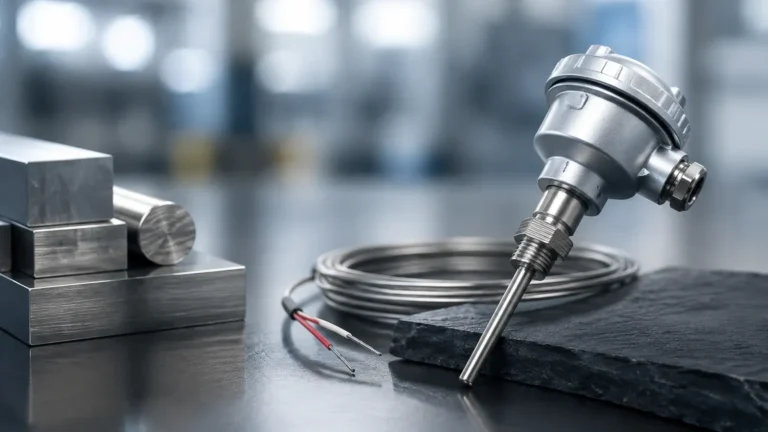
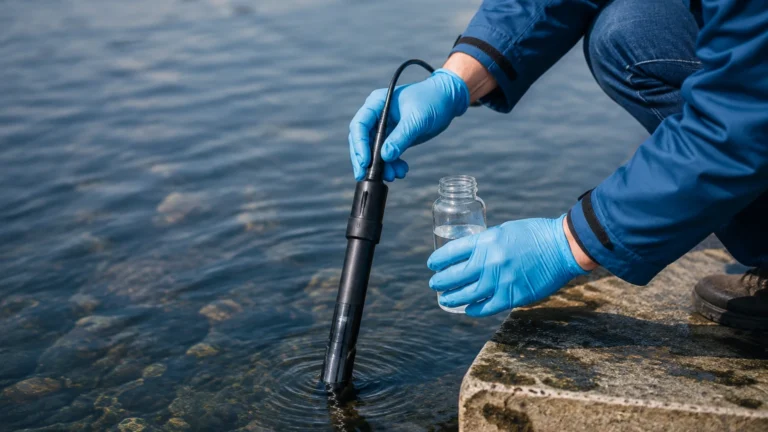
Tx141th-b
Tx141th-b
In the landscape of industrial process automation, the accuracy of data transmission is as critical as the measurement itself. The Tx141th-b represents a specialized category of industrial transmitters designed to bridge the gap between raw physical sensing and actionable digital or analog data. Often deployed in environments where temperature, humidity, and pressure monitoring are essential to the stability of liquid level measurements, understanding the technical specifications and operational principles of this component is vital for instrumentation engineers.
Industrial facilities, ranging from chemical processing plants to water treatment works, rely on a network of sensors to maintain safety and efficiency. The Tx141th-b serves as a robust link in this network, providing the high-precision signal conditioning required for modern PLC (Programmable Logic Controller) and SCADA (Supervisory Control and Data Acquisition) systems. This guide explores the engineering fundamentals, selection criteria, and practical application of the Tx141th-b within the broader context of industrial level and environmental monitoring.
Core Measurement Principles and Signal Processing
The fundamental role of the Tx141th-b is the conversion of physical variables into a standardized electrical signal. In most industrial contexts, this involves sensing ambient or process conditions and translating them into a 4-20mA current loop or a digital protocol such as Modbus RTU (RS485).
Sensing Elements
At the heart of the Tx141th-b are high-stability sensing elements. For temperature measurement, these typically utilize RTDs (Resistance Temperature Detectors) like the Pt100 or high-precision thermistors. For humidity, capacitive polymer sensors are standard, as they offer excellent linearity and resistance to chemical contaminants. When integrated into level measurement systems, these sensors provide the necessary compensation data to ensure that variations in air density or temperature do not skew the readings of ultrasonic or radar level meters.
Signal Conditioning and Linearization
Raw data from sensing elements is rarely linear. The internal circuitry of the Tx141th-b performs complex mathematical linearization and temperature compensation. This ensures that the output signal remains accurate across the entire operating range, typically -40°C to +85°C for industrial-grade units. The use of high-resolution A/D (Analog-to-Digital) converters minimizes quantization errors, maintaining a high Signal-to-Noise Ratio (SNR) even in electromagnetically noisy environments common in heavy industry.
Key Selection Criteria for Industrial Applications
Choosing the correct configuration for a Tx141th-b requires a detailed analysis of the application environment. Engineers must look beyond simple measurement ranges to consider long-term stability and housing integrity.
Environmental Protection and Housing
Industrial transmitters are frequently exposed to dust, moisture, and corrosive vapors. The Tx141th-b is typically housed in materials such as ABS plastic for light industrial use or stainless steel (SS304/SS316) for harsh chemical environments. The Ingress Protection (IP) rating is a primary selection factor. For outdoor or wash-down areas, an IP65 or IP67 rating is mandatory to prevent internal circuitry failure.
Output Protocols and Connectivity
The choice between analog and digital output depends on the existing infrastructure. While 4-20mA is the industry standard for long-distance transmission with high noise immunity, digital outputs like RS485 allow for multi-drop configurations where multiple sensors can be daisy-chained on a single pair of wires. This significantly reduces wiring costs in large-scale installations.
| Feature | Specification Detail | Application Significance |
| :— | :— | :— |
| Temperature Range | -40°C to +80°C (-40°F to 176°F) | Ensures reliability in extreme climates. |
| Humidity Range | 0% to 100% RH | Essential for condensation monitoring in tanks. |
| Accuracy (Temp) | ±0.3°C to ±0.5°C | Critical for precise density calculations. |
| Accuracy (Humidity) | ±2% to ±3% RH | Prevents moisture-related equipment damage. |
| Supply Voltage | 12V to 24V DC | Standard for industrial power supplies. |
| Output Signal | 4-20mA / RS485 Modbus | Compatibility with Main Page control systems. |
Installation Best Practices and Configuration
Proper installation is the single most influential factor in the longevity and accuracy of the Tx141th-b. Poor placement can lead to "micro-climates" that do not represent the actual process conditions.
Mounting Considerations
1. Avoid Direct Sunlight: Solar radiation can cause localized heating of the transmitter housing, leading to temperature readings that are significantly higher than the actual ambient air. Use a solar radiation shield if outdoor mounting is necessary.
2. Airflow Optimization: For humidity sensing, the probe must be placed in an area with representative airflow. Dead-air pockets near tank corners can lead to stagnant readings and delayed response times.
3. Vibration Isolation: While the Tx141th-b is solid-state, excessive vibration from pumps or heavy machinery can stress electrical connections and housing seals over time.
Wiring and Grounding
To prevent ground loops and electromagnetic interference (EMI), shielded twisted-pair cabling should be used. The shield should be grounded at a single point, typically at the control cabinet end. When using the RS485 version, ensuring proper termination with a 120-ohm resistor at the end of the bus line is essential to prevent signal reflections that cause data corruption.

Integration with Level Measurement Systems
In the context of Welk's industrial level measurement solutions, the Tx141th-b often serves as a critical auxiliary sensor. The speed of sound, which is fundamental to ultrasonic level measurement, varies with air temperature. Specifically, the speed of sound increases by approximately 0.6 m/s for every degree Celsius increase.
By integrating a Tx141th-b near the top of a storage tank, the control system can apply real-time temperature compensation to the ultrasonic level sensor's data. This prevents "level drift" during diurnal temperature cycles, where a tank might appear to have more or less liquid simply because the air above it has warmed or cooled. Similarly, in pressurized gas storage, humidity data helps in calculating the exact dielectric constant of the vapor space, which can influence the accuracy of high-frequency radar level meters.
Maintenance, Calibration, and Troubleshooting
Even the most robust industrial transmitters require periodic verification to ensure they remain within specified accuracy limits.
Calibration Cycles
For most industrial applications, an annual calibration check is recommended. This involves comparing the Tx141th-b output against a certified reference standard. If the unit supports digital configuration, offsets can be programmed into the device to correct for any minor sensor drift observed over the year.
Common Risks and Mitigation
* Sensor Contamination: In oil and gas applications, oil mist can coat the humidity sensing element, leading to sluggish response or permanent shifts. Sintered filters should be used to protect the sensor head without blocking air diffusion.
* Condensation: If the transmitter is mounted in a location where the temperature drops below the dew point, liquid water may form on the electronics. Ensuring the cable entry points use proper liquid-tight glands and "drip loops" prevents moisture from traveling down the cable into the housing.
Troubleshooting Checklist
* No Signal Output: Check supply voltage at the transmitter terminals. Verify polarity of the 4-20mA loop.
* Erratic Readings: Inspect for loose terminal connections or damaged cable shielding. Check for nearby high-voltage lines causing interference.
* Slow Response: Check the sensor protection filter for clogging or debris accumulation.
Frequently Asked Questions
Q: Can the Tx141th-b be used in explosive atmospheres?
A: Standard models are designed for general industrial use. If your application involves flammable gases or dusts, you must select a version with the appropriate ATEX or IECEx certification (e.g., intrinsically safe or flameproof).
Q: What is the maximum cable distance for a 4-20mA Tx141th-b?
A: The distance is primarily limited by the loop resistance and the power supply voltage. With a standard 24V DC supply, distances of up to 1,000 meters are achievable using 18 AWG copper wire, provided the total loop resistance remains within the transmitter's specifications.
Q: How does humidity affect the lifespan of the device?
A: While the device is designed to measure up to 100% RH, prolonged exposure to saturated steam or constant condensation can degrade the polymer sensing element. In such cases, specialized probes with heated sensor heads may be required to prevent saturation.
Q: Is the Tx141th-b compatible with all PLC brands?
A: Yes, as long as the PLC has an analog input card (for 4-20mA) or a communication module (for Modbus RS485). These are universal standards in the automation industry.
For engineers seeking to optimize their process monitoring, the Tx141th-b offers a reliable and cost-effective solution for environmental and process parameter transmission. By following strict installation and selection protocols, it ensures that the data reaching the Main Page of your control interface is accurate, stable, and representative of real-world conditions.