Wastewater Monitoring Solutions
Wastewater Monitoring Solutions
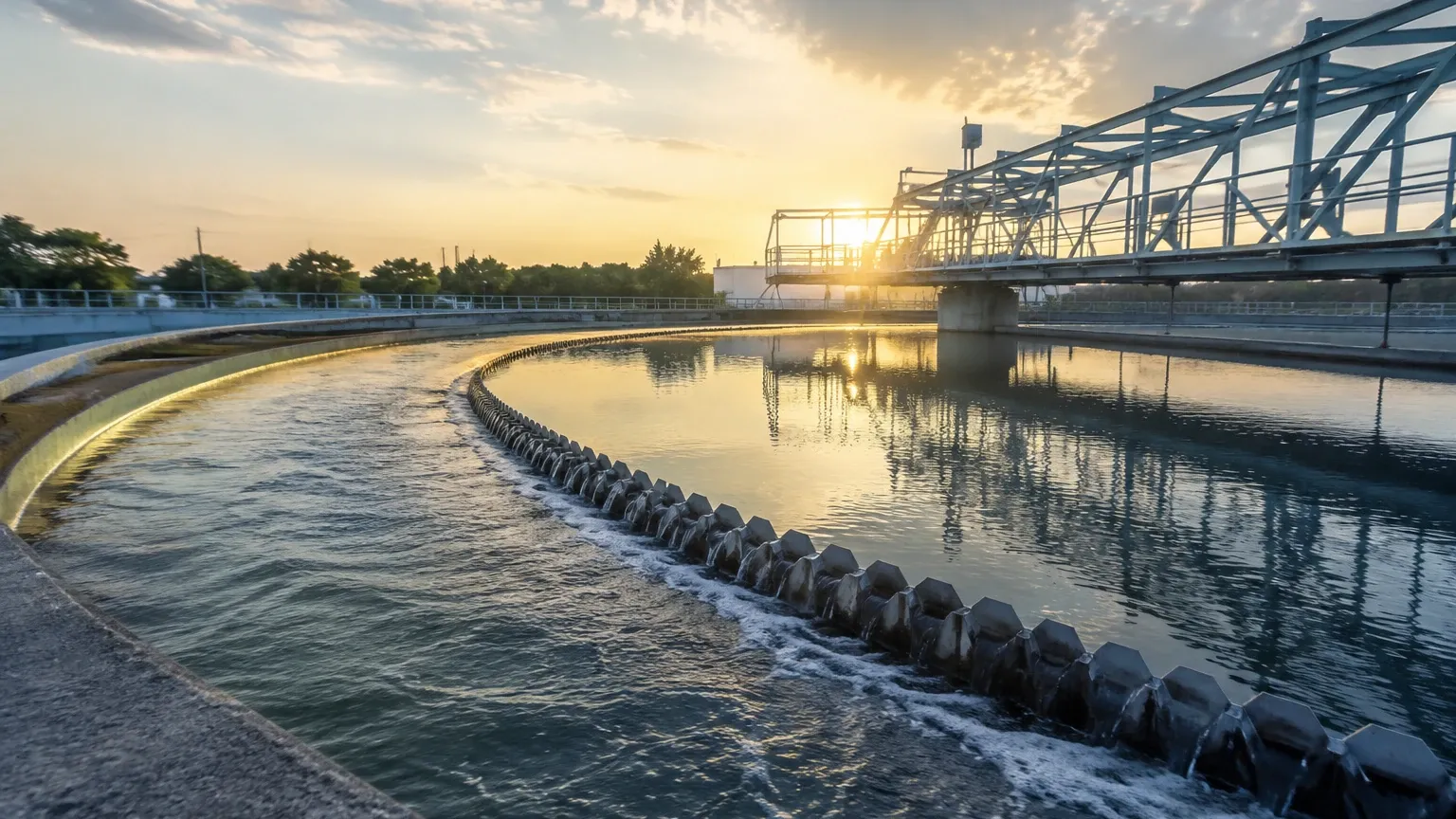
In industrial and municipal infrastructure, wastewater monitoring solutions are critical for ensuring environmental compliance, optimizing process efficiency, and protecting downstream equipment. Effective management of wastewater requires precise level measurement across various stages, from initial collection and grit removal to secondary treatment and final discharge. Because wastewater is rarely a clean or consistent medium, selecting the appropriate instrumentation requires a deep understanding of the underlying measurement principles and the specific challenges posed by the fluid's characteristics.
Measurement Principles in Wastewater Applications
Before selecting a specific instrument, it is essential to understand how different technologies interact with the wastewater environment. Level measurement in this sector generally falls into two categories: non-contact and contact-based methods.
1. Ultrasonic (Non-Contact)
Ultrasonic sensors operate on the Time-of-Flight (ToF) principle. The sensor emits a high-frequency acoustic pulse that travels through the air, reflects off the surface of the liquid, and returns to the transducer. The device calculates the distance based on the time interval between transmission and reception. In wastewater monitoring solutions, ultrasonic technology is frequently used for open-channel flow measurement and sump level monitoring.
2. Radar (Non-Contact)
Radar level meters also use the ToF principle but utilize electromagnetic waves instead of sound. These waves travel at the speed of light. Radar is less affected by air temperature fluctuations, steam, or dust compared to ultrasonic sensors. High-frequency radar (such as 80GHz) offers a narrow beam angle, which is advantageous in narrow wet wells or tanks with internal obstructions.
3. Hydrostatic (Contact)
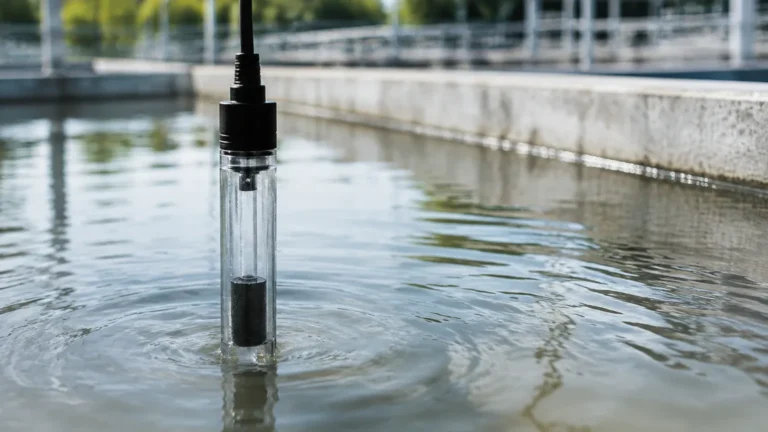
Hydrostatic level transmitters measure the liquid level by sensing the pressure exerted by the liquid column above the sensor. Based on Pascal’s Law, the pressure at a specific depth is proportional to the height of the liquid and its density. These are typically submersible probes designed to sit at the bottom of a tank or well.
4. Magnetic and Float-Based (Contact)
Magnetic level gauges and switches use a float containing a magnet that moves with the liquid level. This movement either actuates a switch or moves an external indicator. These are often used for high/low-level alarms rather than continuous monitoring in high-solids wastewater due to the risk of mechanical fouling.
Key Technologies for Wastewater Monitoring
Choosing the right technology depends on the specific point in the treatment process. Below are the primary instruments utilized in modern wastewater monitoring solutions.
Radar Level Meters
Radar technology has become the industry standard for challenging wastewater applications. Unlike ultrasonic waves, radar signals do not require a medium (air) to travel, making them immune to changes in gas composition or vacuum conditions. For wastewater tanks that experience heavy foaming or surface agitation, high-frequency radar provides a reliable signal where other technologies might fail. You can Review product options and application support to see how different radar frequencies suit specific tank geometries.
Ultrasonic Level Sensors
Ultrasonic sensors remain a cost-effective choice for many municipal applications, particularly in open-air environments like flumes and weirs. However, they are sensitive to temperature gradients. Most professional-grade ultrasonic sensors include integrated temperature compensation to mitigate this effect. They are best suited for applications where the distance to the liquid is less than 15 meters and the surface is relatively calm.
Hydrostatic Level Transmitters
For deep wells, lift stations, and reservoirs, hydrostatic transmitters are highly effective. Since they are submerged, they are not affected by surface foam or floating debris. The primary challenge with hydrostatic sensors in wastewater is the potential for sludge buildup or "clogging" of the sensing diaphragm. Selecting a flush-diaphragm design or a non-clogging cage is essential for longevity.
Selection Criteria and Technical Comparison
When evaluating wastewater monitoring solutions, engineers must weigh the advantages of each technology against the specific constraints of the site. The following table provides a comparative overview of common level measurement technologies used in the industry.
| Technology | Accuracy | Ideal Application | Limitations |
| :— | :— | :— | :— |
| Radar (80GHz) | ±1 mm | Narrow wet wells, foaming tanks, chemical storage | Higher initial cost than ultrasonic |
| Ultrasonic | ±0.25% of range | Open channels, sumps, flumes | Affected by heavy foam, steam, and wind |
| Hydrostatic | ±0.1% to 0.5% | Lift stations, deep boreholes, reservoirs | Sensitive to changes in liquid density |
| Level Switches | N/A (Point level) | Overfill protection, pump control | Mechanical parts can foul in raw sewage |
Installation Considerations for Wastewater Environments
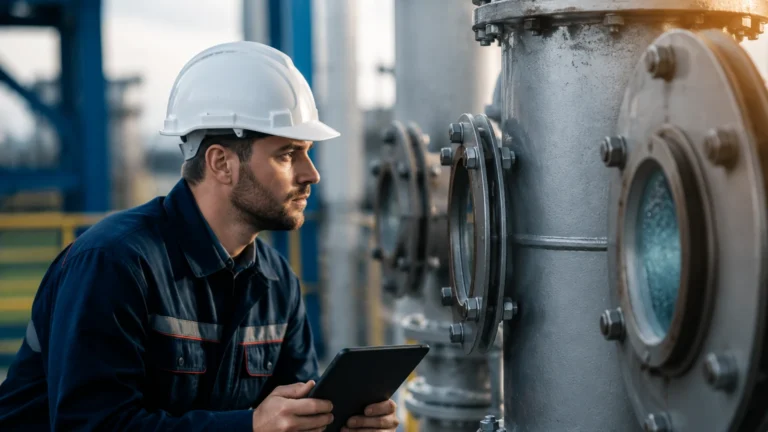
Proper installation is as critical as technology selection. Even the most advanced radar or ultrasonic meter will provide inaccurate data if installed incorrectly.
1. Dead Zones (Blocking Distance): Every non-contact sensor has a "dead zone" directly beneath the transducer where measurements cannot be taken. Ensure the sensor is mounted high enough so that the maximum liquid level never enters this zone.
2. Beam Angle and Obstructions: For radar and ultrasonic units, the signal spreads in a cone. If this cone hits a ladder, pipe, or the wall of the tank, it will create a false reflection. Narrower beam angles (typical of 80GHz radar) allow for installation closer to walls.
3. Stilling Wells and Bypass Pipes: In applications with extreme turbulence or heavy foam, installing the sensor inside a stilling well (a vertical pipe submerged in the liquid) can provide a calm surface for more accurate measurement.
4. Submersible Cable Protection: For hydrostatic sensors, the vent tube in the cable must remain unobstructed to allow for atmospheric pressure compensation. Using a desiccant bellows or a specialized junction box prevents moisture from entering the vent tube and damaging the electronics.
Common Risks and Limitations
Implementing wastewater monitoring solutions involves navigating several environmental risks that can compromise data integrity:
* Foam and Turbulence: Thick foam can absorb ultrasonic and radar signals. While radar is more resilient, extremely dense foam may require a lower frequency or a stilling well to penetrate the surface.
* Chemical Corrosion: Wastewater often contains hydrogen sulfide (H2S) and other corrosive gases. Instruments must be constructed from compatible materials such as PVDF, PTFE, or high-grade stainless steel (316L).
* Build-up and Scaling: In raw sewage or sludge applications, material can accumulate on the sensor face. Non-contact sensors are generally preferred here, but even they may require periodic cleaning if condensation and dust create a crust on the transducer.
* Lightning and Surges: Since many wastewater facilities are located in open areas, instrumentation is susceptible to lightning strikes. Proper grounding and the use of surge protection modules are mandatory for outdoor installations.
Project Confirmation: Before You Order
To ensure the success of a wastewater monitoring project, the following technical details should be confirmed by the engineering team before procurement:
* Media Composition: Is the liquid raw sewage, treated effluent, or thickened sludge? What is the estimated solids content?
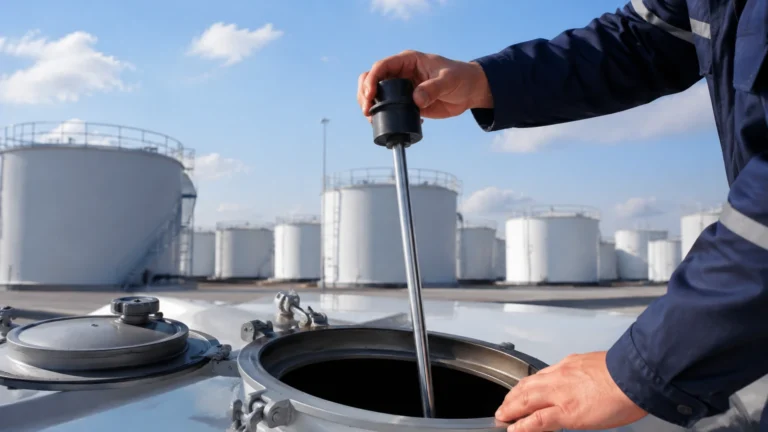
* Tank/Well Geometry: Provide the total depth (e.g., 10 meters), diameter, and the location of any internal pipes or pumps.
* Process Conditions: What are the maximum and minimum temperatures? Is there likely to be foam or steam present?
* Power and Output Requirements: Is 24V DC available? Does the control system require 4-20mA, HART, Modbus, or a wireless protocol like LoRaWAN?
* Regulatory Requirements: Is the installation in a hazardous area (ATEX/IECEx) requiring intrinsically safe or explosion-proof equipment?
Frequently Asked Questions (FAQ)
Q: Can radar level meters measure through plastic tank lids?
A: Yes, radar signals can penetrate many non-conductive plastics. This allows for the sensor to be mounted outside the tank, protected from corrosive fumes, provided the lid material is not carbon-filled or metallic.
Q: How often do ultrasonic sensors need calibration in wastewater applications?
A: While the electronics are stable, the physical environment changes. It is recommended to verify the zero and span points annually, or more frequently if significant temperature swings occur that might exceed the internal compensation limits.
Q: Is hydrostatic measurement better than radar for sludge tanks?
A: Not necessarily. While hydrostatic sensors are unaffected by surface foam, the varying density of sludge can introduce errors in level calculation. Radar is generally preferred for sludge unless the tank is extremely deep and narrow, making a submersible probe the only physical option.
Conclusion
Selecting effective wastewater monitoring solutions requires balancing the precision of the technology with the harsh realities of the treatment environment. Whether utilizing the robustness of 80GHz radar or the cost-effectiveness of ultrasonic sensors, understanding the physical limitations of each method is the key to long-term reliability. For comprehensive technical specifications and to explore a wide range of industrial measurement tools, visit the Main Page of our product catalog. By following established engineering guidelines and carefully assessing site-specific variables, operators can ensure accurate data and maintain the integrity of their wastewater management systems.