Vapor Pressure Osmometer Working Principle Thermocouple
Vapor Pressure Osmometer Working Principle Thermocouple
In the realm of analytical chemistry and process engineering, determining the concentration of solutes in a solution is a fundamental requirement. One of the most reliable methods for this is osmometry. While various techniques exist, the vapor pressure osmometer (VPO) is favored for its ability to handle complex samples that might interfere with other methods. Central to this technology is the vapor pressure osmometer working principle thermocouple, a mechanism that translates minute changes in vapor pressure into precise electrical signals to determine osmolality.
Understanding the underlying physics and the role of the sensing elements is essential for engineers and laboratory managers selecting equipment for pharmaceutical, chemical, or environmental applications. This guide provides a detailed technical overview of how these instruments operate, their advantages, and practical considerations for industrial implementation.
Understanding Vapor Pressure Osmometry
Osmometry is based on the measurement of colligative properties—properties of a solution that depend on the number of solute particles present, rather than the chemical identity of those particles. These properties include boiling point elevation, freezing point depression, and vapor pressure lowering.
The Physics of Vapor Pressure Lowering
According to Raoult’s Law, the vapor pressure of a solvent is reduced when a non-volatile solute is added. This occurs because the solute particles occupy space at the liquid-vapor interface, reducing the rate at which solvent molecules can escape into the gas phase. In a closed system at equilibrium, the vapor pressure above a solution is lower than the vapor pressure above the pure solvent at the same temperature.
In a vapor pressure osmometer, this difference in vapor pressure is measured indirectly through temperature changes. Because the vapor pressure is directly proportional to the mole fraction of the solvent, measuring the drop in vapor pressure allows for the calculation of the solution's osmolality (expressed in mOsm/kg).
The Vapor Pressure Osmometer Working Principle Thermocouple
The core of a modern VPO is the thermocouple or a highly sensitive thermistor. The vapor pressure osmometer working principle thermocouple involves measuring the temperature differential created by the condensation of solvent vapor onto a sample droplet.
The Measurement Cycle
1. Saturation: The measurement chamber is sealed and saturated with the vapor of the pure solvent (usually water). The chamber is maintained at a highly stable, controlled temperature.
2. Sample Introduction: A small droplet of the sample solution is placed onto the sensing tip of a thermocouple. A second thermocouple usually holds a droplet of the pure solvent to act as a reference.
3. Condensation and Latent Heat: Because the sample solution has a lower vapor pressure than the pure solvent vapor filling the chamber, solvent molecules from the saturated air condense onto the sample droplet.
4. Temperature Rise: As the solvent vapor condenses into the liquid phase on the sample droplet, it releases latent heat of vaporization. This causes the temperature of the sample droplet to rise.
5. Equilibrium: The temperature continues to rise until the vapor pressure of the (now slightly diluted and warmer) sample droplet equals the vapor pressure of the surrounding saturated vapor.
6. Signal Conversion: The thermocouple detects this minute temperature increase (often in the range of millidegrees Celsius). The voltage generated by the thermocouple is proportional to the temperature difference, which in turn is proportional to the osmolality of the solution.
Why Use a Thermocouple?
Thermocouples are selected for this application due to their rapid response times and ability to detect extremely small thermal gradients. In high-precision instruments, the thermocouple must be capable of resolving temperature differences as small as 0.0001°C to provide accurate osmolality readings.
Comparison: Vapor Pressure vs. Freezing Point Osmometry
While vapor pressure osmometry is highly effective, it is often compared to freezing point osmometry. The choice between the two depends heavily on the nature of the solute and the required process conditions.
| Feature | Vapor Pressure Osmometry (VPO) | Freezing Point Osmometry (FPO) |
| :— | :— | :— |
| Primary Principle | Vapor pressure lowering / Heat of condensation | Freezing point depression |
| Sample State | Liquid (requires solvent evaporation) | Liquid (requires freezing) |
| Sensitivity to Volatiles | High (can be a limitation) | Low |
| Sample Volume | Very small (microliter range) | Small to Medium |
| Thermal Stress | Operates at elevated or ambient temps | Requires cooling to sub-zero |
| Best For | High molecular weight polymers, viscous fluids | Clinical diagnostics, simple aqueous solutions |
For broader industrial fluid monitoring and tank management, where osmolality might be one of several parameters, integrating these sensors with robust level measurement systems is common. For more information on industrial-grade measurement hardware, you may refer to the Main Page of professional instrumentation providers.
Key Evaluation Criteria for Selection
When selecting an instrument based on the vapor pressure osmometer working principle thermocouple, engineers should evaluate the following technical specifications:
1. Measurement Range and Accuracy
Most industrial VPOs cover a range from 0 to 3000 mOsm/kg. Accuracy is typically within ±1% of the reading. For high-precision chemical manufacturing, ensure the instrument maintains linearity across the entire range.
2. Sample Volume Requirements
One of the primary advantages of VPO is the ability to work with extremely small samples, often as low as 2–10 microliters. This is critical in pharmaceutical research where sample material may be expensive or scarce.
3. Temperature Control Stability
Since the measurement relies on detecting millidegree temperature changes, the internal chamber's thermal stability is paramount. Look for instruments with Peltier-effect cooling/heating and high-density insulation.
4. Compatibility with Solvents
While many osmometers are designed for aqueous solutions, industrial applications may require the use of organic solvents (e.g., toluene, chloroform). Ensure the thermocouple materials and chamber seals are chemically resistant to the intended solvents.
Installation and Calibration Considerations
To ensure the longevity and accuracy of a vapor pressure osmometer, specific installation and maintenance protocols must be followed.
Environmental Conditions
* Vibration Isolation: The sensitive thermocouple and the liquid droplet can be disturbed by mechanical vibrations. Place the unit on a heavy, stable bench.
* Ambient Temperature: Avoid placing the instrument near HVAC vents or in direct sunlight. Rapid changes in ambient temperature can drift the baseline of the thermocouple.
Calibration Standards
Calibration is typically performed using standard solutions of Sodium Chloride (NaCl) or specialized polymers with known osmolality.
* Two-Point Calibration: Use a zero-reference (pure solvent) and a high-range standard.
* Frequency: In regulated environments (GLP/GMP), daily calibration checks are recommended before starting a series of measurements.
Cleaning the Thermocouple
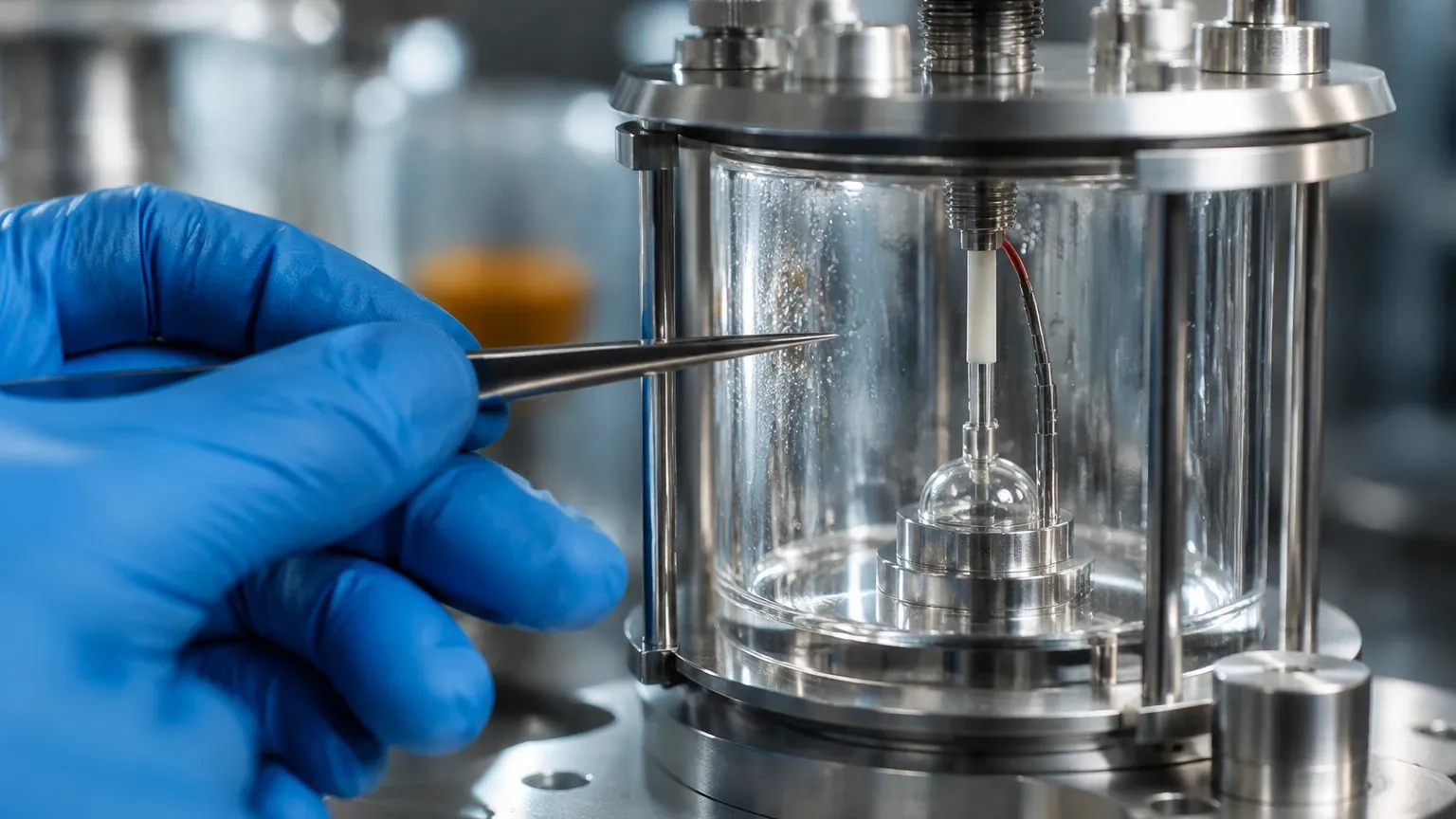
The thermocouple tip is extremely fragile. Cleaning should be performed using specialized lint-free tissues and appropriate solvents. Any residue left on the sensor from a previous test will cause significant measurement errors by altering the surface tension and vapor pressure of the next sample.
Common Risks and Limitations
Despite its precision, the vapor pressure osmometer working principle thermocouple has specific limitations that must be managed:
* Volatile Solutes: VPO is generally not suitable for samples containing volatile solutes (e.g., ethanol or ether) because these solutes will evaporate into the chamber vapor space, interfering with the partial pressure equilibrium and leading to false low readings.
* Sensor Fragility: The thermocouple wire is often thinner than a human hair. Physical contact during cleaning or sample loading can break the sensor, requiring expensive replacement.
* Equilibrium Time: VPO is generally slower than freezing point osmometry because it requires the system to reach thermal and vapor equilibrium, which can take several minutes per sample.
Practical Selection Table for Industrial Use
| Application | Recommended Sensor Type | Key Consideration |
| :— | :— | :— |
| Polymer Science | High-Sensitivity Thermocouple | Accuracy at low concentrations is vital for Mn (number-average molecular weight) determination. |
| Clinical Research | Micro-volume VPO | Minimized sample loss for rare biological fluids. |
| Chemical Processing | Solvent-Resistant VPO | Must verify compatibility with non-aqueous solvents. |
| Quality Control | Automated VPO | Focus on repeatability and ease of sensor cleaning. |
Frequently Asked Questions (FAQs)
Q: How does ambient humidity affect the vapor pressure osmometer?
A: Most modern VPOs use a sealed chamber, so ambient humidity does not directly affect the measurement once the chamber is closed. However, high humidity can make sample handling difficult and may lead to moisture absorption by hygroscopic samples before they are placed in the chamber.
Q: Can VPO be used to determine molecular weight?
A: Yes. By measuring the osmolality of a known mass concentration of a solute, the number-average molecular weight ($M_n$) can be calculated. This is a standard application in polymer chemistry for molecules up to approximately 50,000 Daltons.
Q: What happens if the thermocouple is contaminated?
A: Contamination usually results in "drift" or inconsistent readings. If the baseline does not return to zero with a pure solvent, the thermocouple likely has salt crystals or organic residue on it and requires cleaning with deionized water or a specialized solvent.
Q: Is the thermocouple principle better than the thermistor principle?
A: Both serve the same purpose. Thermistors generally have a higher change in resistance per degree of temperature change, making them very sensitive, while thermocouples are often more robust and can operate over a wider temperature range. The choice usually depends on the specific instrument manufacturer's design.
Conclusion
The vapor pressure osmometer working principle thermocouple remains a cornerstone of precision concentration measurement in both laboratory and specialized industrial process environments. By leveraging the latent heat of condensation, these instruments provide a window into the molecular makeup of complex solutions that other methods cannot reach. For engineers tasked with integrating such high-precision measurements into broader industrial frameworks, understanding these thermal dynamics is the first step toward ensuring accurate and repeatable data. When expanding from laboratory analysis to full-scale industrial fluid management, selecting the right instrumentation—ranging from osmometers to advanced level sensors available on the Main Page—is critical for operational success.
Download Vapor Pressure Osmometer Working Principle Thermocouple as a PDF