Vega Banjo Serial Numbers
Vega Banjo Serial Numbers
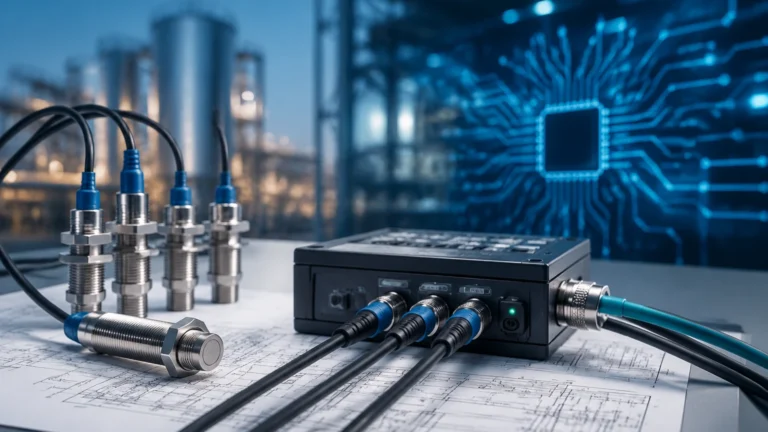
In the complex landscape of industrial automation and process control, the ability to uniquely identify and track instrumentation is fundamental to operational safety, maintenance efficiency, and regulatory compliance. Whether managing a fleet of radar level sensors in a chemical plant or maintaining legacy equipment in a water treatment facility, the serial number serves as the primary key to an instrument's technical specifications, calibration history, and manufacturing origin. While the term "vega banjo serial numbers" is frequently associated with the historical documentation of vintage musical instruments, the engineering principles of serial tracking in the industrial sector—specifically for brands like VEGA or Welk—are far more rigorous, serving as the foundation for lifecycle management in high-stakes environments.
For process engineers and procurement specialists, understanding how to decode and utilize serial numbers is as critical as understanding the measurement principles of the devices themselves. This guide explores the technical framework of level measurement identification and provides a comprehensive reference for selecting and maintaining industrial level meters.
Understanding Level Measurement Principles
Before delving into the specifics of equipment identification and serial tracking, it is essential to understand the underlying technologies that these serial numbers represent. Industrial level measurement is generally categorized into continuous measurement and point-level detection.
Radar Level Measurement (ToF and FMCW)
Radar level meters, such as those manufactured by Welk, operate on the principle of Time of Flight (ToF) or Frequency Modulated Continuous Wave (FMCW).
* Pulse Radar: The instrument emits short microwave pulses toward the medium. The time it takes for the pulse to travel to the surface and back is measured to calculate the distance.
* FMCW Radar: The sensor emits a continuous signal with a constantly changing frequency. The difference in frequency between the emitted signal and the reflected signal is proportional to the distance.
Radar technology is preferred for its non-contact nature and its immunity to changes in pressure, temperature, and vapor space composition. Modern 80 GHz radar sensors offer high focalization, allowing for accurate measurement even in narrow tanks with internal obstructions.
Ultrasonic Level Sensors
Ultrasonic sensors utilize sound waves (typically in the 20 kHz to 200 kHz range). The sensor measures the time interval between the emission of the ultrasonic pulse and the reception of the echo. Unlike radar, ultrasonic measurement is affected by the medium's temperature (which changes the speed of sound) and the presence of heavy foam or dust, which can attenuate the signal. Most Welk ultrasonic transmitters include integrated temperature compensation to maintain accuracy across varying environmental conditions.
Hydrostatic and Pressure-Based Measurement
Hydrostatic level transmitters measure the pressure exerted by a liquid column. The relationship is defined by the formula: $P = \rho \cdot g \cdot h$, where $P$ is pressure, $\rho$ is the density of the liquid, $g$ is gravity, and $h$ is the height of the liquid. This method is highly reliable for vented tanks but requires compensation if the tank is pressurized.
The Role of Serial Numbers in Industrial Instrumentation
In industrial manufacturing, a serial number is more than just a chronological marker. For high-precision instruments, the serial number is linked to a "Digital Twin" or a comprehensive database entry that includes:
1. Material Traceability: Documentation of the alloys (e.g., 316L Stainless Steel, Hastelloy) used in the wetted parts.
2. Calibration Records: The factory-set zero and span points, and the linearity curves recorded during quality control.
3. Software/Firmware Version: Essential for troubleshooting communication protocols like HART, Modbus, or Profibus.
4. Hazardous Area Certifications: Verification of ATEX, IECEx, or SIL (Safety Integrity Level) ratings.
While collectors might look for vega banjo serial numbers to determine the year a specific instrument was handcrafted in a Boston workshop, a process engineer uses a VEGA or Welk serial number to ensure that a replacement sensor matches the exact flange size, pressure rating, and dielectric constant (εr) requirements of a specific chemical reactor. Misidentifying an industrial sensor can lead to catastrophic failures, whereas misidentifying a banjo merely results in an inaccurate historical record.
How to Locate and Read Serial Numbers
On most industrial level meters, the serial number is found on the nameplate (data plate) located on the electronics housing. Modern units often include a QR code that, when scanned, directs the user to a technical portal. For legacy systems, the serial number might be laser-etched onto the process connection (flange or thread).
Practical Selection Table for Level Measurement Technologies
When selecting a level meter, the serial number of the existing unit is the best starting point for a replacement. However, for new installations, engineers must evaluate the application based on the following criteria:
| Technology | Typical Range | Accuracy | Suitable Media | Limitations |
| :— | :— | :— | :— | :— |
| 80 GHz Radar | 0.1 m – 120 m | ±1 mm | Liquids, Solids, Corrosives | Extremely low dielectric constants |
| Ultrasonic | 0.2 m – 15 m | ±0.25% FS | Water, Wastewater, Slurries | Foam, vacuum, high dust |
| Hydrostatic | 0.5 m – 200 m | ±0.1% to 0.5% | Clear liquids, Oils | Changing liquid density |
| Magnetic Gauge | 0.3 m – 6 m | ±5 mm | Clean liquids, LPG | High viscosity, magnetic particles |
| Guided Wave Radar | 0.3 m – 75 m | ±2 mm | Liquids, Interfaces | Mechanical contact required |
For detailed technical specifications and to explore the full range of industrial measurement solutions, you can visit the Main Page of the Welk product catalog.
Installation Considerations and Best Practices
Proper installation is as critical as selecting the correct technology. Even the most advanced radar sensor will fail if the installation environment is not considered.
Beam Angle and Obstructions
The "beam angle" is the area where the radar or ultrasonic energy is concentrated. For a standard radar sensor, the beam angle might be 3° to 10°. It is vital to ensure that the beam path is clear of internal tank structures such as:
* Agitators and impellers
* Heating coils
* Inflow streams
* Ladders or support struts
If an obstruction cannot be moved, many modern transmitters, including those from Welk, offer "False Signal Suppression" or "Echo Mapping," which allows the sensor to ignore static reflections from internal structures.
Nozzle Geometry
The mounting nozzle should be as short as possible. If a nozzle is too long or narrow, it can create "ringing" or internal reflections that interfere with the measurement of the actual liquid surface. For ultrasonic sensors, a "dead zone" or "blocking distance" exists immediately below the sensor face (typically 100 mm to 500 mm) where measurement is impossible.
Environmental Protection
In outdoor installations, sunshields should be used to prevent the electronics from overheating, which can shorten the lifespan of the LCD and internal components. For hydrostatic sensors in deep wells, lightning protection and moisture-wicking vent tubes are essential to prevent sensor drift or failure.

Limitations and Common Risks
Every level measurement technology has its boundaries. Understanding these prevents costly downtime.
* Dielectric Constant (εr): Radar relies on the reflection of electromagnetic waves. Materials with very low εr (like certain liquefied gases or dry powders) reflect very little energy. In these cases, Guided Wave Radar (GWR) or high-sensitivity 80 GHz units are required.
* Surface Turbulence: Rapidly boiling liquids or high-speed agitators can scatter the signal. Using a stilling well or a bypass pipe can stabilize the surface for more accurate readings.
* Condensation and Buildup: While 80 GHz radar is resistant to buildup, heavy coating on an ultrasonic transducer face will eventually cause a "high level" false alarm. Selecting a sensor with a self-cleaning face or a non-contact radar with a PTFE drip-off antenna is recommended for such applications.
Maintenance and Lifecycle Support
Industrial instruments should be verified annually. This process involves comparing the sensor's output against a manual dip-tape measurement or using a portable calibrator to simulate pressure or loop current.
When a unit reaches its end-of-life, the serial number is used to retrieve the original configuration. By providing the serial number to the manufacturer, a "clone" unit can be produced, pre-configured with the same tank height, offset, and output scaling, allowing for a "plug-and-play" replacement. This is a significant advantage over manual reconfiguration, which is prone to human error.
Frequently Asked Questions (FAQ)
Q: Can I use a serial number to find the manufacturing date of my level meter?
A: Yes. Most manufacturers, including Welk and VEGA, encode the production year and week into the serial number or maintain a database where this information is accessible via the Main Page support portal.
Q: Why does my radar meter show a full tank when it is empty?
A: This is often caused by a strong reflection from a nozzle weld or an internal obstruction. Check the "False Signal Suppression" settings in the device menu to map out these interference echoes.
Q: Are serial numbers unique across different product lines?
A: Generally, yes. Leading manufacturers use a global unique identifier system to ensure that no two instruments share the same serial number, regardless of whether they are ultrasonic, radar, or pressure transmitters.
Q: How do I handle a missing nameplate?
A: If the physical nameplate is missing or illegible, the serial number can often be retrieved digitally by connecting to the device via a HART hand-held communicator or PC-based software (like PACTware or DTM).
Q: What is the difference between a serial number and a model code?
A: A model code (e.g., WLK-80G-S1) describes the general features of the product line, such as the technology and pressure rating. The serial number is a unique identifier for one specific physical unit.
In conclusion, while the search for vega banjo serial numbers might lead one down a path of musical history, the search for industrial serial numbers leads to the heart of process efficiency. By maintaining accurate records and understanding the technical principles of your level measurement equipment, you ensure the continued reliability and safety of your industrial operations. For further assistance in selecting the right instrument for your application, consult the technical documentation and support resources available at the Main Page.