Vega Projects
Vega Projects
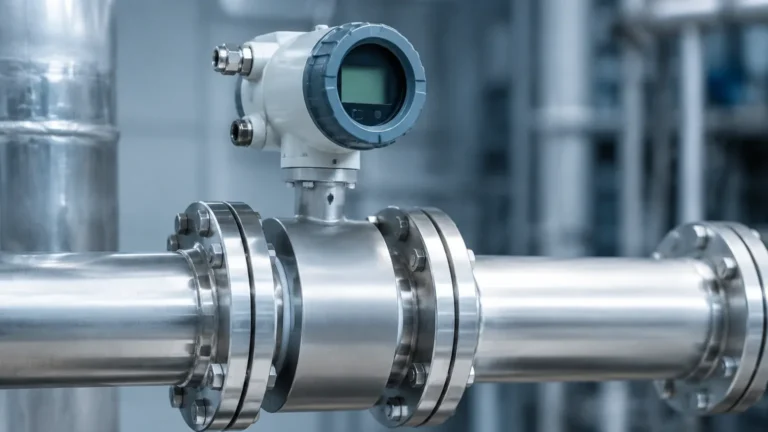
In the realm of industrial automation and process control, the term "vega projects" often refers to large-scale instrumentation initiatives that prioritize high-precision level measurement in challenging environments. These projects typically involve the integration of sophisticated radar, ultrasonic, and hydrostatic sensors into a centralized control system. For engineers and project managers, selecting the right technology is not merely about measuring a distance; it is about ensuring process safety, reducing waste, and maintaining operational efficiency over decades of service.
Industrial level measurement is a cornerstone of modern manufacturing. Whether it is monitoring the volume of corrosive chemicals in a storage tank or managing the flow in a municipal water treatment facility, the accuracy of the data collected dictates the success of the entire operation. Companies like Welk provide the essential hardware—ranging from 80GHz radar level meters to robust hydrostatic transmitters—that forms the backbone of these complex installations. For those seeking detailed technical specifications and a broad overview of available instrumentation, visiting the Main Page provides a comprehensive starting point for product selection.
Understanding Core Measurement Principles
Before embarking on any instrumentation project, it is critical to understand the physics behind the sensors. Level measurement technologies are generally categorized into non-contact and contact methods, each with distinct advantages and limitations.
Radar Level Measurement (ToF)
Radar sensors operate on the Time-of-Flight (ToF) principle. The sensor emits a high-frequency electromagnetic wave (typically in the 26GHz or 80GHz range) toward the medium. This wave is reflected by the surface of the product and returned to the sensor. The device measures the time elapsed between emission and reception to calculate the distance.
* 80GHz Radar: This is the current gold standard for many vega projects. The higher frequency allows for a much narrower beam angle (as small as 3 degrees), which is essential for avoiding internal tank obstructions like agitators or heating coils. It also provides superior signal-to-noise ratios, allowing it to "see" through heavy dust or steam.
* Guided Wave Radar (GWR): Unlike free-space radar, GWR uses a probe (cable or rod) to guide the microwave signal. This is particularly effective for liquids with low dielectric constants or processes with heavy foam, as the signal is concentrated along the probe.
Ultrasonic Level Measurement
Ultrasonic sensors use sound waves instead of electromagnetic waves. A transducer emits a pulse of sound that bounces off the surface of the material. The time taken for the echo to return is used to determine the level. Because the speed of sound is affected by air temperature, these sensors must include an integrated temperature probe to compensate for fluctuations. While cost-effective, ultrasonic sensors are limited by vacuum conditions (sound cannot travel in a vacuum) and can be hindered by heavy foam or significant turbulence.
Hydrostatic Level Measurement
This is a contact method based on the principle that the pressure at the bottom of a vessel is proportional to the height of the liquid above it. The formula used is $P = \rho \cdot g \cdot h$, where $P$ is pressure, $\rho$ is the density of the fluid, $g$ is gravity, and $h$ is the height. Hydrostatic transmitters are favored for their reliability in vented tanks and their ability to provide accurate readings regardless of surface foam or dielectric changes, provided the fluid density remains constant.
Technology Selection for Industrial Projects
Selecting the appropriate instrument for vega projects requires a deep dive into the process conditions. The following table provides a quick reference for matching technology to application needs.
| Feature | 80GHz Radar | Ultrasonic | Hydrostatic | Guided Wave Radar |
| :— | :— | :— | :— | :— |
| Measurement Type | Non-contact | Non-contact | Contact (Pressure) | Contact (Probe) |
| Typical Range | Up to 120m | Up to 30m | Up to 200m (H2O) | Up to 75m |
| Accuracy | ±1mm to ±2mm | ±0.25% of range | ±0.1% to ±0.5% | ±2mm |
| Foam Resistance | High (80GHz) | Low | Excellent | Moderate |
| Dust/Vapor | Excellent | Poor | Excellent | Good |
| Vacuum Rated | Yes | No | Yes | Yes |
| Cost Profile | Premium | Economical | Moderate | Moderate |
Critical Installation Considerations
Even the most advanced sensor will fail to perform if the installation is flawed. In the context of vega projects, engineering teams must adhere to strict installation guidelines to ensure signal integrity.
Beam Angle and Obstructions
When installing non-contact radar or ultrasonic sensors, the "beam angle" is the most critical factor. The signal spreads as it travels away from the sensor. If this beam hits a ladder, a pipe, or the tank wall, it creates a "false echo" that can confuse the sensor's software.
* Rule of Thumb: Ensure the center of the sensor is at least 200mm (approx. 8 inches) away from the tank wall for every 1 meter of depth if using lower-frequency sensors. With 80GHz radar, this distance can be significantly reduced due to the narrow beam.
* Nozzle Height: The sensor should be mounted so that the antenna or transducer face extends slightly below the bottom of the mounting nozzle. If the sensor is recessed too far up into a narrow nozzle, "ringing" or internal reflections can create a dead zone at the top of the tank.
The Dead Zone (Blocking Distance)
Every non-contact sensor has a minimum distance it cannot measure, known as the dead zone or blocking distance. For ultrasonic sensors, this is typically 0.25m to 0.8m (10 to 31 inches), depending on the frequency. For radar, it is much smaller, often less than 0.1m. Engineers must ensure the maximum fill level of the tank never enters this dead zone, or the sensor will lose its signal or lock onto a false high-level reading.
Managing Risks in Large-Scale Projects
In complex industrial environments, several factors can compromise measurement accuracy. Identifying these risks early in the vega projects planning phase is essential.
1. Dielectric Constant ($ε_r$): Radar signals rely on the difference in dielectric constant between the air/gas and the product. If the product has a very low dielectric constant (like certain oils or liquefied gases), the signal may pass right through the surface and reflect off the bottom of the tank. In these cases, Guided Wave Radar or high-sensitivity free-space radar is required.
2. Surface Turbulence and Foam: Heavy agitation or chemical reactions can create thick foam. Ultrasonic waves are often absorbed by foam, leading to signal loss. High-frequency radar can often penetrate light foam, but for extremely dense foam, hydrostatic or GWR sensors are usually the safer choice.
3. Build-up and Condensation: In many chemical processes, material can build up on the sensor face. While many modern Welk radar sensors feature "false signal suppression" software to ignore this build-up, excessive accumulation can eventually block the signal. Selecting sensors with PTFE-coated antennas or integrated air-purge systems can mitigate this risk.

Maintenance and Long-term Reliability
While modern level meters are designed for low maintenance, they are not "set and forget" devices. Successful vega projects include a lifecycle management plan.
* Calibration Verification: Sensors should be checked annually against a manual tape measure or a secondary reference point.
* Signal Diagnostics: Advanced radar units provide a "signal-to-noise" ratio reading. A degrading ratio over time often indicates build-up on the antenna or a change in the process environment that needs to be addressed before a total failure occurs.
* Integration: Most industrial projects now utilize digital communication protocols like HART, Modbus RS485, or Profibus. These allow for remote diagnostics and configuration, significantly reducing the need for technicians to climb to the top of silos or tanks for troubleshooting.
Frequently Asked Questions
Q: Can radar level meters measure solids like grain or cement?
A: Yes, but it requires specific considerations. Solids do not have a flat surface; they form cones and valleys. 80GHz radar is preferred here because its narrow beam can be aimed at a specific point on the slope, and its high signal strength can penetrate the dust typically found in silos.
Q: How does temperature affect hydrostatic level sensors?
A: Hydrostatic sensors measure pressure. If the temperature changes significantly, the density of the liquid changes. Since the sensor assumes a constant density to calculate height, this can lead to errors. High-end hydrostatic systems use a dual-sensor approach or temperature compensation to correct these errors in real-time.
Q: Is 80GHz radar always better than 26GHz?
A: Not necessarily. While 80GHz offers a narrower beam and better resolution, 26GHz radar is often more robust in applications with very heavy steam or condensation, as the longer wavelength is less likely to be scattered by water droplets in the air.
Q: What is the benefit of choosing a manufacturer like Welk for these projects?
A: Manufacturers like Welk offer a balance of advanced technology and cost-effectiveness. By providing a full suite of radar, ultrasonic, and hydrostatic options, they allow project engineers to source all their instrumentation from a single, reliable partner, ensuring compatibility and simplified support. For more information on specific models and engineering support, please refer to the Main Page.
Conclusion
Executing successful vega projects requires a blend of physical science, precise engineering, and a deep understanding of the specific application. By evaluating the dielectric properties of the medium, the physical constraints of the vessel, and the potential for environmental interference, engineers can select a level measurement solution that provides accurate data for years to come. Whether the solution involves a non-contact radar for a chemical reactor or a hydrostatic transmitter for a deep-well application, the goal remains the same: reliable, repeatable measurement that keeps industrial processes running safely and efficiently.