Vega Sensor
Vega Sensor
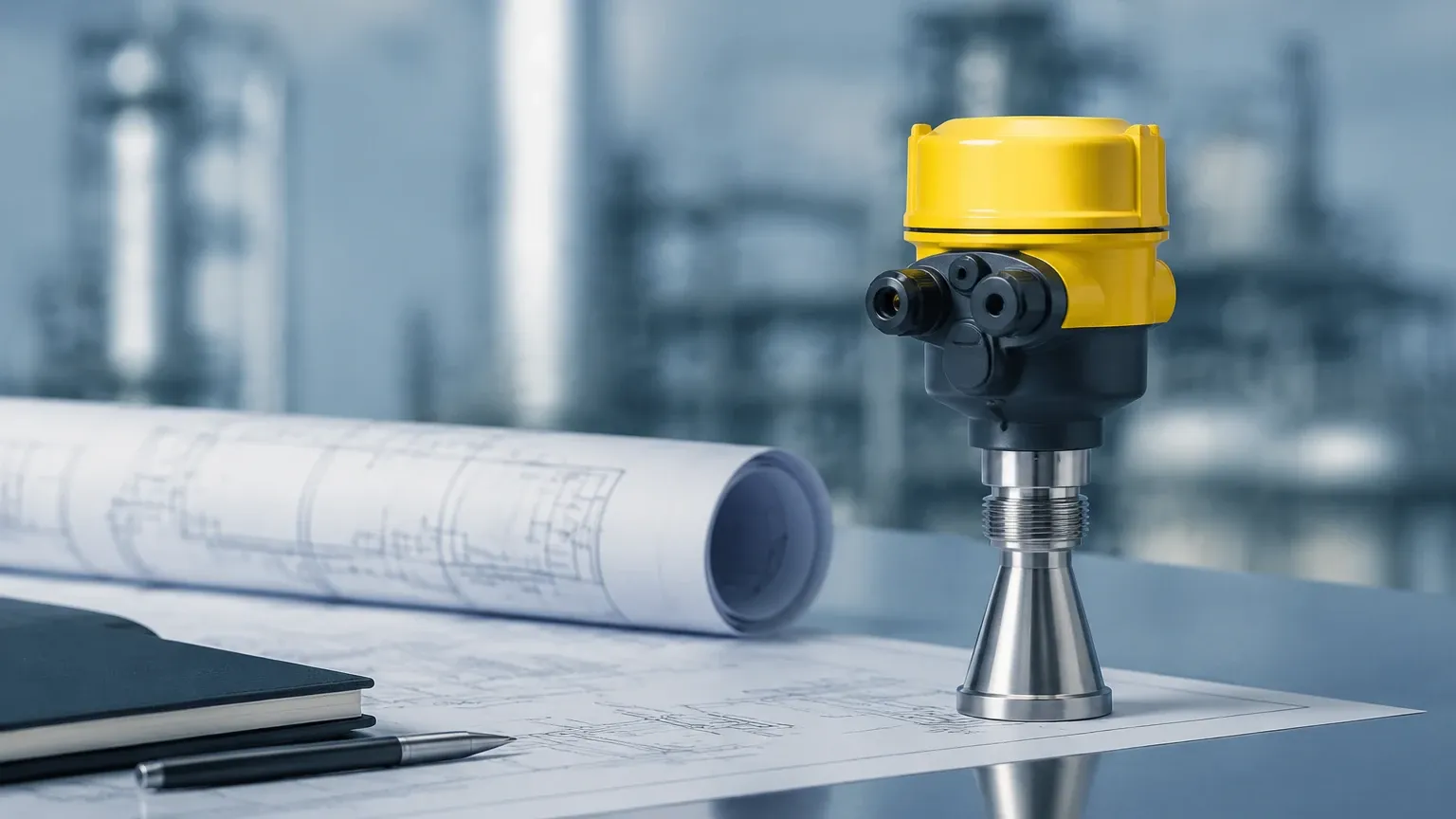
In the landscape of industrial automation, precise level measurement is a cornerstone of operational efficiency, safety, and inventory management. The term "Vega sensor" often refers to a broad category of high-end instrumentation produced by Vega Grieshaber KG, a German manufacturer that has set significant benchmarks in radar and pressure measurement technology. For process engineers and procurement specialists, understanding the technical nuances of these sensors—and how they compare to broader industrial solutions—is essential for optimizing plant performance.
Level measurement technology has transitioned from simple mechanical floats to sophisticated electronic systems capable of millimeter-level accuracy in extreme environments. Whether the application involves corrosive chemicals, high-pressure steam, or bulk solids, the selection of a sensor depends heavily on the physics of the media and the constraints of the vessel. This guide examines the principles, evaluation criteria, and practical implementation of advanced level sensors used in modern industry.
Understanding Level Measurement Principles
Before selecting a specific instrument, it is vital to understand the underlying physical principles that govern level detection. Most modern sensors, including the high-frequency radar units often associated with the Vega sensor brand, operate on the Time of Flight (ToF) principle.
Radar Level Measurement (Non-Contact)
Radar sensors emit high-frequency electromagnetic pulses (typically in the 6 GHz, 26 GHz, or 80 GHz range). These pulses travel at the speed of light, reflect off the surface of the medium, and return to the sensor antenna. The time elapsed is directly proportional to the distance to the product surface.
* 6 GHz Radar: Best for applications with heavy foam or turbulence, as the longer wavelength can penetrate surface disturbances.
* 26 GHz Radar: A versatile standard for many liquid applications, offering a balance between beam focus and signal strength.
* 80 GHz Radar: This represents the current state-of-the-art. The high frequency allows for a very narrow beam angle (often down to 3°), which minimizes interference from internal tank obstructions like agitators or heating coils.
Ultrasonic Level Measurement
Ultrasonic sensors use sound waves instead of electromagnetic waves. While cost-effective, they are limited by environmental factors. Sound speed varies with air temperature and density, and high-pressure or vacuum conditions can render ultrasonic signals ineffective. However, for open-channel flow or simple water tank applications, they remain a reliable choice.
Guided Wave Radar (GWR)
Also known as Time Domain Reflectometry (TDR), GWR utilizes a physical probe (cable or rod) to guide the microwave pulse to the surface. This method is highly effective for low-dielectric liquids and applications with heavy steam or dust, as the signal is concentrated along the probe rather than dispersed through the air.
The Evolution of Radar Technology in Level Sensing
The market for the Vega sensor has been largely defined by its pioneering work in 80 GHz radar technology. Traditionally, radar sensors required large antennas to achieve narrow beam angles. The shift to higher frequencies allowed for smaller process fittings (as small as ¾" NPT) while maintaining exceptional focus.
For industrial operators, this evolution means that sensors can now be installed in tall, narrow nozzles or vessels with complex internal geometries without the risk of "false echoes" from the tank walls. Furthermore, the increased dynamic range of modern radar chips allows them to detect signals from media with very low reflectivity, such as plastic pellets or ultra-pure water.
While Vega is a prominent name in this space, manufacturers like Welk provide comparable industrial-grade instruments, including radar level meters and hydrostatic transmitters, designed to meet these same rigorous accuracy requirements in water treatment, chemical processing, and oil and gas sectors.
Key Evaluation Criteria for Industrial Level Sensors
When evaluating a sensor for a specific B2B application, engineers must look beyond the brand name and focus on technical specifications that align with the process environment.
1. Media Properties: The dielectric constant (εr) of the liquid or solid is the most critical factor for radar. Media with εr < 2.0 (like liquid gases) require highly sensitive electronics or guided wave radar. For hydrostatic sensors, the density of the fluid must be constant for accurate measurement.
2. Process Temperature and Pressure: Standard sensors typically handle up to 80°C (176°F), but specialized versions with ceramic seals or cooling fins can withstand temperatures exceeding 450°C (842°F) and pressures up to 160 bar (2320 psi).
3. Accuracy and Repeatability: In custody transfer applications, a margin of error of ±1 mm is often required. For simple pump control, ±5 mm to ±10 mm may be sufficient.
4. Signal Output and Integration: Modern sensors support 4-20mA HART, Profibus PA, Foundation Fieldbus, and increasingly, Modbus or IO-Link for Industry 4.0 integration.
Comparative Analysis: Selecting the Right Technology
The following table provides a general guideline for technology selection based on common industrial scenarios.
| Application Feature | Non-Contact Radar (80 GHz) | Guided Wave Radar (TDR) | Ultrasonic Sensor | Hydrostatic Transmitter |
| :— | :— | :— | :— | :— |
| Vacuum Compatibility | Excellent | Excellent | Not Recommended | Excellent |
| Heavy Foam | Moderate (Freq. Dependent) | Excellent | Poor | Excellent |
| Internal Obstructions | Excellent (Narrow Beam) | Good (Avoid Contact) | Poor | Excellent |
| Corrosive Media | Excellent (PTFE/PVDF) | Good (Special Alloys) | Good (Plastic) | Excellent (Diaphragm) |
| Cost Profile | High | Medium-High | Low-Medium | Medium |
| Maintenance | Very Low | Low (Probe Cleaning) | Low | Moderate (Cleaning) |
For those comparing different brands and models, reviewing the Main Page of specialized manufacturers can provide a broader perspective on cost-effective alternatives that maintain high performance in these categories.
Installation Considerations and Practical Engineering Limits
Even the most advanced Vega sensor or equivalent instrument will fail if installation guidelines are ignored. Practical engineering requires attention to the "dead zone" (blocking distance) and the signal beam path.
Nozzle Geometry
The height and diameter of the mounting nozzle can significantly impact signal quality. For non-contact radar, the antenna should ideally extend slightly past the bottom of the nozzle to prevent signal ringing within the pipe. If the nozzle is very long, a sensor with a higher frequency (80 GHz) is mandatory to keep the beam narrow enough to avoid the nozzle walls.
Obstructions and False Echoes
Agitators, ladders, and inflow pipes are common sources of interference. While modern software allows for "False Signal Suppression" (mapping out static reflections), it is best practice to mount the sensor at a distance from these objects. A general rule is to maintain a distance of at least 200 mm (approx. 8 inches) from the tank wall for every 10 meters of height.
Media Turbulence and Foam
In vessels with high-speed mixers, the surface may be turbulent. This can scatter the radar signal. In such cases, using a standpipe (stilling well) can provide a calm surface for the sensor to measure. For applications with thick, dense foam, hydrostatic pressure sensors or guided wave radar are often more reliable than non-contact methods, as foam can absorb high-frequency electromagnetic waves.
Common Risks and Maintenance Requirements
While modern electronic level sensors are marketed as "maintenance-free," certain risks remain in industrial environments:
* Build-up and Condensation: In heavy steaming applications, condensation can form on the antenna lens. While many 80 GHz sensors feature a convex PTFE lens designed to shed droplets, extreme build-up of sticky or crystallizing media may eventually require manual cleaning or the use of an integrated air purge system.
* Electronic Drift: Over several years, electronic components can experience minor drift. Periodic verification against a manual dip-tape or a secondary reference is recommended for critical safety loops (SIL-rated systems).
* Lightning and Surges: Since level sensors are often mounted at the highest point of outdoor tanks, they are susceptible to lightning strikes. Proper grounding and the use of surge protection modules are essential to protect the investment.
Frequently Asked Questions (FAQ)
Q: Can a radar sensor measure through a plastic tank lid?
A: Yes. Because plastic is non-conductive and has a low dielectric constant, radar waves can pass through it. This allows for "non-invasive" measurement where the sensor is mounted outside a plastic IBC or storage tank, provided the material is not carbon-filled or metallic.
Q: What is the difference between a level transmitter and a level switch?
A: A level transmitter (like a Vega sensor radar unit) provides continuous measurement (e.g., 0-100% full). A level switch (like a vibrating fork or float switch) provides a point-level alert, typically used for high-level overfill protection or low-level pump dry-run prevention.
Q: How does temperature affect radar measurement?
A: Unlike ultrasonic sensors, radar waves are electromagnetic and are not significantly affected by air temperature, pressure, or gas composition. This makes radar the preferred choice for high-temperature reactors.
Q: Is 80 GHz always better than 26 GHz?
A: Not necessarily. While 80 GHz offers better focus and smaller fittings, 26 GHz or 6 GHz may be better at penetrating heavy dust or steam in certain specific bulk solid applications. Selection should be based on the specific application data.
In conclusion, whether utilizing a Vega sensor or exploring customized solutions from manufacturers like Welk, the success of a level measurement project depends on a rigorous analysis of the process conditions. By matching the right frequency and measurement principle to the specific media and vessel geometry, engineers can ensure long-term reliability and accuracy. For a detailed review of product options and technical application support, professionals are encouraged to consult the Main Page of industry-leading suppliers to find the most cost-effective and technically sound solutions for their specific needs.