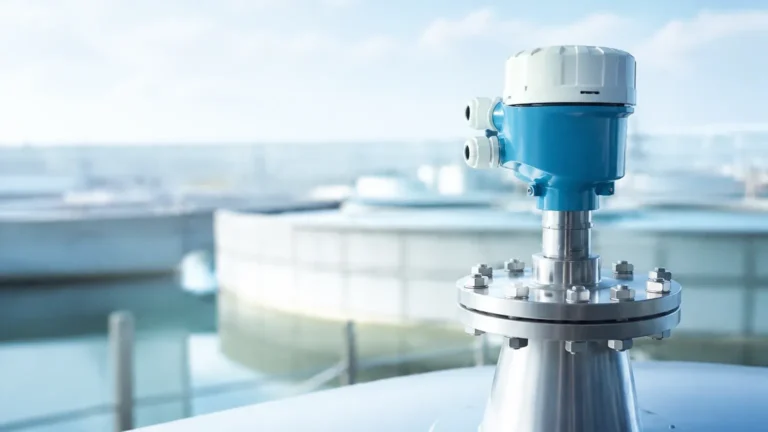
Vegapuls C21
Vegapuls C21
In the landscape of industrial automation and process control, the transition from traditional contact-based measurement to non-contact radar technology has significantly improved reliability and reduced maintenance overhead. The Vegapuls C21 represents a specific category of compact 80 GHz radar sensors designed primarily for the water and wastewater industry, as well as basic industrial applications. This guide provides a technical deep dive into the measurement principles, application criteria, and installation requirements for this class of sensor, while positioning it within the broader context of industrial level measurement solutions.
Understanding 80 GHz Radar Measurement Principles
To appreciate the utility of the Vegapuls C21, one must first understand the underlying Frequency Modulated Continuous Wave (FMCW) radar technology. Unlike pulse-based radar, which measures the time of flight of a single microwave pulse, FMCW radar transmits a continuous signal with a constantly changing frequency.
The FMCW Process
1. Signal Emission: The sensor emits a continuous radar signal that sweeps across a specific frequency bandwidth (around 80 GHz).
2. Reflection: The signal hits the surface of the medium (liquid or solid) and reflects back toward the sensor antenna.
3. Frequency Difference: Because the emitted frequency is constantly changing, there is a measurable difference between the frequency currently being transmitted and the frequency of the reflected signal that has just returned.
4. Distance Calculation: This frequency shift (the "beat frequency") is directly proportional to the distance between the sensor and the medium. Digital signal processing then converts this frequency difference into a precise level reading.
Advantages of 80 GHz over 26 GHz
The shift to 80 GHz technology is a significant milestone in level measurement. Higher frequencies allow for a much narrower beam angle with a smaller antenna size. While a 26 GHz sensor might have a beam angle of 20 to 30 degrees, an 80 GHz sensor like the Vegapuls C21 typically achieves a beam angle of approximately 8 degrees. This narrow focus allows the signal to avoid internal tank obstructions such as pipes, ladders, or agitators, which would otherwise cause "false echoes" and measurement errors.
For engineers evaluating these technologies, understanding the signal-to-noise ratio and the dielectric constant ($ε_r$) of the media is essential. For comprehensive technical support and to Review product options and application support, consulting with experienced manufacturers like Welk can help ensure the right technology is selected for specific process conditions.
Key Technical Specifications of the Vegapuls C21
The Vegapuls C21 is characterized by its compact, encapsulated design, making it suitable for environments where space is limited and protection against moisture is paramount.
Core Specifications
* Measuring Range: Up to 15 meters (approx. 49.2 feet).
* Accuracy: Within ±2 mm (approx. 0.08 inches).
* Process Temperature: Typically ranges from -40°C to +80°C (-40°F to +176°F).
* Process Pressure: -1 to +3 bar (-100 to +300 kPa).
* Frequency Range: W-band (approx. 80 GHz).
* Output Signal: 4…20 mA/HART, Modbus RTU, or SDI-12 depending on the configuration.
* Protection Rating: IP66/IP68 (3 bar), ensuring the device can withstand submersion.
Material Construction
The housing is usually constructed from PVDF (Polyvinylidene fluoride), a highly resistant fluoropolymer that provides excellent chemical resistance against acids, bases, and organic solvents. The cable entry is typically a fixed connection, ensuring that the internal electronics remain hermetically sealed from the environment.
Industrial Application Scenarios
The Vegapuls C21 is optimized for "simple" applications where high-end process conditions (extreme heat or high pressure) are not present, but where reliability and accuracy are still required.
Water and Wastewater Management
In municipal water treatment, radar sensors are used to monitor levels in open channels, pumping stations, and rain overflow basins. Because radar is unaffected by air temperature fluctuations, wind, or fog—factors that often plague ultrasonic sensors—it provides a more stable reading in outdoor environments.
Chemical Storage in Small Tanks
For small plastic or metal tanks containing additives, acids, or cleaning agents, the compact size of the C21 allows it to be mounted via standard G1.5" or 1.5" NPT threads. The narrow beam angle is particularly useful here, as small tanks often have limited mounting space and many internal features.
Environmental Monitoring
Due to its low power consumption and support for protocols like SDI-12, the sensor is frequently integrated into battery-powered telemetry systems for monitoring river levels, flood warnings, and irrigation systems.
Technology Comparison: Radar vs. Ultrasonic vs. Hydrostatic
When selecting a level transmitter, engineers must weigh the pros and cons of different physical principles. The following table compares the 80 GHz radar technology found in the Vegapuls C21 with other common methods.
| Feature | 80 GHz Radar (e.g., C21) | Ultrasonic Sensors | Hydrostatic Transmitters |
| :— | :— | :— | :— |
| Measurement Type | Non-contact | Non-contact | Contact (Pressure-based) |
| Accuracy | High (±2 mm) | Moderate (±0.2% of range) | High (±0.1% to 0.5%) |
| Vapor/Dust Impact | Negligible | Significant | None |
| Foam Impact | Low to Moderate | High (Signal absorption) | None |
| Installation | Top-mounted | Top-mounted | Bottom or Submersed |
| Maintenance | Low (No moving parts) | Low (Clean face required) | Moderate (Diaphragm cleaning) |
| Price Point | Moderate | Low to Moderate | Moderate |
While ultrasonic sensors are cost-effective, they rely on the speed of sound, which changes with air temperature and composition. Radar, utilizing electromagnetic waves, travels at the speed of light and remains unaffected by these atmospheric changes. Hydrostatic sensors are excellent for deep wells but require contact with the media, which can lead to corrosion or clogging issues over time.

Installation Guidelines and Best Practices
Proper installation is critical to maximizing the performance of the Vegapuls C21. Even with an 80 GHz narrow beam, certain geometry rules apply.
Positioning and Mounting
1. Distance from Wall: The sensor should not be mounted too close to the tank wall. A general rule of thumb is to maintain a distance of at least 200 mm (approx. 8 inches) to avoid signal interference from wall reflections.
2. Nozzle Height: If mounting on a nozzle, the bottom of the sensor antenna should ideally extend beyond the nozzle or be flush with it. Long, narrow nozzles can create internal reflections that interfere with the near-range measurement.
3. Beam Path: Ensure the path of the 8-degree beam is clear of obstructions like heating coils, ladders, or inflow streams. If an obstruction is unavoidable, many modern sensors allow for a "false signal suppression" or "masking" to be programmed into the electronics.
4. Orientation: The sensor should be mounted perpendicular to the liquid surface to ensure the maximum amount of signal is reflected back to the antenna.
Electrical Connection
The C21 usually comes with a fixed, multi-core cable. It is essential to use a screened cable for the signal output to prevent electromagnetic interference (EMI) from nearby high-voltage equipment or variable frequency drives (VFDs). The shield should be grounded at the control cabinet end.
Operational Limitations and Environmental Factors
Despite the versatility of 80 GHz radar, there are physical boundaries that users must respect to avoid measurement failure.
Dielectric Constant (ε_r)
Radar relies on the reflection of waves. The strength of this reflection depends on the dielectric constant of the medium. Water has a high ε_r (~80) and reflects radar signals very well. However, hydrocarbons like oil or solvents have low ε_r values (1.7 to 4.0). If the ε_r is too low, the signal may pass through the liquid and reflect off the bottom of the tank instead. The C21 is generally rated for media with ε_r > 1.6.
Heavy Foam and Turbulence
While radar handles light foam better than ultrasonic sensors, extremely thick, dense foam (like shaving cream) can absorb the radar signal entirely. In cases of extreme surface turbulence, the signal may be scattered, leading to a temporary loss of echo. In these specific instances, a stilling well or a different technology might be required.
Build-up and Condensation
The PVDF face of the Vegapuls C21 is designed to shed moisture. However, heavy build-up of solids or thick oils on the sensor face can attenuate the signal. Regular inspection is recommended in "dirty" applications, although the non-contact nature of the device minimizes this need compared to contact probes.
Frequently Asked Questions (FAQ)
Q: Can the Vegapuls C21 measure through a plastic tank roof?
A: Yes. Because plastic is non-conductive, 80 GHz radar signals can penetrate the top of a plastic tank (such as HDPE or PP) to measure the level inside without a process opening. However, signal attenuation will occur, and the accuracy may be slightly reduced.
Q: What is the "Dead Zone" or "Blocking Distance"?
A: The dead zone is the area immediately below the sensor where measurement is not possible. For the C21, this is typically very small (0 mm from the antenna end under ideal conditions), but for reliable processing, a minimum distance of 25–50 mm is often recommended.
Q: How is the sensor configured?
A: Most units are configured via Bluetooth using a smartphone or tablet with the manufacturer's app. Alternatively, they can be adjusted via a PC using a VEGACONNECT interface or through the HART protocol.
Q: Is the C21 suitable for explosive atmospheres?
A: The C21 comes in various versions, including those with ATEX, IECEx, and CSA approvals for use in hazardous areas. Always check the specific model's certification plate before installation in a Zone 0 or Zone 1 environment.
For those seeking reliable, accurate, and cost-effective level measurement solutions, it is beneficial to explore the full spectrum of industrial instruments. You can visit the Main Page to find a wide array of radar level meters, ultrasonic sensors, and magnetic gauges tailored for global industrial automation requirements. Manufacturers like Welk provide the technical depth and customized OEM/ODM services necessary to solve complex level measurement challenges across the chemical, oil and gas, and water treatment sectors.