Veho Driver Support Phone Number 24 7 Near Me
Veho Driver Support Phone Number 24 7 Near Me
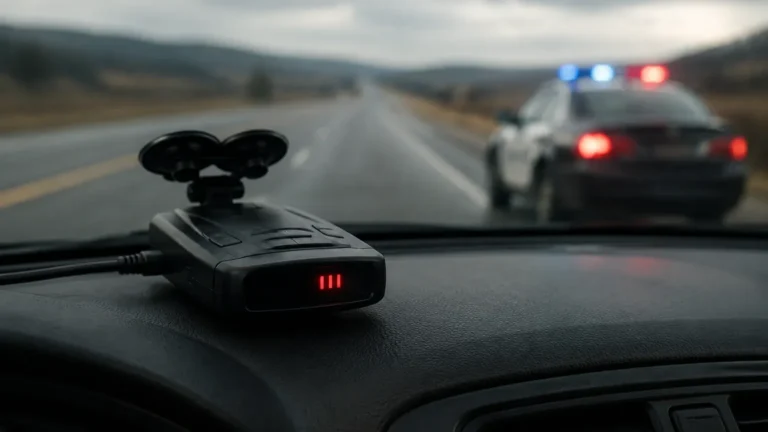
In the high-stakes environment of industrial automation, the reliability of level measurement instrumentation is matched only by the reliability of the supply chain that delivers it. Whether managing a water treatment facility, a chemical processing plant, or an oil and gas refinery, engineers and procurement specialists understand that downtime is the enemy of profitability. When a critical sensor fails, the immediate need for a replacement often leads to a search for logistical solutions, such as a veho driver support phone number 24 7 near me, to ensure that the necessary hardware reaches the site without delay.
However, before addressing the logistics of delivery and support, it is essential to understand the technical foundations of the instruments being transported. Level measurement is not a one-size-fits-all discipline. Choosing the right technology—be it radar, ultrasonic, or hydrostatic—requires a deep dive into measurement principles and application-specific variables.
Fundamental Principles of Level Measurement
Before selecting a level meter for industrial use, it is critical to understand how different technologies interact with the medium being measured. Welk provides a range of solutions based on several core physical principles.
1. Radar Level Measurement (Time of Flight)
Radar level meters, particularly those operating at high frequencies like 80GHz, utilize the Time of Flight (ToF) principle. The instrument emits a high-frequency microwave pulse that travels to the surface of the medium, reflects, and returns to the sensor. The distance is calculated based on the time interval between emission and reception. Because microwaves are unaffected by temperature fluctuations, vacuum, or high pressure, radar is often considered the gold standard for complex chemical and oil applications.
2. Ultrasonic Level Sensing (Acoustic Waves)
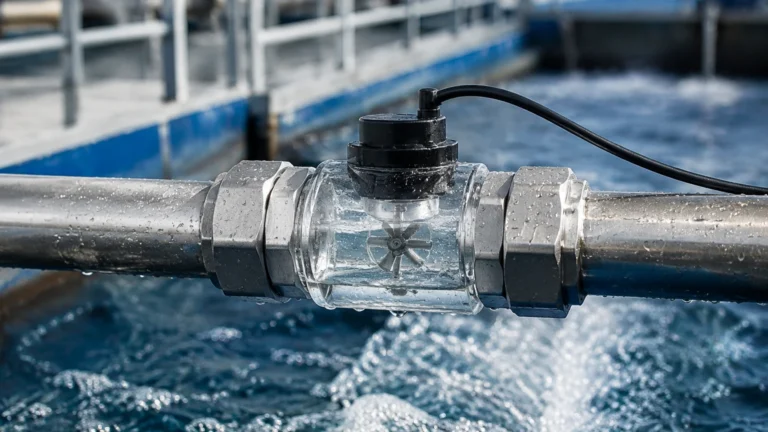
Ultrasonic sensors also use the ToF principle but rely on sound waves rather than electromagnetic waves. A transducer emits an ultrasonic pulse that bounces off the liquid or solid surface. While cost-effective and ideal for water treatment, these sensors are sensitive to air temperature changes and heavy foam, which can absorb the sound signal.
3. Hydrostatic Level Transmitters (Pressure)
This method measures the pressure exerted by a liquid column at a specific point. The pressure is directly proportional to the height of the liquid and its density ($P = \rho \cdot g \cdot h$). Hydrostatic transmitters are robust and widely used in open tanks and deep wells, though they require accurate density data to maintain precision.
4. Magnetic Level Gauges (Buoyancy)
Magnetic gauges utilize a float containing a permanent magnet. As the liquid level rises or falls, the float moves accordingly, acting upon a series of magnetic flags or a transmitter outside the chamber. This provides a clear visual indication and a reliable electronic signal without the need for direct contact between the electronics and the process medium.
The Role of Logistics: Why Support Matters
In the context of modern industrial maintenance, the phrase veho driver support phone number 24 7 near me represents the intersection of technology and logistics. When a facility requires an urgent upgrade or a replacement part from a Main Page of a trusted manufacturer like Welk, the speed of the "last mile" delivery is paramount.
Logistics providers specialized in rapid delivery ensure that sensitive electronic instruments are handled correctly and delivered to remote industrial sites. Access to 24/7 driver support ensures that if a delivery vehicle encounters an issue or if a site's receiving dock has specific after-hours requirements, the communication remains seamless. For the B2B sector, this level of support is not just a convenience; it is a risk-mitigation strategy.
Practical Selection Table for Level Technologies
Choosing the correct instrument involves balancing performance requirements with environmental constraints. The following table provides a general guide for technology selection.
| Technology | Ideal Medium | Max Range (Typical) | Pressure Limits | Key Advantage |
| :— | :— | :— | :— | :— |
| 80GHz Radar | Corrosive liquids, solids | Up to 120m | Up to 160 bar | Unaffected by vapor/dust |
| Ultrasonic | Water, wastewater | 15m – 30m | Atmospheric | Non-contact, low cost |
| Hydrostatic | Clean liquids, oils | 200m (cable) | High depth | Simple installation |
| Magnetic Gauge | Toxic/High-pressure liquids | 6m (standard) | Up to 320 bar | Visual + Electronic output |
| Level Switch | Overfill protection | N/A (Point) | Varies | High reliability safety |
Installation Considerations for Industrial Accuracy
Even the most advanced radar or ultrasonic meter will fail to provide accurate data if installed incorrectly. Engineers must consider the following factors during the design phase:
* The Blanking Distance (Dead Zone): Every non-contact sensor has a minimum distance it cannot measure near the transducer face. For ultrasonic sensors, this is typically 0.2m to 0.5m. Ensure the maximum liquid level does not enter this zone.
* Internal Obstructions: Agitators, ladders, and heating coils can create false echoes. While modern software can "map out" these obstructions, it is best to install the sensor in a location with a clear line of sight to the surface.
* Nozzle Geometry: The height and diameter of the mounting nozzle can interfere with the signal beam. For 80GHz radar, the narrow beam angle (often as low as 3 degrees) allows for installation in narrower nozzles compared to older 26GHz models.
* Environmental Protection: In outdoor installations, sunshields are recommended to prevent temperature-induced errors in ultrasonic sensors and to protect the electronics of radar units from extreme UV exposure.

Limitations and Maintenance
While Welk instruments are designed for longevity, users must be aware of specific limitations:
1. Dielectric Constant (Dk): Radar meters require a medium with a sufficient dielectric constant to reflect the signal. For materials with a very low Dk (like some liquefied gases), a guided wave radar or a magnetic level gauge may be more appropriate.
2. Foam and Turbulence: Heavy, dense foam can dissipate ultrasonic signals. In such cases, a hydrostatic transmitter or a bypass magnetic gauge is often more reliable.
3. Build-up: In sticky or viscous applications, material build-up on the sensor face can degrade performance. Regular inspection and the use of PTFE-coated antennas can mitigate this risk.
For ongoing support and detailed technical documentation, engineers are encouraged to visit the Main Page to Review product options and application support.
Frequently Asked Questions (FAQ)
Q: How do I choose between radar and ultrasonic for water tank monitoring?
A: For standard water tanks at ambient temperature, ultrasonic is cost-effective. However, if the tank is prone to steam, foam, or high pressure, radar is the superior choice due to its immunity to gas-space conditions.
Q: Can hydrostatic transmitters be used in pressurized tanks?
A: A single hydrostatic transmitter cannot account for the headspace pressure in a sealed tank. In these applications, a differential pressure (DP) transmitter is required to subtract the top pressure from the bottom total pressure.
Q: What is the benefit of a 24/7 support structure for logistics?
A: In B2B operations, equipment failure can cost thousands of dollars per hour. Having access to a veho driver support phone number 24 7 near me ensures that if a replacement part is in transit, any logistical hurdles can be resolved instantly, keeping the project on schedule.
Q: Do magnetic level gauges require power?
A: The visual indicator (the flags) operates purely on magnetic force and requires no power. However, if you add a reed chain transmitter or a magnetostrictive sensor for remote monitoring, a standard 24V DC power supply is typically needed.
Conclusion
Successful level measurement depends on the synergy between high-quality hardware and a robust support network. From the initial selection of a Welk radar meter to the final "last mile" delivery facilitated by responsive logistics, every step is vital. By understanding the physical principles of measurement and preparing for the logistical realities of industrial maintenance, facilities can ensure continuous, safe, and efficient operations. For more information on specific models and customized OEM/ODM services, visiting the Main Page is the recommended first step for any engineering project.
Download Veho Driver Support Phone Number 24 7 Near Me as a PDF