Wastewater from Food Processing Industry
Wastewater from Food Processing Industry
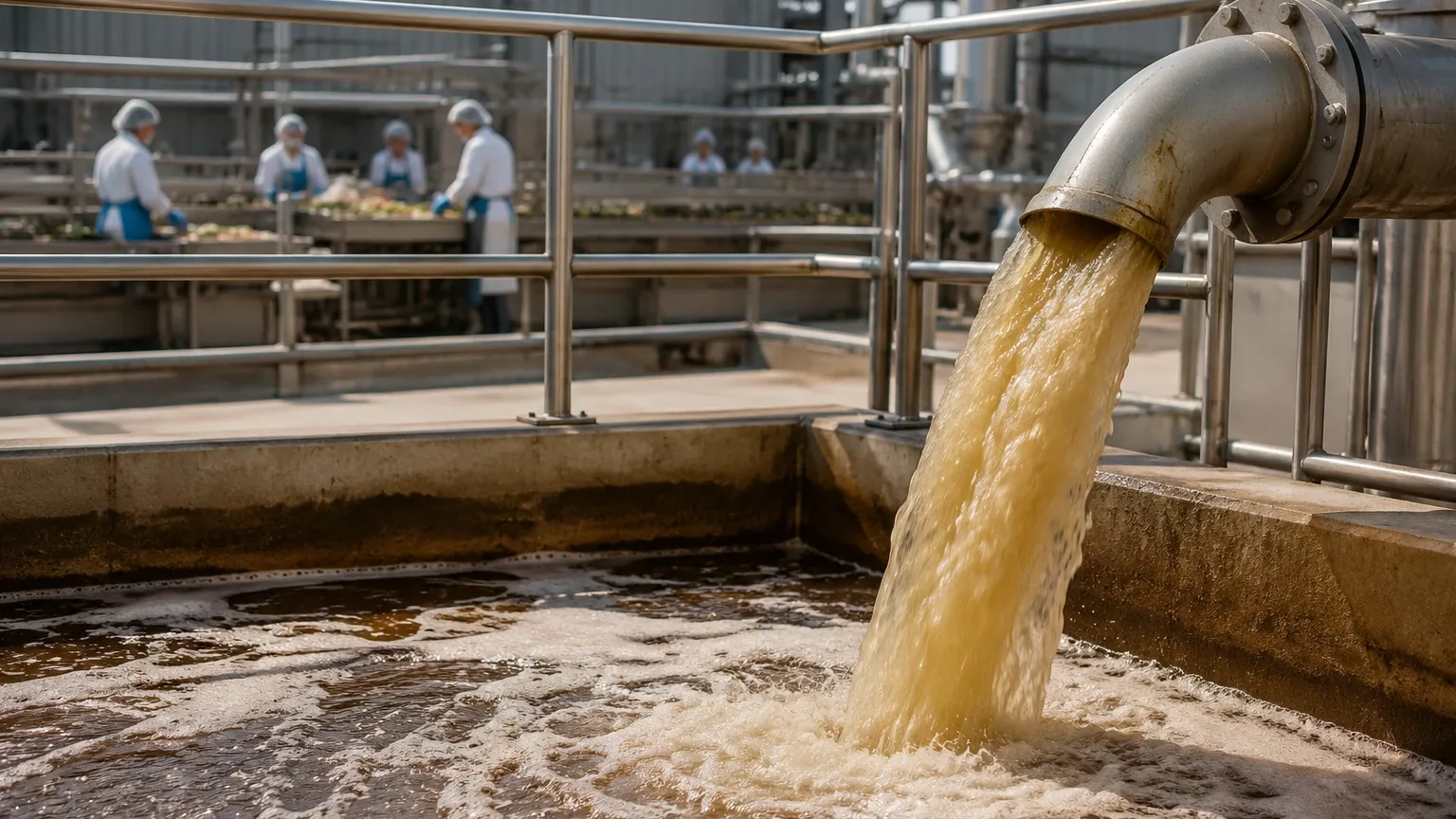
Managing wastewater from food processing industry operations presents a unique set of challenges for plant engineers and environmental managers. Unlike standard municipal sewage, food processing effluent is often characterized by high concentrations of biological oxygen demand (BOD), chemical oxygen demand (COD), suspended solids, and varying levels of fats, oils, and grease (FOG). To ensure environmental compliance and operational efficiency, precise level measurement within treatment systems is critical.
Effective management of these fluids requires a deep understanding of the physical and chemical properties of the waste stream. Whether dealing with dairy wash-down, meat processing runoff, or vegetable blanching water, the instrumentation selected must withstand corrosive cleaning agents, fluctuating temperatures, and the presence of foam or heavy vapors. This guide explores the technical requirements for monitoring level in these demanding environments and provides a framework for selecting the most reliable measurement technologies.
Principles of Level Measurement in Wastewater Applications
Before selecting an instrument, it is essential to understand the physical principles that govern different measurement technologies. In the context of wastewater from food processing industry facilities, four primary methods are commonly employed: ultrasonic, radar, hydrostatic, and point-level switching.
Ultrasonic Level Measurement (Non-Contact)
Ultrasonic sensors operate on the "Time-of-Flight" principle. The sensor emits a high-frequency acoustic pulse that travels through the air, reflects off the surface of the wastewater, and returns to the transducer. By measuring the time interval between emission and reception, the device calculates the distance to the liquid surface. Because this is a non-contact method, it is often preferred for corrosive or dirty fluids where mechanical contact would lead to sensor fouling.
Radar Level Measurement (Non-Contact)
Radar transmitters utilize electromagnetic waves, typically in the 26 GHz or 80 GHz frequency range. Similar to ultrasonic sensors, they use the Time-of-Flight principle (or Frequency Modulated Continuous Wave – FMCW). However, because radar waves are electromagnetic rather than mechanical, they are not affected by air temperature fluctuations, heavy steam, or vacuum conditions. This makes radar highly effective for wastewater tanks located indoors where steam from hot wash-down processes is prevalent.
Hydrostatic Level Measurement (Contact)
Hydrostatic transmitters measure the pressure exerted by the liquid column above the sensor. The principle is based on the formula $P = \rho gh$, where $P$ is pressure, $\rho$ is the density of the liquid, $g$ is gravity, and $h$ is the height of the liquid. These sensors are submerged at the bottom of a pit or tank. They are exceptionally reliable for deep sumps but require consideration of the liquid's density, which may change if the concentration of solids in the wastewater fluctuates significantly.
Point Level Detection
Level switches are used for discrete control, such as high-level alarms or pump run-dry protection. Technologies include tuning forks (vibration-based) or float switches. In food processing wastewater, tuning forks are often favored because they can be designed to ignore heavy coating or buildup, which is common in meat and dairy processing.
Key Evaluation Criteria for Instrument Selection
When designing a monitoring system for wastewater from food processing industry streams, engineers must evaluate several site-specific factors to ensure long-term accuracy.
1. Presence of Foam: Many food processing activities, particularly those involving proteins or detergents, generate significant surface foam. Ultrasonic signals are often absorbed by foam, leading to signal loss. In these cases, high-frequency radar (80 GHz) is the superior choice as it can penetrate thin foam layers or detect the top of the liquid through the foam.
2. Fats, Oils, and Grease (FOG): Wastewater from meat processing or commercial kitchens contains high levels of grease that can solidify on sensors. Contact-based sensors, such as hydrostatic probes, must have large, flush-mounted diaphragms to prevent clogging. Non-contact sensors are generally better suited for high-FOG environments.
3. Chemical Compatibility: The wastewater may contain high concentrations of acids or alkalis used during Clean-in-Place (CIP) cycles. The wetted materials of any submerged sensor must be resistant to these chemicals. Common materials include PVDF, PTFE, or high-grade 316L stainless steel.
4. Tank Geometry and Obstructions: Internal structures like agitators, ladders, or inlet pipes can create false echoes for non-contact sensors. Modern radar and ultrasonic units feature "false echo suppression" software to ignore these fixed obstructions.
Practical Selection Table for Food Processing Wastewater
The following table provides a comparison of common level measurement technologies based on typical application requirements in the food industry.
| Technology | Typical Application | Advantages | Limitations |
| :— | :— | :— | :— |
| Ultrasonic | Open sumps, effluent channels | Cost-effective, non-contact | Affected by heavy foam and steam |
| 80 GHz Radar | Process tanks, buffer tanks | Extremely accurate, ignores steam | Higher initial investment |
| Hydrostatic | Deep lift stations, reservoirs | Simple installation, unaffected by foam | Sensitive to density changes |
| Magnetic Gauge | External bypass on boilers | Visual and electronic feedback | Not suitable for high-solids waste |
| Vibration Switch | Overfill protection | Robust, ignores buildup | Point level only (no continuous output) |
Installation Considerations and Best Practices
Proper installation is as critical as selecting the right technology. For wastewater from food processing industry applications, follow these engineering guidelines:
* Dead Zones: Every non-contact sensor has a "dead zone" (blocking distance) near the face of the transducer where measurement is impossible. Ensure the sensor is mounted high enough that the maximum liquid level never enters this zone.
* Beam Angle and Wall Interference: Non-contact sensors emit signals in a cone. If the sensor is mounted too close to a flat wall, the signal may reflect off the wall rather than the liquid. As a rule of thumb, maintain a distance from the wall of at least 10% of the total tank height.
* Stilling Wells: In highly turbulent tanks (e.g., near an agitator or a high-volume inlet), a stilling well—a vertical pipe that dampens surface turbulence—can be used to provide a stable surface for the sensor to measure. This is particularly useful for ultrasonic and radar applications.
* Mounting Position: Sensors should never be mounted directly above the fill inlet. The falling liquid will interfere with the signal and may cause physical damage to the instrument over time.
Limitations of Level Technologies
While modern instrumentation is highly advanced, certain environmental factors remain challenging. For instance, ultrasonic sensors are limited by the speed of sound, which changes with air temperature. While most sensors have integrated temperature compensation, they cannot account for rapid temperature gradients across the vapor space.
Similarly, hydrostatic sensors are "blind" to changes in the headspace pressure. If used in a pressurized tank, a differential pressure (DP) setup is required to subtract the headspace pressure from the total pressure at the bottom. In the wastewater from food processing industry, most tanks are vented to the atmosphere, making standard hydrostatic probes sufficient, but this must be verified during the design phase.
Frequently Asked Questions (FAQ)
Q: How do I handle heavy steam in a wastewater pit?
A: Radar is the recommended technology for steam-heavy environments. Unlike ultrasonic waves, radar signals are not attenuated by water vapor or temperature fluctuations in the air.
Q: Can I use a hydrostatic sensor if the wastewater density changes?
A: If the density change is significant (e.g., moving from pure water to a thick slurry), the hydrostatic sensor will report an incorrect level. In these cases, a non-contact method like radar is preferred as it is independent of liquid density.
Q: What maintenance is required for wastewater level sensors?
A: Non-contact sensors require minimal maintenance, usually just a periodic check for condensation or cobwebs on the lens. Submerged sensors should be inspected every 6–12 months for buildup of grease or biological growth on the diaphragm.
Conclusion
Selecting the right instrumentation for wastewater from food processing industry applications requires balancing accuracy requirements against the harsh realities of the process environment. By understanding the measurement principles and the specific characteristics of the waste stream, engineers can implement solutions that reduce downtime and ensure environmental compliance. For a comprehensive range of industrial measurement tools tailored to these applications, professionals should Review product options and application support on the Welk Main Page to find the specific configuration that fits their facility's needs.