Utah Rural Water Association
Utah Rural Water Association
The management of water resources in Utah presents a unique set of challenges, ranging from high-altitude desert climates to the logistical complexities of serving remote, rural populations. The Utah Rural Water Association (URWA) plays a pivotal role in this landscape, providing technical assistance, training, and advocacy for the state’s small water and wastewater systems. For engineers and operators working within these systems, maintaining accurate data on tank levels, reservoir volumes, and well depths is essential for both regulatory compliance and operational efficiency.
Reliable level measurement is the backbone of modern water infrastructure. Without precise instrumentation, operators face risks such as pump dry-running, reservoir overflows, and inaccurate billing or water rights reporting. This guide explores the intersection of professional level measurement technology and the needs of systems supported by the Utah Rural Water Association, focusing on the selection, installation, and maintenance of industrial-grade sensors.
The Role of the Utah Rural Water Association in Infrastructure Management
The Utah Rural Water Association serves as a non-profit organization dedicated to helping small water and wastewater systems provide safe, clean water to their communities. In Utah, where water is a precious and strictly regulated commodity, the URWA provides the necessary bridge between state regulations (such as those from the Utah Division of Drinking Water) and the practical, day-to-day operations of local districts.
Key areas where URWA support and accurate level measurement converge include:
* Regulatory Compliance: Ensuring that water storage levels meet minimum fire flow requirements and health standards.
* Operational Efficiency: Optimizing pump schedules based on real-time tank levels to reduce energy costs, particularly during peak demand periods.
* Resource Conservation: Detecting leaks or system losses by comparing production data with storage level trends.
* Operator Certification: Providing the training necessary for personnel to understand and maintain the sophisticated SCADA (Supervisory Control and Data Acquisition) systems that rely on level sensor inputs.
For systems looking to upgrade their monitoring capabilities, reviewing professional equipment options is a critical first step. You can explore a wide range of industrial solutions on the Main Page of leading instrumentation providers to understand the current technological landscape.
Level Measurement Principles for Water Systems
Before selecting a device, it is essential to understand the physical principles that govern different level measurement technologies. In the context of the Utah Rural Water Association’s member systems, three primary technologies are most common: Ultrasonic, Radar, and Hydrostatic pressure.
Ultrasonic Level Measurement
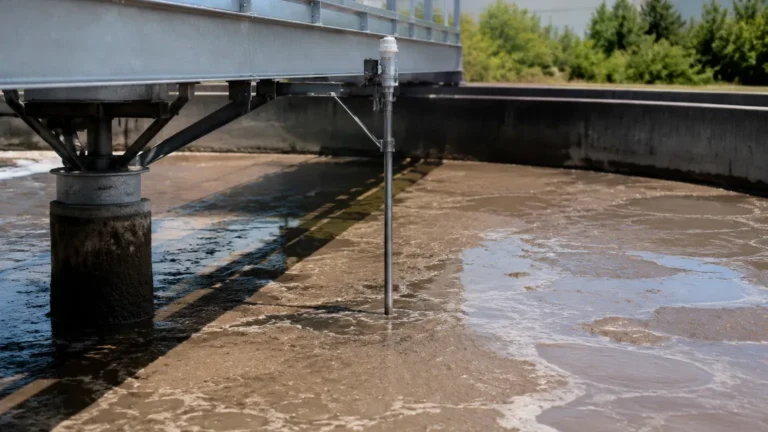
Ultrasonic sensors operate on the "time-of-flight" principle. The sensor emits a high-frequency sound pulse that travels through the air, reflects off the surface of the liquid, and returns to the transducer. The device calculates the distance based on the time it takes for the echo to return.
* Pros: Non-contact, relatively low cost, and easy to install.
* Cons: Sensitive to air temperature fluctuations, heavy foam, and surface turbulence. In Utah’s varied climate, temperature compensation is mandatory for ultrasonic accuracy.
Radar Level Measurement
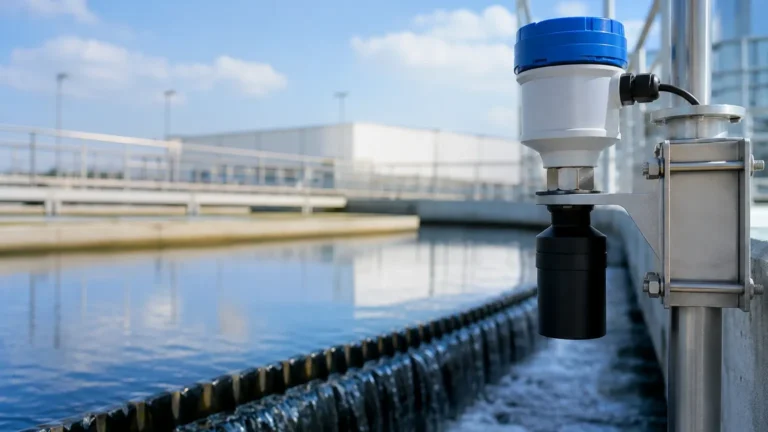
Radar sensors also use time-of-flight but utilize electromagnetic waves (microwaves) rather than sound. These waves travel at the speed of light and are largely unaffected by air temperature, pressure, or vacuum conditions.
* Pros: Extremely accurate, non-contact, and immune to vapor or dust. High-frequency radar (e.g., 80 GHz) can penetrate narrow spaces and ignore internal tank obstructions.
* Cons: Higher initial investment than ultrasonic sensors.
* Applications: Ideal for chemical storage tanks (like chlorine or alum) and large outdoor reservoirs where wind and temperature shifts are frequent.
Hydrostatic Level Measurement
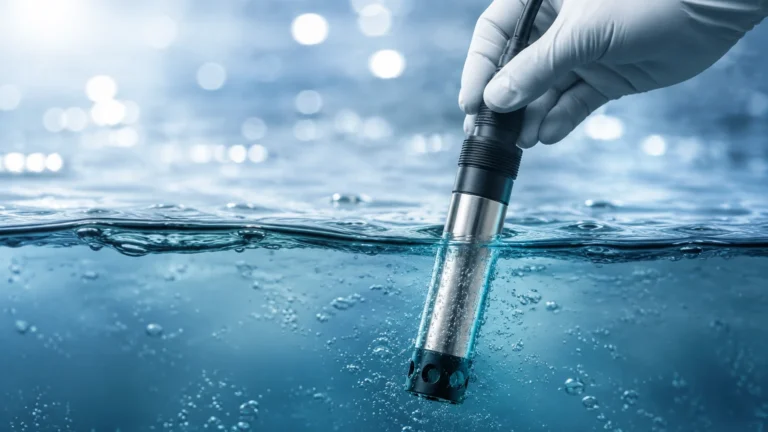
This technology measures the liquid level by sensing the pressure exerted by the liquid column above a submerged sensor. The principle is based on the formula: *Pressure (P) = Density (ρ) × Gravity (g) × Height (h)*.
* Pros: Highly reliable for deep wells and vented tanks. It is not affected by surface foam or turbulence.
* Cons: Requires the sensor to be in contact with the liquid. In vented systems, the sensor must be compensated for changes in atmospheric pressure (barometric compensation).
Practical Selection Table for Water and Wastewater Applications
Choosing the right instrument depends on the specific requirements of the site. The following table provides a comparison of technologies based on typical rural water scenarios.
| Application Type | Recommended Technology | Typical Range | Key Advantage |
| :— | :— | :— | :— |
| Potable Water Storage Tank | Radar (Non-contact) | 0–30m (0–100ft) | High accuracy; no contact with drinking water. |
| Deep Groundwater Well | Hydrostatic (Submersible) | 0–200m+ (0–650ft+) | Reliable in narrow boreholes; handles high head pressure. |
| Wastewater Lift Station | Ultrasonic or Radar | 0–10m (0–33ft) | Non-contact prevents fouling from grease and solids. |
| Chemical Feed Tank | Radar (80 GHz) | 0–5m (0–16ft) | Resists corrosive vapors; high precision for small volumes. |
| Open Channel Flow | Ultrasonic | 0–5m (0–16ft) | Cost-effective for flumes and weirs. |
Installation Considerations for Utah’s Environment
Systems associated with the Utah Rural Water Association often operate in harsh environments, from the freezing temperatures of the Uintah Basin to the intense heat of Southern Utah. Proper installation is critical to ensuring the longevity of level measurement instruments.
1. Temperature Extremes and Condensation
In many parts of Utah, diurnal temperature swings can exceed 20°C (36°F). This leads to condensation on sensor faces. When using ultrasonic sensors, ensure they have a "self-cleaning" or vibrating face feature. For radar, a PTFE-faced antenna can help shed moisture droplets that might otherwise attenuate the signal.
2. Lightning and Surge Protection
Rural water assets like elevated tanks and remote wells are often the highest points in the local landscape, making them targets for lightning. All level transmitters should be installed with proper grounding and, where possible, secondary surge protection modules on the 4-20mA loop or RS485 communication lines.
3. Atmospheric Pressure Compensation
For hydrostatic sensors used in Utah’s high-altitude regions, atmospheric pressure is significantly lower than at sea level. If using a submersible pressure transducer, it must either use a vented cable (to allow the sensor to "breathe" and automatically cancel out barometric pressure) or be paired with a separate barometric sensor in the SCADA system to calculate the true liquid level.
4. Mounting and Stilling Wells
In tanks with significant turbulence or internal structures (like ladders or braces), a stilling well—a vertical pipe that dampens surface movement—can provide a stable environment for the sensor. This is particularly useful for hydrostatic and ultrasonic technologies.

Limitations and Common Risks
While modern level meters are highly advanced, they are not "set and forget" devices. Operators should be aware of the following limitations:
* Dielectric Constant (Radar): Radar relies on the reflectivity of the liquid. While water has a high dielectric constant (approx. 80) and is easy to measure, some oils or hydrocarbons used in industrial automation have low dielectrics, requiring specialized high-sensitivity radar units.
* Signal Blocking: In ultrasonic applications, heavy steam or extremely dense foam can absorb the sound pulse, causing the sensor to lose the signal (a "Lost Echo" error).
* Build-up and Scaling: In wastewater or hard water applications, mineral scaling or biological growth on the sensor face can degrade performance. Regular visual inspections are recommended.
* Power Constraints: Many remote sites in Utah rely on solar power. Selecting low-power instrumentation (e.g., loop-powered 2-wire transmitters) is essential to ensure continuous operation during winter months with limited sunlight.
Information Confirmation Before Implementation
Before proceeding with a procurement or upgrade plan, the Utah Rural Water Association often recommends that system managers confirm several key pieces of information:
1. Media Compatibility: Is the liquid corrosive? Does it contain solids that could clog a hydrostatic sensor?
2. Process Conditions: What are the maximum and minimum temperatures and pressures the sensor will encounter?
3. Integration Requirements: Does the existing SCADA system require a 4-20mA analog signal, or a digital protocol like Modbus RTU or HART?
4. Physical Constraints: Is there a clear line of sight for a non-contact sensor, or are there internal obstructions?
By addressing these factors early, water districts can avoid costly retrofits and ensure that their level measurement systems provide reliable data for years to come.
Frequently Asked Questions (FAQs)
Q: How often should level sensors be calibrated?
A: For most municipal water applications, an annual calibration check is standard. However, for critical billing or water rights applications, semi-annual verification may be required. Many modern radar and ultrasonic units feature internal self-diagnostics that can alert operators to calibration drift.
Q: Can these sensors be used in hazardous locations?
A: Yes. Many industrial level meters are available with FM, CSA, or ATEX certifications for use in Class I, Div 1 or Div 2 environments, which may be necessary for certain wastewater treatment processes or chemical storage areas.
Q: What is the benefit of 80 GHz radar over older 26 GHz models?
A: The 80 GHz frequency allows for a much narrower beam angle. This means the signal is less likely to hit the sides of a tank or internal pipes, making it much easier to install in small or crowded vessels. It also provides better resolution for measuring very small changes in level.
Q: How does the Utah Rural Water Association help with these technologies?
A: URWA provides hands-on training sessions and annual conferences where operators can interact with vendors, see equipment demonstrations, and learn about the latest best practices in water system automation and monitoring.
For those looking to evaluate specific models and technical specifications for their next project, visiting the Main Page of an experienced manufacturer provides access to detailed data sheets and application engineering support tailored to the needs of the water industry.