Wastewater Lifting Station
Wastewater Lifting Station
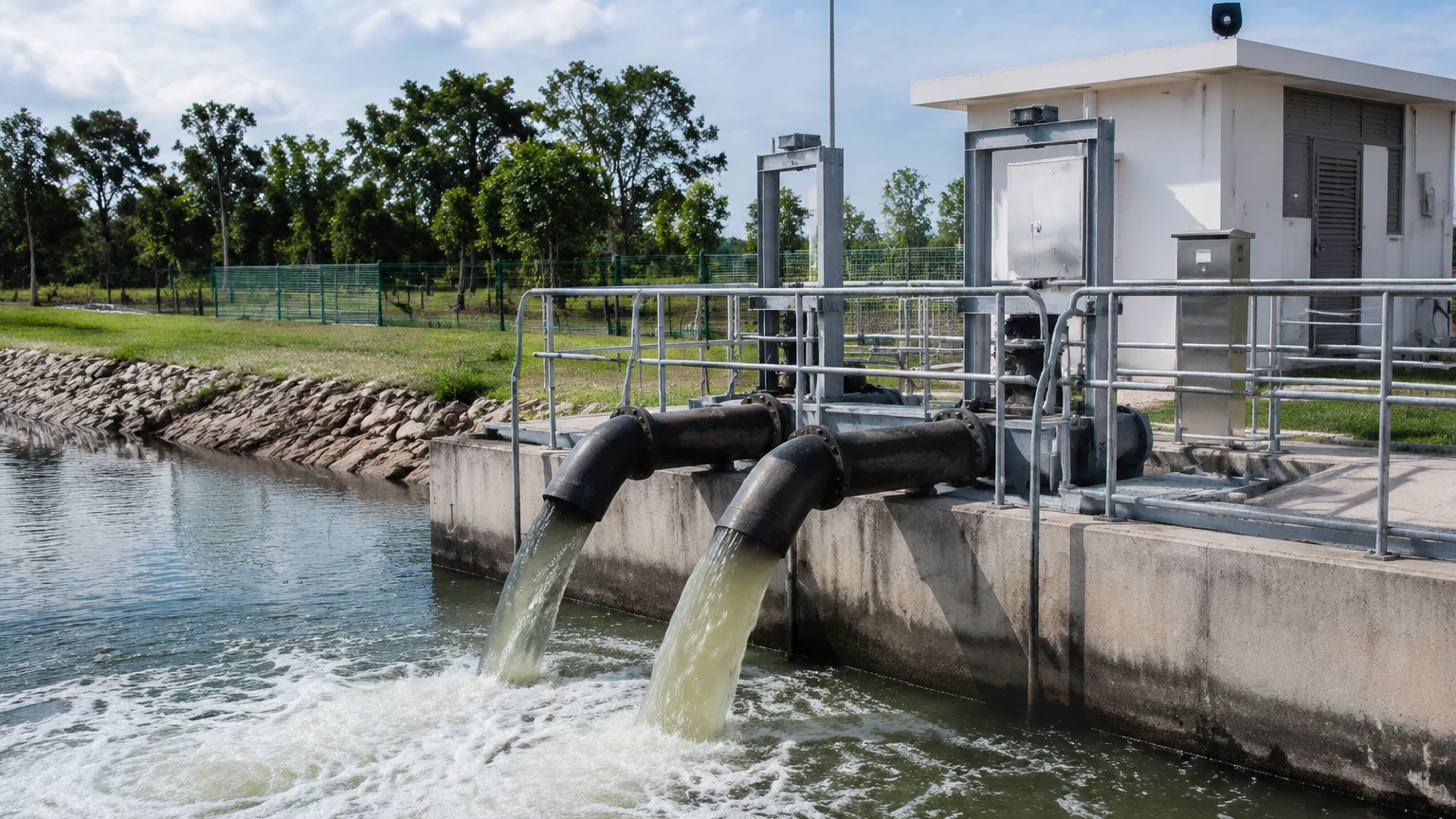
A wastewater lifting station, commonly referred to as a lift station or pump station, is a critical component of modern civil and industrial infrastructure. Its primary function is to transport sewage or industrial effluent from lower to higher elevations when the gradient of the terrain does not allow for natural gravity flow. These stations are essential in preventing the accumulation of waste and ensuring that fluids reach treatment plants efficiently.
In the context of industrial automation, the reliability of a wastewater lifting station depends almost entirely on the accuracy of its level measurement system. The level sensors dictate when pumps start and stop, provide high-level alarms to prevent overflows, and protect pumps from dry-running. Selecting the appropriate instrumentation requires a deep understanding of measurement principles and the specific challenges posed by the wastewater environment.
Core Measurement Principles for Lift Stations
To design an effective control system for a wastewater lifting station, engineers must first understand the physics behind the various level measurement technologies available. Each principle offers distinct advantages depending on the pit depth, fluid composition, and budget.
Hydrostatic Pressure Measurement
Hydrostatic level transmitters operate on the principle that the pressure at the bottom of a liquid column is directly proportional to its height. The formula used is $P = \rho gh$, where $P$ is pressure, $\rho$ is the density of the fluid, $g$ is gravity, and $h$ is the height of the liquid.
In a lifting station, a submersible pressure transducer is lowered to the bottom of the wet well. The sensor measures the weight of the water above it. To ensure accuracy, these sensors include a vented cable that allows the internal sensing element to compensate for changes in atmospheric pressure. This technology is valued for its simplicity and ease of installation, though it is susceptible to errors if heavy sludge or debris accumulates around the sensor diaphragm.
Ultrasonic (Time-of-Flight)
Ultrasonic sensors are non-contact devices that emit high-frequency sound pulses. These pulses travel through the air, reflect off the surface of the wastewater, and return to the sensor. The distance is calculated based on the time it takes for the pulse to return, using the speed of sound.
Because the sensor does not touch the liquid, it is immune to the corrosive effects of the wastewater. However, ultrasonic waves are sensitive to air temperature fluctuations and can be scattered by heavy foam or steam, which are common in many industrial lifting stations.
Radar (Microwave) Technology
Similar to ultrasonic sensors, radar level meters use time-of-flight principles but utilize electromagnetic microwave pulses instead of sound waves. High-frequency radar (typically 26GHz or 80GHz) is unaffected by air temperature, pressure, or the presence of vapors and gases like hydrogen sulfide (H2S).
Radar is increasingly becoming the preferred choice for wastewater lifting stations due to its high precision and narrow beam angle, which allows it to operate effectively even in cramped wet wells with internal obstructions like ladders or pipes. For more technical specifications on these sensors, engineers can consult the Main Page for detailed product comparisons.
Point Level Switches
While continuous measurement is preferred for pump control, point level switches (such as float switches or conductive probes) are often used as secondary safety backups. A float switch operates mechanically; as the water level rises, the float tips, closing a circuit to trigger an alarm or an emergency pump start. While simple, they are prone to "ragging"—the accumulation of debris that can prevent the float from moving freely.
Environmental Challenges in Wastewater Applications
Designing a wastewater lifting station requires addressing several harsh environmental factors that can degrade sensor performance over time.
1. Corrosive Gases: Wastewater decomposition often produces hydrogen sulfide (H2S). When combined with moisture, this forms sulfuric acid, which can corrode stainless steel and standard electronics. Sensors used in these environments should ideally feature PVDF or Tefzel housings.
2. Foam and Turbulence: Inflow into a lifting station can be turbulent, creating surface foam. Foam absorbs ultrasonic signals, leading to "lost echo" errors. In such cases, radar or hydrostatic sensors are more reliable.
3. Grease and Solids: Household and industrial waste often contain fats, oils, and grease (FOG). These substances can coat sensors. If a hydrostatic sensor is used, a flush-diaphragm design is necessary to prevent clogging.
4. Condensation: In humid wet wells, condensation can form on the face of non-contact sensors. Modern radar units often feature specialized antenna designs that allow droplets to run off without interfering with the signal.
Comparative Analysis and Selection Criteria
Choosing the right technology involves balancing initial capital expenditure (CAPEX) with long-term operational expenditure (OPEX). The following table provides a practical reference for selection based on common lifting station requirements.
| Feature | Hydrostatic | Ultrasonic | Radar (80GHz) | Float Switch |
| :— | :— | :— | :— | :— |
| Contact Type | Contact (Submerged) | Non-contact | Non-contact | Contact |
| Accuracy | ±0.25% to 0.5% | ±0.25% | ±1 mm to 2 mm | N/A (Point only) |
| Maintenance | Moderate (Cleaning) | Low | Very Low | High (Debris removal) |
| Foam Resistance | Excellent | Poor | Good | Moderate |
| Vapor/Gas Impact | None | High | None | None |
| Ideal Depth | 1m – 20m | 0.5m – 10m | 0.1m – 30m+ | N/A |
| Typical Cost | Low to Mid | Mid | Mid to High | Low |
Installation Best Practices for Reliable Operation
Proper installation is as critical as sensor selection. Even the most advanced radar meter will fail if it is positioned incorrectly within the wastewater lifting station.
Positioning and Dead Zones
Every non-contact sensor has a "dead zone" or "blocking distance" directly beneath the sensor face where it cannot measure. The sensor must be mounted high enough so that the maximum liquid level never enters this zone. Conversely, it should be positioned away from the side walls to avoid signal interference, typically maintaining a distance of at least 200 mm from the wall for every 5 meters of depth.
Avoiding Turbulence
The sensor should not be installed directly above the inflow pipe. The turbulence and air entrainment caused by falling water will create inconsistent readings. If space is limited, a stilling well (a vertical pipe with vent holes) can be installed to provide a calm surface for the sensor to measure.
Cable Management and Grounding
For hydrostatic sensors, the vented cable must be secured to prevent the sensor from swinging during pump cycles. The vent tube should terminate in a dry junction box with a desiccant cartridge to prevent moisture from traveling down the tube and damaging the internal electronics. Proper grounding is also essential to protect the instrumentation from lightning strikes, which are a common cause of failure in outdoor lifting stations.
Control Logic and System Integration
The level signal (usually a 4-20mA analog output or a digital Modbus/HART signal) is sent to a Pump Control Panel or a PLC. The logic typically follows a "Lead/Lag" configuration:
* Stop Level: All pumps turn off to prevent dry running (e.g., at 0.5 meters).
* Lead Pump Start: The first pump starts when the level reaches a set point (e.g., 2.0 meters).
* Lag Pump Start: If the level continues to rise (e.g., to 3.0 meters), the second pump starts to assist.
* High-Level Alarm: Triggered if the level reaches a critical point (e.g., 4.0 meters), indicating a pump failure or excessive inflow.
Modern systems often include "pump alternation" logic, which rotates the lead pump role each cycle to ensure equal wear and tear on the mechanical components.
Maintenance and Troubleshooting Guidelines
While modern sensors are designed for longevity, a wastewater lifting station is a demanding environment that requires periodic inspection.
* Monthly Inspection: Check for debris or "ragging" on float switches. For ultrasonic sensors, wipe the transducer face to remove spider webs or heavy condensation.
* Quarterly Calibration: Verify the sensor reading against a physical tape measure. Many digital sensors allow for field-calibration via a handheld programmer or smartphone app.
* Annual Cable Check: Inspect the outer jacket of submersible cables for signs of cracking or chemical degradation. Ensure the desiccant in the junction box is still active (usually indicated by a color change from blue to pink).
Troubleshooting Common Issues
* Erratic Readings: Often caused by signal interference from internal structures or heavy foam. Consider adjusting the sensitivity (gain) or switching to a radar sensor with a narrower beam.
* Fixed Output (e.g., 4mA or 20mA): Usually indicates a loop break or a sensor that has entered a fail-safe state due to a lost echo. Check the power supply and wiring terminals.
Frequently Asked Questions (FAQs)
Q: Can I use an ultrasonic sensor if there is heavy steam in the wet well?
A: It is not recommended. Steam changes the density of the air, which alters the speed of sound and leads to significant measurement errors. A radar level meter or a hydrostatic transmitter is a better choice for steaming environments.
Q: How do I protect my sensors from lightning?
A: Ensure the instrument is connected to a dedicated surge protection device (SPD) within the control panel and that the shield of the signal cable is grounded at only one end to prevent ground loops.
Q: What is the benefit of 80GHz radar over 26GHz radar?
A: 80GHz radar has a much narrower beam angle (often as small as 3 degrees). This allows the signal to pass between narrow gaps in the lifting station infrastructure without hitting pipes or ladders, resulting in a much cleaner signal.
Q: Is it necessary to use a stilling well for hydrostatic sensors?
A: While not always necessary, a stilling well is highly recommended if there is significant turbulence or if the station uses high-velocity mixers to prevent solids from settling. It protects the sensor from mechanical stress and ensures a stable pressure reading.
By carefully evaluating the specific hydraulic and chemical conditions of the wastewater lifting station, engineers can select a level measurement solution that minimizes maintenance and maximizes the operational lifespan of the facility. For further guidance on selecting the right instrument for your specific application, you can visit the Main Page to view comprehensive technical data and support resources.