Water Height Sensor
Water Height Sensor
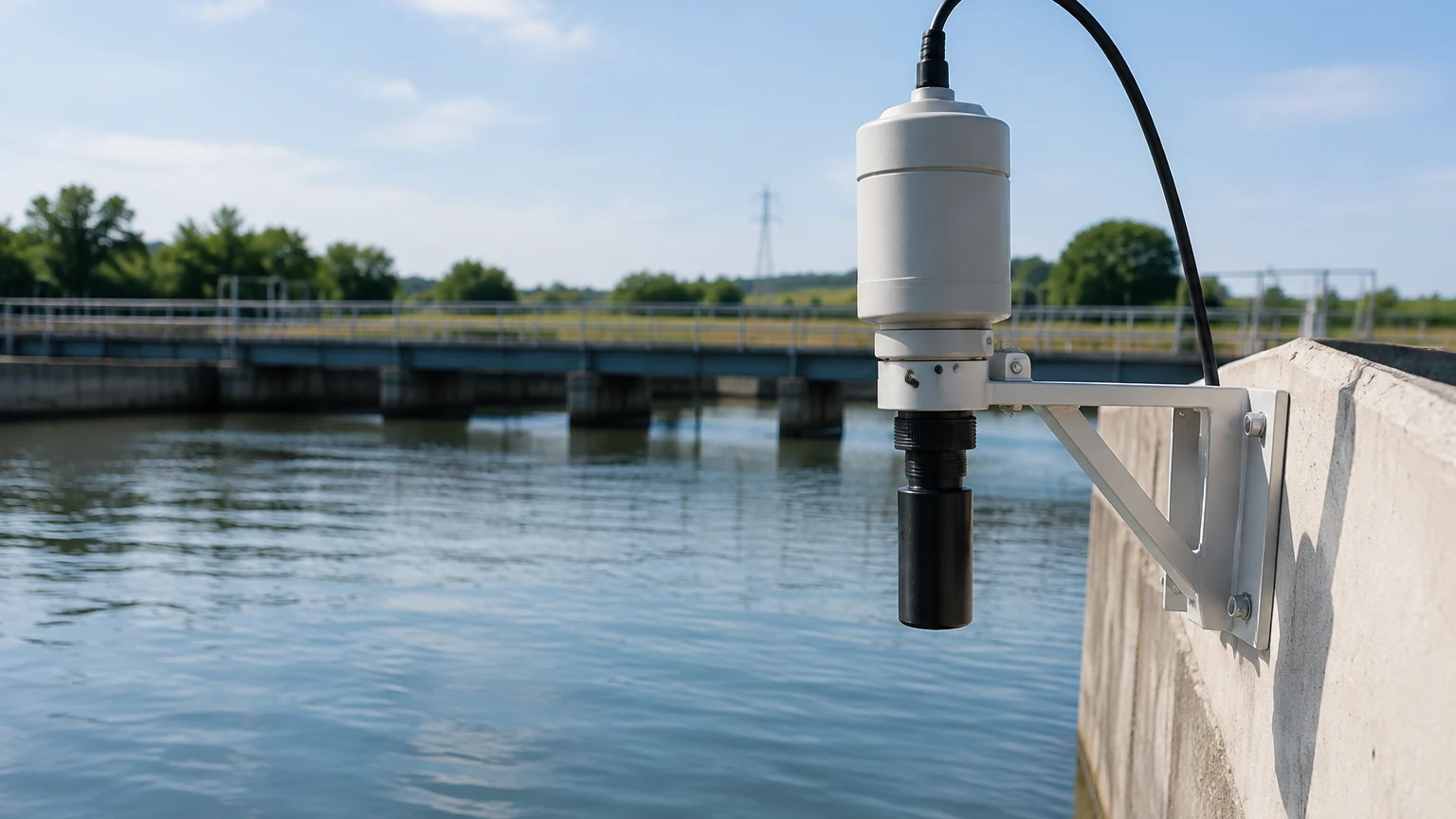
In industrial automation and environmental monitoring, the ability to accurately determine the level of liquid in a vessel or open channel is fundamental. A water height sensor is a device engineered to measure the vertical distance from a fixed reference point to the surface of a water body. These instruments are critical components in systems ranging from municipal water treatment and flood warning networks to chemical processing and industrial cooling towers.
Selecting the appropriate technology requires a deep understanding of the physical principles governing measurement, the environmental conditions of the application, and the specific requirements for accuracy and maintenance. This guide provides a technical overview of the primary sensing technologies used to monitor water height, offering engineering insights into their selection and deployment.
Core Measurement Principles for Water Height Sensors
Modern water height sensors utilize various physical phenomena to translate liquid levels into electrical signals. The most common methods include hydrostatic pressure, ultrasonic time-of-flight, and radar microwave reflection.
Hydrostatic Pressure Measurement
The hydrostatic principle is based on the relationship between the height of a liquid column and the pressure it exerts at a specific depth. According to Pascal's Law, the pressure ($P$) at a depth ($h$) is calculated as:
$P = \rho \cdot g \cdot h$
Where:
* $P$ is the hydrostatic pressure.
* $\rho$ is the density of the liquid (approximately $1000\text{ kg/m}^3$ for water).
* $g$ is the acceleration due to gravity (approximately $9.81\text{ m/s}^2$).
* $h$ is the height of the liquid column above the sensor.
In practice, a submersible hydrostatic level transmitter is placed at the bottom of the tank or well. It measures the pressure exerted by the water and converts it into a 4-20mA or digital signal. To ensure accuracy, these sensors must compensate for atmospheric pressure changes, typically through a vented cable that allows the internal side of the sensor diaphragm to remain at ambient pressure.
Ultrasonic Level Measurement
Ultrasonic sensors are non-contact devices that emit high-frequency sound waves (typically between $20\text{ kHz}$ and $200\text{ kHz}$). The sensor measures the time it takes for the sound pulse to travel to the water surface and return as an echo. The distance ($D$) is calculated using the speed of sound ($v$):
$D = \frac{v \cdot t}{2}$
Since the speed of sound in air is approximately $343\text{ m/s}$ at $20^\circ\text{C}$ but varies with temperature, high-quality ultrasonic sensors include integrated temperature compensation. These sensors are ideal for applications where the liquid is corrosive or contains solids that might damage contact-based probes.
Radar Level Measurement
Radar sensors operate similarly to ultrasonic devices but utilize electromagnetic microwave pulses instead of sound waves. There are two primary types: Pulse Radar and Frequency Modulated Continuous Wave (FMCW) radar.
Because microwaves travel at the speed of light and are unaffected by air temperature, pressure, or vacuum conditions, radar sensors offer superior accuracy and stability. They are particularly effective in environments with heavy steam, dust, or fluctuating gas layers above the water surface. For detailed technical specifications on radar and other measurement technologies, engineers often consult the Main Page of specialized manufacturers like Welk to compare model-specific performance data.
Technical Selection Criteria
Choosing the right water height sensor involves evaluating several operational parameters. A mismatch between the sensor technology and the application environment can lead to measurement drift, frequent maintenance, or total device failure.
1. Accuracy and Repeatability
For billing applications or precise chemical dosing, high-accuracy radar sensors (often within $\pm 2\text{ mm}$) are preferred. For general tank monitoring or sump pump control, hydrostatic or ultrasonic sensors with $\pm 0.5\%$ to $\pm 0.25\%$ full-scale accuracy are usually sufficient.
2. Media Characteristics
* Clean Water: Most technologies work well.
* Wastewater/Sludge: Non-contact sensors (ultrasonic/radar) are preferred to prevent clogging and sensor fouling. If using hydrostatic sensors, a flush-diaphragm design is necessary.
* Corrosive Liquids: Sensors must be constructed from compatible materials such as PVDF, PTFE, or high-grade stainless steel (316L).
3. Environmental Conditions
* Temperature Extremes: Ultrasonic sensors may struggle in very high temperatures due to changes in the speed of sound. Radar is more robust in these scenarios.
* Foam and Turbulence: Surface foam absorbs ultrasonic signals, leading to signal loss. Radar, particularly high-frequency $80\text{ GHz}$ models, can often penetrate light foam or use sophisticated algorithms to filter out noise from turbulent surfaces.
Comparative Analysis of Sensor Technologies
The following table summarizes the typical performance characteristics of common water height sensing technologies.
| Feature | Hydrostatic | Ultrasonic | Radar (Non-Contact) |
| :— | :— | :— | :— |
| Measurement Type | Contact (Submersible) | Non-Contact | Non-Contact |
| Typical Accuracy | $\pm 0.25\% – 0.5\%$ | $\pm 0.25\%$ | $\pm 1\text{ mm} – 5\text{ mm}$ |
| Max Range | Up to $500\text{ m}$ | $0.25\text{ m} – 15\text{ m}$ | $0.1\text{ m} – 120\text{ m}$ |
| Process Temp. | $-20^\circ\text{C}$ to $+80^\circ\text{C}$ | $-40^\circ\text{C}$ to $+80^\circ\text{C}$ | $-40^\circ\text{C}$ to $+200^\circ\text{C}+$ |
| Vessel Pressure | Atmospheric/Static | Atmospheric | Vacuum to $160\text{ bar}+$ |
| Primary Limitation | Density sensitive | Foam/Vapor sensitive | Higher initial cost |
Installation Guidelines and Best Practices
Proper installation is as critical as sensor selection. Even the most advanced water height sensor will provide unreliable data if installed incorrectly.
Mounting Position
For non-contact sensors (ultrasonic and radar), the beam must have a clear path to the water surface. Avoid mounting the sensor near the tank wall, as side-lobe reflections can interfere with the primary signal. Generally, the sensor should be mounted at least $200\text{ mm}$ away from the wall for every $1\text{ m}$ of depth, though this varies by the sensor's beam angle.
Avoiding Obstructions
Internal tank structures such as ladders, agitators, or inflow pipes can create false echoes. While many modern sensors feature "false echo suppression" software, it is best practice to install the sensor where it has a clear "view" of the liquid. If the surface is excessively turbulent, a stilling well (a vertical pipe that stabilizes the water level) should be used.
Dead Zones (Blocking Distance)
Every ultrasonic and radar sensor has a "dead zone" or "blocking distance" directly beneath the transducer face where measurement is impossible. For an ultrasonic sensor, this might be $0.25\text{ m}$ to $0.5\text{ m}$. Ensure the sensor is mounted high enough that the maximum water level never enters this zone.
Hydrostatic Placement
Submersible sensors should be located away from areas of high turbulence, such as directly under an inlet pipe. In deep wells or moving water, the sensor should be secured to prevent it from swinging, which can cause mechanical wear on the cable and signal fluctuations.
Environmental and Operational Limitations
While water height sensors are highly reliable, certain conditions present challenges that engineers must mitigate:
1. Vapor and Condensation: In closed tanks, water vapor can condense on the face of ultrasonic transducers, dampening the signal. Many radar sensors feature specialized antenna designs (like drip-off lenses) to shed condensation and maintain signal integrity.
2. Atmospheric Pressure Changes: For non-vented hydrostatic sensors, a change in barometric pressure will be interpreted as a change in water level. Using a vented cable or a secondary barometric pressure sensor for compensation is essential for accuracy in shallow water applications.
3. Density Fluctuations: Since hydrostatic sensors measure weight, changes in water salinity or temperature (which affect density) will change the level reading even if the actual height remains constant. If density is variable, non-contact methods are superior.
Frequently Asked Questions (FAQ)
Q: How often should a water height sensor be calibrated?
A: For most industrial applications, an annual calibration check is recommended. However, in wastewater applications where buildup is common, quarterly inspections may be necessary to ensure the sensor face or diaphragm is clean.
Q: Can ultrasonic sensors be used in vacuum tanks?
A: No. Sound waves require a medium (air or gas) to travel. In a vacuum, ultrasonic sensors cannot function. Radar sensors are the appropriate choice for vacuum or high-pressure vessels.
Q: What is the benefit of an 80 GHz radar over a 26 GHz radar?
A: Higher frequency radar (80 GHz) has a much narrower beam angle, which allows it to avoid internal obstructions and measure more accurately in small tanks or through narrow nozzles. It also handles condensation and surface turbulence more effectively.
Q: How does cable length affect hydrostatic sensor performance?
A: For analog 4-20mA signals, cable lengths can extend several hundred meters without significant signal loss, provided the wire gauge is sufficient. The primary concern with long cables is the integrity of the atmospheric vent tube, which must remain unkinked and dry.
Conclusion
The selection of a water height sensor is a critical engineering decision that impacts the safety, efficiency, and reliability of industrial processes. By understanding the underlying physics of hydrostatic, ultrasonic, and radar technologies, and by adhering to rigorous installation standards, facilities can ensure long-term measurement accuracy. For complex applications requiring customized OEM/ODM solutions or specific material certifications, consulting with a professional manufacturer like Welk ensures that the selected instrument meets all technical and budgetary requirements.