Water Network Monitoring
Water Network Monitoring
Effective water network monitoring is the cornerstone of modern municipal and industrial infrastructure management. As global water scarcity increases and infrastructure ages, the ability to accurately track, analyze, and manage water levels and flow across vast distribution networks has become a critical operational requirement. For engineers and facility managers, selecting the appropriate level measurement technology is not merely a matter of hardware procurement but a strategic decision that impacts resource efficiency, leak detection, and regulatory compliance.
In the context of industrial automation and water treatment, water network monitoring involves the integration of sensors, data transmission units, and analytical software to provide a real-time overview of the water cycle. This guide explores the fundamental measurement principles, selection criteria, and practical implementation strategies for level measurement instruments within these networks.
Fundamental Measurement Principles
Before selecting a specific instrument for water network monitoring, it is essential to understand the physics behind the primary measurement technologies. In water applications, three technologies dominate the landscape: ultrasonic, radar, and hydrostatic pressure measurement.
Ultrasonic Level Measurement
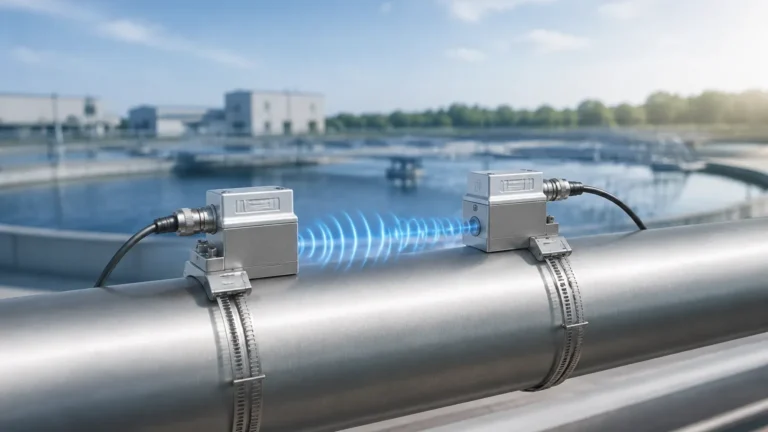
Ultrasonic sensors operate on the "time-of-flight" principle. The sensor emits a high-frequency sound pulse that travels through the air, reflects off the water surface, and returns to the transducer. By measuring the time taken for the pulse to return and knowing the speed of sound in air, the device calculates the distance to the water surface.
* Advantages: Non-contact measurement, cost-effective for open channels and tanks.
* Limitations: Sensitive to air temperature fluctuations, heavy foam, and surface turbulence.
Radar Level Measurement
Similar to ultrasonic sensors, radar meters use the time-of-flight principle but utilize electromagnetic waves (microwaves) rather than sound. These waves travel at the speed of light and are reflected by the dielectric change at the water surface.
* Advantages: Unaffected by temperature, pressure, or vapor; extremely high precision; non-contact.
* Limitations: Higher initial cost compared to ultrasonic; requires a minimum dielectric constant of the medium.
Hydrostatic Level Measurement
Hydrostatic transmitters are submersible sensors that measure the pressure exerted by the liquid column above them. According to Pascal's law, the pressure at a specific depth is proportional to the height of the liquid and its density.
* Advantages: Simple installation in deep wells or narrow boreholes; unaffected by surface conditions like foam or floating debris.
* Limitations: Contact-based measurement; requires compensation for atmospheric pressure changes (usually via a vented cable).
The Role of Level Measurement in Water Network Monitoring
Water network monitoring is not limited to a single point of measurement. It encompasses a variety of environments, each requiring a specific technical approach to ensure data reliability.
1. Reservoir and Tank Management: Monitoring levels in high-capacity storage tanks ensures that supply meets demand while preventing overflows. Radar level meters are often preferred here for their high accuracy over long distances (up to 30 or 70 meters).
2. Pump Station Optimization: Level switches and continuous sensors control the start/stop cycles of pumps. Accurate monitoring prevents dry running, which can lead to catastrophic pump failure.
3. Open Channel Flow: In wastewater or irrigation networks, level sensors are used in conjunction with flumes or weirs. By measuring the head level of the water, the system calculates the flow rate using standardized formulas.
4. Leak Detection and Non-Revenue Water (NRW): By comparing level changes in reservoirs during low-demand periods (such as 2:00 AM to 4:00 AM) with expected outflow, engineers can identify hidden leaks within the network.
Key Evaluation Criteria for Sensor Selection
When designing a system for water network monitoring, engineers must evaluate several factors to ensure the longevity and accuracy of the installation.
Environmental Conditions
Is the sensor exposed to direct sunlight, extreme cold, or corrosive gases? For example, in sewer monitoring, hydrogen sulfide (H2S) can corrode standard stainless steel. In such cases, plastic-housed ultrasonic sensors or PVDF-coated radar antennas are necessary.
Power Availability
Many points in a water distribution network are remote and lack access to the power grid. In these scenarios, low-power sensors capable of operating on battery or solar power are required. Hydrostatic transmitters and certain pulsed-radar models are often optimized for low-power consumption, interfacing with RTUs (Remote Terminal Units) via SDI-12 or Modbus protocols.
Accuracy and Range
For a shallow irrigation ditch, a 0.25% accuracy ultrasonic sensor with a 5-meter range is sufficient. However, for a large-scale municipal reservoir, a high-frequency (80 GHz) radar sensor may be required to maintain millimeter-level precision over a 30-meter span.
Practical Selection Table
| Technology | Contact Type | Ideal Application | Major Constraint |
| :— | :— | :— | :— |
| Ultrasonic | Non-contact | Open channels, small tanks | Wind, steam, foam |
| Radar (80GHz) | Non-contact | Large reservoirs, chemical tanks | Higher cost |
| Hydrostatic | Contact | Deep wells, boreholes | Clogging in sludge |
| Level Switch | Contact | Overflow alarm, pump protection | Point measurement only |
Installation Considerations and Best Practices
Even the most advanced sensor will fail to provide accurate data if installed incorrectly. For comprehensive water network monitoring, follow these engineering guidelines:
* Dead Zone Awareness: Every non-contact sensor has a "dead zone" (blocking distance) directly beneath the transducer where measurement is impossible. Ensure the sensor is mounted high enough that the maximum water level never enters this zone.
* Beam Angle and Obstructions: Ultrasonic and radar beams spread as they travel. If the beam hits a ladder, pipe, or wall before reaching the water, it will create a false echo. Ensure a clear path for the signal.
* Submersible Venting: For hydrostatic sensors, the capillary tube in the cable must remain unobstructed and protected from moisture. Use a desiccant cartridge or a specialized junction box to prevent condensation from entering the tube, which would cause drift in the readings.
* Stilling Wells: In applications with high turbulence or surface waves, installing the sensor inside a stilling well (a vertical pipe with vent holes) can provide a stable surface for more accurate measurement.
Common Risks and Limitations
Despite advancements in technology, water network monitoring faces several persistent challenges:
1. Signal Interference: In urban environments, electromagnetic interference (EMI) can affect sensor electronics. Using shielded cables and proper grounding is essential.
2. Biofouling: In raw water or wastewater applications, algae and mineral deposits can build up on submerged sensors. Regular maintenance schedules are required to clean hydrostatic diaphragms or ultrasonic faces.
3. Data Gaps: Reliability in monitoring depends on the communication link. If using cellular or LoRaWAN networks, signal strength must be verified during the wet season when foliage or weather may degrade the signal.
Frequently Asked Questions (FAQs)
Q: Can I use ultrasonic sensors for wastewater with heavy foam?
A: Foam absorbs sound waves, often leading to a loss of signal. For heavy foam, a high-frequency radar sensor or a hydrostatic pressure transmitter is a more reliable choice.
Q: How often do level sensors need calibration?
A: Most modern digital sensors are pre-calibrated. However, for critical water network monitoring, a field verification against a manual tape measure is recommended every 6 to 12 months.
Q: What is the benefit of 80 GHz radar over 26 GHz?
A: 80 GHz radar has a much narrower beam angle, which allows it to avoid internal tank obstructions and measure more accurately in narrow spaces.
Conclusion
Selecting the right instrumentation for water network monitoring requires a balance between technical requirements and budgetary constraints. By understanding the principles of ultrasonic, radar, and hydrostatic measurement, engineers can build resilient systems that provide the data necessary for efficient water management. For a comprehensive range of industrial measurement tools and expert guidance on selecting the right sensor for your specific application, you can Review product options and application support on the Welk Main Page.
As a professional manufacturer, Welk provides the advanced technology and customized OEM/ODM services required to meet the rigorous demands of global water infrastructure, ensuring that every drop is accounted for and every system operates at peak efficiency.