Water Sampler Equipment
Water Sampler Equipment
In the realm of industrial wastewater management and environmental monitoring, water sampler equipment serves as a critical bridge between real-time process monitoring and laboratory-grade chemical analysis. While level measurement instruments provide instantaneous data on volume and flow, automatic water samplers allow engineers to capture physical specimens for the assessment of Total Suspended Solids (TSS), Biological Oxygen Demand (BOD), and specific chemical concentrations. For facilities operating under strict regulatory permits, the integration of reliable sampling hardware with accurate level and flow measurement is essential for maintaining compliance and optimizing treatment processes.
Principles of Operation
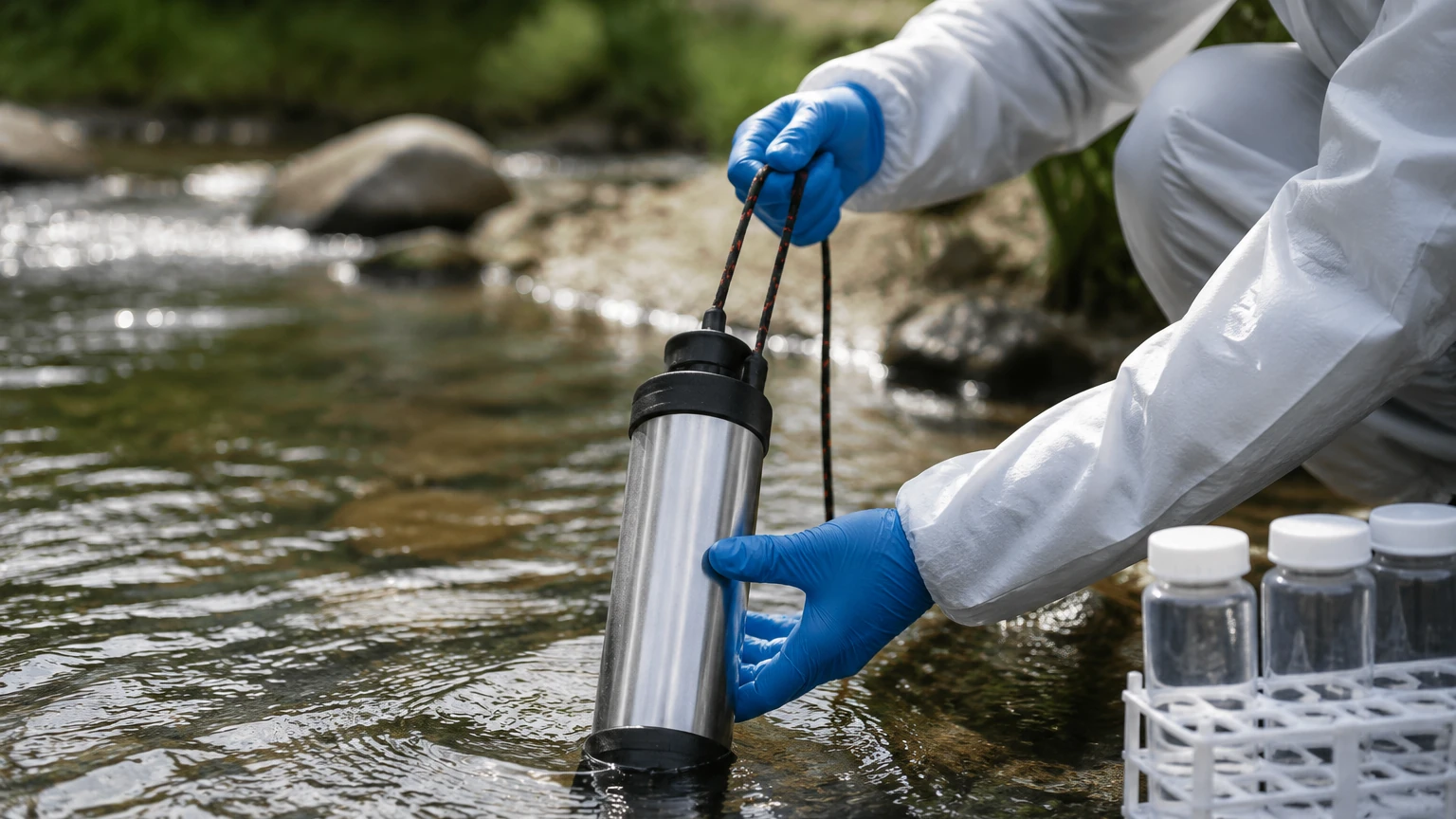
Water sampler equipment is designed to collect representative samples of water or wastewater from a source—such as a flume, tank, or open channel—and store them in a controlled environment for later analysis. The core principle involves a controlled intake mechanism, a transport system, and a storage array.
1. Sampling Modes
There are two primary methods by which water sampler equipment determines when to take a sample:
* Time-Proportional Sampling: The equipment is programmed to collect a fixed volume of water at specific time intervals (e.g., every 30 minutes). This is used when the flow rate is relatively constant or when temporal changes in water quality are the primary concern.
* Flow-Proportional Sampling: This method relies on input from external instruments, such as ultrasonic level sensors or area-velocity flow meters. As the volume of water passing through a point reaches a predefined threshold (e.g., every 1,000 liters), the sampler is triggered. This ensures that the collected sample accurately reflects the total mass loading of pollutants over a period, a requirement for many industrial discharge permits.
2. Intake Mechanisms
Most modern automatic samplers utilize one of two mechanical principles to draw the sample:
* Peristaltic Pumps: A rotating roller compresses a flexible tube, creating a vacuum that draws the liquid. This method is preferred for its ease of maintenance and because the liquid never touches the pump's mechanical parts, reducing the risk of cross-contamination. It is effective for vertical lifts up to approximately 8 meters (26 feet).
* Vacuum/Pressure Sampling: These systems use a vacuum pump to draw the sample into a regulated chamber. Once the chamber is full, the vacuum is released, and the sample is pressurized into the collection bottle. This method is often used for higher lift requirements or when high-velocity intake is needed to ensure representative sampling of heavy solids.
Types of Water Sampler Equipment
Selecting the correct hardware depends on the environment, the frequency of testing, and the specific parameters being monitored. Use the following classifications as a guide for industrial applications.
Portable Water Samplers
Portable units are designed for short-term studies, remote site monitoring, or temporary troubleshooting. They are typically battery-powered and housed in rugged, weather-resistant enclosures. While they offer flexibility, they often have smaller storage capacities and may require more frequent manual intervention to replace batteries or collect samples.
Stationary Water Samplers
Stationary samplers are permanent installations, usually powered by AC mains. They are frequently found at the influent and effluent points of wastewater treatment plants. These units often include integrated refrigeration systems to keep samples at a constant 4°C (39°F), which is vital for preserving the integrity of biological and volatile organic compounds.
Composite vs. Discrete Sampling
* Composite Samplers: Collect multiple individual samples into a single large container. This provides an average concentration of the water quality over the entire sampling period.
* Discrete (Sequential) Samplers: Collect samples into separate bottles (e.g., 24 bottles for 24 hours). This allows lab technicians to identify exactly when a specific spike in pollutants occurred.
Selection Criteria and Technical Specifications
When evaluating water sampler equipment for a specific project, engineers must consider the chemical nature of the liquid and the physical constraints of the site. The following table provides a comparison of common configurations.
| Feature | Portable Peristaltic | Stationary Refrigerated | Vacuum/Pressure System |
| :— | :— | :— | :— |
| Primary Use | Field studies / Remote sites | Compliance / Permanent discharge | High lift / Heavy solids |
| Power Source | 12V DC Battery | 110V/220V AC | 110V/220V AC |
| Max Vertical Lift | 7 – 8 meters | 8 meters | Up to 10+ meters |
| Sample Cooling | Ice or passive insulation | Active compressor (4°C) | Active compressor (4°C) |
| Bottle Options | Single 10L or 24x1L | Single 20L or 24x1L | Customizable configurations |
| Material Compatibility | PVC/Silicone/PE | Glass/PTFE/Stainless | Glass/PTFE/Stainless |
Integration with Level Measurement Systems
For flow-proportional sampling to be accurate, the water sampler must communicate effectively with level measurement instruments. In open-channel flow applications, an ultrasonic level sensor measures the head height behind a weir or flume. This level data is converted to a flow rate using standard hydraulic equations.
Modern water sampler equipment typically accepts several types of input signals from level meters:
* 4-20mA Analog Signal: The sampler receives a continuous signal representing the real-time flow rate and calculates the sampling trigger internally.
* Pulse/Digital Signal: The level meter or flow computer sends a pulse every time a specific volume (e.g., 1 cubic meter) has passed, triggering the sampler immediately.
For comprehensive information on the sensors used to drive these sampling systems, engineers should consult the Main Page for detailed technical data on radar and ultrasonic transmitters.
Installation Considerations
Proper installation is paramount to ensuring that the sample collected is representative of the actual process stream. Failure to follow these guidelines often leads to biased data or equipment failure.
1. Suction Line Placement: The intake strainer should be placed in the center of the flow stream, ideally in a zone of high turbulence to ensure solids are well-mixed. Avoid placing the intake too close to the bottom where heavy grit accumulates, or too close to the surface where oils and grease float.
2. Line Slope: The suction line must have a continuous downward slope toward the source. This allows the line to drain completely between samples, preventing cross-contamination and protecting the line from freezing in cold climates.
3. Vertical Lift: Always minimize the vertical distance between the sampler and the water surface. As the lift height increases, the intake velocity decreases, which can lead to the loss of heavier suspended solids from the sample.
4. Power Supply: For stationary units, ensure a stable AC power source with surge protection. For portable units, calculate the battery life based on the sampling frequency and the power draw of the pump at the required lift height.
Limitations and Common Risks
While automatic water sampler equipment significantly reduces manual labor, it is not without limitations:
* Cross-Contamination: If the pump tubing is not properly purged or replaced regularly, residues from previous samples can skew results. Most high-end samplers include a "pre-sample purge" and "post-sample purge" cycle to mitigate this.
* Clogging: In high-solids applications, the intake strainer or the internal tubing can become blocked. Regular inspection of the intake point is necessary.
* Temperature Sensitivity: If the refrigeration system fails in a stationary unit, the samples may degrade rapidly, especially for BOD and nutrient analysis. Redundant temperature monitoring is recommended for critical compliance points.
* Chemical Compatibility: Standard PVC or silicone tubing may react with certain industrial solvents or highly corrosive liquids. In these instances, PTFE-lined tubing and glass collection bottles must be used.
Frequently Asked Questions (FAQs)
Q: How often should the suction tubing be replaced?
A: In standard municipal wastewater applications, tubing is typically replaced every 6 to 12 months. However, in industrial environments with abrasive solids or aggressive chemicals, replacement may be required every 3 months or sooner to prevent rupture and contamination.
Q: Can water samplers be used in hazardous (Ex) zones?
A: Yes, but you must specify an ATEX or IECEx-certified sampler. These units are designed with intrinsically safe electronics and non-sparking components to prevent ignition in environments where flammable gases or dust may be present.
Q: What is the ideal intake velocity?
A: International standards (such as ISO 5667) generally recommend a minimum intake velocity of 0.5 meters per second (m/s) to ensure that suspended solids are effectively transported through the suction line without settling.
Q: How does the sampler handle a power outage?
A: Most stationary samplers have an internal backup battery to maintain the program memory. However, the pump and refrigeration system will typically cease to function unless the unit is connected to an Uninterruptible Power Supply (UPS).
Maintenance and Best Practices
To maintain the accuracy of water sampler equipment, a routine maintenance schedule should be implemented. This includes:
* Weekly: Check the sample bottles for cleanliness and ensure the refrigeration unit is maintaining 4°C.
* Monthly: Inspect the suction line for kinks, cracks, or bio-growth. Clean the intake strainer.
* Quarterly: Calibrate the sample volume. Program the sampler to collect 1000ml and verify the actual volume collected in a graduated cylinder. Adjust the pump calibration settings if the error exceeds ±5%.
* Annually: Replace all internal pump tubing and seals. Perform a full diagnostic check on the communication link between the sampler and the associated level or flow meter.
By integrating robust water sampler equipment with precision level measurement technology, industrial operators can ensure that their data is both legally defensible and operationally useful. For further technical specifications on the instrumentation required to trigger these systems, refer to the Main Page for professional-grade measurement solutions.