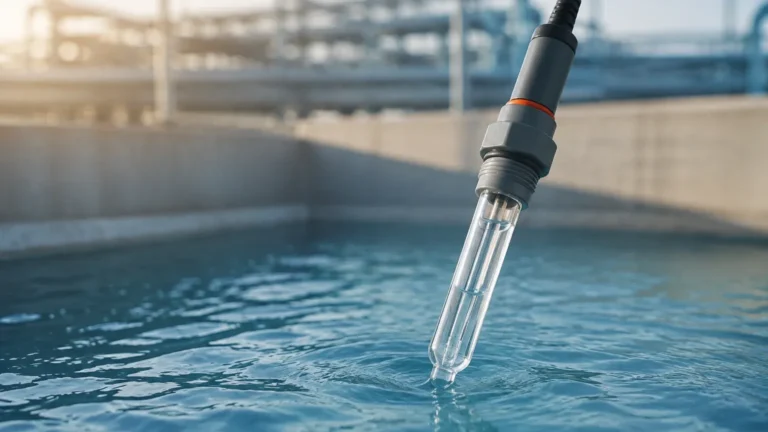
El11
El11
In the field of industrial automation and fluid management, point level detection remains a critical requirement for safety, process efficiency, and inventory control. Among the various technologies available, conductive level switches, often categorized under series such as the EL11, provide a reliable and cost-effective method for monitoring conductive liquids. These instruments are widely utilized in water treatment, chemical processing, and food production due to their lack of moving parts and straightforward integration into control loops.
Understanding the technical nuances of the EL11 series requires a deep dive into the physics of conductivity-based sensing, the mechanical constraints of electrode design, and the specific application environments where this technology outperforms alternative methods like float switches or ultrasonic sensors.
Principles of Conductive Level Measurement
The operation of an EL11 conductive level switch is based on the electrical conductivity of the process medium. Unlike hydrostatic or radar-based continuous measurement, the EL11 is designed for point level detection—identifying whether a liquid has reached a specific height in a tank or vessel.
The Circuit Logic
The system typically consists of a controller and a set of electrodes (probes). The measurement principle relies on a low-voltage AC signal applied between a reference electrode (or the metallic tank wall) and a measuring electrode. When the liquid level rises and touches the measuring electrode, the conductive nature of the fluid completes an electrical circuit. This change in resistance is detected by the EL11 controller, which then triggers a relay output or a digital signal to a PLC (Programmable Logic Controller).
Why AC instead of DC?
Industrial conductive sensors use Alternating Current (AC) rather than Direct Current (DC) to prevent electrolysis and the subsequent buildup of ions on the electrode surface. Electrolysis can lead to electrode corrosion and the formation of gas bubbles, both of which degrade measurement accuracy and shorten the lifespan of the instrument. By using a high-frequency AC signal, the EL11 maintains electrode integrity over long-term operation.
Technical Specifications and Selection Criteria
When selecting an EL11 configuration for a specific industrial process, engineers must evaluate several mechanical and electrical parameters. The performance of the sensor is directly tied to the compatibility of the electrode materials with the process fluid and the physical conditions of the vessel.
Electrode Material and Insulation
The electrodes are typically manufactured from 316L stainless steel, providing excellent resistance to corrosion in water and mild chemical applications. For more aggressive media, specialized coatings or materials like Hastelloy or Titanium may be employed. The insulation—usually PTFE or Polypropylene—is equally important, as it prevents false triggering caused by moisture or residue buildup on the probe head.
Key Evaluation Parameters
| Parameter | Standard Specification | Industrial Requirement |
| :— | :— | :— |
| Supply Voltage | 24V DC / 220V AC | Match local control power |
| Sensitivity | 1kΩ to 100kΩ (Adjustable) | Depends on fluid conductivity |
| Process Pressure | Up to 10 bar (145 psi) | Vessel design pressure |
| Operating Temperature | -20°C to +100°C (-4°F to 212°F) | Process thermal limits |
| Connection Size | G1/2", G1", or Flanged | Tank nozzle compatibility |
For comprehensive technical data and to explore specific model variations within this category, professionals often consult the Main Page of specialized manufacturers to ensure the selected hardware meets international safety standards.
Application Scenarios for EL11 Sensors
The EL11 is particularly effective in applications where the liquid is conductive and the environment may be prone to vibration or turbulence that would interfere with mechanical float switches.
1. Water and Wastewater Treatment
In pump control systems for sumps and reservoirs, EL11 sensors are used to prevent dry running of pumps or to trigger high-level alarms. Because they can feature multiple electrodes of varying lengths, a single EL11 unit can manage "Pump On," "Pump Off," and "High Alarm" levels simultaneously.
2. Chemical Processing
For conductive acids and alkalis, the EL11 provides a non-mechanical sensing solution. In these environments, the absence of moving parts is a significant advantage, as it eliminates the risk of mechanical jamming due to crystallization or sediment buildup.
3. Boiler Level Control
While high-pressure steam boilers require specialized high-temperature probes, the EL11 series is frequently used in feed-water tanks and condensate return systems where temperatures remain within the limits of standard PTFE insulation.
Installation Considerations and Best Practices
Proper installation is paramount to the reliability of conductive level switches. Errors in mounting can lead to false positives or a failure to detect the liquid level entirely.
1. Electrode Length and Alignment: Electrodes should be cut to the precise length required for the switching point. If multiple electrodes are used, they must be installed vertically. If the tank is subject to high flow rates or agitation, spacers should be used to prevent the electrodes from touching each other and creating a short circuit.
2. Reference Grounding: In non-metallic tanks (such as plastic or fiberglass), a dedicated reference electrode must be installed. This electrode must be the longest in the set, ensuring it remains in contact with the liquid as long as any other electrode is active.
3. Avoiding Turbulence: Probes should be installed away from inlet pipes where splashing or foam might occur. Foam can be conductive enough to trigger a sensor prematurely, leading to process instability.
4. Cable Protection: The connection between the probe head and the controller should use shielded cabling if the distance exceeds 50 meters (164 feet) to prevent electromagnetic interference from triggering the sensitive conductivity circuit.

Limitations and Risks
While the EL11 is a versatile tool, it is not a universal solution for all level measurement challenges. Engineers must be aware of the following limitations:
* Non-Conductive Liquids: The EL11 cannot detect oils, pure hydrocarbons, or deionized water with extremely low conductivity (typically below 5 μS/cm). In these cases, capacitive or ultrasonic sensors are required.
* Coating and Scaling: If the process fluid is prone to leaving heavy, conductive deposits (such as certain slurries or wastewater with high mineral content), these deposits can bridge the gap between the electrode and the tank wall, causing a permanent "high" signal even when the tank is empty.
* Vessel Pressure: Most EL11 units are designed for atmospheric or low-pressure vessels. High-pressure applications require specialized sealing glands to prevent process leakage through the probe head.
Technology Comparison: Conductive vs. Other Methods
To assist in the selection process, the following table compares the EL11 conductive switch against other common point-level technologies.
| Feature | Conductive (EL11) | Ultrasonic | Tuning Fork (Vibrating) |
| :— | :— | :— | :— |
| Medium Requirement | Must be conductive | Reflective surface | Specific density |
| Moving Parts | None | None | Vibrating tines |
| Sensitivity to Foam | High (may false trigger) | Moderate | Low |
| Cost | Low | Medium to High | Medium |
| Maintenance | Low (clean probes) | Low (non-contact) | Moderate (check for buildup) |
Frequently Asked Questions (FAQ)
Q: Can the EL11 be used for flammable liquids?
A: Only if used in conjunction with an intrinsically safe barrier and if the liquid itself is conductive (which most flammable hydrocarbons are not). Always verify ATEX or IECEx ratings before installation in hazardous zones.
Q: How do I adjust the sensitivity of the EL11?
A: Most EL11 controllers feature a potentiometer. For liquids with low conductivity, such as distilled water, the sensitivity should be increased. For highly conductive liquids like brine, it should be decreased to prevent false triggering from moisture or steam.
Q: What is the maximum length for the electrodes?
A: Standard electrodes are usually available up to 3 meters (approx. 10 feet). For deeper tanks, wire-rope electrodes with weights are used to maintain verticality, though these require careful installation to avoid swaying.
Q: How often should the electrodes be cleaned?
A: This depends entirely on the medium. In clean water applications, electrodes may last years without maintenance. In wastewater, a quarterly inspection is recommended to remove any grease or ragging that may have accumulated.
Conclusion
The EL11 conductive level switch represents a fundamental yet highly effective technology for modern process control. By leveraging the electrical properties of the liquid, it provides a robust, low-maintenance alternative to mechanical switches. When applied correctly—with careful consideration of fluid conductivity, electrode material, and installation environment—the EL11 ensures precise point level detection across a wide range of industrial sectors. For those looking to integrate these sensors into a broader automation strategy, reviewing the latest hardware specifications on the Main Page is the recommended next step for ensuring system compatibility and long-term operational success.