What Instrument Is Used to Measure Pressure
What Instrument Is Used to Measure Pressure
In industrial process control, understanding what instrument is used to measure pressure is fundamental to ensuring safety, efficiency, and product quality. Pressure measurement is not a one-size-fits-all task; it spans a vast range of applications from monitoring steam in a boiler to determining the level of liquid in a deep storage tank. Selecting the correct instrument requires a deep understanding of the physical principles involved, the nature of the media being measured, and the environmental conditions of the installation.
This guide examines the various technologies used to quantify pressure, the engineering principles behind them, and how these instruments are applied across different industrial sectors.
Fundamental Principles of Pressure Measurement
Before selecting an instrument, it is essential to understand how pressure is converted from a physical force into a readable value or an electrical signal. Most industrial pressure instruments rely on the displacement or deformation of a sensing element.
Mechanical Deformation
Mechanical instruments, such as the Bourdon tube, utilize a curved, hollow tube that tends to straighten when pressurized. This movement is mechanically linked to a pointer on a dial. Similarly, diaphragm-based instruments use a flexible membrane that deflects under pressure. This deflection is proportional to the pressure applied and can be used to drive a mechanical linkage or an electronic sensor.
Piezoresistive Sensing
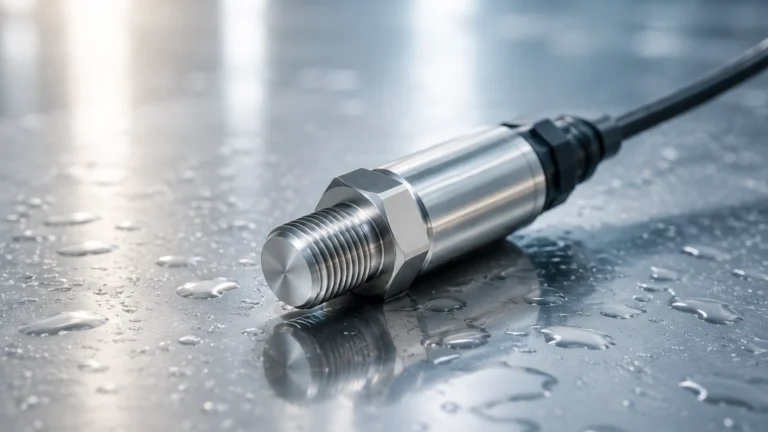
Many modern electronic transmitters use the piezoresistive effect. A strain gauge is bonded to a diaphragm (often silicon or ceramic). When pressure deforms the diaphragm, the electrical resistance of the strain gauge changes. This change is processed by internal electronics to provide a standard output signal, such as 4-20mA or a digital protocol like HART.
Capacitive Sensing
In capacitive pressure sensors, a sensing diaphragm is placed between two fixed plates. As pressure moves the diaphragm, the capacitance between the diaphragm and the plates changes. This method is highly sensitive and is frequently used in high-precision differential pressure applications.
Types of Pressure Measurement Instruments
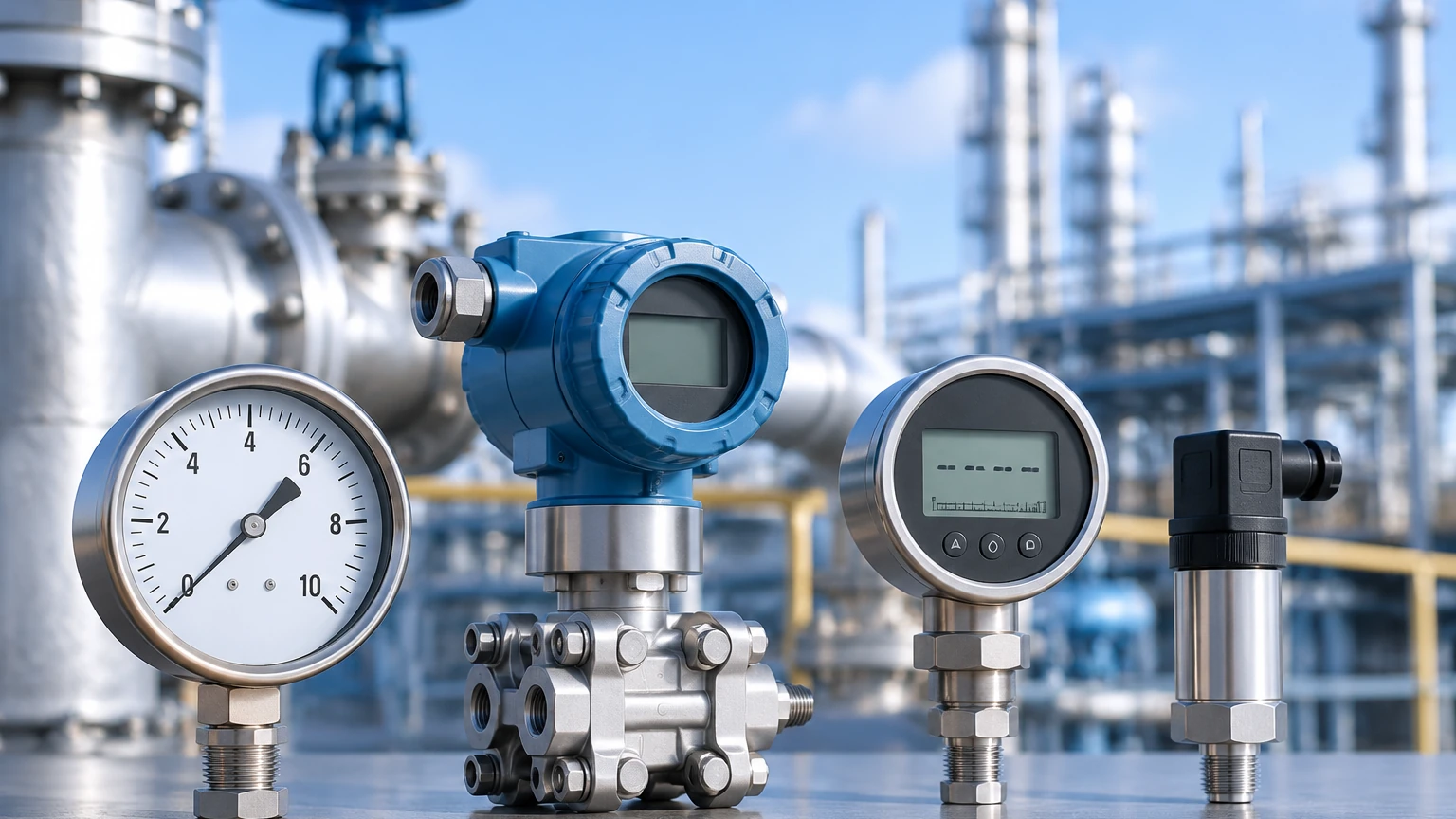
When asking what instrument is used to measure pressure, the answer depends on whether the goal is local visual monitoring or integration into an automated control system.
1. Pressure Gauges
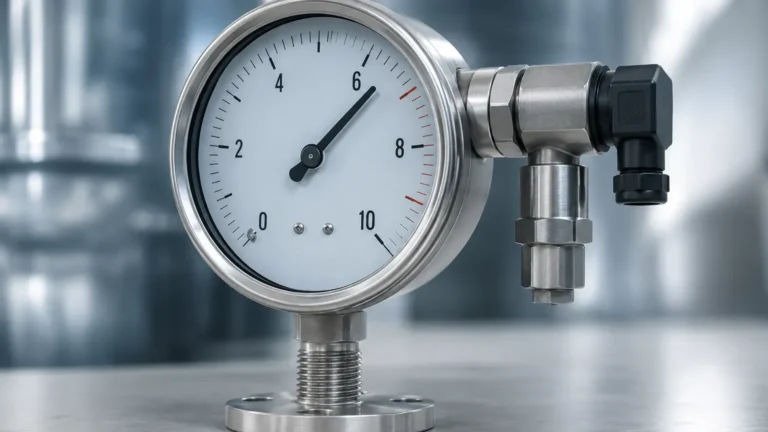
Pressure gauges are mechanical devices used for local indication. They do not require external power and are essential for manual system checks. The most common type is the Bourdon tube gauge, suitable for gas and liquid pressures from 0.6 bar (10 psi) up to 7,000 bar (100,000 psi). For low-pressure applications or viscous media, diaphragm gauges are preferred because the larger surface area of the diaphragm provides more force to move the pointer.
2. Pressure Transmitters and Transducers
Transmitters are the workhorses of industrial automation. They convert the physical pressure into an electrical signal (typically 4-20mA, 0-10V, or digital RS485). These are categorized by the reference pressure they use:
* Gauge Pressure Transmitters: Measure pressure relative to the local atmospheric pressure.
* Absolute Pressure Transmitters: Measure pressure relative to a perfect vacuum. These are critical in vacuum distillation and atmospheric research.
* Differential Pressure (DP) Transmitters: Measure the difference between two pressure points. These are widely used for flow measurement (across an orifice plate) and level measurement in pressurized tanks.
3. Hydrostatic Level Transmitters
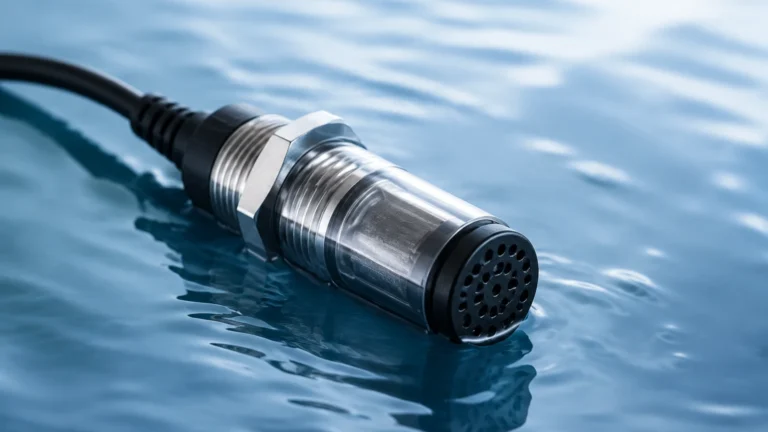
In the context of liquid storage, a specialized pressure instrument known as a hydrostatic level transmitter is used. It operates on the principle that the pressure at the bottom of a liquid column is directly proportional to the height of the liquid and its density ($P = \rho \cdot g \cdot h$). By measuring this "head pressure," the instrument accurately determines the liquid level in a tank or well. For more information on these and other measurement technologies, you can Review product options and application support on the Welk Main Page.
Selection Criteria: Choosing the Right Instrument
Selecting the appropriate instrument requires balancing technical requirements with cost-effectiveness. The following table provides a comparison of common industrial pressure measurement technologies.
| Instrument Type | Measurement Principle | Typical Accuracy | Best For |
| :— | :— | :— | :— |
| Bourdon Gauge | Mechanical Tube | ±1.0% to ±3.0% | Local monitoring, non-critical loops |
| Piezoresistive Transmitter | Resistance Change | ±0.1% to ±0.5% | General process automation, hydraulics |
| Capacitive Transmitter | Capacitance Change | ±0.05% to ±0.2% | High-precision DP, low-pressure gas |
| Hydrostatic Sensor | Liquid Head Pressure | ±0.25% to ±0.5% | Tank level, wastewater, deep wells |
| Diaphragm Seal Gauge | Fluid Transmission | ±1.5% to ±2.5% | Corrosive, viscous, or hygienic media |
Key Evaluation Factors
1. Media Compatibility: Does the process fluid corrode stainless steel? If so, specialized materials like Hastelloy, Monel, or Tantalum coatings may be required.
2. Pressure Range: The operating pressure should ideally fall within the middle 30% to 60% of the instrument's full-scale range to ensure longevity and accuracy.
3. Temperature Limits: High-temperature steam or cryogenic liquids can damage sensing elements. Siphons or cooling towers are often used to protect the instrument.
4. Environmental Rating: For outdoor or wash-down areas, instruments must have appropriate Ingress Protection (IP) ratings, such as IP67 or IP68.
Installation and Engineering Considerations
Even the most accurate instrument will fail or provide false readings if installed incorrectly. Engineers must consider the following during the design phase:
Orientation and Mounting
Pressure transmitters are often sensitive to mounting orientation due to the weight of the internal fill fluid (in the case of diaphragm seals). While many can be zero-calibrated after installation to account for this, it is best practice to follow the manufacturer's recommended orientation. For gas applications, the instrument should be mounted above the tap to allow condensate to drain back into the process. For liquid applications, it should be mounted below the tap to prevent air bubbles from being trapped in the impulse lines.
Isolation and Manifolds
To allow for maintenance and calibration without shutting down the entire process, pressure instruments should be installed with isolation valves. In differential pressure applications, a 3-valve or 5-valve manifold is standard. These manifolds allow the user to block the process, equalize the pressure across the sensor, and vent the instrument safely.
Impulse Lines
Impulse lines are the small-diameter pipes that connect the process to the instrument. They must be as short as possible to minimize lag and should be sloped (typically 1:12) to prevent the accumulation of gas or liquid pockets that could cause false pressure offsets.
Limitations and Common Challenges
Understanding the limitations of what instrument is used to measure pressure is as important as knowing its capabilities.
* Overpressure Events: Every instrument has a "Proof Pressure" (the maximum pressure it can withstand without permanent damage) and a "Burst Pressure." Exceeding these can lead to catastrophic failure.
* Clogging: In wastewater or chemical slurries, small pressure ports can easily clog. In these cases, a "Flush Diaphragm" design is necessary to prevent buildup.
* Pulsation and Vibration: Rapid pressure fluctuations (pulsation) can cause mechanical gauges to wear out prematurely. Using liquid-filled gauges (glycerin or silicone oil) or installing snubbers can dampen these effects.
* Thermal Shift: All electronic sensors experience some degree of drift as the ambient or process temperature changes. High-quality transmitters include internal temperature compensation to mitigate this error.
Frequently Asked Questions (FAQ)
Q: What is the difference between a pressure transducer and a pressure transmitter?
A: While often used interchangeably, a transducer typically provides a raw millivolt (mV) output, whereas a transmitter includes signal conditioning electronics to provide a standardized 4-20mA or digital output.
Q: How often should pressure instruments be calibrated?
A: This depends on the criticality of the process and the stability of the instrument. Standard practice is annually, though high-precision or safety-critical loops may require quarterly checks.
Q: Can I use a standard pressure transmitter for level measurement?
A: Yes, provided the tank is vented to the atmosphere. If the tank is pressurized, a differential pressure transmitter is required to subtract the top-side vapor pressure from the bottom-side total pressure.
Q: What is a "smart" pressure transmitter?
A: A smart transmitter uses a microprocessor to perform self-diagnostics, compensate for environmental variables, and communicate via digital protocols like HART, Profibus, or Foundation Fieldbus.
Conclusion
Identifying what instrument is used to measure pressure requires a holistic view of the industrial environment. From simple mechanical gauges for local checks to sophisticated hydrostatic level transmitters for inventory management, the choice of technology impacts the reliability of the entire control system. By understanding the underlying physics, adhering to strict installation standards, and selecting materials compatible with the process media, engineers can ensure accurate and durable pressure measurement across any application.
Download What Instrument Is Used to Measure Pressure as a PDF