What Is a Cdu in a Data Center
What Is a Cdu in a Data Center
As data centers evolve to support high-density computing workloads—such as artificial intelligence (AI), machine learning (ML), and high-performance computing (HPC)—traditional air cooling methods often reach their physical limits. In these modern environments, liquid cooling has become the standard for managing the intense heat generated by high-wattage CPUs and GPUs. At the heart of this liquid cooling infrastructure is the Cooling Distribution Unit, or CDU.
Understanding what is a cdu in a data center requires looking beyond a simple pump; it is a sophisticated system designed to manage coolant flow, regulate temperature, and provide a critical barrier between the facility’s primary water supply and the sensitive electronic equipment. For engineers and facility managers, the CDU is the primary point of control for thermal management. To ensure these systems operate reliably, precise instrumentation, particularly level measurement in coolant reservoirs, is essential. For those seeking technical specifications on the sensors used in these systems, the Main Page offers a detailed look at the necessary industrial instrumentation.
Understanding the Role of a Cooling Distribution Unit (CDU)
A Cooling Distribution Unit (CDU) is a standalone or rack-integrated system that facilitates the exchange of heat between two separate fluid loops: the Primary Loop (Facility Water System) and the Secondary Loop (Technology Cooling System).
In a typical data center architecture, the facility water system (FWS) provides chilled water from a central chiller plant or cooling tower. However, this water is often not suitable for direct contact with server components due to its chemical composition, potential for debris, or temperature. The CDU acts as a localized heat exchanger. It takes the heat from the secondary loop—which circulates through the servers via cold plates or immersion tanks—and transfers it to the primary loop without the two fluids ever mixing.
The Two-Loop Architecture
1. The Primary Loop (Facility Side): This loop connects the CDU to the building's central cooling plant. It usually operates at higher pressures and may use water that is treated for industrial cooling but is not "clean" enough for direct electronics cooling.
2. The Secondary Loop (IT Side): This loop circulates a specialized coolant—often deionized water or a glycol-water mixture like PG25—directly to the IT equipment. This loop is tightly controlled for pressure, flow rate, and purity.
By separating these loops, the CDU protects the IT equipment from the risks associated with the larger facility water system while allowing for precise control of the cooling delivered to specific racks.
The Core Components and Operating Principles
To understand what is a cdu in a data center from a mechanical perspective, one must examine its internal components. A standard CDU consists of several key elements working in unison:
* Heat Exchanger: Usually a plate-and-frame or brazed-plate design, this is where the thermal energy is transferred from the secondary coolant to the primary facility water.
* Circulating Pumps: These drive the coolant through the secondary loop. Most CDUs use redundant (N+1) pump configurations to ensure continuous operation even if one pump fails.
* Filtration System: Integrated filters remove particulates from the secondary loop to prevent clogging in the micro-channels of server cold plates.
* Expansion Tank/Reservoir: This component compensates for the thermal expansion and contraction of the coolant. It also serves as the primary point for monitoring the fluid volume within the system.
* Control Logic and Sensors: A CDU is equipped with various sensors to monitor temperature, pressure, flow rate, and—crucially—liquid level.
Measurement Principle: Heat Exchange
The CDU operates on the principle of thermal conduction. As the warm coolant returns from the server racks, it passes through the heat exchanger. On the other side of the exchanger plates, the cooler facility water flows in the opposite direction (counter-flow). The heat moves through the metal plates from the hot secondary fluid to the cold primary fluid. The now-cooled secondary fluid is then pumped back to the IT equipment.
The Critical Role of Level Measurement in CDUs
In the context of a CDU, level measurement is not merely a convenience; it is a critical safety and performance requirement. The expansion tank or reservoir within the CDU must maintain a specific volume of coolant to ensure the pumps do not run dry and to allow for the natural expansion of the fluid as it heats up.
Why Level Monitoring Matters
If the liquid level in the CDU reservoir drops too low, air can be sucked into the pump (cavitation), leading to mechanical failure and an immediate loss of cooling capacity. Conversely, an overfill situation can lead to excessive pressure during thermal expansion, potentially causing leaks or burst seals.
Furthermore, the liquid level is the first indicator of a leak within the secondary loop. In a data center, even a small leak of conductive fluid can be catastrophic. By using high-precision level transmitters, operators can detect minute drops in the reservoir level that might indicate a slow leak in a rack manifold or a cold plate long before a floor-mounted leak cable detects moisture.
Selecting the Right Level Sensor Technology for Data Center Cooling
When specifying instrumentation for a CDU, engineers must choose a technology that balances accuracy, reliability, and the physical constraints of the CDU cabinet. Below are the primary technologies used for level measurement in these applications.
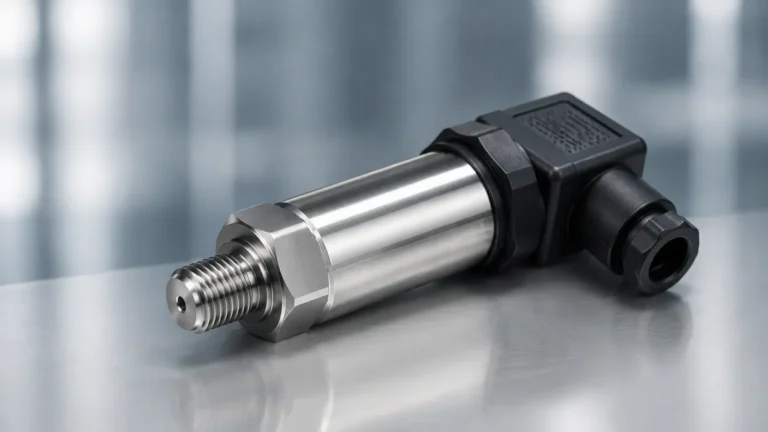
1. Hydrostatic Level Transmitters
Hydrostatic sensors measure the pressure exerted by the liquid column at the bottom of the reservoir. Since pressure is directly proportional to the height of the liquid ($P = \rho gh$), the sensor can accurately calculate the level.
* Pros: Reliable, no moving parts, and very effective for small tanks.
* Cons: Accuracy can be affected by changes in fluid density (e.g., changing the glycol concentration).
2. Ultrasonic Level Sensors
These are non-contact sensors that emit a high-frequency sound pulse. The sensor measures the time it takes for the pulse to hit the liquid surface and return.
* Pros: No contact with the coolant, which is ideal for maintaining fluid purity.
* Cons: Can be affected by foam or heavy turbulence within the expansion tank.
3. Radar Level Meters (80GHz)
Radar sensors use high-frequency microwave pulses. Like ultrasonic sensors, they measure Time of Flight (ToF) but are unaffected by air temperature, pressure, or vapor.
* Pros: Extremely high precision (often ±1mm), compact size, and immune to environmental changes inside the tank.
* Cons: Higher initial cost than hydrostatic or ultrasonic options.
4. Magnetic Level Gauges and Switches
Magnetic gauges use a float containing a magnet that moves with the liquid level. This can provide both a visual indication and an electronic signal via a reed switch or transmitter.
* Pros: Simple, requires no power for visual indication, and provides a clear physical backup to electronic systems.
* Cons: Includes moving parts (the float) which can theoretically stick if the coolant is not kept clean.
Selection Comparison Table
| Technology | Accuracy | Contact Type | Maintenance | Best Use Case |
| :— | :— | :— | :— | :— |
| Hydrostatic | High | Contact | Low | Standard reservoir monitoring |
| Ultrasonic | Medium | Non-contact | Low | Clean fluids, budget-conscious |
| Radar (80GHz) | Very High | Non-contact | Minimal | High-density CDUs, precision control |
| Magnetic Float | Medium | Contact | Moderate | Visual backup and low/high alarms |

Installation Considerations for CDU Level Monitoring
Proper installation of level sensors within a CDU is vital for obtaining accurate data. Because CDUs are often compact, space is at a premium.
1. Dead Zones: Every non-contact sensor (Radar and Ultrasonic) has a "dead zone" or "blocking distance" directly beneath the sensor where it cannot measure. Ensure the reservoir height accounts for this, or use a sensor with a very small dead zone (e.g., 50mm / 2 inches).
2. Turbulence: The return line to the CDU reservoir can create turbulence. Sensors should be installed away from the inlet or behind a stilling well to ensure a stable surface for measurement.
3. Fluid Compatibility: Ensure the wetted parts of the sensor (for hydrostatic or magnetic types) are compatible with the coolant. For example, stainless steel 316L is standard, but certain specialized coolants may require plastic housings or specific O-ring materials.
4. Integration: Most modern CDUs communicate via Modbus TCP/IP, SNMP, or BACnet. Level sensors should provide a 4-20mA signal or a digital output that integrates seamlessly with the CDU’s PLC (Programmable Logic Controller).
Limitations and Operational Safety
While CDUs are highly efficient, they are not without limitations.
* Condensation Risk: If the secondary coolant temperature falls below the dew point of the data center air, condensation can form on the pipes. CDUs must include dew point control logic to adjust the coolant temperature dynamically.
* Redundancy Limits: While pumps are often redundant, the heat exchanger itself is usually a single point of failure unless a dual-exchanger CDU is specified.
* Maintenance Requirements: Filters must be changed regularly. If a level sensor indicates a drop in level, the system must be checked immediately for leaks. A "low-low" level alarm should be interlocked with the pump power to prevent dry-running.
Frequently Asked Questions (FAQ)
Q: How often should the coolant level in a CDU be checked?
A: While automated sensors provide 24/7 monitoring, a manual visual inspection of the reservoir and magnetic level gauge should be performed monthly as part of standard preventative maintenance.
Q: Can a CDU handle different types of coolants?
A: Most CDUs are designed for specific fluids (e.g., water/glycol). Changing the coolant type requires verifying the compatibility of all seals, pumps, and level sensor wetted parts.
Q: What is the typical size of a CDU?
A: In-rack CDUs can take up 4U to 10U of rack space, while floor-mount units can be the size of a standard server rack and manage cooling for multiple rows of servers.
Q: Why use a radar sensor instead of a simple float switch?
A: A float switch only tells you if the level is "high" or "low." A radar sensor provides a continuous measurement (e.g., 45% full), allowing the system to detect trends, such as a very slow leak, before it triggers an emergency alarm.
Conclusion
In the high-stakes environment of a modern data center, the Cooling Distribution Unit is the silent workhorse that enables the density required for today’s computational demands. By understanding what is a cdu in a data center, engineers can better appreciate the complex interplay between thermal management and precision instrumentation. Maintaining the correct liquid level within these units is paramount to operational uptime. Whether utilizing hydrostatic, ultrasonic, or advanced radar technology, the goal remains the same: ensuring the continuous, safe, and efficient transfer of heat to protect the critical IT assets that power our digital world.