What Is Coke Oven
What Is Coke Oven
In the realm of heavy industry and metallurgy, understanding the fundamental infrastructure is essential for optimizing production and ensuring safety. For engineers and procurement specialists, the question of "what is coke oven" extends beyond a simple definition; it involves understanding a complex thermal process, the harsh environmental conditions involved, and the precise instrumentation required to manage it. A coke oven is a specialized industrial furnace used to convert coal into coke through a process known as destructive distillation or carbonization.
Coke is a high-carbon fuel and a critical reducing agent used in blast furnaces for the production of steel. Because the coking process involves extreme temperatures, corrosive gases, and heavy dust, the monitoring of material levels—both solid coal and liquid by-products—is a significant engineering challenge. This article provides a technical overview of coke oven operations and the critical role of level measurement technologies in maintaining efficiency.
Understanding the Coke Oven and the Coking Process
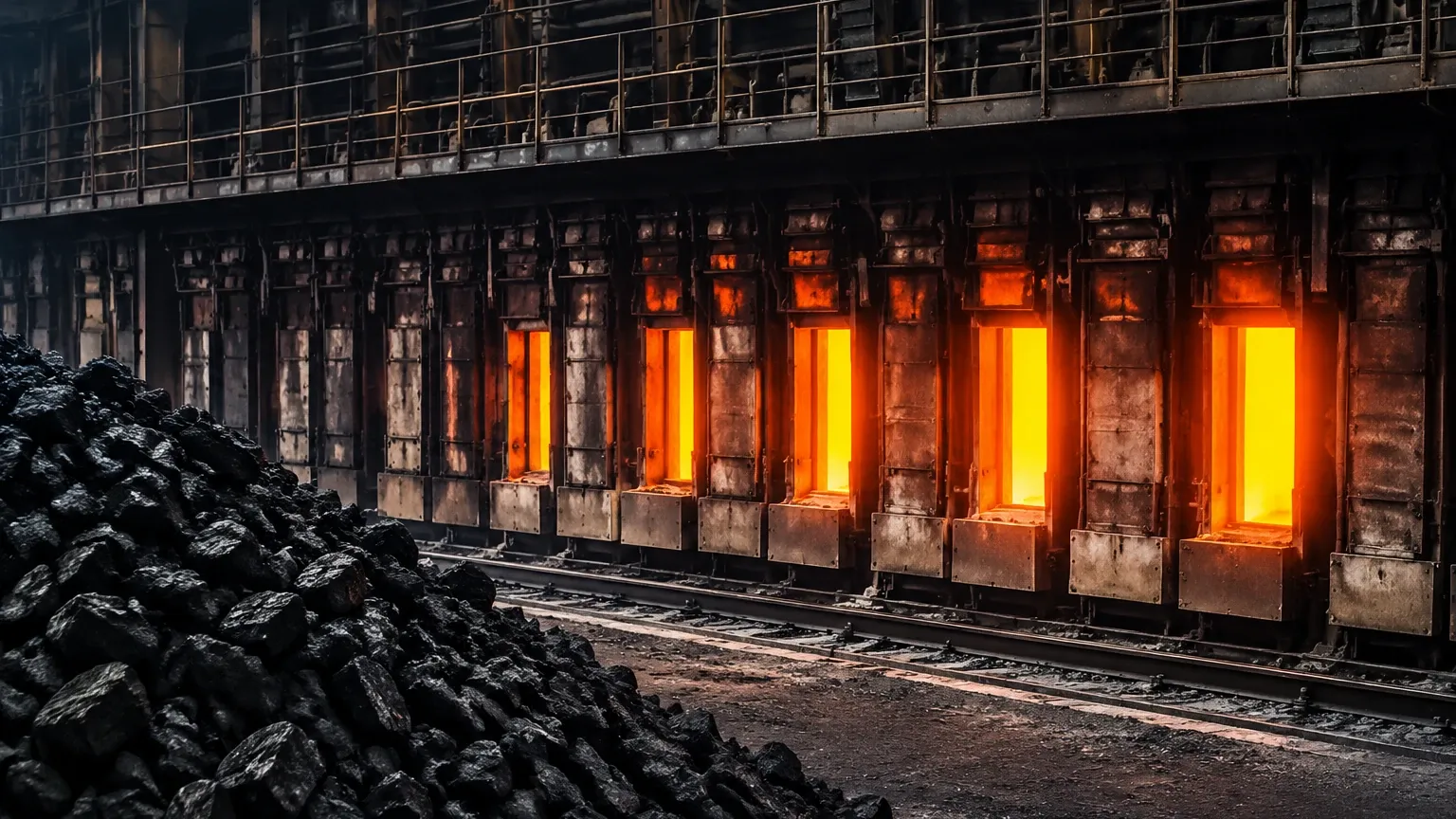
To answer "what is coke oven" in a technical context, one must look at the structure and the chemical transformation it facilitates. A coke oven is typically a long, narrow chamber constructed from silica brick and other refractory materials. These chambers are arranged in groups called "batteries," which can contain dozens of individual ovens sharing common heating walls.
The Carbonization Process
The primary function of the oven is to heat coal in the absence of air. This prevents the coal from simply burning and instead forces the volatile components (such as water, coal gas, and coal tar) to be driven off, leaving behind a porous, strong, and carbon-rich material called coke.
1. Charging: Pulverized coal is fed into the top of the oven through charging holes. Precise level measurement during this stage is vital to ensure the oven is filled to the correct volume without overfilling, which could block the gas exit ports.
2. Heating: The oven is sealed, and heat is applied indirectly through the walls. Temperatures typically range from 1,000°C to 1,100°C (1,832°F to 2,012°F). The process usually lasts between 12 and 20 hours.
3. Pushing: Once carbonization is complete, the oven doors are opened, and a massive ram (the pusher machine) pushes the red-hot coke out of the oven into a quenching car.
4. Quenching: The hot coke is transported to a quenching tower, where it is sprayed with water (wet quenching) or cooled with inert gas (dry quenching) to stop further combustion.
The Critical Role of Level Measurement in Coking
Operating a coke oven battery requires the management of various materials across different states of matter. Reliable level instrumentation is necessary to automate processes, protect equipment, and ensure the safety of personnel. When selecting instruments from a Main Page of industrial sensors, engineers must account for the specific demands of each stage in the coke production cycle.
Coal Bunker and Silo Monitoring
Before coal enters the oven, it is stored in large bunkers or silos. These silos can be 20 to 30 meters high. Monitoring the level of coal is essential for inventory management and to ensure a continuous supply to the charging cars. The primary challenge here is the heavy dust generated during filling and the potential for "bridging" or "rat-holing" of the material.
Charging Car Volume Control
Charging cars move along the top of the battery, delivering coal to individual ovens. Sensors on these cars must withstand high ambient heat and vibration. Accurate level detection ensures that the coal is distributed evenly, which is critical for uniform heating within the oven.
Quench Tower Water Management
In wet quenching, large volumes of water are used to cool the coke. This water is often recycled through a treatment system. Level sensors in the quench water tanks must handle steam, turbulence, and the presence of suspended solids (coke breeze).
By-product Plant Level Control
The gases driven off during carbonization are captured and processed in a by-product plant. This involves the separation of coal tar, ammonia liquor, and sulfur. Level transmitters are required for tanks containing these hazardous and often viscous liquids.
Measurement Principles and Technology Selection
Choosing the right technology for a coke oven environment requires an understanding of how different measurement principles interact with the process media. Below are the most common technologies used in these applications.
Radar Level Measurement (ToF)
Radar (Radio Detection and Ranging) is the gold standard for many coke oven applications. It operates on the Time-of-Flight (ToF) principle, where a sensor emits a high-frequency electromagnetic wave that reflects off the surface of the material and returns to the receiver.
* Non-contact Radar: Ideal for coal bunkers and liquid tanks. High-frequency radar (e.g., 80 GHz) is particularly effective in dusty environments because the short wavelength can penetrate dust clouds more effectively than lower frequencies. It is also unaffected by the high temperatures found near the oven tops, provided the sensor is equipped with a cooling jacket or a thermal isolator.
* Guided Wave Radar (GWR): This uses a physical probe to guide the signal. While highly accurate for liquids, it is less common for bulk coal due to the mechanical stress the coal exerts on the probe.
Ultrasonic Level Sensors
Ultrasonic sensors use sound waves to measure distance. While cost-effective, they have significant limitations in coke oven applications. Sound speed is affected by temperature fluctuations and gas composition, both of which are highly variable in a coking environment. Furthermore, heavy steam in quenching areas can absorb the acoustic signal, leading to signal loss.
Radiometric (Nuclear) Measurement
For the most extreme conditions—such as detecting the level of coal inside the oven or the position of the coke cake during pushing—radiometric sensors are often used. These involve a radioactive source on one side of the vessel and a detector on the other. Because the measurement is non-intrusive and can see through steel walls and refractory brick, it is unaffected by heat or pressure. However, it requires strict regulatory compliance and specialized handling.
Electromechanical Systems (Yo-Yo Sensors)
These systems lower a weight on a cable to the surface of the coal. While simple and unaffected by dust, they are prone to mechanical wear and are generally being replaced by non-contact radar for continuous monitoring.
Technical Selection Criteria
When evaluating level measurement solutions for coke oven facilities, engineers should use the following table as a baseline for technology selection.
| Application | Recommended Technology | Key Benefit | Environmental Challenges |
| :— | :— | :— | :— |
| Coal Storage Silo | 80 GHz Non-contact Radar | Penetrates heavy dust | Dust, large measuring range |
| Charging Car Hopper | Radar or Laser | High speed, non-contact | Vibration, high heat |
| Quench Water Tank | Hydrostatic or Radar | Reliable in steam | Steam, turbulence, solids |
| Tar Storage Tank | Guided Wave Radar | Ignores foam/vapor | High viscosity, coating |
| Ammonia Liquor | Radar or Ultrasonic | Corrosion resistance | Corrosive vapors |
Installation and Engineering Considerations
Proper installation is as critical as technology selection. In a coke oven battery, the environment is unforgiving, and even the best sensor will fail if not installed correctly.
1. Thermal Protection: For sensors mounted on top of the oven or on charging cars, heat shields and air-cooling jackets are mandatory. The ambient temperature can easily exceed the operating limits of the sensor electronics (typically 65°C to 80°C).
2. Purging Systems: To prevent the buildup of coal dust or condensed tars on the sensor face (antenna), air purging is often used. A continuous flow of clean, dry air keeps the lens clear and ensures signal integrity.
3. Mounting Angle: For bulk solids like coal, the angle of repose must be considered. Radar sensors should be mounted in a position where they can detect the "peak" or an average level, rather than being aimed at a slope that might deflect the signal away from the receiver.
4. Chemical Compatibility: In the by-product plant, wetted parts must be compatible with corrosive substances. PTFE-coated antennas or high-grade stainless steel (316L or Hastelloy) are standard requirements.
Limitations and Operational Risks
While modern instrumentation has significantly improved the safety of coke oven operations, certain risks remain:
* Signal Attenuation: In extremely dense dust or heavy steam, even high-frequency radar can experience signal attenuation. Redundancy or the use of different measurement principles is recommended for safety-critical points.
* Coating and Buildup: In tar and liquor tanks, material buildup on the sensor can cause "ghost readings." Choosing sensors with high sensitivity and "false echo suppression" software is essential.
* Maintenance Access: Many measurement points are in hazardous or hard-to-reach areas. Selecting sensors with remote electronics or wireless communication can simplify maintenance and improve safety.
Frequently Asked Questions (FAQs)
Q: Why is coal dust such a problem for level sensors?
A: Coal dust can coat sensor faces, leading to signal failure. It also creates a dense medium that can scatter or absorb sound waves (ultrasonic) or lower-frequency radio waves. High-frequency 80 GHz radar is the preferred solution because its focused beam and short wavelength are less affected by these particles.
Q: Can radar sensors measure the level of hot coke?
A: Yes, but the sensor itself must be protected from the radiant heat. Non-contact radar can measure red-hot coke in quenching cars or during the pushing process if it is installed behind a heat-resistant window or equipped with a cooling system.
Q: How do you handle the high temperatures in a coke oven battery?
A: We use a combination of physical distance, thermal stand-offs, and active cooling (air or water jackets). It is also common to use specialized antennas that can withstand higher temperatures while keeping the sensitive electronics in a cooler housing.
Q: Is it better to use continuous or point level measurement?
A: Most coke oven applications require continuous measurement for process optimization. However, point level switches (such as vibrating forks or admittance probes) are often used as high-level alarms to prevent overfilling and catastrophic spills.
Conclusion
Understanding "what is coke oven" is the first step in mastering the complex logistical and engineering requirements of coke production. As a vital link in the steel manufacturing chain, the coke oven demands precision, durability, and advanced technology. By implementing robust level measurement solutions—particularly high-frequency radar and specialized liquid transmitters—operators can ensure that the coking process remains efficient, safe, and environmentally compliant.
For engineers looking to upgrade their facilities or specify new equipment, reviewing the latest advancements in sensor technology is essential. Reliable data is the foundation of industrial automation, and in the high-heat environment of a coke oven, that data starts with the right level sensor. For more information on specific measurement technologies and product specifications, visit the Main Page to explore the full range of industrial level measurement solutions.