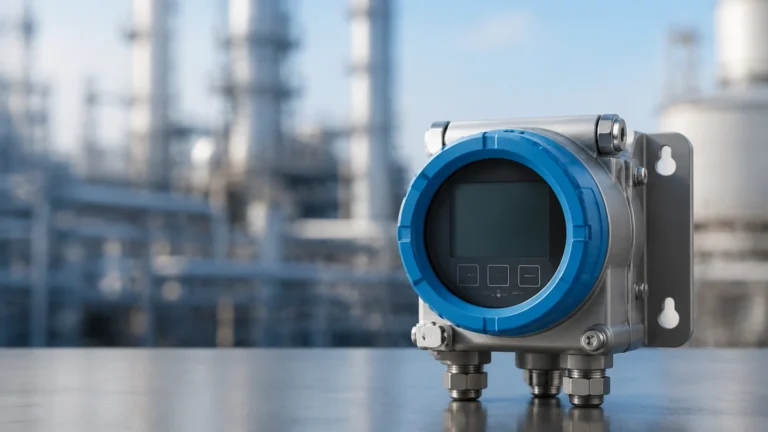
Pmc21
Pmc21
In the field of industrial process automation, the measurement of pressure and liquid level is fundamental to ensuring safety, efficiency, and product quality. Among the various instruments available to engineers, the PMC21 stands out as a compact, robust pressure transmitter specifically designed for hydrostatic level measurement and general pressure monitoring. This article provides a comprehensive technical overview of the PMC21, its underlying measurement principles, selection criteria, and practical installation guidance for industrial applications.
Understanding the Measurement Principle
The PMC21 belongs to the category of hydrostatic level transmitters. To select the right instrument, it is essential to understand the physics of hydrostatic pressure.
Hydrostatic Pressure Theory
Hydrostatic level measurement is based on the principle that the pressure at the bottom of a liquid column is directly proportional to the height of that column and the density of the liquid. This relationship is defined by the formula:
P = ρ × g × h
Where:
* P is the hydrostatic pressure (measured in Pascals or bar).
* ρ (rho) is the density of the liquid (kg/m³).
* g is the acceleration due to gravity (approximately 9.81 m/s²).
* h is the height of the liquid column (meters).
In a vented (open) tank, the transmitter measures the pressure exerted by the liquid. Since gravity is constant and the density of the liquid is usually known, the transmitter can accurately calculate the level (h) based on the measured pressure (P). For closed tanks, a differential pressure measurement is typically required to account for the internal gas pressure above the liquid.
Ceramic Sensor Technology
The PMC21 is distinguished by its use of a capacitive ceramic sensor, often referred to as a "dry" sensor. Unlike metallic diaphragms that use an internal oil fill to transmit pressure to the sensing element, the ceramic sensor in the PMC21 makes direct contact with the process medium.
Ceramic (typically 99.9% Al2O3) is favored in many B2B industrial applications because of its extreme hardness and resistance to corrosion and abrasion. When pressure is applied to the ceramic diaphragm, the capacitance between the diaphragm and the substrate changes. This change is converted into an electrical signal (usually 4-20mA or IO-Link).
Key Technical Specifications of the PMC21
The PMC21 is designed for space-constrained environments where a full-sized process transmitter might be unnecessary or too bulky. Below is a summary of the typical technical parameters encountered in industrial configurations:
| Feature | Specification Details |
| :— | :— |
| Measurement Range | 100 mbar to 40 bar (1.5 psi to 600 psi) |
| Accuracy | Standard: 0.5%; Optional: 0.3% of span |
| Sensor Material | Ceraphire (Ceramic 99.9% Al2O3) |
| Process Temperature | -25°C to +100°C (-13°F to +212°F) |
| Ambient Temperature | -40°C to +85°C (-40°F to +185°F) |
| Output Signal | 4 to 20 mA, IO-Link (Digital) |
| Supply Voltage | 10 to 30 V DC |
| Protection Class | IP65 to IP68 (depending on electrical connection) |
Selection Criteria for Industrial Applications
Choosing the correct version of a hydrostatic transmitter like the PMC21 requires a detailed analysis of the process environment. Engineers should consider the following factors:
1. Media Compatibility
While ceramic is highly resistant to many chemicals, it is essential to verify the compatibility of the housing material (usually 316L stainless steel) and the O-ring seals (FKM, EPDM, or NBR) with the process fluid. For example, EPDM is often preferred for water applications, while FKM is better suited for oils and certain chemicals.
2. Pressure Range and Overload Resistance
The selected range should cover the maximum possible level in the tank plus a safety margin. One of the primary advantages of the ceramic sensor in the PMC21 is its high overload resistance. In some cases, the sensor can withstand pressures up to 40 times its nominal range without permanent damage or calibration shift.
3. Electrical Integration
Modern industrial plants are increasingly moving toward digital communication. The availability of IO-Link in newer versions of the PMC21 allows for easier integration into Industry 4.0 environments, providing not only the primary measurement value but also diagnostic data and device identification.
For a broader look at how these sensors fit into a complete industrial ecosystem, including radar and ultrasonic alternatives, you may refer to the Main Page for detailed product comparisons and application support.
Installation and Commissioning Considerations
Proper installation is critical to the longevity and accuracy of any level measurement instrument. For the PMC21, several engineering best practices should be followed:
Mounting Position
* Bottom Mounting: For level measurement, the transmitter is typically mounted at the bottom of the tank. It is important to install the device away from the filling inlet to avoid pressure spikes caused by the falling liquid.
* Stilling Wells: In tanks with high turbulence or agitation, installing the transmitter inside a stilling well (a vertical pipe) can protect the diaphragm and stabilize the reading.
Atmospheric Pressure Compensation
Since the PMC21 measures gauge pressure, it must be vented to the atmosphere to account for changes in barometric pressure. This is usually achieved through a vented cable or a specialized breathing membrane in the plug connection. If the vent becomes blocked by moisture or debris, the measurement will drift.
Orientation Effects
While the PMC21 can be mounted in any orientation, it is calibrated in the vertical position (process connection pointing down). If mounted horizontally, a zero-point shift may occur due to the weight of the diaphragm. This shift can usually be corrected during commissioning via the software or an offset adjustment.
Limitations and Common Risks
Despite its versatility, the PMC21 is not suitable for every application. Engineers must be aware of the following limitations:
1. Vacuum Applications: While ceramic sensors are generally good for vacuum, extreme vacuum combined with high temperatures can stress the seals. Special considerations are needed for absolute pressure versions.
2. Abrasive Solids: Although ceramic is hard, high-velocity slurries containing large particles can eventually erode the diaphragm. In such cases, non-contact methods like radar might be more appropriate.
3. Temperature Shocks: Rapid changes in temperature (e.g., during a CIP/SIP cleaning cycle in food processing) can cause temporary measurement errors. The sensor requires time to stabilize after a thermal shock.
4. Hydrogen Permeation: In certain chemical processes where hydrogen gas is present, hydrogen atoms can permeate through metallic diaphragms. While ceramic sensors are less susceptible to this, it is still a factor to consider in high-pressure hydrogen environments.

Comparing Hydrostatic Sensors with Alternative Technologies
When evaluating the PMC21, it is helpful to compare it against other common level measurement technologies:
* Ultrasonic Sensors: These are non-contact and ideal for simple water applications. However, they struggle with foam, dust, and internal tank obstructions. The PMC21 is unaffected by foam or surface turbulence.
* Radar Level Meters: Radar offers high precision and is non-contact, making it suitable for aggressive chemicals. However, radar is generally more expensive than a hydrostatic transmitter like the PMC21. Radar is often preferred for tall silos or tanks with varying densities.
* Magnetic Level Gauges: These provide a visual indication and can be equipped with transmitters. They are excellent for high-pressure/high-temperature boiler applications but require more maintenance than a solid-state electronic sensor.
Maintenance and Troubleshooting
The PMC21 is designed to be maintenance-free, but periodic checks are recommended in critical applications.
* Zero Point Check: Periodically empty the tank to verify that the transmitter reads zero. If a deviation is found, it may indicate buildup on the diaphragm or a shift in the electronics.
* Diaphragm Inspection: If the process involves scaling or crystallization, the ceramic face should be inspected for deposits. Cleaning should be done carefully with a soft cloth and compatible solvent; never use sharp tools on the diaphragm.
* Cable Integrity: For submersible versions, the cable jacket should be inspected for cuts or abrasions that could allow moisture to enter the vent tube.
Frequently Asked Questions (FAQs)
Q: Can the PMC21 be used in hygienic applications?
A: Yes, there are versions of the PMC21 with hygienic process connections (like Tri-Clamp) and food-grade certificates (FDA, 3-A). However, ensure the O-ring material is also food-grade compliant.
Q: What is the difference between the PMC21 and the PMP21?
A: The PMC21 uses a ceramic sensor (capacitive), while the PMP21 uses a metallic sensor (piezoresistive). The ceramic sensor is generally better for abrasive or corrosive media, while the metallic sensor is often used for higher pressure ranges and specific hygienic requirements.
Q: How do I handle density changes in the liquid?
A: Since hydrostatic pressure depends on density, if the liquid density changes (e.g., due to temperature or concentration changes), the level reading will be inaccurate. In such cases, a density-compensated system or a non-contact radar sensor may be required.
Q: Is the PMC21 suitable for outdoor installation?
A: Yes, provided the electrical connection is properly sealed and the atmospheric vent is protected from direct rain and ice. Using a version with an IP67 or IP68 rating is recommended for outdoor environments.
Conclusion
The PMC21 represents a reliable and cost-effective solution for many industrial pressure and level measurement tasks. Its ceramic sensor technology provides a level of durability that metallic sensors often cannot match, particularly in harsh chemical or abrasive environments. By understanding the hydrostatic principle and following strict installation guidelines, engineers can ensure highly accurate measurements and long-term stability. For those exploring a wider range of industrial level measurement instruments, including advanced radar and ultrasonic solutions, visiting the Main Page offers a wealth of technical resources and product options to suit various process requirements.