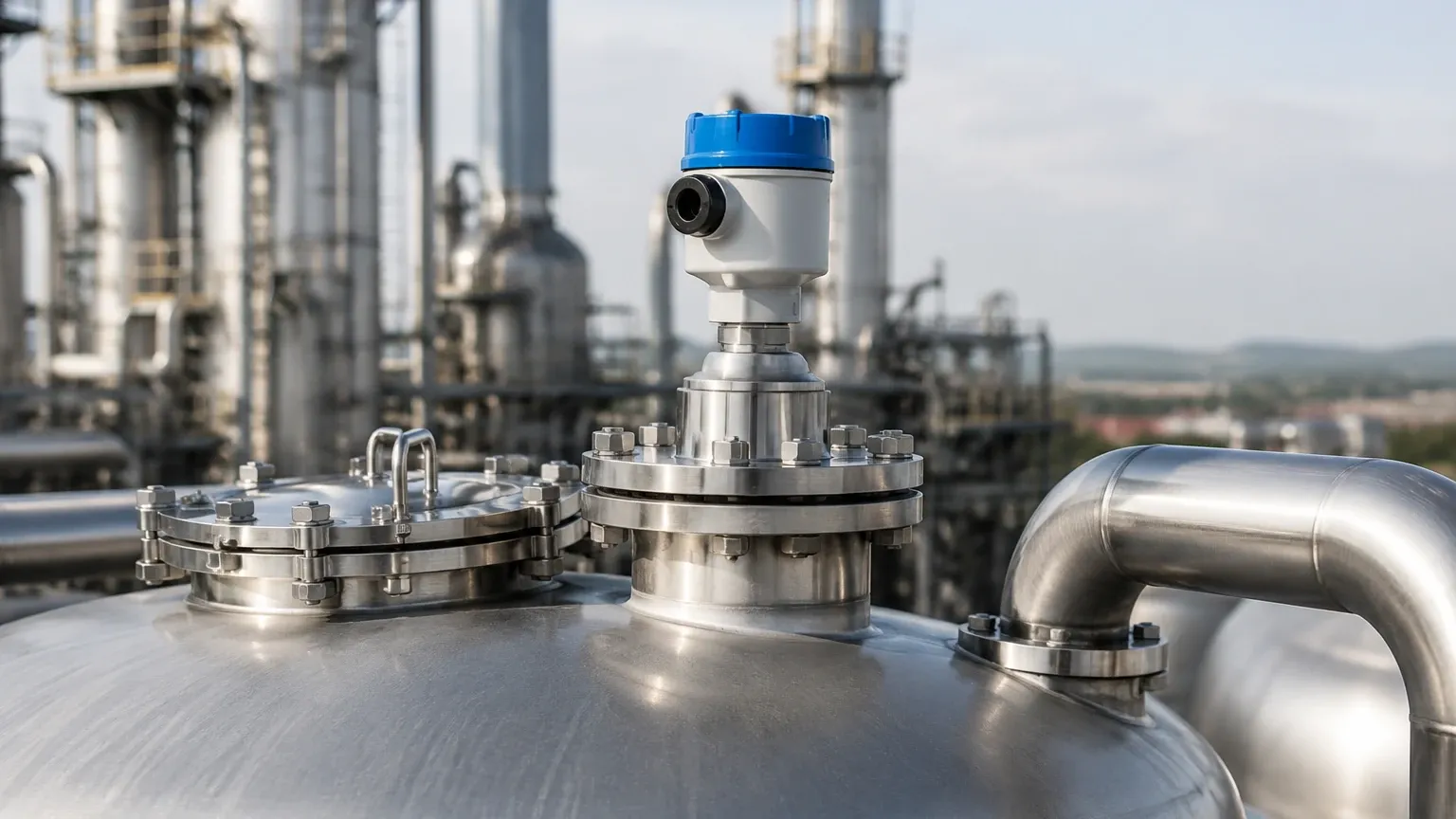
3408 Radar Level Transmitter
3408 Radar Level Transmitter: A Technical Engineering Guide to High-Frequency Level Measurement
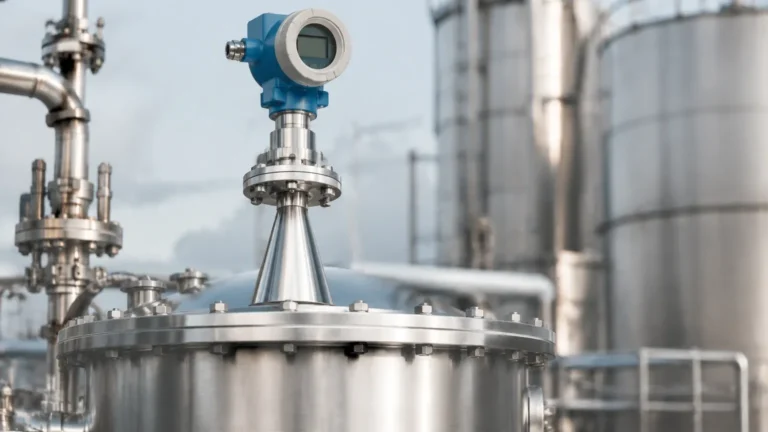
In the landscape of modern industrial automation, the demand for high-precision, non-contact level measurement has led to the widespread adoption of high-frequency radar technology. The 3408 radar level transmitter represents a significant advancement in this field, utilizing 80 GHz Frequency Modulated Continuous Wave (FMCW) technology to provide reliable data in complex process environments.
For process engineers and procurement specialists, understanding the nuances of the 3408 series is essential for ensuring plant safety, efficiency, and long-term reliability. This guide examines the operating principles, selection criteria, and installation requirements for Radar Level Meters, with a specific focus on the 3408 transmitter's capabilities.
1. Measurement Principle: The 80 GHz FMCW Advantage
Before selecting a 3408 radar level transmitter, it is critical to understand how it differs from traditional pulse radar systems. The 3408 operates on the Frequency Modulated Continuous Wave (FMCW) principle.
How FMCW Works
Unlike pulse radar, which measures the time-of-flight of a single microwave burst, an FMCW radar transmits a continuous signal with a constantly changing frequency (a frequency sweep or "ramp").
1. Signal Transmission: The transmitter emits a high-frequency signal (starting around 76 GHz and sweeping up to 81 GHz).
2. Reflection: The signal hits the surface of the medium (liquid or solid) and reflects back to the antenna.
3. Frequency Difference: Because the transmitter is still sweeping its frequency while the signal is traveling, the frequency of the received signal will differ from the frequency being transmitted at that exact moment.
4. Beat Frequency Calculation: The difference between these two frequencies—known as the "beat frequency"—is directly proportional to the distance to the product surface.
Why 80 GHz Matters
The shift from legacy 6 GHz or 26 GHz systems to the 80 GHz frequency used by the 3408 offers several engineering advantages:
* Narrow Beam Angle: Higher frequencies allow for much smaller antenna sizes while maintaining a narrow beam (often as low as 3°). This minimizes interference from tank walls, agitators, and internal baffles.
* Higher Resolution: The wider bandwidth available at 80 GHz allows the transmitter to distinguish between the product surface and nearby obstructions or foam layers with greater precision.
* Smaller Process Connections: The 3408 can be installed on smaller nozzles (as small as 1 inch or 25 mm) without sacrificing accuracy.
2. Key Features of the 3408 Radar Level Transmitter
The 3408 is designed as a versatile, user-friendly instrument for both simple and challenging applications. Its feature set typically includes:
* Bluetooth Connectivity: Modern 3408 units often include a secure Bluetooth interface, allowing technicians to configure the device and view diagnostics from a distance of up to 20 meters (65 feet) using a smartphone or tablet. This is particularly valuable for instruments mounted on top of tall silos or in hazardous areas.
* Smart Diagnostics: The transmitter monitors its own health, tracking signal quality and detecting issues like antenna build-up or abnormal surface turbulence.
* HART 7 Compatibility: Integration into existing control systems is seamless via 4-20 mA HART protocols, providing digital access to process variables and device status.
* Compact Design: The use of PTFE-encapsulated lens antennas makes the device resistant to aggressive chemicals and easy to clean.
3. Technical Specifications and Selection Table
When specifying a 3408 radar level transmitter, engineers must align the instrument's capabilities with the physical properties of the medium and the vessel.
| Parameter | Specification (Typical) | Engineering Note |
| :— | :— | :— |
| Measuring Range | Up to 30m (98 ft) | Dependent on dielectric constant (DC) |
| Accuracy | ±2 mm (±0.08 in) | Constant across the entire range |
| Frequency | 77–81 GHz (W-band) | FMCW Technology |
| Beam Angle | 3° to 8° | Depends on antenna size (larger = narrower) |
| Process Temperature | -40°C to +150°C | High-temp versions available |
| Process Pressure | -1 to 20 bar (-14.5 to 290 psi) | Higher ratings available for specific flanges |
| Output | 4-20 mA / HART 7 / Bluetooth | Digital and analog options |
| Housing Material | Aluminum or Stainless Steel | Selection depends on environmental corrosivity |
| Wetted Parts | PTFE, PVDF, or 316L SS | Must be chemically compatible with medium |
4. Application Engineering: Where to Use the 3408
The 3408 is a "workhorse" transmitter suitable for a variety of industries. However, its performance is optimized for specific scenarios:
Chemical and Petrochemical
Due to its non-contact nature and the availability of PTFE-coated antennas, the 3408 is ideal for measuring aggressive acids, bases, and solvents. The 80 GHz beam can easily ignore internal heating coils or agitator blades common in chemical reactors.
Water and Wastewater
In open-air applications like flumes or wet wells, the 3408 is unaffected by temperature fluctuations, wind, or vapor, which often plague ultrasonic sensors. Its narrow beam allows it to measure through narrow gratings or near-wall mounts without interference.
Food and Beverage
The flush-mounted lens antenna options meet hygienic requirements. The 3408 can accurately measure levels in small buffer tanks where rapid filling and emptying cycles create significant turbulence.
Solids and Powders
While primarily used for liquids, the 3408 can be applied to small-to-medium-sized silos containing plastic pellets, grains, or powders. The high frequency provides a better reflection from sloped surfaces compared to lower-frequency radars.
5. Installation Considerations and Constraints
Proper installation is the single most important factor in the performance of any radar level transmitter. For the 3408, the following engineering guidelines should be followed:
Nozzle Geometry
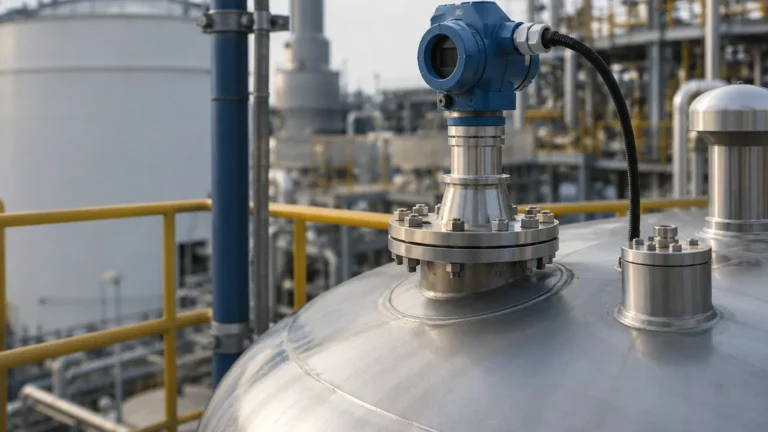
While the 80 GHz signal is narrow, the nozzle should still be kept as short as possible. If the nozzle is significantly longer than the antenna, internal reflections (ringing) can occur. Ideally, the antenna should extend slightly past the bottom of the nozzle.
Obstruction Avoidance
The beam should be kept clear of any internal structures.
* The 1/6 Diameter Rule: A common rule of thumb is to install the transmitter at a distance of 1/6 of the tank diameter from the wall.
* Avoid the Center: Never install the transmitter in the exact center of a domed-roof tank, as this can cause multiple reflections to converge at the antenna, creating a false "high level" signal.
Polarization Alignment
Radar waves are polarized. The 3408 housing can usually be rotated to align the polarization of the signal. In rectangular tanks, aligning the polarization parallel to the walls can help reduce unwanted reflections.
Dead Zone (Blocking Distance)
Every radar has a minimum measuring distance (dead zone) near the antenna. For the 3408, this is typically around 50 mm to 100 mm. The maximum fill level of the tank must be calibrated to stay below this zone to prevent signal loss.
6. Limitations and Risks
Despite its advanced technology, the 3408 radar level transmitter is not a universal solution. Engineers must account for the following limitations:
1. Low Dielectric Media: Radar relies on the reflection of microwaves. Materials with a very low dielectric constant (DC < 1.5), such as certain liquefied gases or ultra-pure oils, may reflect very little energy. In these cases, a guided wave radar or a larger antenna may be required.
2. Heavy Foam: While 80 GHz radar can penetrate some light foam, extremely dense or conductive foam (like that found in some fermentation processes) can absorb the radar signal entirely, leading to a "Loss of Echo" (LOE) error.
3. Heavy Condensation/Icing: While the 3408 is designed to shed droplets, extreme condensation or ice buildup on the lens antenna will attenuate the signal. In these environments, an integrated air purge system or a specialized weather shield should be considered.
7. International Buyer’s Checklist
When sourcing a 3408 radar level transmitter for international projects, ensure the following technical details are confirmed with the manufacturer:
* Hazardous Area Certifications: Does the unit require ATEX, IECEx, or FM approvals? Ensure the housing and cable glands match the zone rating.
* Process Connection Standards: Confirm whether flanges should follow ASME (ANSI), EN (DIN), or JIS standards.
* Configuration Tools: Will the site team use a handheld HART communicator, a laptop with a DTM/EDDL driver, or the Bluetooth mobile app? Ensure the necessary licenses are included.
* Factory Calibration: Request a calibration certificate if the unit is being used for custody transfer or high-accuracy inventory management.
8. Frequently Asked Questions (FAQ)
Q: Can the 3408 measure through a plastic tank lid?
A: Yes. Because microwaves can penetrate non-conductive materials, the 3408 can often measure the level inside a plastic (IBC) tank without being in contact with the liquid, provided the lid material does not contain carbon black or metal reinforcement.
Q: How does the 3408 handle agitators?
A: The 3408 uses a "False Echo Suppression" or "Echo Mapping" feature. During commissioning, the user records the reflections from the empty tank (including the agitator). The software then "masks" these static reflections, allowing the transmitter to track only the moving liquid surface.
Q: Is maintenance required for the lens antenna?
A: Generally, no. The PTFE lens is designed to be non-stick. However, in applications with heavy crystallization or coating, periodic visual inspection and cleaning with a soft cloth and mild solvent may be necessary.
Q: What is the difference between the 3408 and a guided wave radar?
A: The 3408 is a non-contact device (through-air), whereas guided wave radar (GWR) uses a physical probe or cable to guide the signal. GWR is better for very low dielectric liquids and interface measurement (e.g., oil over water), while the 3408 is preferred for corrosive, sticky, or hygienic applications where no contact is desired.
Conclusion
The 3408 radar level transmitter is a robust and high-precision instrument that simplifies level measurement in a wide range of industrial applications. By leveraging 80 GHz FMCW technology, it overcomes many of the hurdles associated with traditional level sensing. When correctly specified and installed according to the guidelines above, it provides a maintenance-free solution for critical process monitoring.
For more information on selecting the right technology for your facility, explore the full range of Radar Level Meters and consult with an application engineer to verify compatibility with your specific process conditions.