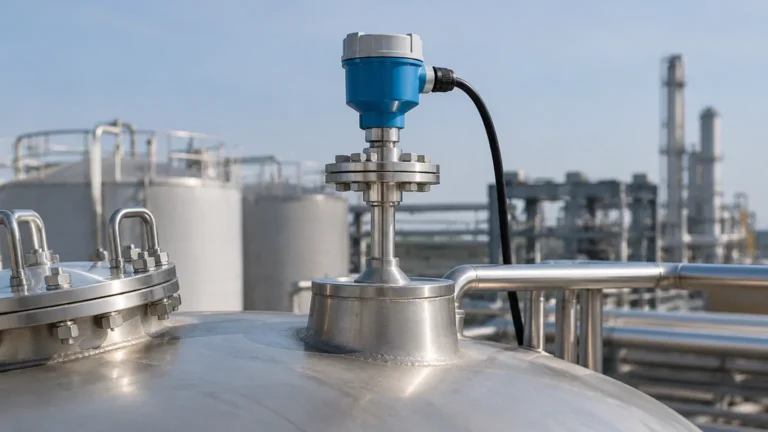
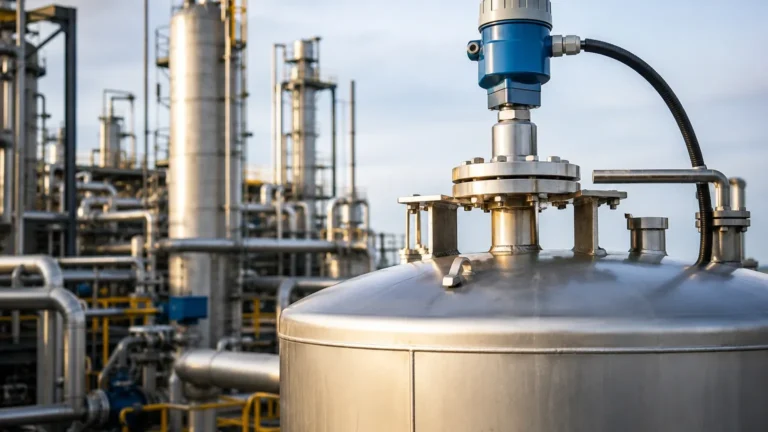
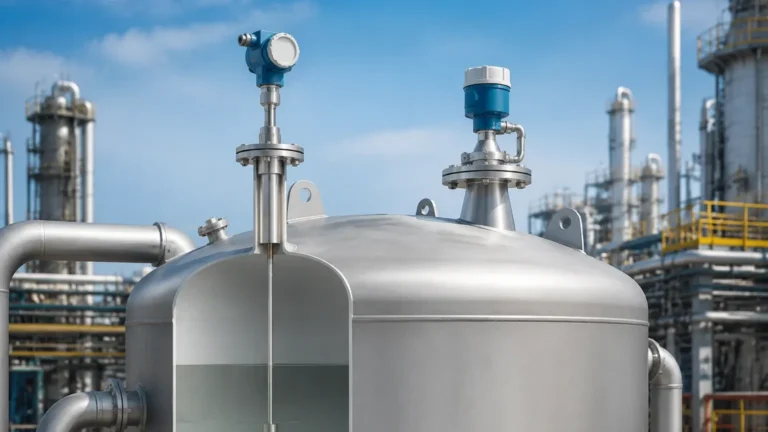
Radar Level Transmitter Siemens
Radar Level Transmitter Siemens: An Engineering Guide to Selection and Application
In the landscape of industrial process control, non-contact level measurement has become the preferred standard for accuracy and reliability. Among the various technologies available, radar-based systems stand out for their ability to operate independently of temperature, pressure, and vapor fluctuations. For many engineers, the radar level transmitter siemens (specifically the SITRANS LR series) represents a benchmark in the industry. Understanding the technical nuances of these instruments, alongside broader market offerings in Radar Level Meters, is essential for optimizing plant efficiency and safety.
This guide explores the fundamental principles of radar level measurement, provides a technical breakdown of selection criteria, and outlines the installation constraints that determine the success of a level monitoring project.
Understanding Radar Measurement Principles
Before selecting a specific model, such as a radar level transmitter siemens, it is critical to understand how these devices interact with the process medium. Radar level measurement generally falls into two categories: Time-of-Flight (Pulse) and Frequency Modulated Continuous Wave (FMCW).
1. Pulse Radar (Time-of-Flight)
Pulse radar transmitters emit a high-frequency microwave signal toward the material surface in short, concentrated bursts. The device measures the time it takes for the pulse to travel to the surface and reflect back to the sensor. Since the speed of light is constant, the distance is calculated as:
*Distance = (Speed of Light × Travel Time) / 2*
Pulse radar is often favored for its lower power consumption and is highly effective in standard liquid storage applications.
2. Frequency Modulated Continuous Wave (FMCW)
FMCW radar, utilized in high-end models like the SITRANS LR560, emits a continuous signal with a constantly changing frequency. The reflection from the product surface is compared against the emitted signal. The frequency difference between the transmitted and received signals is directly proportional to the distance. FMCW technology offers superior signal-to-noise ratios, making it the ideal choice for measuring solids, powders, or liquids with heavy turbulence.
The Role of Dielectric Constant (dk)
The dielectric constant of the medium is the most significant factor in signal reflection. Materials with a high dk (e.g., water, dk ≈ 80) reflect signals strongly. Materials with low dk (e.g., hydrocarbons or dry solids, dk < 2) allow more energy to pass through, resulting in weaker echoes. Modern Radar Level Meters utilize advanced algorithms to track these faint echoes even in challenging environments.
Technical Selection: Frequency and Application
Choosing the right frequency is the most pivotal decision in radar selection. The market, including the radar level transmitter siemens portfolio, typically divides instruments into three frequency bands:
| Frequency Band | Common Applications | Key Advantages | Limitations |
| :— | :— | :— | :— |
| 6 GHz (C-Band) | Large tanks with heavy foam, steam, or turbulence. | Penetrates vapor and foam effectively. | Large beam angle; requires large nozzles. |
| 24 GHz (K-Band) | General-purpose liquid storage, chemical tanks. | Good balance of beam focus and signal strength. | Moderate sensitivity to heavy foam. |
| 80 GHz (W-Band) | Narrow vessels, solids, high-precision liquids. | Extremely narrow beam; ignores internal obstructions. | Higher cost; can be attenuated by very heavy dust. |
High-Frequency Advantages (80 GHz)
In recent years, 80 GHz technology has revolutionized the industry. Instruments like the SITRANS LR100 or Welk’s high-frequency radar series allow for measurement through narrow nozzles and ignore internal tank structures like ladders or agitators. The small wavelength also allows for much smaller antenna sizes, often integrated into a flush-lens design that resists buildup.
Engineering Considerations for Installation
Even the most advanced radar level transmitter siemens will fail if installation parameters are ignored. Engineers must account for the physical geometry of the vessel and the behavior of the medium.
1. Beam Angle and Obstructions
Every radar antenna has a beam angle (typically between 3° and 20°). The "footprint" of the radar signal expands as it travels further from the sensor. If this footprint hits a cooling coil, agitator blade, or tank wall, it creates a false echo.
* Calculation Tip: For a 10° beam angle, the radius of the beam at 10 meters (32.8 ft) is approximately 0.87 meters (2.85 ft). Ensure no obstructions exist within this radius.
2. Nozzle Geometry
The mounting nozzle should be as short as possible. If a nozzle is too long or narrow, the radar signal may reflect off the nozzle's inner edge, creating a "ringing" effect that obscures the true level in the near-field (the "dead zone"). For 80 GHz transmitters, nozzle interference is significantly reduced, but for lower frequency units, the nozzle height-to-diameter ratio must be strictly monitored.
3. Turbulence and Foam
While radar is superior to ultrasonic sensors in presence of foam, not all foam is equal. Dry, airy foam may be transparent to radar, while dense, wet foam (like that found in wastewater treatment or chemical reactors) can absorb or scatter the signal. In these cases, a low-frequency (6 GHz) radar or a guided wave radar (GWR) may be more appropriate.
Comparing Siemens SITRANS LR Series with Industrial Alternatives
When evaluating a radar level transmitter siemens, it is helpful to look at how specific models align with industrial needs. The SITRANS LR250 is a staple for liquid applications, while the LR560 is a leader in solids measurement.
However, for many international buyers, manufacturers like Welk provide comparable Radar Level Meters that offer similar technical specifications—such as 80 GHz FMCW technology, HART/Modbus communication, and ATEX/IECEx certifications—often with shorter lead times and localized technical support. These alternatives are particularly valuable for OEM/ODM projects where customized process connections or housing materials (e.g., PTFE-lined for corrosive acids) are required.
Maintenance and Troubleshooting
Radar transmitters are generally low-maintenance because they have no moving parts. However, certain conditions can lead to measurement errors:
* Build-up on Antenna: In sticky or crystallizing media, material can accumulate on the lens. While many modern radars can "see through" thin layers of build-up, heavy accumulation will attenuate the signal. Selecting a lens-style antenna or using a purging connection (air blast) can mitigate this.
* False Echo Suppression: If a tank has permanent internal obstructions, engineers must perform a "mapping" or "learning" run. This tells the transmitter to ignore specific echoes at fixed distances.
* Power Supply Issues: Radar transmitters are sensitive to voltage drops, especially in long-loop 4-20mA configurations. Ensure the shielded cable is properly grounded at one end to prevent EMI (Electromagnetic Interference) from variable frequency drives (VFDs) or motors.
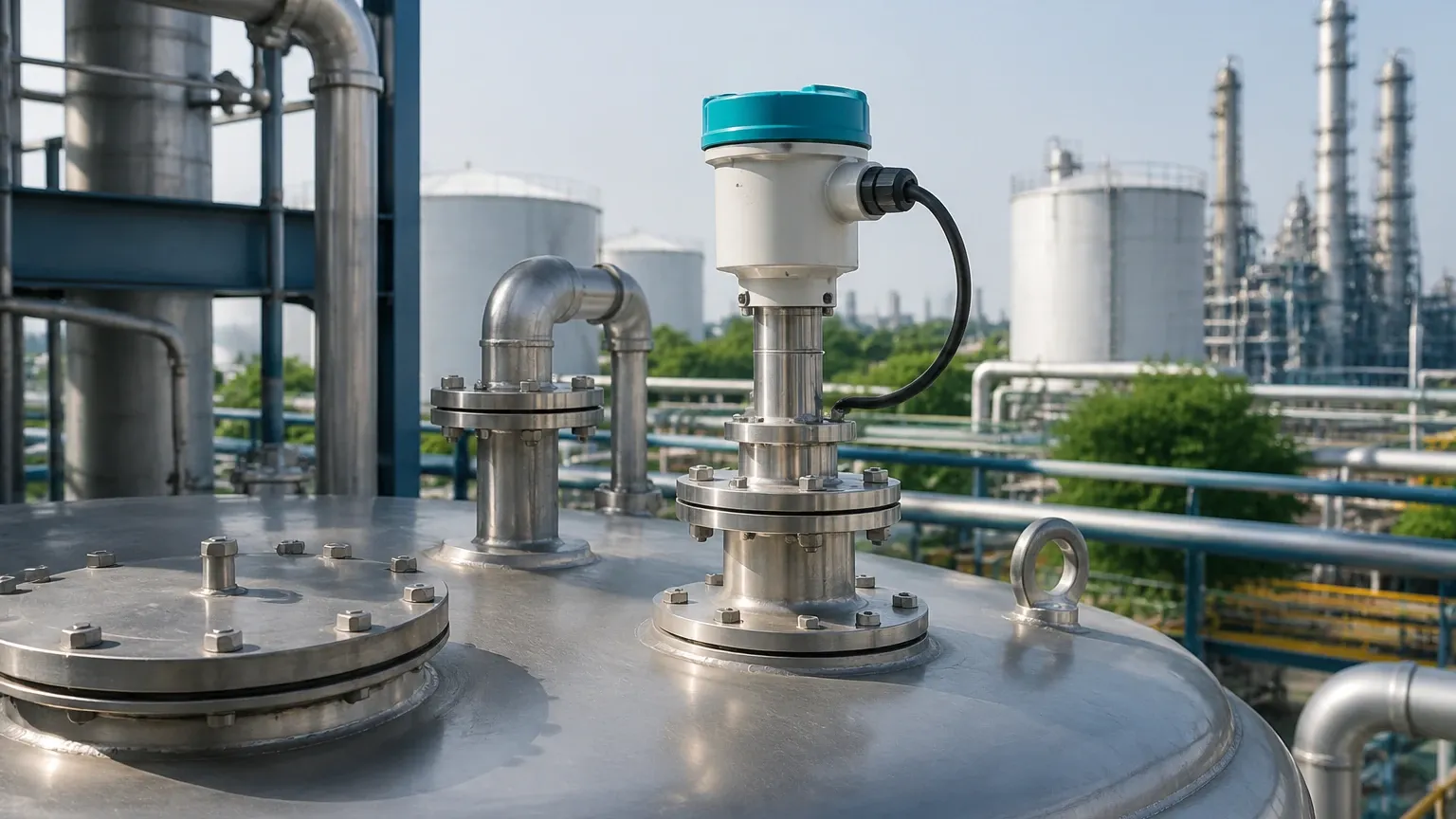
Application Focus: Solids vs. Liquids
Solids Measurement
Measuring the level of grain, cement, or plastic pellets is notoriously difficult due to the uneven surface (angle of repose) and heavy dust during filling. A radar level transmitter siemens like the LR560 uses a high frequency and a narrow beam to penetrate dust and integrate the signal from the sloping surface. For these applications, a swiveling flange is often recommended to aim the beam at the most representative part of the material cone.
Liquid Measurement
In liquid applications, the primary concern is often the presence of vapor or agitation. For high-pressure boilers or chemical reactors, the radar must be isolated from the process using a glass or ceramic window. In these environments, the stability of the 24 GHz or 80 GHz signal ensures that the level is tracked even when the surface is boiling.
Critical Checklist for International Buyers
When sourcing Radar Level Meters, whether from a major brand or a specialized manufacturer like Welk, ensure the following data points are confirmed:
1. Process Temperature and Pressure: Standard units typically handle up to 80°C (176°F), but high-temp versions can reach 200°C (392°F) or more.
2. Chemical Compatibility: Ensure the wetted parts (316L Stainless Steel, PTFE, Hastelloy) are compatible with the medium.
3. Communication Protocol: Does the facility require 4-20mA HART, Profibus PA, or Foundation Fieldbus?
4. Hazardous Area Ratings: Verify if the installation zone requires Intrinsically Safe (IS) or Explosion-Proof (XP) certification.
5. Measuring Range: Ensure the device's maximum range (e.g., 30m, 70m, or 120m) exceeds the vessel height by at least 10% to account for the bottom of the tank.
Frequently Asked Questions (FAQ)
Q: Can a radar level transmitter measure through a plastic tank wall?
A: Yes. If the tank is made of non-conductive plastic (like HDPE or PP) and is not reinforced with metal, a radar transmitter can measure the level from the outside, provided the material inside has a sufficient dielectric constant.
Q: How does a radar level transmitter siemens handle heavy steam?
A: High-pressure steam can slightly change the speed of the microwave signal, but the error is usually negligible (less than 1%) compared to ultrasonic sensors, which fail completely in steam. For extreme precision in saturated steam, specific compensation factors may be applied.
Q: What is the difference between "Guided Wave Radar" and "Non-Contact Radar"?
A: Non-contact radar sends signals through the air. Guided Wave Radar (GWR) uses a physical probe (cable or rod) to lead the signal to the surface. GWR is better for very low dielectric liquids and interface measurement (e.g., oil over water), while non-contact radar is better for corrosive or hygienic applications where you don't want a probe in the liquid.
Conclusion
Selecting the right level measurement solution requires a balance of technology, application knowledge, and budget. While the radar level transmitter siemens remains a popular choice for its proven track record, the emergence of high-frequency 80 GHz Radar Level Meters from specialized manufacturers like Welk offers engineers more flexibility than ever before. By focusing on the dielectric properties of the medium, the geometry of the vessel, and the required frequency, industrial facilities can achieve precise, maintenance-free level control that stands the test of time.