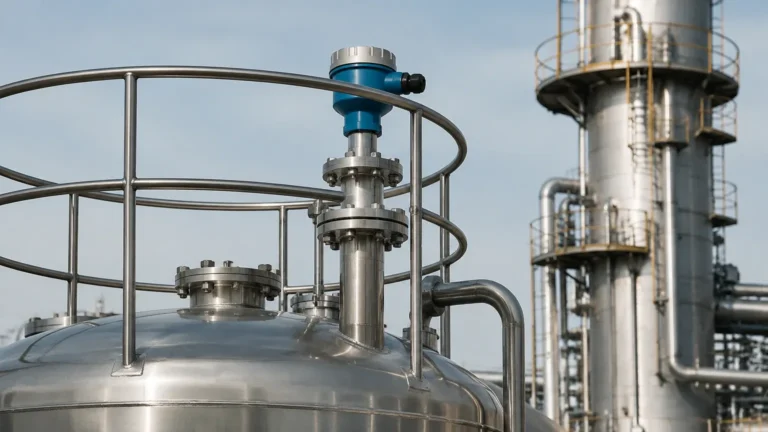
Rosemount Tm 3408 Level Transmitter Non Contacting Radar
Rosemount TM 3408 Level Transmitter: Non-Contacting Radar Engineering Guide
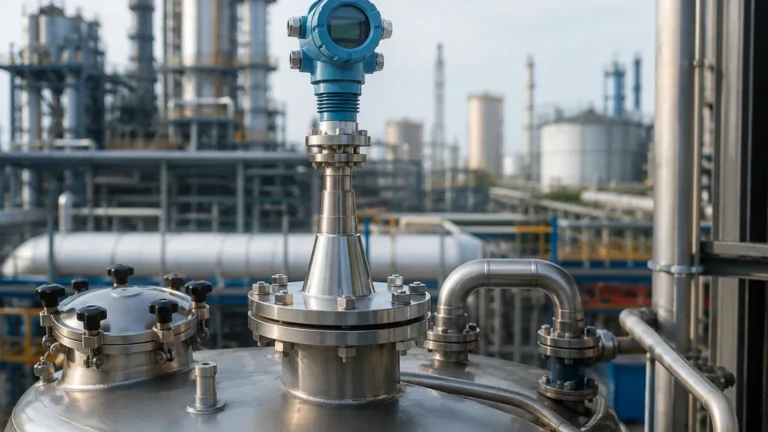
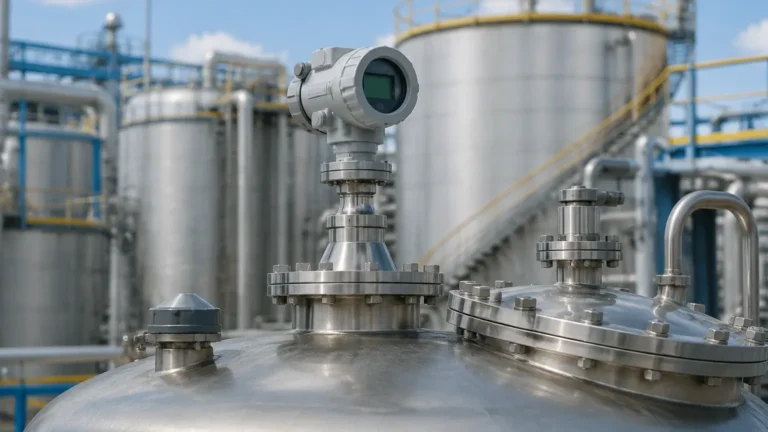
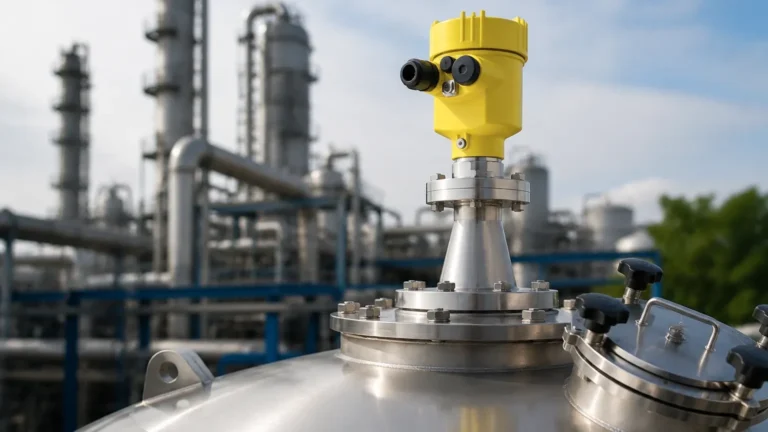
In the landscape of industrial automation, the transition from contact-based measurement to non-contacting technologies has significantly enhanced process reliability and reduced maintenance overhead. Among these technologies, the rosemount tm 3408 level transmitter non contacting radar stands out as a versatile solution designed for a wide range of liquid level applications. This article provides a comprehensive technical analysis of non-contacting radar technology, focusing on the 80 GHz FMCW (Frequency Modulated Continuous Wave) principle, selection criteria, and practical installation requirements for industrial environments.
Understanding the Measurement Principle: 80 GHz FMCW Radar
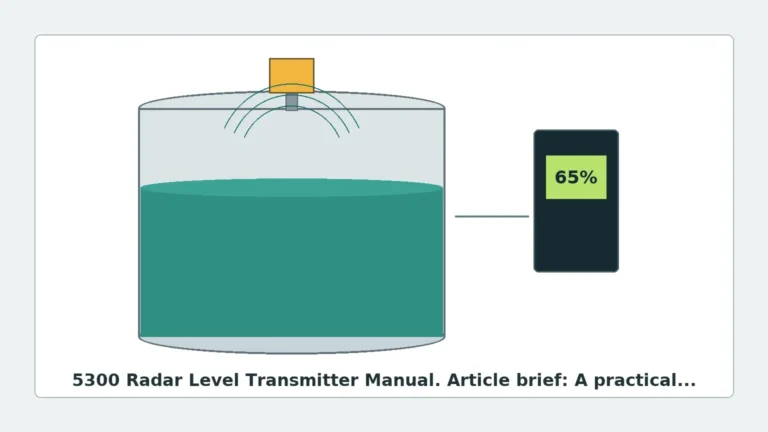
To appreciate the capabilities of modern Radar Level Meters, one must first understand the underlying physics of Frequency Modulated Continuous Wave (FMCW) technology. Unlike traditional pulse radar, which measures the time-of-flight of a single microwave pulse, FMCW radar transmits a continuous electromagnetic signal with a constantly changing frequency.
The FMCW Mechanism
As the transmitter emits a signal, the frequency increases linearly over a specific bandwidth (the "sweep"). When the signal hits the surface of the medium, it is reflected back to the sensor. By the time the reflected signal returns, the transmitter is already emitting a higher frequency. The difference between the transmitted frequency and the received frequency is directly proportional to the distance between the sensor and the product surface.
Mathematically, the distance ($D$) is calculated as:
$$D = \frac{c \cdot \Delta f}{2 \cdot (df/dt)}$$
Where:
* $c$ is the speed of light.
* $\Delta f$ is the measured frequency difference.
* $df/dt$ is the rate of frequency change (sweep rate).
The Advantage of 80 GHz Frequency
The Rosemount 3408 utilizes 80 GHz technology. In the world of radar level measurement, frequency determines the beam angle and the size of the antenna. A higher frequency allows for a much narrower beam. For instance, an 80 GHz radar can achieve a beam angle as narrow as 3 degrees, whereas older 6 GHz or 26 GHz models often require much larger antennas to achieve even a 10-degree spread. This precision allows the signal to avoid internal tank obstructions like agitators, ladders, and heating coils, which would otherwise cause "false echoes" and measurement errors.
Key Features of the Rosemount TM 3408 Level Transmitter
The Rosemount 3408 is engineered to simplify the user experience while maintaining high-performance standards. It is particularly noted for its integration of digital diagnostics and ease of commissioning.
1. Smart Meter Verification (SMV): This feature allows operators to verify the health of the transmitter without interrupting the process or removing the device from the tank. It provides a documented health check that is essential for regulatory compliance and safety-instrumented systems (SIS).
2. Bluetooth® Connectivity: Modern industrial sites are increasingly adopting wireless configuration. The 3408 allows for secure, short-range configuration via mobile devices, reducing the need for technicians to climb tanks or open housings in hazardous areas.
3. Dynamic Vapor Compensation: In high-pressure or high-temperature applications where the gas phase above the liquid changes density, the speed of the radar signal can be affected. The 3408 includes algorithms to compensate for these changes, ensuring accuracy remains within the ±2 mm (0.08 in) specification.
4. Compact Design: The high frequency allows for smaller process connections, making it suitable for small vessels and plastic tanks where space is a premium.
Selection Criteria for Non-Contacting Radar
Choosing the right radar level meter requires an evaluation of the physical properties of the media and the geometry of the vessel. The following table outlines the primary considerations for selecting a rosemount tm 3408 level transmitter non contacting radar or similar 80 GHz devices.
Table 1: Selection Matrix for Radar Level Meters
| Parameter | Requirement | Impact on Measurement |
| :— | :— | :— |
| Dielectric Constant ($\epsilon_r$) | Min 1.2 | Higher values provide stronger signal reflections. Low $\epsilon_r$ (e.g., oils) may require specialized sensitivity settings. |
| Process Temperature | -40°C to +150°C (-40°F to 302°F) | Extreme temperatures can affect the electronics; ensure the seal material is compatible. |
| Process Pressure | Vacuum to 25 bar (362 psi) | High pressure can change the vapor space density, requiring compensation. |
| Measuring Range | Up to 40 meters (131 ft) | Ensure the transmitter's power is sufficient for the total tank height. |
| Beam Angle | ~3° to 6° | Narrower beams are better for tall, narrow tanks or tanks with internal obstructions. |
Installation Considerations and Best Practices
Even the most advanced radar transmitter will fail to provide accurate data if installed incorrectly. For the Rosemount 3408, several geometric rules must be followed to ensure a clear signal path.
Nozzle Geometry
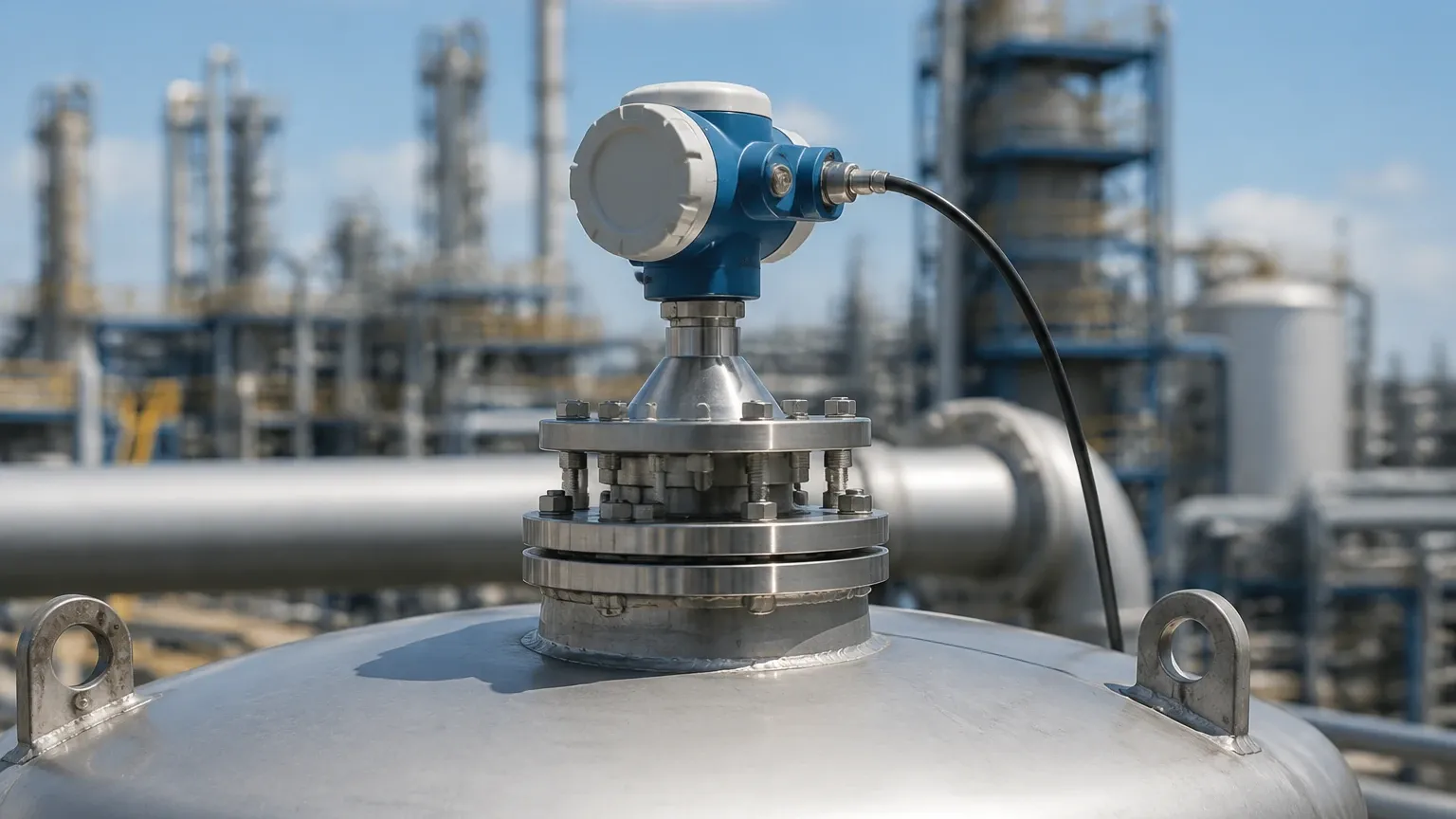
The nozzle height and diameter play a critical role. If the nozzle is too long or narrow, the radar signal may reflect off the internal walls of the nozzle before even entering the tank, creating a "ringing" effect that masks the true level of the liquid. Ideally, the antenna should extend slightly beyond the nozzle or be flush with the tank roof.
Positioning and Obstructions
* Avoid the Center: Never mount a radar transmitter in the exact center of a cylindrical tank. This can lead to multiple reflections (parabolic effect) that amplify noise.
* Distance from Wall: Mount the unit at least 200 mm (8 in) from the tank wall to prevent interference from the wall surface.
* Agitators: If the tank has an agitator, the transmitter should be positioned so the beam does not hit the blades. If this is unavoidable, use the software's "False Echo Suppression" feature to map out the signal from the blades.
Table 2: Recommended Installation Clearances
| Tank Feature | Minimum Clearance (Metric) | Minimum Clearance (Imperial) |
| :— | :— | :— |
| Tank Wall | 200 mm | 8 in |
| Nozzle Height | < 200 mm (standard) | < 8 in |
| Obstructions | 300 mm from beam center | 12 in from beam center |
| Filling Stream | Do not install in path | Do not install in path |
Limitations and Application Risks
While non-contacting radar is highly robust, certain process conditions present challenges that engineers must address during the design phase.
1. Heavy Foam: Radar signals are electromagnetic. While they pass through many vapors, thick, dense foam can absorb or scatter the signal. If the foam is conductive and dense, the radar may reflect off the top of the foam rather than the liquid. In such cases, a guided wave radar (GWR) or a differential pressure transmitter might be more appropriate.
2. Turbulence: Extreme surface turbulence can cause the signal to scatter in multiple directions, reducing the strength of the return echo. The Rosemount 3408 handles this through advanced signal processing and damping, but it is a factor to monitor.
3. Condensation and Buildup: While 80 GHz radar is less sensitive to buildup than lower frequencies, heavy condensation on the antenna lens can attenuate the signal. Many 3408 models feature a PTFE or PEEK lens antenna designed to shed droplets, but in extreme cases, an air purge system may be required.
Maintenance and Troubleshooting FAQ
Q: How often does the Rosemount 3408 require calibration?
A: Because there are no moving parts and the measurement is based on the speed of light, the device does not "drift" in the traditional sense. Most users perform a verification check every 1–3 years using the Smart Meter Verification tool rather than a full wet calibration.
Q: Can the 3408 measure through a plastic tank roof?
A: Yes. Since plastic is non-conductive, the radar signal can penetrate the roof of a plastic (e.g., HDPE or PP) tank. This allows for measurement without cutting a hole in the vessel, provided the plastic is not too thick or reinforced with metallic fibers.
Q: What happens if the dielectric constant of my liquid changes?
A: In non-contacting radar, the dielectric constant affects the *strength* of the reflection, not the *speed* of the signal. As long as the dielectric remains above the minimum threshold (typically 1.2), the level reading will remain accurate even if the product composition changes.
Conclusion
The rosemount tm 3408 level transmitter non contacting radar represents a significant step forward in simplifying complex level measurements. By leveraging 80 GHz FMCW technology, it provides the narrow beam and high resolution required for modern industrial tanks, while its digital features reduce the total cost of ownership through simplified maintenance.
For engineers and procurement professionals, selecting the right instrumentation involves balancing technical specifications with application-specific constraints. When evaluating your next project, consider the full range of Radar Level Meters to ensure the chosen technology aligns with your media properties, vessel geometry, and accuracy requirements. By following the installation and selection guidelines outlined above, industrial facilities can achieve reliable, long-term level monitoring with minimal intervention.
Download Rosemount Tm 3408 Level Transmitter Non Contacting Radar as a PDF