Ultrasonic Level Indicator Price
Ultrasonic Level Indicator Price: A Comprehensive Engineering and Procurement Guide
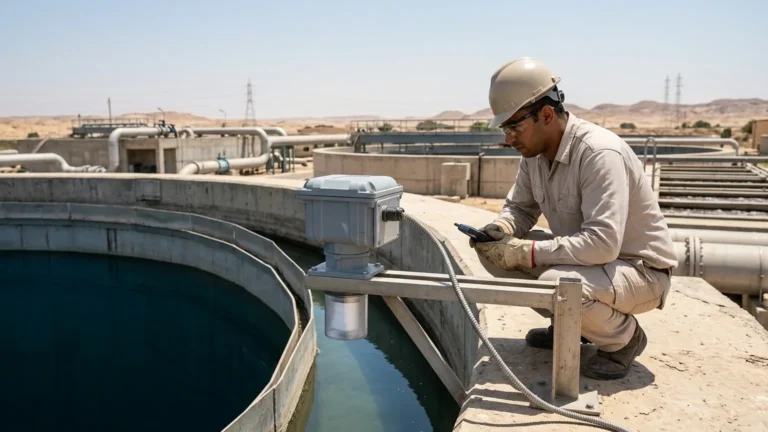
In industrial process automation, selecting the right instrumentation requires a balance between technical performance and budgetary constraints. For many liquid and solid monitoring applications, Ultrasonic Level Meters represent the most cost-effective non-contact solution. However, understanding the factors that influence the ultrasonic level indicator price is essential for engineers and procurement professionals to ensure long-term reliability and minimize the total cost of ownership (TCO).
This guide explores the underlying technology of ultrasonic measurement, the variables that drive market pricing, and practical selection criteria for industrial environments.
Understanding Ultrasonic Measurement Principles
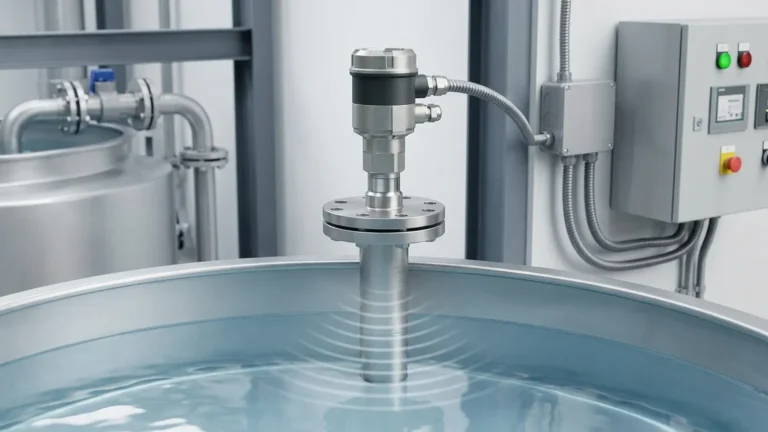
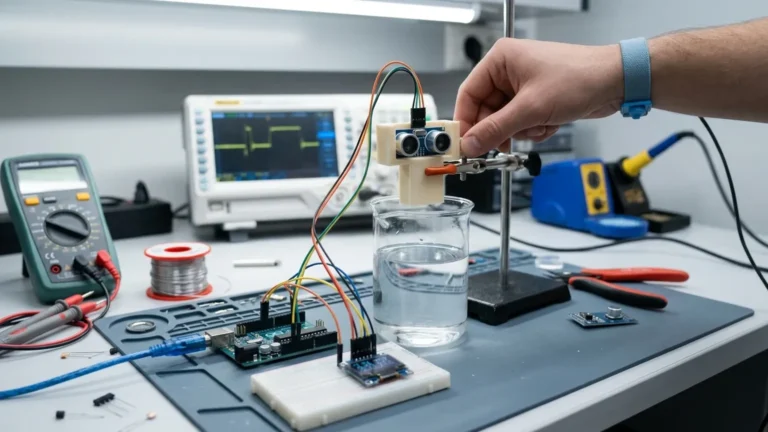
Before evaluating costs, it is critical to understand how these devices function. Ultrasonic level meters operate on the "Time of Flight" (ToF) principle. The sensor, typically mounted at the top of a tank or vessel, emits high-frequency sound pulses (usually between 20 kHz and 70 kHz). These pulses travel through the air, reflect off the surface of the medium (liquid or solid), and return to the transducer.
The meter calculates the distance to the material surface using the formula:
Distance = (Speed of Sound × Time) / 2
Because the speed of sound is influenced by air temperature, most industrial-grade ultrasonic level meters include an integrated temperature sensor to compensate for these variations automatically. This ensures accuracy across changing environmental conditions.
The "Dead Zone" Factor
One technical limitation that influences both application and price is the "Dead Zone" (or Blocking Distance). This is a small area directly beneath the transducer where the device cannot accurately measure because the sensor is still vibrating from the pulse emission when the echo returns. Typically, higher-quality sensors with advanced signal processing have smaller dead zones, allowing for measurements closer to the top of the tank.
Key Factors Affecting Ultrasonic Level Indicator Price
When requesting quotes, you will find a wide variance in pricing. This discrepancy is rarely arbitrary; it usually reflects the internal components, build quality, and specialized features required for specific industrial tasks. The following factors are the primary drivers of the ultrasonic level indicator price:
1. Measuring Range and Frequency
The maximum distance a meter can measure significantly impacts the cost. Standard sensors usually cover ranges from 5 meters (16.4 ft) to 15 meters (49.2 ft). Long-range sensors capable of reaching 30 meters (98.4 ft) or more require larger transducers and more powerful electronics to emit stronger pulses and filter out background noise, leading to a higher price point.
2. Material Construction and Chemical Resistance
For water treatment or non-corrosive liquid storage, a standard ABS or polycarbonate housing is sufficient. However, in chemical processing involving acids or bases, the transducer face and housing must be constructed from chemically resistant materials like PVDF (Polyvinylidene Fluoride) or PTFE (Teflon). These materials increase the manufacturing cost but are essential for preventing sensor failure.
3. Accuracy and Signal Processing
Basic indicators may offer an accuracy of 0.5% of the span, while high-precision models can achieve 0.2% or better. Advanced signal processing—often referred to as "False Echo Suppression"—allows the meter to ignore internal tank obstructions like ladders, agitators, or weld seams. This software intelligence is a key differentiator in the ultrasonic level indicator price.
4. Output and Communication Protocols
A standard 4-20mA analog output is the baseline. Adding digital communication protocols such as HART, RS485 (Modbus), or Profibus increases the unit price but provides significantly more data for predictive maintenance and remote configuration.
5. Hazardous Area Certifications
If the meter is to be installed in an environment with explosive gases or dust (e.g., oil and gas or grain silos), it must be Intrinsically Safe (IS) or Explosion-Proof (Ex). Obtaining ATEX, IECEx, or UL certifications adds rigorous testing and specialized hardware requirements, which is reflected in the final cost.
Industrial Selection Table: Comparing Models
The following table provides a general overview of how different configurations impact the application suitability and relative pricing structure.
| Feature Set | Typical Range | Housing Material | Common Applications | Price Tier |
| :— | :— | :— | :— | :— |
| Basic Integrated | 0–5m (16.4 ft) | ABS Plastic | Open water tanks, sumps | Economy |
| Standard Industrial | 0–12m (39.4 ft) | Reinforced Plastic | Chemical storage, wastewater | Mid-Range |
| Corrosion Resistant | 0–15m (49.2 ft) | Full PVDF/PTFE | Strong acids, plating baths | Premium |
| Split/Remote Type | 0–30m (98.4 ft) | Aluminum/Plastic | Large silos, deep wells | High-End |
| Explosion-Proof | 0–20m (65.6 ft) | Die-cast Aluminum | Oil & Gas, Fuel storage | Specialized |
Installation Considerations and Best Practices
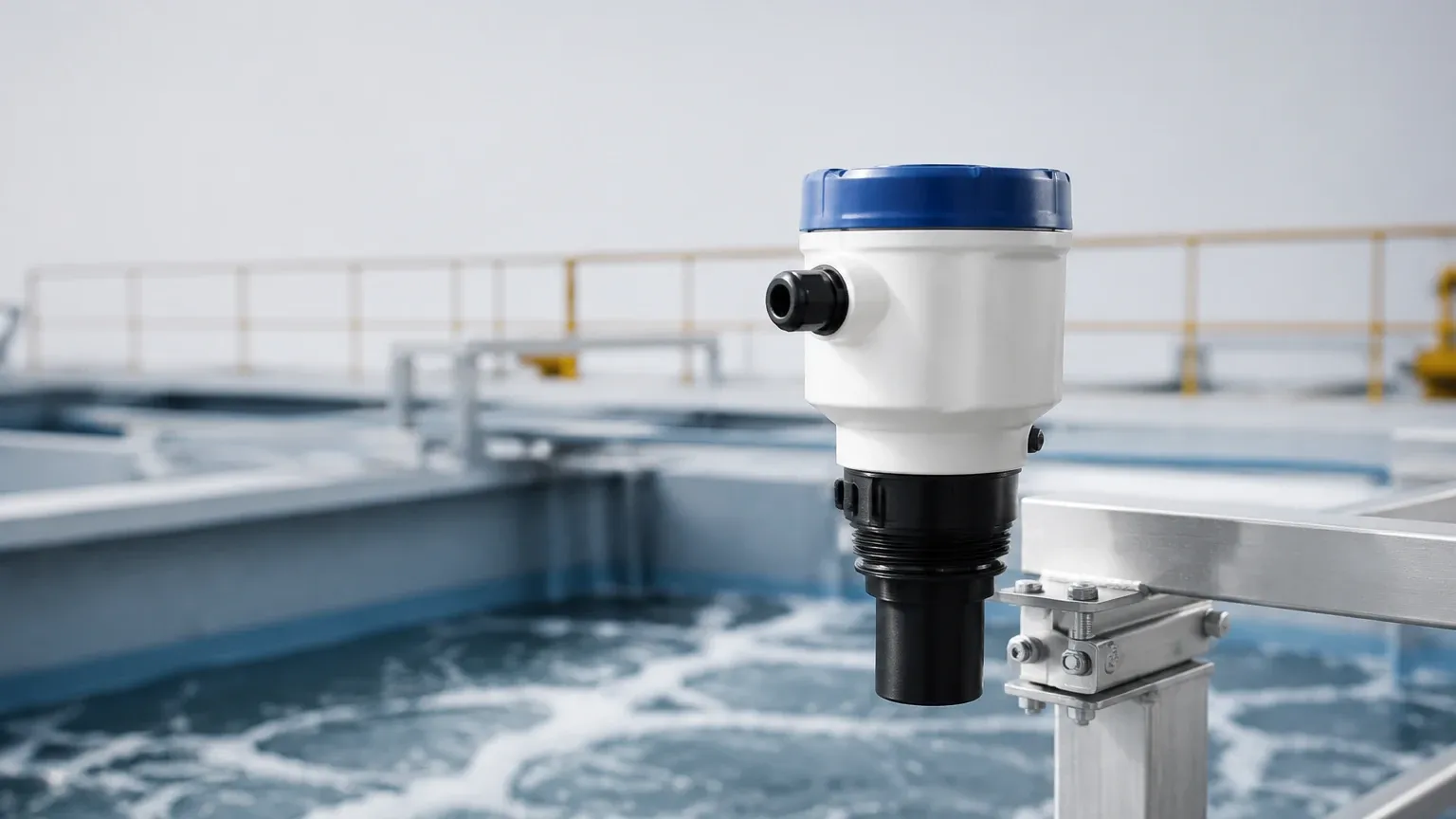
The performance of an ultrasonic level meter is heavily dependent on correct installation. Even the most expensive sensor will fail if poorly positioned. To maximize the value of your investment, follow these engineering guidelines:
* Perpendicular Mounting: The transducer face must be perfectly parallel to the liquid surface. A tilt of even a few degrees can cause the reflected signal to miss the receiver, leading to "Loss of Echo" errors.
* Avoid the Fill Stream: Never install the sensor directly above the point where the tank is being filled. The turbulence and falling material will interfere with the ultrasonic pulses.
* Distance from Walls: To avoid interference from side-wall reflections, the sensor should generally be installed at a distance from the wall equal to at least 1/6th of the tank height.
* Standpipe Usage: In tanks with heavy foam or extreme turbulence, installing the sensor inside a plastic or metal standpipe (still-well) can help provide a stable surface for measurement. However, ensure the pipe is vented and the internal surface is smooth.
Limitations: When to Look Beyond Ultrasonic Technology
While Ultrasonic Level Meters are highly versatile, they are not universal solutions. Certain process conditions can attenuate or distort sound waves, making ultrasonic technology unreliable regardless of the ultrasonic level indicator price.
1. Vacuum Conditions: Sound requires a medium (air or gas) to travel. In a vacuum, ultrasonic pulses cannot propagate.
2. High Pressure/High Temperature: Changes in pressure and temperature significantly alter the speed of sound. While compensation is possible, extreme fluctuations (e.g., above 3 bar or 80°C / 176°F) often require switching to Radar (GWR or Non-contact).
3. Heavy Foam: Thick, dense foam absorbs sound waves rather than reflecting them. If your process involves heavy agitation and foaming, a hydrostatic pressure transmitter or a radar meter may be more appropriate.
4. Heavy Dust or Steam: Similar to foam, dense steam or airborne dust in silos can scatter the ultrasonic signal, reducing the effective measuring range.
Total Cost of Ownership (TCO) in Level Measurement
When evaluating the ultrasonic level indicator price, it is a mistake to focus solely on the initial purchase. The TCO includes:
* Commissioning Time: Units with intuitive LCD menus and push-button calibration save hours of technician labor compared to units requiring specialized software or complex coding.
* Maintenance: Non-contact sensors like ultrasonics generally have lower maintenance costs than contact-based methods (like float switches or bubblers) because they do not suffer from mechanical wear or buildup.
* Reliability: Choosing a cheaper, non-certified sensor for a critical application can lead to overflows or dry-run pump damage, the costs of which far exceed the price of a high-quality instrument.
Frequently Asked Questions (FAQ)
Q: How does temperature affect the accuracy of an ultrasonic level indicator?
A: The speed of sound changes by approximately 0.17% per degree Celsius. Most industrial meters include a built-in thermistor to adjust the calculation. However, if there is a significant temperature gradient between the sensor and the liquid surface, accuracy may decrease.
Q: Can ultrasonic meters measure solids like grain or sand?
A: Yes, but with caveats. Solids do not reflect sound as efficiently as liquids and often form "cones" or "craters" that scatter the signal. For solids, it is recommended to use a sensor with a higher power output and a narrower beam angle, which may increase the ultrasonic level indicator price.
Q: What is the difference between an integrated and a split-type meter?
A: An integrated (compact) meter has the sensor and the display/electronics in one housing. A split-type meter has a remote display unit connected to the sensor via a cable. Split types are preferred when the measurement point is difficult to access or when the electronics need to be protected from extreme heat or vibration at the tank top.
Q: Does the color of the liquid affect the measurement?
A: No. Unlike optical or laser sensors, ultrasonic waves are unaffected by the color, transparency, or opacity of the medium.
Conclusion
Selecting the right instrument involves more than just finding the lowest ultrasonic level indicator price. By understanding the measurement principles and the environmental factors of your specific application, you can select a device that provides the necessary accuracy and durability. Whether you are managing a simple water reservoir or a complex chemical process, investing in a well-specified ultrasonic meter ensures operational safety and efficiency. For detailed technical specifications and model comparisons, you can Review product options and application support to find the ideal solution for your facility.