Ultrasonic Meters Water
Engineering Guide to Ultrasonic Level Meters for Water Applications
In industrial and municipal water management, accurate level measurement is critical for operational efficiency, safety, and regulatory compliance. Among the various technologies available, ultrasonic level meters have emerged as a primary choice for non-contact measurement. This guide explores the technical principles, selection criteria, and installation requirements for utilizing ultrasonic meters in water-related environments.
Understanding the Measurement Principle
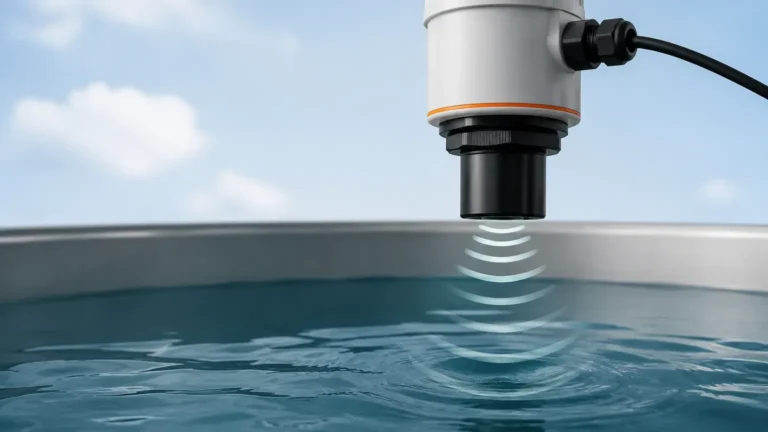
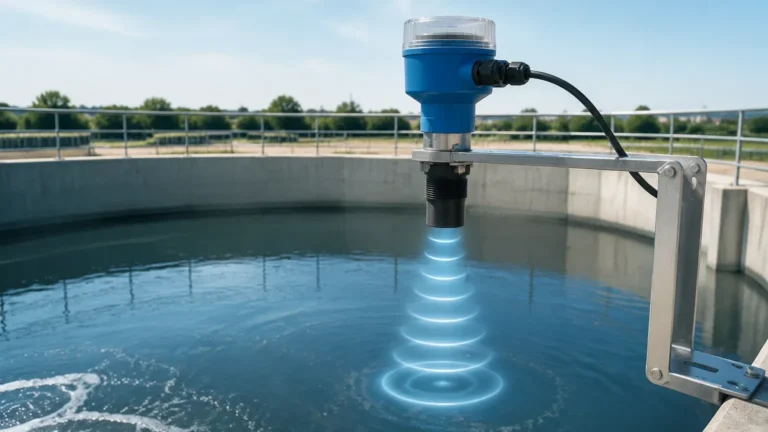
Ultrasonic level measurement is based on the "Time-of-Flight" (ToF) principle. The instrument consists of a transducer that functions as both a transmitter and a receiver. The transducer emits high-frequency sound pulses—typically between 20 kHz and 200 kHz—directed toward the surface of the water.
When these sound waves hit the water surface, they are reflected back toward the sensor. The electronics within the meter measure the time interval between the emission of the pulse and the reception of the echo. Given that the speed of sound in air is approximately 344 meters per second (1,128 feet per second) at 20°C (68°F), the distance to the water surface can be calculated using the formula:
Distance = (Speed of Sound × Time) / 2
By knowing the total height of the tank or the distance to the bottom of a channel (the "zero point"), the device subtracts the measured distance from the total height to determine the actual water level. Modern Ultrasonic Level Meters incorporate advanced digital signal processing to filter out false echoes caused by internal tank structures or agitators.
Applications for Ultrasonic Meters in Water Systems
The versatility of ultrasonic technology makes it suitable for a wide range of "ultrasonic meters water" applications. Because the sensor does not come into contact with the medium, it is ideal for corrosive, dirty, or coating liquids often found in water treatment.
1. Wastewater Treatment
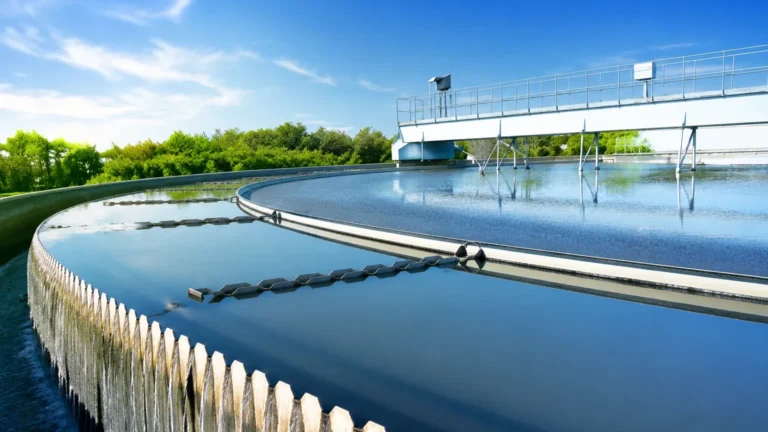
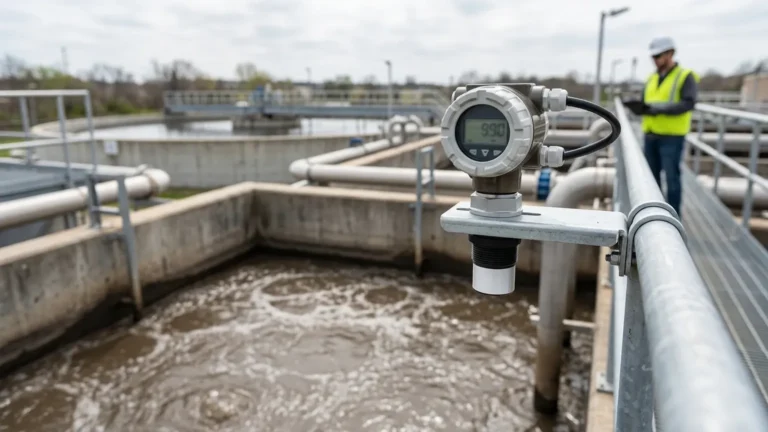
In wastewater facilities, ultrasonic sensors are used in lift stations, wet wells, and primary/secondary clarifiers. The non-contact nature prevents the buildup of grease, sludge, or debris on the sensor, which would otherwise plague submerged hydrostatic sensors.
2. Open Channel Flow Measurement
When combined with a flume (such as a Parshall flume) or a weir, ultrasonic meters measure the head height of the water. The meter’s internal software then applies specific flow formulas to convert that height into a volumetric flow rate. This is a standard method for monitoring effluent discharge.
3. Municipal Water Storage
Large reservoirs and elevated storage tanks utilize ultrasonic sensors to maintain optimal water levels. These systems often require long-range measurement capabilities, sometimes reaching up to 30 meters (approx. 98 feet).
4. Irrigation and Environmental Monitoring
Monitoring water levels in canals, rivers, and dams helps in flood prevention and resource management. Battery-powered or solar-powered ultrasonic units with wireless transmission are frequently deployed in these remote locations.
Key Benefits of Non-Contact Measurement
Choosing ultrasonic meters water solutions offers several distinct advantages over contact-based methods like float switches or pressure transmitters:
* Low Maintenance: With no moving parts and no contact with the liquid, there is no mechanical wear or chemical corrosion of the sensing element.
* High Accuracy: Standard industrial units provide accuracy levels ranging from 0.25% to 0.5% of the measured span.
* Easy Installation: Meters can often be installed and calibrated without emptying the tank or stopping the process.
* Safety: In applications involving hazardous chemicals used in water treatment (like chlorine or acids), non-contact measurement keeps personnel and equipment away from the medium.
Selection Criteria and Technical Specifications
Selecting the correct instrument requires an understanding of the specific process conditions. Use the following table as a general reference for evaluating ultrasonic level meters:
| Feature | Specification Range | Engineering Consideration |
| :— | :— | :— |
| Measurement Range | 0.3m to 30m (1ft to 98ft) | Choose a range that covers the full tank height plus a safety margin. |
| Beam Angle | 5° to 12° | A narrower beam angle is better for narrow tanks or tanks with internal obstructions. |
| Output Signal | 4-20mA, RS485 (Modbus), HART | Ensure compatibility with the local PLC or SCADA system. |
| Operating Temperature | -40°C to +70°C (-40°F to 158°F) | Integrated temperature compensation is required for accuracy as sound speed varies with air temperature. |
| Enclosure Rating | IP65 to IP68 | For outdoor water applications or wet wells, IP67 or IP68 is recommended. |
| Power Supply | 24V DC or 220V AC | Loop-powered (2-wire) units are common for standard monitoring; 4-wire units offer more power for complex processing. |

Installation Best Practices
To ensure the reliability of ultrasonic meters water readings, engineers must adhere to specific installation guidelines. Improper mounting is the most common cause of measurement failure in the field.
1. The Blocking Distance (Dead Zone)
Every ultrasonic transducer has a "blocking distance" or "dead zone" directly beneath the sensor face (typically 0.2m to 0.5m). The meter cannot measure any liquid that enters this zone. The sensor must be mounted high enough so that the maximum water level never reaches the dead zone.
2. Sensor Orientation
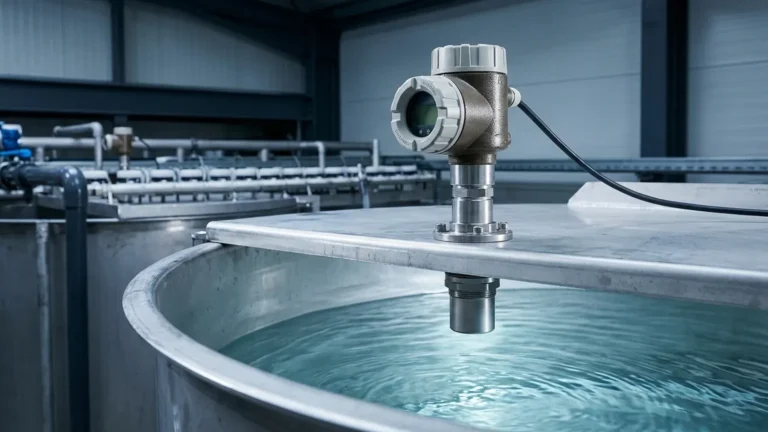
The transducer face must be mounted perfectly parallel to the water surface. If the sensor is tilted, the emitted sound wave will reflect away from the transducer rather than back to it, resulting in a "Loss of Echo" (LOE) error.
3. Avoiding Obstructions
The ultrasonic pulse spreads out in a cone shape. Any internal structures within this cone—such as ladders, pipes, or wall reinforcements—will create false echoes. If obstructions are unavoidable, many modern meters allow for "False Echo Suppression," where the device is taught to ignore reflections at specific distances.
4. Mounting Location
* Do not mount in the center: In circular tanks with domed tops, mounting in the center can cause multiple reflections that confuse the sensor.
* Avoid the fill stream: Never mount the sensor directly above the point where water enters the tank, as the turbulence and falling liquid will disrupt the signal.
* Distance from wall: The sensor should be placed at least 20-30 cm from the tank wall to prevent interference from wall seams or welds.
Limitations and Environmental Factors
While highly effective, ultrasonic technology is not a universal solution. Certain environmental factors can attenuate the sound signal or distort the measurement:
* Heavy Foam: Thick, dense foam on the water surface acts as an acoustic insulator, absorbing the sound pulse rather than reflecting it. In these cases, radar or hydrostatic sensors are preferred.
* Vapor and Steam: While standard water applications are fine, high-temperature water (near boiling) creates steam that changes the density of the air, significantly affecting the speed of sound and measurement accuracy.
* Vacuum or High Pressure: Ultrasonic waves require a medium (air/gas) to travel. They cannot function in a vacuum. High-pressure environments also alter the acoustic impedance, requiring specialized calibration.
* Turbulence: Extreme surface turbulence can scatter the sound waves. Using a stilling well (a vertical pipe that dampens surface movement) can resolve this issue.
Frequently Asked Questions (FAQ)
Q: How does temperature affect the accuracy of an ultrasonic meter?
A: The speed of sound changes by approximately 0.17% for every degree Celsius change in temperature. To maintain accuracy, quality ultrasonic level meters include a built-in temperature sensor to automatically compensate for these changes.
Q: Can ultrasonic meters be used for solids like sand or gravel in water treatment?
A: Yes, but the range is typically reduced. Solid surfaces are irregular and absorb more sound energy than liquid surfaces. A meter rated for 10 meters in water might only be effective for 5 meters in solids.
Q: What is the difference between an integrated and a split-type meter?
A: An integrated meter has the transducer and electronics in a single housing. A split-type (remote) meter connects the transducer to a separate controller via a cable. Split-types are useful when the measurement point is difficult to access or when the display needs to be mounted at eye level far from the tank.
Q: How do I handle condensation on the sensor face?
A: Condensation is common in water tanks. Most transducers are designed with a smooth, fluoropolymer face that allows droplets to coalesce and run off. In extreme cases, a aiming kit or a heated transducer may be used, though standard designs are sufficient for most water applications.
Conclusion
For most water and wastewater level monitoring needs, ultrasonic technology provides a robust balance of performance and cost-effectiveness. By understanding the acoustic principles and respecting the physical installation requirements, engineers can ensure long-term, maintenance-free operation. When dealing with complex geometries or challenging environmental conditions like heavy foam, it is advisable to consult with a specialist to determine if Ultrasonic Level Meters are the optimal fit or if alternative technologies like radar should be considered.