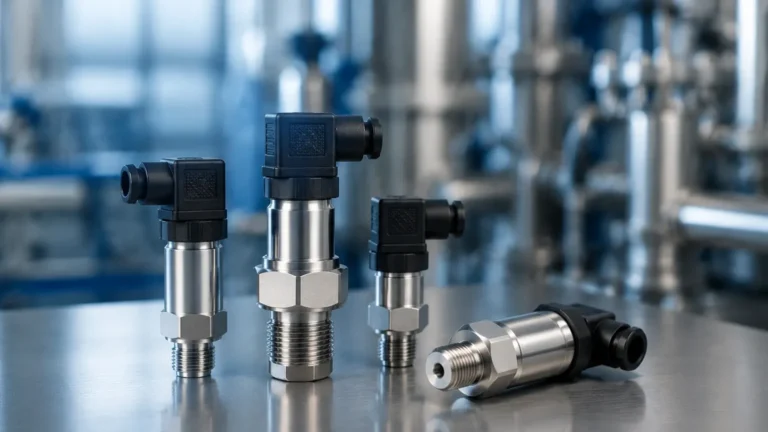
Endress and Hauser Magnetic Flow Meter
Endress and Hauser Magnetic Flow Meter
Electromagnetic flow meters, commonly referred to as magmeters, represent one of the most versatile and accurate technologies for measuring the volume flow of conductive liquids. Within the industrial automation sector, the Endress and Hauser magnetic flow meter—specifically the Promag series—is a standard-bearer for reliability in applications ranging from municipal water treatment to high-precision chemical dosing.
Understanding the engineering principles, selection criteria, and installation requirements of these instruments is essential for process engineers aiming to optimize plant efficiency. This guide details the technical framework of electromagnetic flow measurement and provides a practical reference for integrating these devices into broader process control systems, including their relationship with level measurement instrumentation.
Measurement Principles of Electromagnetic Flow Meters
The operation of an Endress and Hauser magnetic flow meter is based on Faraday’s Law of Induction, a fundamental principle of electromagnetism. The law states that a voltage is induced when a conductive medium moves through a magnetic field.
The Mathematical Foundation
In a magmeter, the relationship is expressed by the formula:
U = B · v · d · k
Where:
* U is the induced voltage (signal).
* B is the magnetic field strength generated by the internal coils.
* v is the average flow velocity of the medium.
* d is the pipe diameter (distance between electrodes).
* k is a proportionality constant or correction factor.
Physical Components
To facilitate this measurement, the flow meter consists of a non-conductive liner (to prevent the signal from shorting to the pipe wall), a pair of electromagnetic coils, and two or more measuring electrodes. When the coils are energized, they create a constant magnetic field perpendicular to the flow direction. As the conductive liquid flows through this field, it generates an electrical potential. The electrodes, located on opposite sides of the pipe, pick up this voltage, which is directly proportional to the flow velocity. The transmitter then converts this microvolt signal into a standard output, such as 4-20 mA, HART, or Profibus.
The Endress+Hauser Promag Series Overview
Endress+Hauser categorizes its magnetic flow meters under the "Promag" brand. These are typically divided into different sensor types optimized for specific industrial environments.
1. Promag W: Designed primarily for the water and wastewater industry. It often features specialized liners for buried installation or constant underwater use and is available in large diameters (up to DN 3000 / 120 inches).
2. Promag P: Engineered for the chemical and process industries. These sensors are built to withstand high temperatures and corrosive media, often utilizing PTFE or PFA liners.
3. Promag H: The hygienic variant, used extensively in the food, beverage, and life sciences sectors. It features stainless steel construction and 3-A or EHEDG certifications.
4. Promag L: A versatile sensor with a lap-joint flange concept, allowing for flexible installation and reduced weight, often used in general water applications.
Practical Selection Criteria
Selecting the correct Endress and Hauser magnetic flow meter requires an analysis of the fluid properties and the physical environment. The following table provides a comparison of common sensor characteristics used in process engineering.
Selection Comparison Table
| Feature | Promag W | Promag P | Promag H |
| :— | :— | :— | :— |
| Primary Application | Water, Wastewater | Chemicals, Corrosive Media | Food, Pharma, Hygienic |
| Liner Materials | Hard Rubber, Polyurethane | PTFE, PFA | PFA |
| Medium Temp. Range | -20 to +80 °C | -40 to +180 °C | -20 to +150 °C |
| Conductivity Min. | ≥ 5 μS/cm | ≥ 5 μS/cm | ≥ 5 μS/cm |
| Standard Sizes | DN 25 to 3000 | DN 15 to 600 | DN 2 to 150 |
| Pressure Rating | Up to PN 40 | Up to PN 40 | Up to PN 40 |
Conductivity Requirements
The most critical limitation of any magnetic flow meter is the requirement for a minimum electrical conductivity of the medium. For most Promag devices, the medium must have a conductivity of at least 5 μS/cm. This excludes hydrocarbons (oils), demineralized water, and gases from measurement via this technology.
Installation Considerations and Best Practices
To achieve the specified accuracy (often ±0.2% to ±0.5% of the measured value), strict adherence to installation guidelines is mandatory.
Inlet and Outlet Runs
Flow profiles must be stable for accurate measurement. Standard installations typically require an inlet run of 5 x DN (five times the nominal diameter) and an outlet run of 2 x DN. If there are significant disturbances upstream, such as pumps or multiple elbows, longer inlet runs or the use of flow conditioners may be necessary. Some modern versions, like the Promag W 400, offer a "0 x DN" full-bore option that maintains accuracy even with zero straight pipe runs, though this is application-specific.
Pipe Orientation and Filling
The measuring tube must always be completely full.
* Vertical Installation: This is the preferred orientation, with the flow moving upward. This ensures the pipe remains full and prevents the accumulation of solids or air bubbles at the electrodes.
* Horizontal Installation: The electrodes must be positioned horizontally (at the 3 o'clock and 9 o'clock positions). If the electrodes are at the top and bottom, air bubbles or sediment can insulate them, leading to signal loss or measurement errors.
Grounding
Since the induced voltage is very small, proper grounding is vital to eliminate electrical noise. The fluid, the sensor, and the transmitter must be at the same electrical potential. In plastic or lined pipes, grounding rings are usually required to establish a conductive path to the medium.

Limitations and Common Risks
While highly reliable, the Endress and Hauser magnetic flow meter is subject to specific operational risks:
* Vacuum Conditions: In applications involving high-temperature cleaning or vacuum-assisted processes, PTFE liners can collapse or peel away from the pipe wall if not specifically designed for vacuum service. PFA liners with mechanical anchors are preferred for these conditions.
* Entrained Air: Large air bubbles in the liquid will be measured as volume flow, leading to over-reading. If air pockets are significant, the "Empty Pipe Detection" (EPD) feature may trigger, halting the measurement to prevent false data.
* Electrode Coating: In applications involving sticky media (e.g., wastewater with high grease content or certain chemical slurries), a film can build up on the electrodes. This increases resistance and eventually causes the signal to fail. Regular maintenance or the use of "self-cleaning" electrode designs may be required.
Integrating Flow and Level Measurement
In comprehensive industrial automation, flow measurement rarely exists in isolation. It is frequently paired with level measurement to provide a complete mass balance of a system. For instance, in a storage tank application, the flow meter tracks the volume of liquid entering or exiting the vessel, while level sensors provide the real-time inventory status.
Engineers often utilize the Main Page of specialized instrument providers like Welk to source high-performance level measurement solutions—such as radar or ultrasonic sensors—that complement the data provided by magnetic flow meters. Integrating these two data points allows for leak detection; if the flow meter indicates a discharge but the level transmitter shows no change in tank volume, it signals a potential integrity issue in the process line.
Frequently Asked Questions (FAQs)
Q: Can a magnetic flow meter measure the flow of deionized water?
No. Deionized or demineralized water has extremely low conductivity, usually well below the 5 μS/cm threshold required for the induction principle to function. For these fluids, ultrasonic or vortex flow meters are better alternatives.
Q: How does temperature affect the accuracy of the Promag series?
Electromagnetic flow meters are largely independent of temperature, pressure, and viscosity, provided the medium remains liquid and the conductivity stays above the minimum threshold. However, extreme temperatures can affect the integrity of the liner material, so the sensor must be rated for the process temperature.
Q: What is the lifespan of an Endress and Hauser magnetic flow meter?
Because there are no moving parts in the flow path to wear out, these meters can last 20 years or more in non-corrosive applications. The lifespan is typically determined by the chemical compatibility of the liner and the electrodes with the process medium.
Q: Is it possible to measure bidirectional flow?
Yes, most Promag transmitters are capable of measuring flow in both directions. The device can be configured to provide separate totals for forward and reverse flow, which is particularly useful in water distribution networks and loading/unloading stations.
Q: What maintenance is required for these instruments?
Under normal conditions, maintenance is minimal. Periodic verification of the electronics and a visual inspection of the liner (if the process allows) are recommended. Many modern E+H meters feature Heartbeat Technology, which allows for internal verification of the device's health without interrupting the process.