Portable Ph Meter
Portable Ph Meter
In the landscape of industrial process control and environmental monitoring, the ability to obtain accurate, real-time data is paramount. While fixed analytical stations provide continuous monitoring, the portable ph meter remains an indispensable tool for field engineers, plant operators, and quality control technicians. Whether used in water treatment facilities, chemical processing plants, or industrial automation sectors, these devices bridge the gap between laboratory precision and field-based operational requirements.
Understanding the technical nuances of pH measurement, the mechanical construction of portable sensors, and the specific requirements for calibration is essential for maintaining process integrity. This guide explores the engineering principles, selection criteria, and practical maintenance protocols for portable pH instrumentation within a B2B industrial context.
Core Principles of pH Measurement
Before selecting a portable ph meter, it is vital to understand the electrochemical principles that govern its operation. The term pH refers to the "potential of Hydrogen," representing the activity of hydrogen ions in a solution. It is measured on a logarithmic scale from 0 to 14, where 7 is neutral.
The Electrochemical Cell
Most modern portable pH meters utilize a potentiometric method. This involves a measuring electrode (usually a glass membrane sensitive to hydrogen ions) and a reference electrode that provides a stable, constant potential. When the probe is immersed in a liquid, an ion exchange occurs on the outer layer of the glass membrane. This creates a potential difference between the internal and external surfaces of the glass.
The Nernst Equation
The relationship between the measured voltage (electromotive force) and the pH value is defined by the Nernst Equation. In ideal conditions, a change of one pH unit corresponds to a change of 59.16 millivolts (mV) at 25°C (298.15 K). Because this voltage-to-pH relationship is temperature-dependent, industrial-grade portable meters must incorporate Automatic Temperature Compensation (ATC) to ensure accuracy across varying environmental conditions.
Key Components of a Portable pH Meter
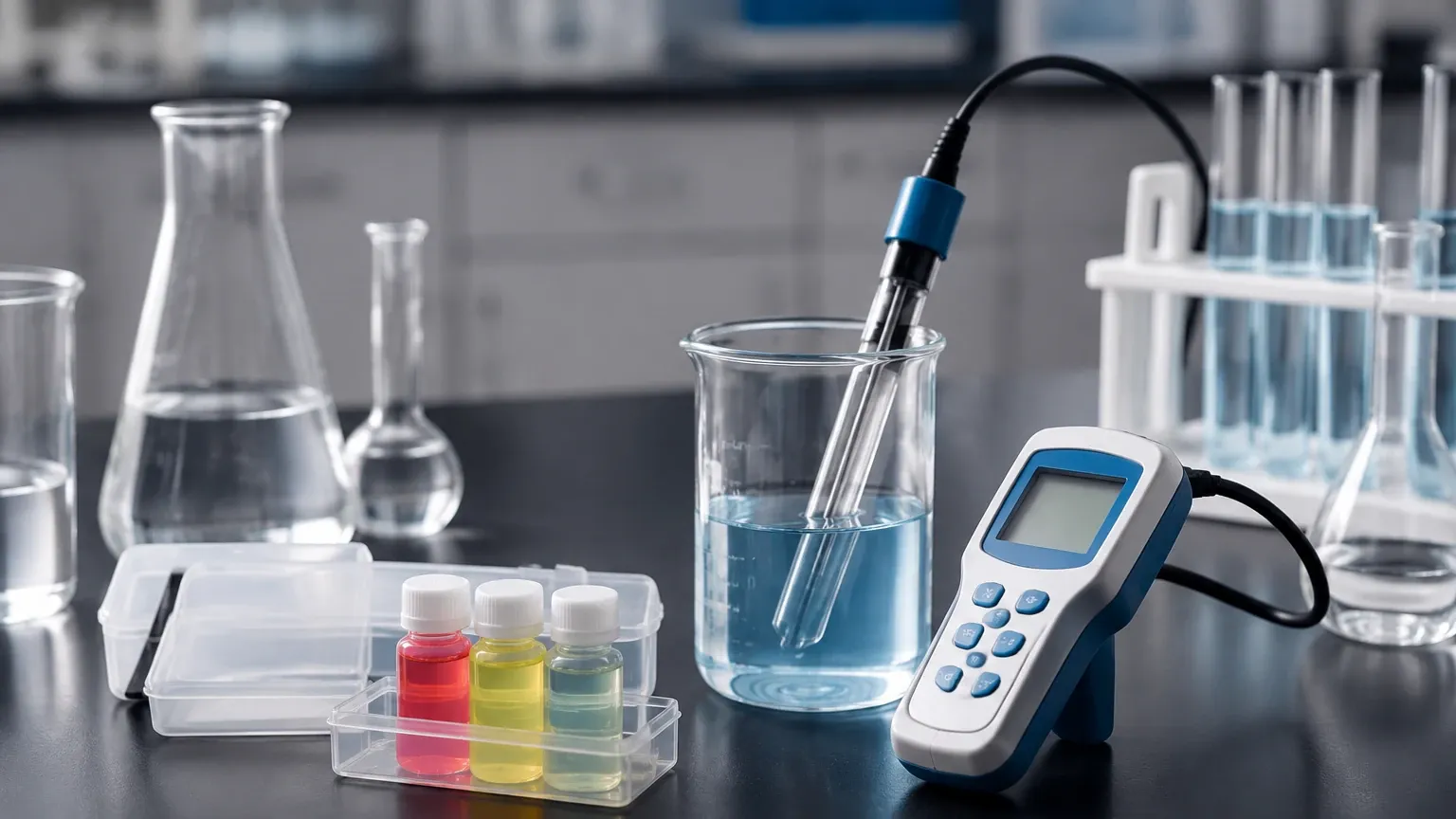
An industrial-grade portable ph meter is more than just a digital display; it is a sophisticated analytical system designed for durability and precision. The primary components include:
1. The Electrode (Sensor): Often a "combination electrode" that houses both the measuring and reference elements in a single body. In industrial settings, these may feature ruggedized epoxy bodies rather than fragile glass.
2. The High-Impedance Amplifier: Since the glass electrode has extremely high electrical resistance, the meter must have a high-input impedance (typically >10^12 ohms) to process the signal without drawing current, which would polarize the electrode and cause errors.
3. The Processor and Display: Converts the millivolt signal into a pH reading, applying temperature corrections and calibration offsets.
4. Temperature Sensor: Usually a thermistor or RTD (Pt100/Pt1000) integrated into the probe for real-time ATC.
Selection Criteria for Industrial Applications
When evaluating a portable ph meter for professional use, engineers must look beyond basic functionality. The following criteria are critical for ensuring long-term reliability in harsh environments.
Accuracy and Resolution
For most industrial applications, an accuracy of ±0.01 pH is standard. However, for rough field checks in wastewater, ±0.1 pH may suffice. The resolution of the display should match the required accuracy of the process.
Electrode Junction Types
The junction is the point where the internal reference electrolyte meets the sample.
* Single Junction: Suitable for clean water and general-purpose use.
* Double Junction: Essential for samples containing proteins, heavy metals, or sulfides, which can react with silver ions in the reference electrolyte and clog a single junction.
* Teflon/Porous Junctions: Preferred for high-solids or oily samples to prevent fouling.
Durability and Ingress Protection (IP Rating)
Field equipment is frequently exposed to moisture, dust, and accidental drops. A portable ph meter should ideally carry an IP67 rating, meaning it is dust-tight and can withstand temporary immersion in water. Ruggedized housings with rubber boots provide additional impact protection.
Data Management and Connectivity
In a B2B environment, data traceability is often a regulatory requirement. Modern meters often include internal memory for logging hundreds of data points, along with USB or Bluetooth connectivity for exporting data to a central management system.
Practical Selection Table
The following table provides a comparison of common portable pH meter configurations found in industrial settings.
| Feature | Entry-Level Pen Type | Professional Handheld | Ruggedized Field Meter |
| :— | :— | :— | :— |
| Typical Accuracy | ±0.1 pH | ±0.01 pH | ±0.005 pH |
| Calibration Points | 1 to 2 points | 3 to 5 points | Up to 6 points |
| ATC Range | 0 to 50°C | 0 to 100°C | -10 to 110°C |
| Data Logging | None | 50 – 500 points | 1000+ points / GLP compliant |
| Probe Type | Fixed/Non-replaceable | Replaceable BNC | Multi-parameter capable |
| Best Use Case | Quick spot checks | Laboratory/Plant QC | Remote environmental monitoring |
Maintenance and Calibration Procedures
Unlike physical sensors such as Main Page level transmitters, pH electrodes are electrochemical consumables with a finite lifespan. Proper maintenance is the only way to ensure their longevity.
Calibration Protocols
Calibration should be performed at least daily when the meter is in use.
1. Buffer Selection: Use fresh NIST-traceable buffers (typically pH 4.01, 7.00, and 10.01). Always start with pH 7.00 (the zero point).
2. Two-Point vs. Three-Point: A two-point calibration (7.00 and either 4.01 or 10.01) is sufficient if the sample's pH is known to be consistently acidic or alkaline. A three-point calibration is necessary if the sample pH fluctuates across the neutral point.
3. Slope Efficiency: Most professional meters will display the "slope" after calibration. A healthy electrode should have a slope between 92% and 102%. A slope below 90% typically indicates a contaminated or aging electrode that requires cleaning or replacement.
Storage and Cleaning
* Never store in deionized water: This leaches ions from the glass membrane and reference electrolyte, permanently damaging the sensor.
* Use Storage Solution: Always store the electrode in a specialized pH storage solution (typically 3M or 4M KCL).
* Cleaning: For protein buildup, use a pepsin/HCl solution. For grease or oil, use a mild detergent or specialized solvent that does not degrade the electrode body material.
Limitations and Operational Risks
While highly effective, the portable ph meter has inherent limitations that operators must account for to avoid false readings.
1. Sodium Error: In highly alkaline solutions (pH > 12), the glass membrane may respond to sodium ions rather than hydrogen ions, leading to a falsely low pH reading.
2. Dehydration: If the electrode is allowed to dry out, the hydrated gel layer on the glass membrane collapses. It may sometimes be recovered by soaking in buffer for 24 hours, but accuracy often suffers.
3. Pressure and Flow: Portable meters are designed for grab samples. If used in a flowing stream, the flow rate can create a streaming potential, affecting the reading. Always measure in a static or slow-moving sample container when possible.
4. Lifespan: Even with perfect maintenance, a pH electrode typically lasts 6 to 18 months depending on the harshness of the chemicals it encounters.
The Role of pH and Level Monitoring in Process Control
In many industrial sectors, such as chemical dosing or wastewater treatment, pH measurement is rarely an isolated task. It is frequently paired with level measurement to manage the entire process lifecycle. For instance, in a neutralization tank, a level meter ensures the tank does not overflow while the portable ph meter verifies that the chemical treatment has reached the desired setpoint before the effluent is discharged.
Integrating high-quality level measurement solutions, such as those found on the Main Page, with reliable analytical tools like a portable ph meter allows for a holistic approach to industrial automation. While the level meter manages the physical volume and safety of the vessel, the pH meter manages the chemical quality and regulatory compliance of the contents.
Frequently Asked Questions (FAQs)
Q: How often should I replace my portable pH probe?
A: In standard industrial use, probes should be replaced every 12 months. If the meter shows a slow response time or the calibration slope falls below 90% despite cleaning, it is time for a replacement.
Q: Can I use a portable ph meter to measure the pH of soil?
A: Yes, but it requires a specific procedure. You must create a soil slurry (usually a 1:1 or 1:2 ratio of soil to distilled water), let it settle, and then measure the supernatant liquid. Specialized "spear-tip" probes are also available for direct insertion.
Q: Why does my pH reading drift?
A: Drifting is often caused by a clogged reference junction, a depleted reference electrolyte, or electromagnetic interference. Ensure the junction is clean and that you are using the meter away from high-power electrical equipment that might induce noise in the high-impedance circuit.
Q: Does temperature affect pH readings?
A: Yes, in two ways. First, the electrode's sensitivity changes with temperature (corrected by ATC). Second, the actual chemical pH of the solution may change with temperature. ATC only corrects for the electrode's change, not the chemical's inherent property change.
By adhering to these engineering standards and maintenance protocols, B2B organizations can ensure that their portable pH instrumentation provides the reliable data necessary for operational excellence and environmental stewardship.