Air Flow Calibration Services
Air Flow Calibration Services
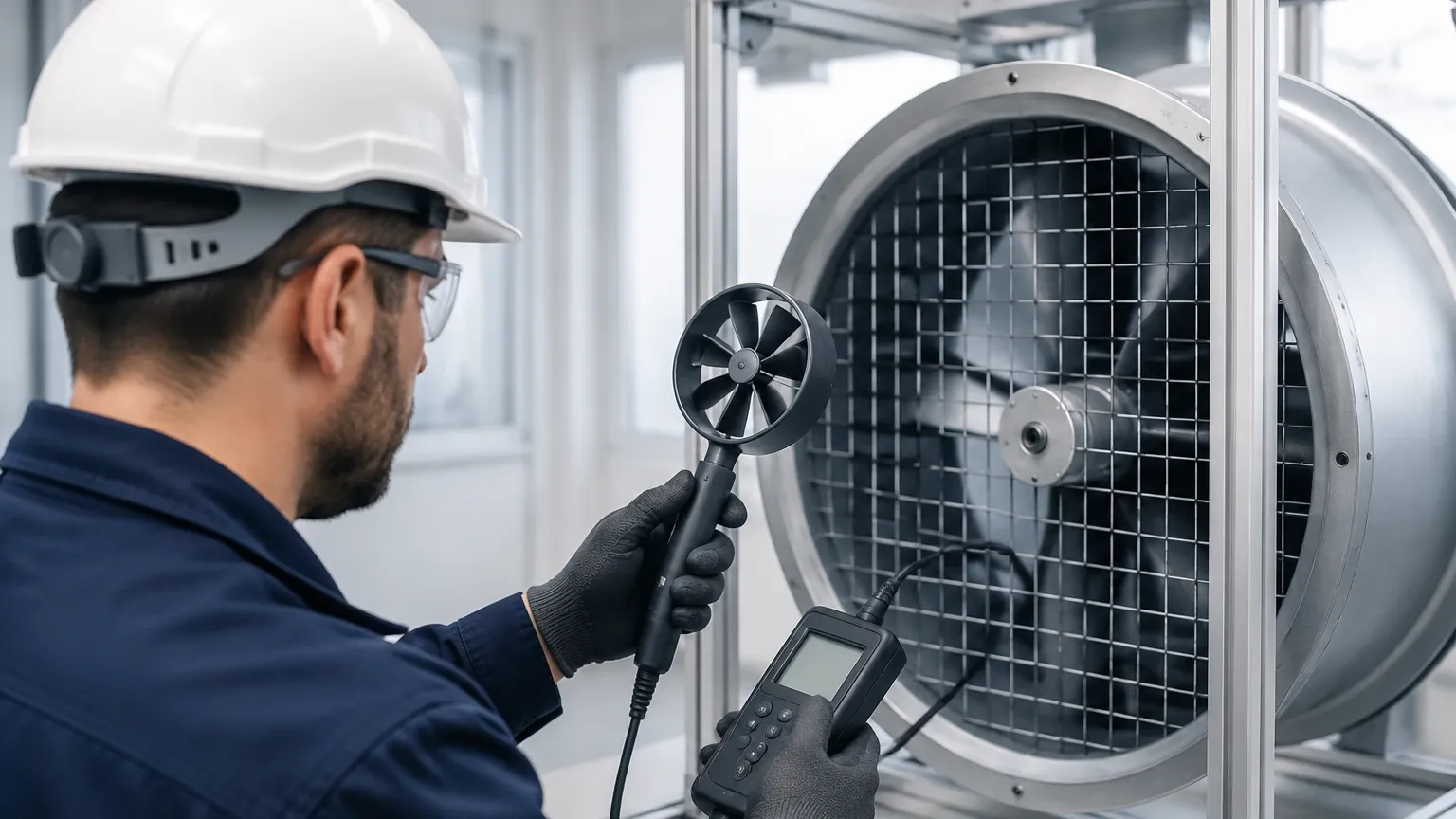
In industrial process control, the accuracy of gas measurement is often the determining factor in system efficiency, safety, and regulatory compliance. Air flow calibration services provide the essential verification and adjustment of instruments to ensure they perform within specified tolerances. While air flow might seem distinct from liquid level measurement, the two fields are deeply interconnected in applications such as air bubbler level systems, pressurized tank monitoring, and pneumatic control loops.
For engineers managing complex facilities, understanding the technical nuances of air flow calibration is critical for maintaining the integrity of the entire measurement chain. This guide explores the principles of air flow measurement, the necessity of professional calibration services, and how these services impact broader industrial automation systems.
Measurement Principles and Technology
Before selecting air flow calibration services, it is necessary to understand the underlying principles of the instruments being calibrated. Air flow meters generally fall into three categories based on their physical operation:
Thermal Mass Flow
Thermal mass flow meters measure the heat dissipation of a heated element placed in the air stream. As air molecules pass over the sensor, they carry heat away. The rate of cooling is directly proportional to the mass flow rate. These sensors are highly sensitive to low flow rates and do not require temperature or pressure compensation because they measure mass directly.
Differential Pressure (DP)
Differential pressure flow meters, such as orifice plates, Venturi tubes, and Pitot tubes, operate on Bernoulli’s principle. By creating a constriction in the pipe, the instrument measures the pressure drop across that constriction. The square root of the pressure difference is proportional to the flow velocity. In many level measurement scenarios, DP transmitters are used interchangeably for both flow and hydrostatic head calculations.
Ultrasonic and Vortex Shedding
Ultrasonic meters use transit-time or Doppler shifts to calculate velocity, while vortex meters measure the frequency of vortices shed from a bluff body placed in the flow. These are often preferred for high-velocity air lines where minimal pressure drop is required.
The Relationship Between Air Flow and Level Measurement
In the context of industrial instrumentation, air flow accuracy is a prerequisite for several level measurement techniques. Professional manufacturers like Welk provide instruments that often operate within systems where air flow must be strictly regulated.
1. Air Bubbler Systems: This is a classic hydrostatic level measurement method. A constant flow of air is pushed through a tube submerged in a liquid. The pressure required to push air bubbles out of the bottom of the tube is equal to the hydrostatic pressure of the liquid column. If the air flow calibration is off—either too high or too low—the resulting pressure reading will be inaccurate, leading to false level data.
2. Purge Systems: For radar or ultrasonic level sensors installed in dusty or corrosive environments, a continuous air purge is used to keep the sensor face clean. If the air flow is not calibrated correctly, it may fail to protect the sensor or, conversely, create turbulence that interferes with the signal.
3. Tank Blanketing: In the chemical and oil industries, an inert gas (usually nitrogen) is maintained at a specific flow and pressure above the liquid level to prevent combustion or oxidation. Precise air flow calibration ensures the blanketing system responds correctly to changes in liquid level.
For a comprehensive look at how these technologies integrate into broader process control, users can refer to the Main Page for detailed product specifications and application support.
Why Air Flow Calibration Services are Critical
All sensors experience "drift" over time due to mechanical wear, sensor aging, or environmental contamination. Air flow calibration services restore the instrument to its baseline performance. The primary reasons for seeking these services include:
* Traceability: Calibration must be traceable to national or international standards, such as NIST (National Institute of Standards and Technology). This ensures that a measurement taken in one facility is consistent with measurements taken anywhere else in the world.
* Regulatory Compliance: Many industries, particularly pharmaceuticals and food processing, are required by law to have their instruments calibrated at fixed intervals (typically annually or bi-annually).
* Energy Efficiency: Compressed air is one of the most expensive utilities in a factory. Accurate air flow measurement allows for the detection of leaks and the optimization of compressor performance, potentially saving thousands of dollars in energy costs.
* Safety: In pneumatic safety-instrumented systems (SIS), an uncalibrated flow sensor could fail to trigger an emergency shutdown during a critical event.
Evaluation Criteria for Calibration Providers
When selecting a service provider for air flow calibration, technical personnel should evaluate the following criteria to ensure the data returned is valid and useful:
ISO/IEC 17025 Accreditation
This is the single most important credential for a calibration laboratory. It demonstrates that the lab has a documented quality management system and the technical competence to produce valid results. Always request the laboratory's scope of accreditation to ensure they are authorized to calibrate in the specific flow range required.
Measurement Uncertainty
Every calibration certificate should list the "Uncertainty of Measurement." This is not the same as the accuracy of the meter; it is the statistical margin of error of the calibration process itself. Ideally, the laboratory's uncertainty should be at least four times better than the accuracy of the instrument being tested (a 4:1 Test Uncertainty Ratio).
Flow Range and Media Capability
Ensure the service provider can match the actual operating conditions of your facility. Calibrating an air flow meter at 10 m³/h (approx. 5.88 CFM) when it usually operates at 500 m³/h (approx. 294 CFM) provides limited value. Furthermore, if the meter is used for gases other than air (e.g., Nitrogen, CO2), the lab must be able to provide gas-specific calibration or use accurate correlation factors.
Practical Selection Table: Calibration Methods
| Method | Best For | Typical Uncertainty | Pros | Cons |
| :— | :— | :— | :— | :— |
| Piston Prover | Low to medium flow rates | 0.2% – 0.5% | Extremely accurate, primary standard. | Limited to smaller pipe sizes. |
| Sonic Nozzles | High-speed, high-precision | 0.1% – 0.3% | No moving parts, highly repeatable. | Requires high pressure differential. |
| Bell Prover | Low pressure air flow | 0.2% | Traditional gold standard for gas meters. | Large physical footprint, slow. |
| Transfer Standard | On-site/Field calibration | 1.0% – 2.0% | Convenient, no need to remove pipes. | Higher uncertainty than lab standards. |
Common Risks and Technical Challenges
Air flow calibration is more complex than liquid calibration because air is a compressible fluid. Several factors can introduce significant errors if not handled correctly by the service provider:
* Temperature and Pressure Fluctuations: Air density changes with temperature and pressure. A professional air flow calibration service must record the ambient conditions and apply the Ideal Gas Law or real gas equations to normalize the data to Standard Temperature and Pressure (STP).
* Humidity: Moisture content in the air can change its density and thermal properties. For high-precision applications, the air used for calibration should be dried to a specific dew point.
* Upstream/Downstream Piping: Turbulence caused by elbows, valves, or reducers can distort flow profiles. Calibration labs use long straight runs of pipe or flow straighteners to ensure a "fully developed flow profile" hits the sensor.
* Sensor Contamination: In industrial environments, oil mist or dust can coat sensors. If a lab calibrates a dirty sensor "as-found," the results will be poor. However, cleaning the sensor before the "as-found" test prevents the user from knowing how much the sensor had drifted during operation. The best practice is to perform an "as-found" test, then clean, and then perform an "as-left" calibration.
Installation and Maintenance Guidelines
To maximize the interval between air flow calibration services, proper installation is paramount. Follow these engineering guidelines:
1. Straight Pipe Runs: Most air flow meters require at least 10 to 20 diameters of straight pipe upstream and 5 diameters downstream. If space is limited, install a honeycomb-style flow conditioner.
2. Filtration: Install a 5-micron filter upstream of sensitive thermal mass flow meters to prevent particulate buildup.
3. Orientation: For air lines, horizontal installation is generally preferred. If installed vertically, the flow should be upward to prevent moisture from pooling on the sensor head.
4. Vibration Isolation: High-frequency vibrations from compressors can interfere with vortex shedding meters. Use flexible couplings if the meter is located near a vibration source.
Frequently Asked Questions (FAQ)
Q: How often should I calibrate my air flow meters?
A: Most manufacturers recommend an annual calibration. However, if the meter is used in a critical safety application or a harsh environment with high particulate matter, a six-month interval may be more appropriate.
Q: Can I calibrate an air flow meter on-site?
A: Yes, using a master meter or a transfer standard. While on-site calibration is more convenient and accounts for the actual piping geometry, it typically has a higher uncertainty than a controlled laboratory environment.
Q: What is the difference between Actual CFM (ACFM) and Standard CFM (SCFM)?
A: ACFM is the volume of air flowing at the actual pressure and temperature in the pipe. SCFM is the volume the air would occupy if it were at standard conditions (usually 14.7 psia and 60°F or 70°F). Calibration services usually report in SCFM or Normal cubic meters (Nm³/h) to allow for consistent comparison.
Q: Does air flow calibration affect my level readings in a bubbler system?
A: Absolutely. If the flow rate is too high, the friction of the air moving through the tube creates a backpressure that the sensor interprets as a higher liquid level. Precise flow control and calibration are essential for hydrostatic accuracy.
By prioritizing professional air flow calibration services, industrial operators ensure that their measurement systems—from simple air lines to complex level-sensing arrays—remain accurate and reliable. For further technical details on integrating these measurements into your facility, visit the Main Page for expert guidance and high-performance instrumentation solutions.