Vgs Careers
Vgs Careers
In the rapidly evolving landscape of industrial automation and process control, the demand for specialized expertise in level measurement and fluid management has never been higher. For professionals exploring vgs careers—which often encompass roles in Vacuum, Gas, and System engineering—the ability to accurately monitor and control material levels is a foundational skill. Whether working in water treatment, chemical processing, or the oil and gas sector, understanding the nuances of instrumentation is critical for operational safety and efficiency.
Industrial level measurement is not a one-size-fits-all field. It requires a deep understanding of physics, material science, and electronic engineering. For those pursuing a career path in this domain, mastering the technologies provided by manufacturers like Welk is essential. This guide explores the technical principles of level measurement, the professional requirements for careers in this sector, and practical considerations for equipment selection and installation.
Core Principles of Level Measurement
Before diving into the specific career opportunities and system configurations, it is necessary to understand the primary measurement principles used in modern industrial environments. Most level measurement challenges are solved using one of three core technologies: radar, ultrasonic, or hydrostatic pressure.
Radar Level Measurement (Time of Flight)
Radar level meters operate on the "Time of Flight" (ToF) principle. The device emits a high-frequency microwave pulse (typically in the 26GHz or 80GHz range) that travels to the surface of the medium, reflects, and returns to the sensor. The distance is calculated based on the time interval between emission and reception.
* Non-contact Radar: Ideal for corrosive or high-temperature materials as the sensor does not touch the medium.
* Guided Wave Radar (GWR): Uses a probe to guide the microwave signal, making it highly effective for low dielectric constants or turbulent surfaces.
Ultrasonic Level Measurement
Similar to radar, ultrasonic sensors use the ToF principle but utilize sound waves instead of electromagnetic waves. A transducer emits an ultrasonic pulse that bounces off the surface of the liquid or solid. Because sound velocity is affected by air temperature, these sensors usually include integrated temperature compensation.
Hydrostatic Level Measurement
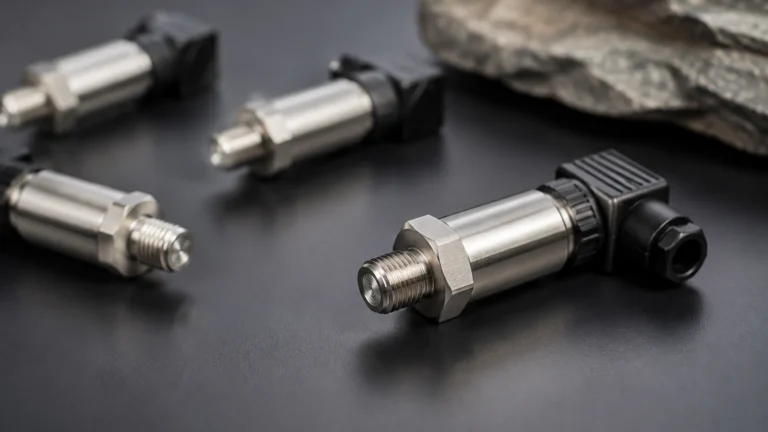
This principle relies on the relationship between the height of a liquid column and the pressure it exerts at the base. A pressure transmitter (often submersible) measures the "head pressure" of the liquid. By knowing the density of the fluid, the system can calculate the exact level. This is a robust solution for deep wells and open tanks.
The Professional Landscape: Vgs Careers and Instrumentation
The term vgs careers frequently appears in the context of specialized engineering roles that manage complex gas systems, vacuum environments, or valve gate systems. In these high-stakes environments, the integration of level sensors is a primary responsibility. Professionals in these roles must bridge the gap between mechanical hardware and digital control systems.
Key Roles in the Industry
1. Application Engineers: These professionals analyze specific site conditions—such as tank geometry and chemical compatibility—to recommend the correct measurement technology. They often consult the Main Page of leading manufacturers to stay updated on the latest hardware capabilities.
2. Field Service Technicians: Responsible for the installation, calibration, and troubleshooting of sensors. In vacuum or gas system environments, these technicians must ensure that sensor seals can withstand extreme pressure differentials.
3. Process Automation Designers: These engineers integrate level data into broader SCADA or PLC systems, ensuring that a radar level meter's signal accurately triggers pumps or safety shut-off valves.
Essential Skills for Success
To excel in careers related to industrial instrumentation, professionals need a mix of theoretical knowledge and hands-on technical skill:
* Signal Processing: Understanding 4-20mA HART, Modbus, and Foundation Fieldbus protocols.
* Safety Compliance: Familiarity with ATEX/IECEx standards for explosive atmospheres, which is common in gas-related systems.
* Material Science: Knowing how different chemicals affect sensor longevity and signal propagation.
Technical Selection Criteria
Choosing the right instrument is a critical task for any engineer. The following table provides a comparison of common level measurement technologies used in the types of projects encountered in vgs careers.
| Technology | Best For | Advantages | Limitations |
| :— | :— | :— | :— |
| 80GHz Radar | Small tanks, agitated liquids | Extremely precise, small beam angle | Higher initial cost |
| Ultrasonic | Water/Wastewater | Cost-effective, easy to install | Sensitive to foam and dust |
| Hydrostatic | Deep wells, vented tanks | Simple, very reliable | Requires constant density |
| Magnetic Gauge | High-pressure boilers | Highly visual, no power needed | Mechanical parts can wear |
| Level Switch | Overfill protection | Low cost, high reliability | Point level only (no continuous data) |
Practical Installation Considerations
Even the most advanced sensor will fail if installed incorrectly. For engineers and technicians, following standardized installation protocols is a hallmark of professional competence.
Nozzle and Position
For radar and ultrasonic sensors, the device should be mounted away from the tank wall to avoid false echoes. Ideally, the sensor should be positioned at 1/4 to 1/3 of the tank diameter from the wall. Ensure that the nozzle height does not interfere with the signal beam's spread.
Avoiding Obstructions
Internal tank structures such as ladders, heating coils, or agitators can create "parasitic echoes." While modern software can perform a "false echo suppression" or "empty tank mapping," it is best practice to choose a mounting location with a clear line of sight to the material surface.
Environmental Protection
In vacuum or gas systems, the integrity of the process seal is paramount. Using high-quality flanges and ensuring chemical compatibility of the O-rings (e.g., Viton, Kalrez, or PTFE) is essential to prevent leaks that could compromise the system or create safety hazards.

Limitations and Challenges
No measurement technology is universal. Professionals must be aware of the following limitations:
* Dielectric Constant ($ε_r$): Radar signals rely on the reflectivity of the material. Materials with a very low dielectric constant (like certain oils or liquefied gases) may require Guided Wave Radar to ensure a strong return signal.
* Foam and Turbulence: Heavy foam can absorb ultrasonic and radar signals, leading to signal loss. In these cases, hydrostatic transmitters or magnetic level gauges are often preferred.
* Temperature and Pressure Extremes: While radar can handle high heat, the electronics must be protected. Specialized cooling fins or remote housing options are often necessary in extreme process environments.
Frequently Asked Questions (FAQ)
Q: How does a career in VGS differ from general instrumentation?
A: Vgs careers typically focus on specialized environments involving vacuum or high-purity gas systems. This requires additional certifications in leak detection and high-pressure safety that general instrumentation roles may not require.
Q: Can radar level meters be used in vacuum tanks?
A: Yes, non-contact radar is excellent for vacuum applications because the microwave signal does not require a medium (like air) to travel. However, the process seal at the mounting point must be vacuum-rated.
Q: What is the maintenance schedule for an ultrasonic level sensor?
A: Ultrasonic sensors are generally low-maintenance because they have no moving parts. However, in high-humidity environments, the transducer face should be checked periodically for condensation or material buildup.
Q: Is it necessary to recalibrate hydrostatic transmitters?
A: Yes. Because they rely on pressure, any change in the specific gravity (density) of the liquid will result in an inaccurate reading. Recalibration is required if the process fluid changes.
Conclusion
For those navigating vgs careers or looking to enter the world of process automation, the path forward is built on technical precision and a commitment to understanding the fundamental physics of the industry. Reliable level measurement is the heartbeat of industrial safety and efficiency. By leveraging advanced solutions—from high-frequency radar to robust hydrostatic transmitters—engineers can ensure that their systems operate at peak performance.
As the industry moves toward Industry 4.0, the role of the instrumentation professional will only grow in complexity. Staying informed through resources like the Main Page and mastering the selection and installation of Welk-quality instruments will remain a competitive advantage for any professional in the field.