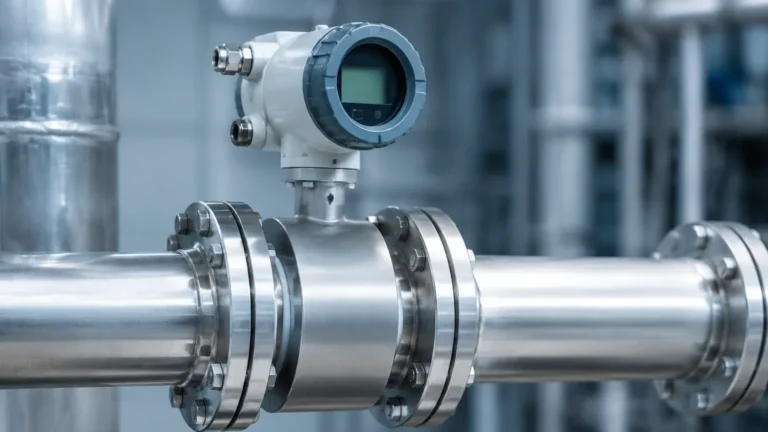
Industrial Temperature Transmitter
Industrial Temperature Transmitter
In the landscape of industrial process automation, the industrial temperature transmitter serves as a critical bridge between raw sensor data and the control system. While sensors like Resistance Temperature Detectors (RTDs) and thermocouples capture thermal changes, the transmitter converts these low-level signals into a robust, standardized output—typically 4-20 mA, HART, or Fieldbus. This conversion is essential for maintaining signal integrity over long distances and ensuring that process variables remain within safe and efficient operating limits.
For engineers and plant managers, selecting the right temperature transmitter is not merely about measuring heat; it is about ensuring system stability, reducing maintenance overhead, and integrating thermal data with other process variables, such as level and pressure. As part of a comprehensive instrumentation strategy, understanding the nuances of these devices is as vital as selecting Main Page solutions for liquid and solid management.
Measurement Principles and Signal Conversion
Before selecting a transmitter, it is necessary to understand the two primary sensing technologies it must interface with: RTDs and Thermocouples.
Resistance Temperature Detectors (RTD)
RTDs operate on the principle that the electrical resistance of a metal increases as its temperature rises. The most common type is the Pt100, which has a resistance of 100 ohms at 0°C. RTDs are prized for their high accuracy and excellent stability over time. An industrial temperature transmitter designed for RTDs must account for lead-wire resistance, which is why 3-wire and 4-wire configurations are standard in industrial environments to compensate for errors introduced by the length of the cabling.
Thermocouples (TC)
Thermocouples consist of two dissimilar metals joined at one end. When the junction experiences a temperature gradient, it produces a small voltage (the Seebeck effect). Thermocouples are preferred for extremely high-temperature applications (up to 2300°C) and are more rugged than RTDs. However, they are less linear and require "Cold Junction Compensation" (CJC) within the transmitter to provide an accurate reading.
The Role of the Transmitter
The transmitter performs three primary functions:
1. Amplification: Converting millivolt or ohm signals into a higher-level current loop (4-20 mA).
2. Linearization: Correcting the non-linear output of the sensor to ensure the output signal is proportional to the temperature.
3. Isolation: Protecting the control system from electrical noise and ground loops common in industrial settings.
Technical Selection Criteria
Choosing an industrial temperature transmitter requires a balance between environmental demands and required precision. The following table provides a comparison of sensor types typically used with these transmitters.
Comparison Table: RTD vs. Thermocouple for Transmitters
| Feature | RTD (e.g., Pt100) | Thermocouple (e.g., Type K) |
| :— | :— | :— |
| Temperature Range | -200°C to +850°C | -270°C to +2300°C |
| Accuracy | High (±0.1°C to ±0.5°C) | Moderate (±0.5°C to ±2.0°C) |
| Stability | Excellent (minimal drift) | Lower (drifts at high temps) |
| Response Time | Slower (0.5 to 5 seconds) | Fast (0.1 to 1 second) |
| Durability | Fragile (vibration sensitive) | Highly Rugged |
| Cost | Higher | Lower |
Form Factor and Mounting
Industrial temperature transmitters are generally categorized by their physical housing:
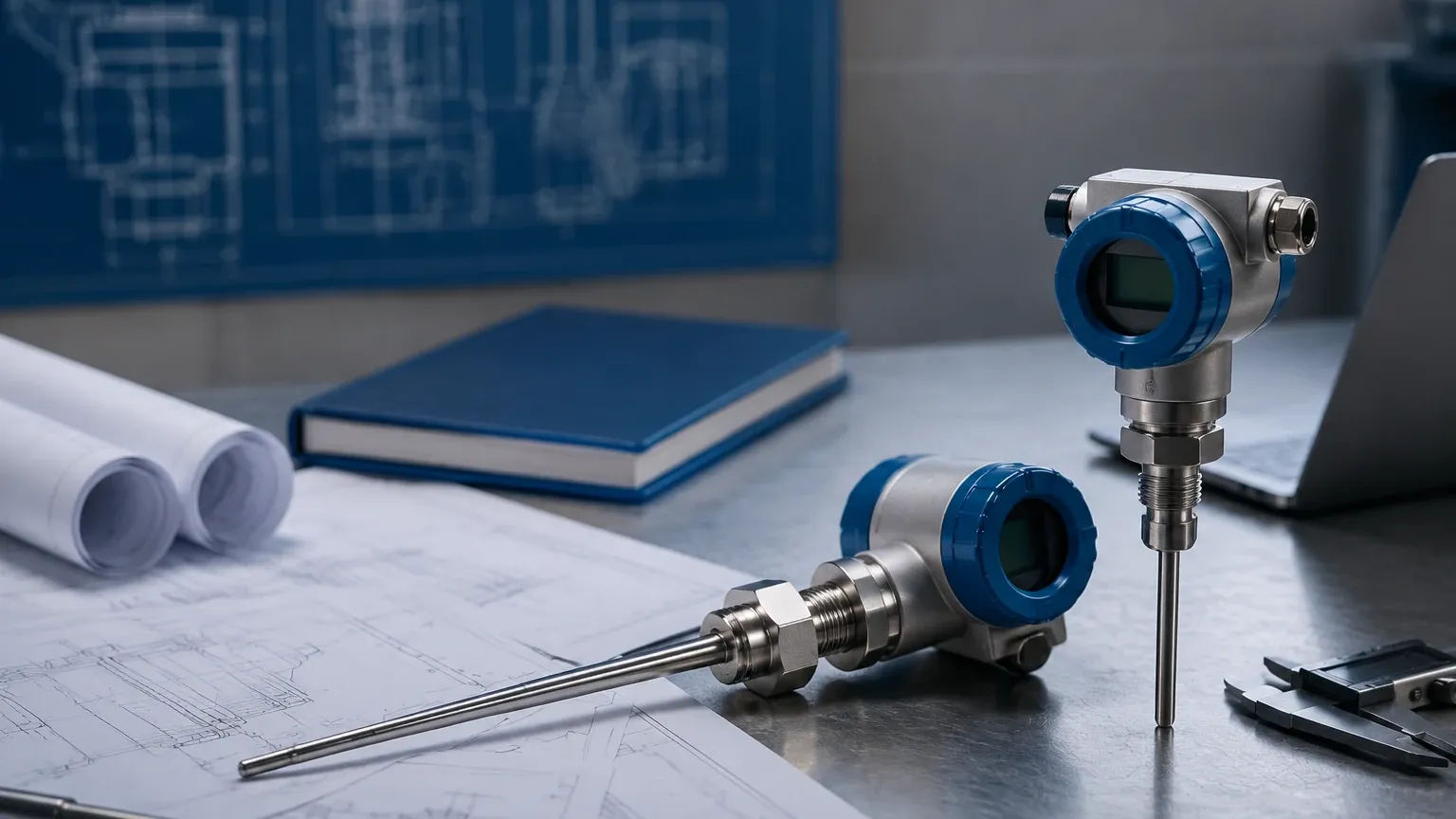
* Head-Mount: Installed directly inside the connection head of a temperature sensor probe. This is the most space-efficient design and reduces the distance the low-level signal must travel.
* DIN Rail-Mount: Located inside a control cabinet. This is ideal when the environment at the measurement point is too harsh (extreme vibration or heat) for electronics.
* Field-Mount: Housed in a dedicated, often explosion-proof or weather-proof enclosure. These are used in the most demanding outdoor or hazardous area applications.
Integration with Level Measurement Systems
In many industrial applications, temperature measurement is not an isolated requirement but a necessary component of accurate level sensing. For instance, in water treatment or chemical storage, the density of a liquid changes with temperature. If a plant uses hydrostatic level transmitters, a change in temperature can lead to a false level reading if not compensated for by an industrial temperature transmitter.
Similarly, ultrasonic level sensors rely on the speed of sound, which varies significantly with air temperature. Most high-quality ultrasonic systems include an integrated temperature sensor, but in large tanks with temperature gradients, external transmitters are often used to provide a more accurate average temperature for compensation. For more advanced measurement technologies that handle these variables, engineers often Review product options and application support to ensure all sensors work in harmony.
Installation Considerations and Best Practices
Proper installation is paramount to the longevity and accuracy of the transmitter. Even the most expensive instrument will fail if environmental factors are ignored.
Thermowell Selection
In most industrial processes, the sensor is not inserted directly into the medium. Instead, it is placed inside a thermowell—a pressure-tight receptacle. The thermowell protects the sensor from corrosion, high pressures, and high-velocity flows. When installing a transmitter/sensor assembly, ensure the immersion length is at least 10 times the diameter of the thermowell to prevent "stem conduction" error, where heat escapes through the sensor housing and lowers the reading.
Wiring and Shielding
To prevent Electromagnetic Interference (EMI) from motors and heavy machinery:
* Use twisted-pair shielded cables for the 4-20 mA loop.
* Ensure the shield is grounded at only one point (usually the control room side) to avoid ground loops.
* Keep signal wires separate from high-voltage power lines.
Environmental Protection
For outdoor installations, consider the ambient temperature limits of the transmitter electronics. While the sensor may be rated for 1000°C, the transmitter electronics are typically limited to an ambient range of -40°C to +85°C. In extreme heat, use extension necks on the thermowell to move the transmitter head away from the hot process pipe.
Limitations and Common Risks
While industrial temperature transmitters are highly reliable, they are subject to specific risks:
1. Sensor Drift: Over time, especially at high temperatures, thermocouples can undergo physical changes that cause the signal to drift. Regular calibration is required.
2. Thermal Lag: The use of a thermowell introduces a delay in the temperature reading. In fast-moving processes, this lag must be accounted for in the control logic.
3. Sensor Breakage: If a sensor fails, the transmitter should be configured for "Upscale" or "Downscale" burnout protection. This ensures the output goes to a specific value (e.g., 21.0 mA or 3.8 mA) so the control system knows a fault has occurred rather than assuming a valid temperature.
Frequently Asked Questions (FAQ)
Q: Can I use a 2-wire RTD with a high-precision transmitter?
A: It is not recommended. A 2-wire RTD cannot compensate for the resistance of the lead wires. For industrial accuracy, a 3-wire or 4-wire configuration should always be used with the transmitter.
Q: What is the benefit of a HART-enabled transmitter?
A: HART (Highway Addressable Remote Transducer) allows digital communication to be superimposed on the 4-20 mA analog signal. This enables remote diagnostics, configuration, and the transmission of multiple variables (like device health and primary value) over a single pair of wires.
Q: How often should an industrial temperature transmitter be calibrated?
A: Most manufacturers recommend an annual calibration check. However, in critical safety applications or high-drift environments (like high-heat furnaces), semi-annual calibration may be necessary.
Q: Does the transmitter need a separate power supply?
A: Most modern industrial transmitters are "loop-powered," meaning they draw the small amount of power they need directly from the 4-20 mA control loop, eliminating the need for extra power wiring.
Conclusion
The industrial temperature transmitter is an indispensable tool for modern process control. By converting sensitive raw data into standardized electrical signals, these devices ensure that temperature—one of the most common variables in industrial automation—is monitored with precision and reliability. Whether used for simple monitoring or as a compensation input for complex level measurement tasks, selecting the correct transmitter requires a deep understanding of the process environment, accuracy requirements, and integration needs. For those looking to optimize their entire measurement suite, exploring the latest in Main Page technology offers a path toward more efficient and safer industrial operations.