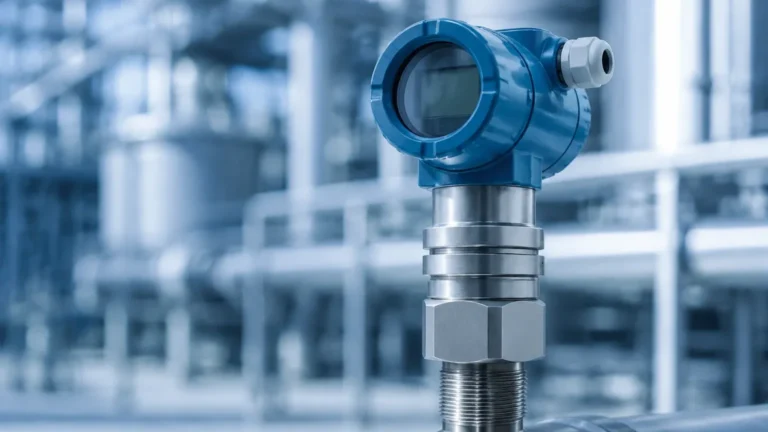
Endress Hauser Jobs
Endress Hauser Jobs
In the rapidly evolving landscape of industrial automation, the demand for skilled professionals in process instrumentation has never been higher. Whether individuals are seeking endress hauser jobs or exploring opportunities with other leading manufacturers like Welk, a profound understanding of level measurement technologies is a prerequisite for success. This article serves as a technical reference for engineers, technicians, and application specialists who manage, install, or specify level measurement instruments in sectors such as water treatment, chemical processing, and oil and gas.
The Landscape of Professional Roles in Process Instrumentation
The field of process instrumentation offers a diverse array of career paths. Professionals pursuing endress hauser jobs often find themselves in roles such as Application Engineers, Field Service Technicians, or Project Managers. These positions require a blend of theoretical knowledge and hands-on expertise.
Application Engineers are responsible for analyzing specific process requirements—such as temperature, pressure, and chemical compatibility—to recommend the most suitable measurement technology. Field Service Technicians, on the other hand, focus on the commissioning, calibration, and troubleshooting of devices on-site. Regardless of the specific job title, the ability to interpret technical data sheets and understand the physics of measurement is what distinguishes a top-tier professional in this industry.
For those looking to deepen their technical knowledge or source high-quality instruments for their next project, consulting a reliable Main Page for industrial level meters is an essential step in the professional workflow.
Core Principles of Level Measurement Technology
Before selecting an instrument or applying for technical roles, one must master the fundamental principles of level measurement. Industrial level sensors generally fall into two categories: point level detection and continuous level measurement.
Radar Level Measurement (Non-Contact)
Radar level meters utilize electromagnetic waves to determine the distance to a product surface. There are two primary types: Pulse Radar and Frequency Modulated Continuous Wave (FMCW).
* Principle: The sensor emits a high-frequency signal that travels to the medium's surface, reflects, and returns to the receiver. The time-of-flight (ToF) is directly proportional to the distance.
* Advantages: Radar is unaffected by vacuum, high pressure, or temperature fluctuations. It is ideal for aggressive chemicals and bulk solids.
Ultrasonic Level Measurement
Ultrasonic sensors use sound waves rather than electromagnetic waves.
* Principle: The transducer emits an ultrasonic pulse (typically in the 20 kHz to 70 kHz range). The pulse reflects off the liquid surface and returns. The device calculates the level based on the speed of sound.
* Considerations: Since the speed of sound is affected by air temperature, these sensors usually include an internal temperature probe for compensation. They are cost-effective but can be hindered by heavy foam or dust.
Hydrostatic Level Measurement
This method relies on the relationship between the height of a liquid and the pressure it exerts at the base of a vessel.
* Principle: The pressure (P) at the bottom of a tank is equal to the height (h) of the liquid multiplied by its density (ρ) and the force of gravity (g) [$P = \rho gh$].
* Application: Hydrostatic transmitters are commonly used in vented tanks or deep wells. They are highly reliable for liquids with constant density.
Selection Criteria for Industrial Applications
Choosing the right technology is the most critical task for any instrumentation professional. The following table provides a comparison of common technologies used in the field.
Level Technology Comparison Table
| Feature | Radar (80GHz) | Ultrasonic | Hydrostatic | Magnetic Gauge |
| :— | :— | :— | :— | :— |
| Measurement Range | Up to 120m | Up to 15m | Up to 200m | Up to 6m |
| Accuracy | ±1mm to ±3mm | ±0.25% of range | ±0.1% to ±0.5% | ±5mm to ±10mm |
| Process Temp. | -40°C to +450°C | -40°C to +80°C | -40°C to +100°C | -40°C to +400°C |
| Pressure Limit | Up to 160 bar | Up to 3 bar | Up to 40 bar | Up to 160 bar |
| Best Used For | Corrosive liquids, solids | Water/Wastewater | Open tanks, wells | Visual monitoring |
When evaluating these options, professionals must consider the dielectric constant (DC) of the medium for radar applications, and the potential for vapor layers when using ultrasonic sensors. In complex chemical environments, the compatibility of wetted parts (e.g., PTFE, 316L Stainless Steel) is paramount.
Installation Best Practices and Engineering Considerations
Proper installation is often more important than the device's inherent accuracy. Even the most advanced sensors will fail if installed incorrectly. Instrumentation specialists, including those in endress hauser jobs, must adhere to strict installation guidelines.
1. Blocking Distance (Dead Zone): Every non-contact sensor has a minimum distance near the transducer where it cannot measure. For ultrasonic sensors, this is typically 0.2m to 0.5m. Ensure the maximum level of the tank never enters this zone.
2. Nozzle Geometry: The height and diameter of the mounting nozzle can interfere with the signal beam. For radar, a shorter nozzle is generally preferred to prevent internal reflections (ringing).
3. Obstructions: Avoid installing sensors directly above agitators, ladders, or inflow pipes. If obstructions are unavoidable, many modern meters offer "False Signal Suppression" or "Echo Mapping" to ignore static reflections.
4. Vessel Shape: In tanks with conical bottoms, the sensor should be centered if possible, but for flat-bottomed tanks containing solids, offset mounting may be required to account for the angle of repose.

Limitations and Environmental Factors
No single technology is a universal solution. Understanding the limitations of each device is a core competency for anyone working in the process industry.
* Foam and Turbulence: Heavy foam can absorb ultrasonic signals and scatter radar waves. In such cases, a stilling well or a bypass chamber may be necessary to provide a calm surface for measurement.
* Vapor and Condensation: While radar is generally immune to vapor, heavy condensation on an ultrasonic transducer can cause "loss of echo." Some sensors feature a self-cleaning face or a heated transducer to mitigate this.
* Density Changes: Hydrostatic sensors are sensitive to changes in fluid density. If a process involves mixing different chemicals or significant temperature swings that change the density, the level reading will drift unless compensated by a second pressure sensor or a temperature-corrected algorithm.
The Role of Digitalization and IIoT
The modern job market for instrumentation professionals is shifting toward digital integration. Roles associated with endress hauser jobs now frequently require knowledge of communication protocols such as HART, PROFIBUS, and Foundation Fieldbus.
Furthermore, the rise of the Industrial Internet of Things (IIoT) means that level meters are no longer isolated devices. They are data points in a larger ecosystem. Cloud-based monitoring allows for predictive maintenance, where the sensor can alert the maintenance team before a failure occurs. Professionals who can bridge the gap between traditional mechanical engineering and modern data science are in high demand.
Frequently Asked Questions (FAQ)
Q: How do I choose between 26GHz and 80GHz radar?
A: 80GHz radar offers a narrower beam angle, which is better for avoiding internal tank obstructions and measuring through narrow nozzles. 26GHz is often more robust in applications with heavy dust or steam due to its longer wavelength.
Q: Can ultrasonic sensors be used in a vacuum?
A: No. Ultrasonic waves require a medium (air or gas) to travel. In a vacuum, there is no medium to carry the sound wave, so the sensor will not function. Radar is the preferred choice for vacuum applications.
Q: What is the difference between a level switch and a level transmitter?
A: A level switch provides a discrete output (on/off) at a specific point, used for high-level alarms or pump control. A level transmitter provides a continuous signal (e.g., 4-20mA) representing the actual level throughout the entire range of the tank.
Q: How often should level meters be calibrated?
A: Calibration frequency depends on the criticality of the application and the environment. In regulated industries like pharmaceuticals, annual calibration is common. In water treatment, a check every 2-3 years may suffice.
Conclusion
Success in the instrumentation industry, whether through endress hauser jobs or technical leadership in other manufacturing firms, is built on a foundation of technical excellence. By understanding the physical principles of radar, ultrasonic, and hydrostatic measurement, and by applying rigorous selection and installation standards, engineers can ensure the reliability and safety of industrial processes. As the industry moves toward greater digitalization, staying informed through reputable technical resources and manufacturer Main Page documentation remains the best strategy for professional growth and operational efficiency.