Vera Mag Flow Meter
Vera Mag Flow Meter
In the realm of industrial process control, the accurate measurement of liquid flow is fundamental to maintaining efficiency, safety, and product quality. The vera mag flow meter stands as a sophisticated solution within the category of electromagnetic flow meters (mag meters), designed specifically to measure the volumetric flow rate of conductive liquids. By leveraging the principles of electromagnetism, these devices provide a non-intrusive method of measurement that eliminates the pressure drops and maintenance issues associated with moving parts.
For engineers and procurement professionals, understanding the technical nuances of the vera mag flow meter is essential for successful integration into water treatment, chemical processing, and industrial automation systems. This guide provides a comprehensive technical overview of the technology, selection criteria, and installation requirements necessary for optimal performance.
Measurement Principles: Faraday’s Law of Induction
The operation of a vera mag flow meter is based on Faraday’s Law of Electromagnetic Induction. This law states that a voltage is induced when a conductive medium moves through a magnetic field. In the context of a flow meter, the "conductive medium" is the process fluid, and the "magnetic field" is generated by coils located within the meter body.
The mathematical representation of this principle is expressed as:
E = k · B · v · D
Where:
* E is the induced voltage (the signal measured by the electrodes).
* k is a constant specific to the instrument.
* B is the magnetic field strength.
* v is the average velocity of the fluid.
* D is the inner diameter of the pipe (the distance between electrodes).
As the fluid flows through the pipe, it acts as a moving conductor. The induced voltage is directly proportional to the velocity of the fluid. Since the cross-sectional area of the pipe is known and constant, the meter can calculate the volumetric flow rate with high precision. Because the measurement is independent of fluid density, viscosity, temperature, and pressure (within operating limits), the vera mag flow meter is exceptionally versatile for various conductive liquids.
Core Components and Construction
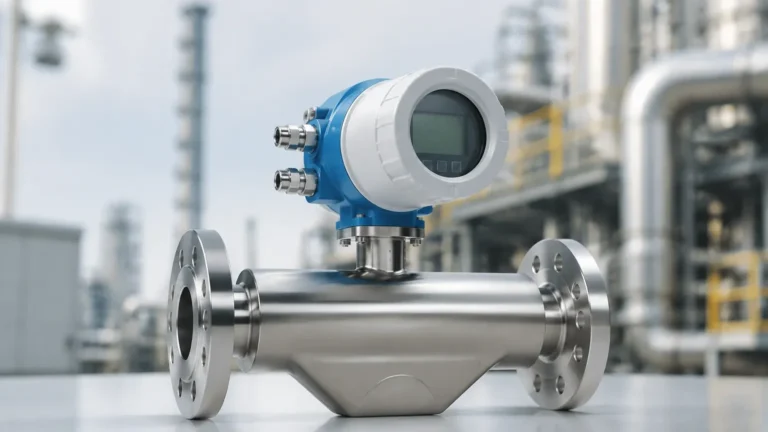
A vera mag flow meter consists of two primary assemblies: the primary element (the flow tube installed in the pipeline) and the secondary element (the transmitter or converter that processes the signal).
1. The Flow Tube (Sensor)
This is the physical housing through which the fluid passes. It is typically constructed from non-magnetic stainless steel to prevent interference with the generated magnetic field. Inside the tube are the magnetic coils and the electrodes.
2. The Liner
Since the flow tube is usually metallic, an insulating liner is required to prevent the induced voltage from short-circuiting through the pipe wall. The choice of liner material is critical for chemical compatibility and temperature resistance. Common materials include PTFE (Teflon), PFA, and hard rubber.
3. Electrodes
A pair of electrodes is mounted flush with the liner to pick up the induced voltage. These must be made of materials that resist corrosion from the process fluid, such as Stainless Steel 316L, Hastelloy C, Tantalum, or Titanium.
4. The Transmitter
The transmitter provides the excitation current to the coils and amplifies the millivolt-level signal from the electrodes. It converts this signal into a standard industrial output, such as 4-20mA, pulse, or digital protocols like Modbus or HART.
Practical Selection Criteria
Selecting the correct vera mag flow meter requires an analysis of the process fluid and the mechanical constraints of the installation. The following table provides a reference for matching meter components to specific application needs.
Selection Table: Liner and Electrode Compatibility
| Material Category | Material Name | Temperature Range | Typical Applications |
| :— | :— | :— | :— |
| Liner | Hard Rubber | -20°C to +60°C (-4°F to 140°F) | Municipal water, wastewater, abrasive slurries. |
| Liner | PTFE (Teflon) | -40°C to +180°C (-40°F to 356°F) | Corrosive chemicals, strong acids, and bases. |
| Liner | PFA | -40°C to +200°C (-40°F to 392°F) | High-temperature chemicals, vacuum applications. |
| Electrode | SS316L | N/A | Low-corrosion liquids, water, mild chemicals. |
| Electrode | Hastelloy C | N/A | Oxidizing salts, sea water, organic acids. |
| Electrode | Tantalum | N/A | Hydrochloric acid, sulfuric acid, highly aggressive media. |
When evaluating a vera mag flow meter for a specific project, ensure that the minimum conductivity of the fluid is at least 5 μS/cm. Most municipal water and chemical solutions meet this threshold, but demineralized water or hydrocarbons (oils) generally do not.
Installation Considerations and Best Practices
To achieve the rated accuracy—often within ±0.5% of the flow rate—the vera mag flow meter must be installed according to specific engineering guidelines. Improper installation is the leading cause of measurement error in electromagnetic systems.
Straight Pipe Requirements
Flow profiles must be stable and fully developed for accurate measurement. Standard practice requires a straight pipe run of at least 5D (five times the nominal pipe diameter) upstream of the meter and 3D downstream. If there are high-turbulence elements like pumps or partially open valves nearby, the upstream requirement may increase to 10D.
Orientation and Filling
The meter must always be completely full of liquid. If the pipe is partially empty, the meter will provide erratic readings or fail to function.
* Vertical Installation: The preferred orientation is vertical with the flow moving upward. This ensures the pipe remains full and prevents the entrapment of air bubbles.
* Horizontal Installation: If installed horizontally, the electrode axis must be horizontal (at the 3 o'clock and 9 o'clock positions). This prevents air bubbles at the top of the pipe or sediment at the bottom from interfering with the electrode signal.
Grounding
Grounding is perhaps the most critical aspect of installing a vera mag flow meter. Because the induced voltage is very small, electrical noise in the pipeline can easily overwhelm the signal. The fluid, the sensor, and the transmitter must all be at the same electrical potential.
* For metallic pipes, grounding straps are connected from the meter flanges to the pipe flanges.
* For non-metallic or lined pipes, grounding rings (thin metallic discs) must be installed between the flanges to provide a path to the fluid.
Application Profiles
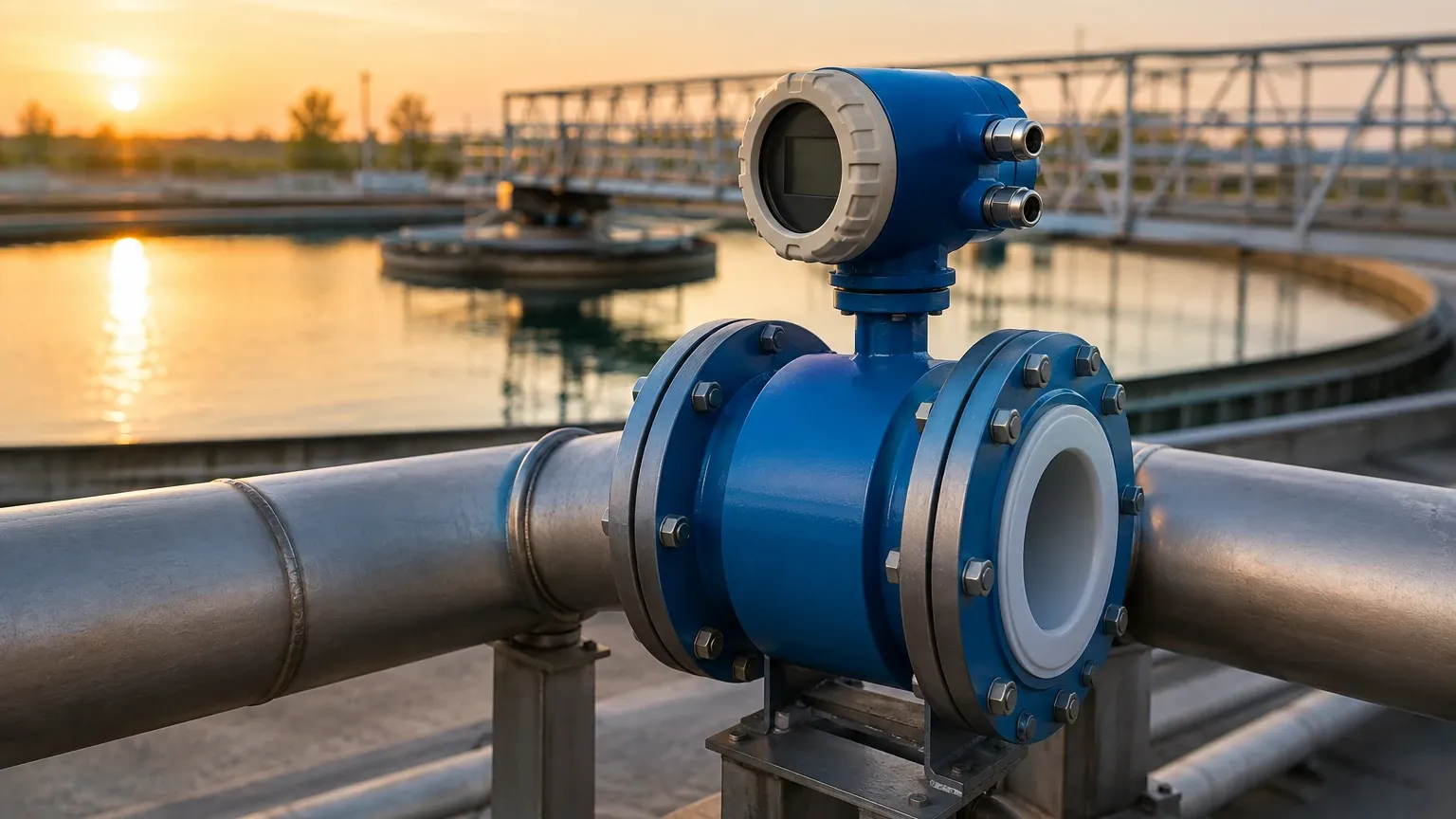
The versatility of the vera mag flow meter makes it a staple in several key industries served by manufacturers like Welk.
Water and Wastewater Management
In municipal systems, these meters are used for influent and effluent monitoring, leak detection, and chemical dosing. Their ability to handle fluids with suspended solids without clogging makes them superior to turbine or vortex meters in these environments.
Chemical and Pharmaceutical Processing
Due to the availability of exotic electrode materials like Tantalum and liners like PFA, the vera mag flow meter can safely measure the flow of highly aggressive acids and caustic solutions. The smooth bore of the meter also supports "Clean-in-Place" (CIP) requirements in pharmaceutical manufacturing.
Industrial Automation
In automated batching systems, the fast response time of the vera mag flow meter allows for precise control of liquid volumes. When integrated with PLC systems via 4-20mA or digital communication, they provide real-time data for process optimization.
For professionals seeking to integrate these flow solutions with broader level measurement and control systems, reviewing specialized product options and application support on the Main Page can provide valuable technical context and hardware compatibility data.
Limitations and Constraints
While highly effective, the vera mag flow meter is not a universal solution. Engineers must be aware of the following limitations:
1. Conductivity Requirement: It cannot measure non-conductive fluids such as oils, alcohols, or distilled water. If the fluid conductivity drops below the manufacturer's threshold (typically 5-20 μS/cm), the signal will be lost.
2. Gas Content: Large volumes of entrained air or gas bubbles will cause measurement errors, as the meter measures the total volume of the medium passing through the tube, not just the liquid.
3. Vacuum Sensitivity: Certain liners, particularly PTFE, can collapse or peel away from the tube wall under vacuum conditions. For applications involving vacuum, PFA liners with mechanical reinforcement are recommended.
4. Temperature Limits: The maximum temperature is limited by the liner material and the electronics. Remote-mounted transmitters are often used when process temperatures exceed 120°C (248°F).
Frequently Asked Questions (FAQ)
Q: Can a vera mag flow meter measure flow in both directions?
A: Yes, most modern electromagnetic flow meters are bi-directional. The transmitter can be configured to track forward and reverse flow separately and provide a net totalization.
Q: How often does the meter need to be calibrated?
A: Since there are no moving parts to wear out, the calibration of a mag meter is remarkably stable. In most industrial applications, a verification check every 1–2 years is sufficient, though regulated industries (like drinking water) may require more frequent certified calibrations.
Q: What happens if the electrodes become coated with scale or grease?
A: Significant coating can insulate the electrodes from the fluid, leading to signal loss. Some vera mag flow meters feature electrode cleaning circuits or removable electrodes, but for fluids prone to scaling, high-velocity flow or ultrasonic cleaning options should be considered.
Q: Is it possible to install the meter in a gravity-fed line?
A: Only if the line is guaranteed to be 100% full at all times. Gravity lines that discharge to atmosphere often run partially full, which will result in inaccurate readings. A "U-trap" configuration in the piping can help ensure the meter remains submerged.
Conclusion
The vera mag flow meter is a robust and highly accurate instrument for measuring conductive liquid flow in demanding industrial environments. By eliminating moving parts and providing a clear flow path, it minimizes maintenance and maximizes process uptime. When selected with the appropriate liner and electrode materials and installed with careful attention to grounding and pipe runs, it provides a reliable foundation for industrial automation and fluid management. For those evaluating complete instrumentation packages, including level and flow sensors, visiting the Main Page offers a gateway to expert technical resources and customized OEM/ODM services tailored to global industrial standards.