Endress and Hauser Coriolis Flow Meter
Endress and Hauser Coriolis Flow Meter
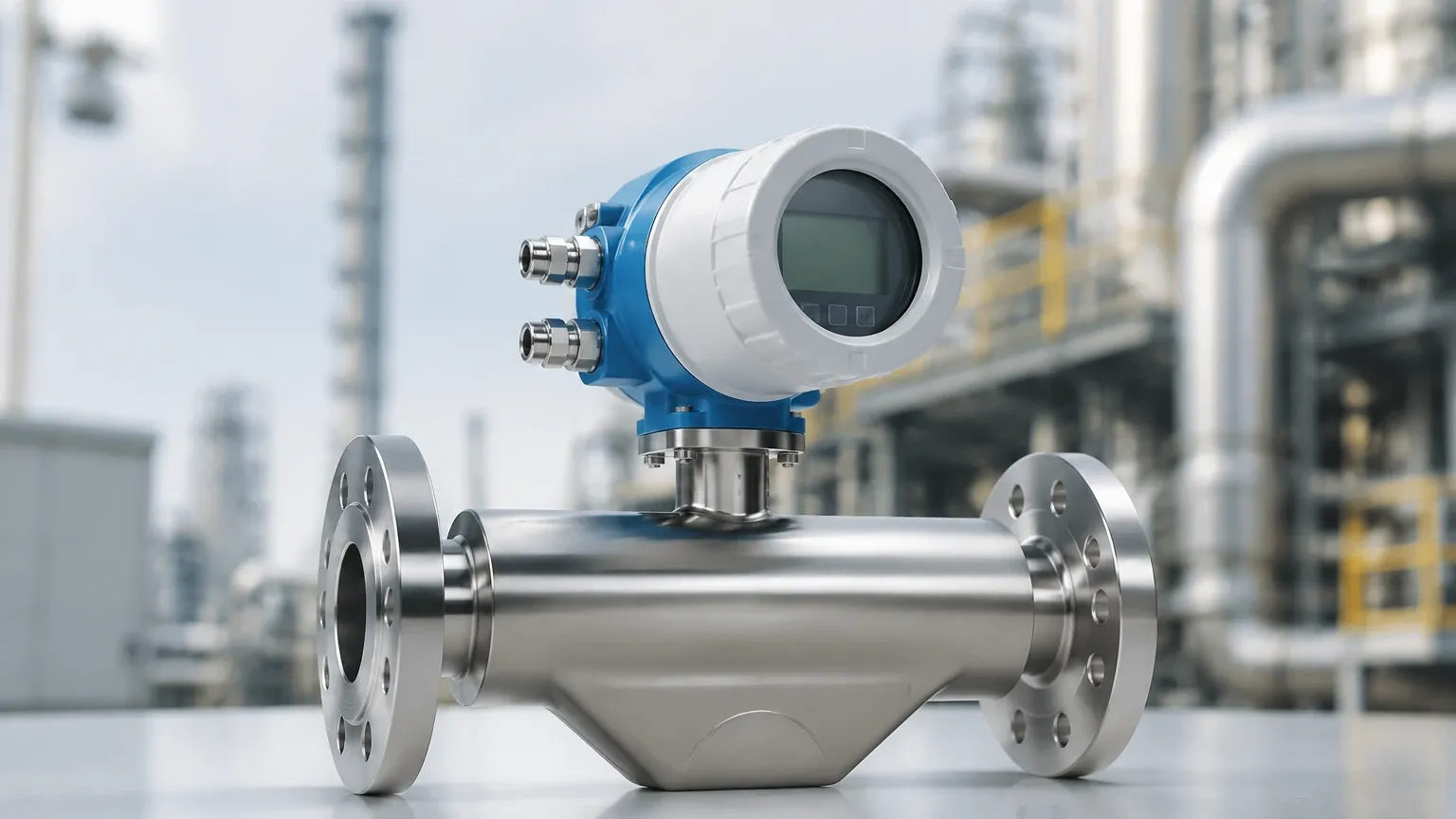
In the landscape of industrial process control, the Endress and Hauser Coriolis flow meter, specifically the Proline Promass series, represents a pinnacle of precision for mass flow measurement. Unlike volumetric flow meters that require compensation for temperature and pressure changes, Coriolis meters measure mass directly. This characteristic makes them indispensable in industries where mass balance is critical, such as chemical processing, oil and gas, and food production.
This article examines the technical principles, selection criteria, and installation requirements of Endress+Hauser Coriolis technology, while also considering how these instruments integrate into broader process monitoring systems alongside other critical sensors like those found on the Main Page of industrial measurement providers.
Understanding the Coriolis Measurement Principle
The operation of an Endress and Hauser Coriolis flow meter is based on the physical principle of the Coriolis effect. Within the sensor, one or two measuring tubes are induced to vibrate at their resonant frequency by an electro-mechanical driver.
Mass Flow Measurement
When a fluid (liquid or gas) flows through these vibrating tubes, the mass inertia of the fluid causes a secondary deformation or "twist" in the tube's oscillation. This is known as the Coriolis force. Sensors located at the inlet and outlet of the tube pick up this vibration.
* Zero Flow: Under no-flow conditions, the inlet and outlet sensors detect a synchronized vibration (in-phase).
* Active Flow: As fluid moves, the inlet part of the tube is delayed while the outlet part is accelerated. This results in a phase shift ($Δt$) between the two sensors.
This phase shift is directly proportional to the mass flow rate. Because mass is a fundamental property that does not change with temperature or pressure, the measurement is inherently more stable than volumetric methods.
Density and Temperature Measurement
In addition to mass flow, Coriolis meters provide real-time density measurement. The resonant frequency at which the tubes vibrate depends on the total mass of the system (tube + fluid). As the density of the fluid changes, the resonant frequency shifts. By measuring this frequency, the meter calculates the fluid's density. Furthermore, a built-in Pt1000 temperature sensor monitors the tube temperature to compensate for thermal expansion and provide a process temperature output. This multivariable capability allows a single instrument to provide mass flow, volume flow, density, and temperature data simultaneously.
Overview of the Endress+Hauser Promass Series
Endress+Hauser categorizes its Coriolis meters under the Promass brand, which is part of the Proline family of transmitters. Each model is engineered for specific process challenges.
| Model | Primary Application | Key Feature |
| :— | :— | :— |
| Promass F | Universal application | High accuracy (±0.05%) and robustness. |
| Promass Q | Oil & Gas, Entrained Gas | Superior performance in liquids with gas bubbles. |
| Promass I | Food & Pharma | Single-tube design, low shear, and easy to clean. |
| Promass E | Basic chemical/utility | Cost-effective for standard applications. |
| Promass O | High Pressure | Designed for extreme pressures in offshore/subsea. |
| Promass X | High Throughput | Large diameter (up to 350 mm) for bulk loading. |
The Proline Transmitter Platform
The sensor is paired with a Proline transmitter (e.g., Proline 10, 100, 200, 300, or 500). These transmitters handle the signal processing and offer various communication protocols, including HART, Modbus RS485, PROFIBUS, and EtherNet/IP. Modern versions include "Heartbeat Technology," which allows for internal device verification without interrupting the process, significantly reducing the need for manual calibration cycles.
Technical Selection Criteria for Coriolis Flow Meters
Selecting the correct Endress and Hauser Coriolis flow meter requires a detailed analysis of the process fluid and environmental conditions. Engineers should evaluate the following factors:
1. Accuracy and Repeatability
For custody transfer or high-value chemical dosing, the Promass F or Q series is typically preferred due to their high accuracy ratings (often ±0.05% o.r. for liquids). For less critical utility water or basic chemical transport, the Promass E or Proline 10 series may suffice.
2. Fluid Properties and Entrained Gas
Standard Coriolis meters can struggle with "two-phase flow" (liquids containing gas bubbles). Gas bubbles dampen the tube vibration, leading to measurement errors. The Promass Q addresses this using Multi-Frequency Technology (MFT), which compensates for the dampening effect, making it the industry standard for applications like bunker fuel loading or aerated food products.
3. Pressure Drop
Because Coriolis meters often involve a reduction in pipe diameter or a split into two smaller tubes, they can introduce a pressure drop. Engineers must calculate the allowable pressure loss using sizing software to ensure the process pump can maintain the required flow rate. For high-viscosity fluids, the single-tube Promass I is often chosen to minimize this drop.
4. Material Compatibility
Measuring tubes are available in various materials, including 316L stainless steel, Hastelloy C22, and Tantalum. Selection depends on the corrosivity of the fluid. For example, highly acidic media in chemical plants require Hastelloy or Tantalum to prevent tube failure.
Installation Best Practices and Mechanical Considerations
While Coriolis meters are generally less sensitive to flow profiles than ultrasonic or magnetic meters, proper installation is vital for maintaining laboratory-grade accuracy in the field.
* Orientation: For liquid applications, the tubes should ideally point downwards (in a "U" shape) to prevent gas from being trapped. For gas applications, the tubes should point upwards to prevent condensate buildup. Vertical installation with upward flow is often the best compromise for self-draining systems.
* Mechanical Stress: The meter must not be used to support the weight of the piping. Flanges should be perfectly aligned to avoid introducing "piping stress" into the sensor body, which can cause zero-point drift.
* Vibration Isolation: High-frequency vibrations from nearby pumps or valves can interfere with the meter's resonant frequency. It is recommended to install the meter on a stable, vibration-free support and use flexible connectors if necessary.
* Zero Point Adjustment: After installation and under full-pipe, zero-flow conditions, a zero-point adjustment must be performed to calibrate the meter to the specific mechanical environment of the site.
Complementary Technologies: Flow and Level Measurement Integration
In industrial automation, flow measurement rarely exists in isolation. It is frequently paired with level measurement to provide a comprehensive view of tank inventory and mass balance. For instance, in a large storage tank, a radar level meter provides the surface height, while an Endress and Hauser Coriolis flow meter at the inlet/outlet tracks the mass entering or leaving the system.
Discrepancies between the flow meter data and the level sensor data can indicate leaks, evaporation, or changes in fluid density. For engineers designing these systems, sourcing reliable level measurement instruments—such as radar, ultrasonic, or hydrostatic transmitters—is essential to complement the precision of Coriolis flow meters. You can Review product options and application support for level measurement technologies that integrate seamlessly with high-end flow control loops.
Operational Limitations and Maintenance Requirements
Despite their versatility, Coriolis meters have limitations:
* Initial Cost: The capital expenditure for a Coriolis meter is significantly higher than for electromagnetic or vortex meters.
* Size Constraints: While Endress+Hauser offers the Promass X for large pipes, the weight and cost of Coriolis meters increase exponentially with pipe size above 250 mm (10 inches).
* Gas Measurement: While capable of measuring gas, the low density of gases results in a very small phase shift, which increases the measurement uncertainty compared to liquid applications.
Maintenance and Verification:
Modern E+H meters rarely require mechanical maintenance because they have no moving parts in the fluid stream. However, periodic verification is required by regulatory bodies. Using Heartbeat Technology, operators can generate a verification report that confirms the sensor and electronics are within specification without removing the device from the pipeline. If a physical calibration is required, it must be performed on a certified flow rig using water or the actual process fluid.
Frequently Asked Questions (FAQ)
Q: Does a Coriolis flow meter require straight inlet and outlet pipe runs?
A: Generally, no. Unlike turbine or orifice plate meters, Coriolis meters are not sensitive to flow profile disturbances like swirls or turbulence. However, it is still good practice to avoid installing them immediately after a high-pressure control valve to prevent cavitation.
Q: Can Coriolis meters measure non-conductive liquids?
A: Yes. Unlike magnetic flow meters (magmeters), Coriolis meters do not rely on electrical conductivity. They work perfectly with hydrocarbons, deionized water, and non-polar solvents.
Q: What is the typical lifespan of an Endress and Hauser Coriolis flow meter?
A: In non-corrosive and non-abrasive applications, these meters can last 20 years or more. The primary life-limiting factor is usually tube erosion or corrosion if the material selection was incorrect for the fluid.
Q: How does temperature affect the measurement?
A: Temperature affects the stiffness of the measuring tubes. Endress+Hauser meters include an internal temperature sensor that automatically compensates for this change in the internal algorithm, ensuring mass flow accuracy across the entire rated temperature range (typically -50°C to +350°C depending on the model).
By understanding these technical nuances, engineers can effectively deploy Coriolis technology to improve process efficiency, ensure product quality, and maintain rigorous mass balance across their operations.