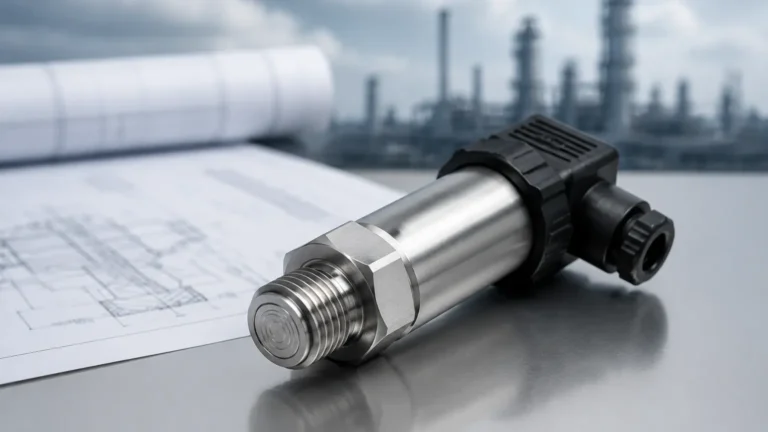
Proline Promag W 400
Proline Promag W 400
In the field of industrial fluid management, the Proline Promag W 400 represents a specialized solution for electromagnetic flow measurement, particularly within the water and wastewater sectors. While many industrial processes focus heavily on volume and storage through various level measurement technologies, the integration of precise flow data is essential for mass balance, leak detection, and process automation. This article examines the technical foundations, application engineering, and installation requirements of the Proline Promag W 400, providing a reference for engineers managing complex liquid cycles.
Measurement Principle: Faraday’s Law of Induction
Before selecting a flowmeter like the Proline Promag W 400, it is necessary to understand the electromagnetic measurement principle. This technology is based on Faraday’s Law of Induction, which states that a voltage is induced when a conductive fluid flows through a magnetic field.
In a practical application, the flowmeter sensor contains two electromagnetic coils. These coils generate a constant magnetic field across the cross-section of the measuring tube. According to the law of induction, the voltage (U) induced is directly proportional to the flow velocity (v), the magnetic field strength (B), and the distance between the electrodes (d), which corresponds to the pipe diameter. The formula is expressed as:
U = B · v · d
Because the magnetic field and the pipe diameter are constant values, the induced voltage is a linear function of the flow velocity. This voltage is picked up by two electrodes located on the inner wall of the measuring tube. The transmitter then converts this signal into a standardized output, such as 4-20 mA, pulse, or digital communication protocols. Crucially, this principle is independent of fluid properties such as pressure, temperature, density, and viscosity, provided the medium meets a minimum electrical conductivity (typically ≥ 5 μS/cm).
Technical Configuration of the Proline Promag W 400
The Proline Promag W 400 is a modular system consisting of the Promag W sensor and the Proline 400 transmitter. This combination is specifically engineered to meet the demands of the water industry, ranging from drinking water distribution to the treatment of industrial effluent.
The Promag W Sensor
The sensor is available in various diameters, typically ranging from DN 25 to DN 3000 (1" to 120"). It is designed with several liner options to suit different chemical and physical environments:
* Hard Rubber: Suitable for general water applications and wastewater.
* Polyurethane: Highly resistant to abrasion, making it ideal for water containing suspended solids or sand.
* PTFE: Used when chemical resistance is required for industrial water treatment.
One of the most significant advancements in the Promag W series is the "0 x DN full-bore" option. Standard electromagnetic flowmeters usually require straight pipe runs (e.g., 5 diameters upstream and 2 downstream) to ensure a stable flow profile. The 0 x DN version utilizes a refined magnetic field and multi-electrode arrangement to maintain accuracy even when installed directly after pipe bends or T-junctions, which is a common constraint in aging infrastructure.
The Proline 400 Transmitter
The transmitter serves as the "brain" of the unit. It is designed for the modern industrial environment, featuring a built-in web server. This allows technicians to configure the device, perform diagnostics, and retrieve data using a standard laptop and a web browser, eliminating the need for specialized proprietary software. It supports various communication protocols, including HART, PROFIBUS DP, EtherNet/IP, and Modbus RS485.
Selection Criteria and Comparison Table
When evaluating the Proline Promag W 400 against other measurement technologies, engineers must consider the specific requirements of the installation site. While flowmeters measure the rate of movement, they are often paired with instruments from the Main Page to provide a complete picture of tank or reservoir status.
| Feature | Proline Promag W 400 | Ultrasonic Flowmeter (Clamp-on) | Mechanical Water Meter |
| :— | :— | :— | :— |
| Measurement Principle | Electromagnetic | Transit Time / Doppler | Turbine / Piston |
| Moving Parts | None | None | Yes (Subject to wear) |
| Pressure Loss | Negligible (Full-bore) | Zero | Significant |
| Conductivity Required | Yes (≥ 5 μS/cm) | No | No |
| Accuracy | ±0.5% (Standard) / ±0.2% | ±1.0% to ±3.0% | ±2.0% |
| Maintenance | Low | Low | High |
Installation Considerations and Hydraulic Best Practices
To ensure the Proline Promag W 400 operates within its specified accuracy limits, several installation factors must be addressed. Even with the 0 x DN technology, hydraulic stability remains a priority for long-term reliability.
1. Pipe Filling
The measuring tube must be completely full of liquid at all times. If air pockets or partially filled pipes occur, the induced voltage will not accurately reflect the total volume, leading to significant measurement errors. In horizontal pipes, it is recommended to install the meter in a rising pipe section or a "U" bend to ensure the sensor remains flooded.
2. Orientation
* Vertical Installation: This is the preferred orientation, with the flow moving upwards. This ensures the pipe is full and prevents the accumulation of solids at the bottom of the sensor.
* Horizontal Installation: The electrode axis must be horizontal. If the electrodes are positioned vertically (one at the top, one at the bottom), air bubbles at the top or sediment at the bottom can interfere with the signal pick-up.
3. Grounding
Proper grounding is critical for electromagnetic flowmeters. Because the induced voltage signals are extremely small (in the millivolt range), electrical noise from the surrounding environment can obscure the measurement. The fluid, the sensor, and the transmitter must be at the same electrical potential. This is typically achieved using grounding rings or grounding electrodes, especially in plastic or lined piping systems.
4. Vibration and Magnetic Fields
While the Proline Promag W 400 is robust, it should not be installed near heavy motors or transformers that generate strong external electromagnetic fields, as these can interfere with the sensor’s internal magnetic field.
Integration with Level Measurement Systems
In comprehensive water management, flow measurement and level measurement are complementary. For example, in a pumping station, an ultrasonic or radar level sensor (available via Main Page) monitors the water level in the wet well to trigger pump starts and stops. Simultaneously, the Proline Promag W 400 measures the discharge flow rate.
By comparing the change in level over time against the measured flow rate, operators can perform "pump efficiency monitoring." A discrepancy between the calculated volume (based on level drop) and the measured volume (via the flowmeter) may indicate pump wear, impeller clogging, or a leak in the discharge line. This dual-instrumentation approach is the standard for modern industrial automation and leak detection programs.

Advanced Diagnostics: Heartbeat Technology
A key feature of the Proline 400 transmitter is Heartbeat Technology. This provides continuous self-diagnostics and verification without interrupting the process. The system monitors internal parameters such as coil resistance, electrode integrity, and electronic component health. This allows for "condition-based maintenance," where the device is only serviced when the internal diagnostics indicate a potential failure, rather than on a rigid, time-based schedule. This is particularly valuable in the water industry, where meters are often located in remote or inaccessible locations.
Limitations and Operational Constraints
Despite its versatility, the Proline Promag W 400 is not suitable for every application. Engineers must be aware of the following limitations:
* Non-Conductive Fluids: It cannot measure hydrocarbons (oils, fuels), demineralized water, or distilled water where conductivity falls below the threshold of 5 μS/cm.
* Gas Content: Large amounts of entrained air or gas bubbles will cause measurement errors. If the process involves significant aeration, an air separator must be installed upstream.
* Temperature Limits: While the sensor can handle a range of temperatures, the specific liner material (e.g., Polyurethane) may have a maximum limit (often around 50°C to 80°C) that is lower than the metallic housing's capability.
* Vacuum Resistance: In applications where vacuum conditions may occur (e.g., siphoning effects), the liner must be checked for vacuum stability to prevent it from collapsing or peeling away from the tube wall.
Frequently Asked Questions (FAQ)
Q: Can the Proline Promag W 400 measure flow in both directions?
A: Yes, electromagnetic flowmeters are inherently bi-directional. The transmitter can be configured to show forward flow, reverse flow, and a net totalizer.
Q: What is the benefit of the web server in the Proline 400 transmitter?
A: It allows for commissioning and troubleshooting via a standard RJ45 Ethernet connection. This reduces the need for handheld terminals and allows for remote support if the transmitter is connected to a local area network (LAN).
Q: How often does the meter need to be calibrated?
A: In many water applications, the meter is calibrated for life unless required by local regulations or custody transfer agreements. However, using Heartbeat Technology, users can perform a formal verification that generates a report for quality audit purposes without removing the meter from the line.
Q: Is the Promag W suitable for seawater?
A: Yes, provided the correct materials are chosen. For seawater, high-grade electrodes (such as Tantalum or Platinum) and appropriate corrosion-resistant coatings for the housing are recommended to withstand the corrosive environment.
Conclusion
The Proline Promag W 400 is a cornerstone of modern hydraulic engineering, providing reliable and accurate data for the world's most critical resource: water. By understanding the electromagnetic principle and adhering to strict installation guidelines regarding pipe filling and grounding, industrial users can ensure long-term operational success. When integrated with high-quality level measurement instruments, these flowmeters provide the data necessary for optimized, efficient, and sustainable industrial automation.