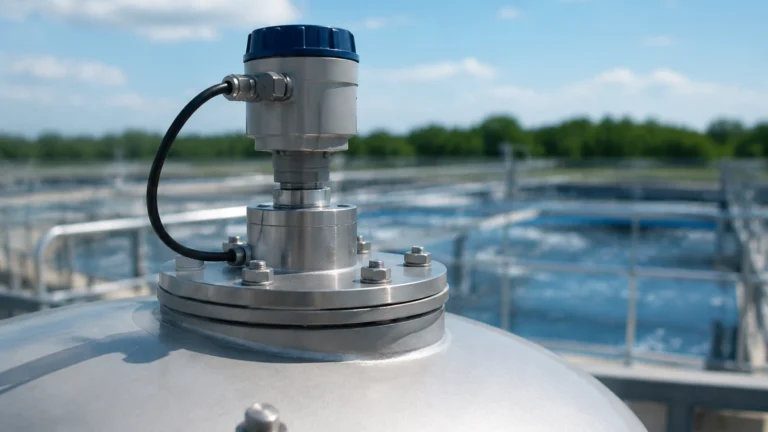
Water Reuse Governance Framework Stakeholders
Water Reuse Governance Framework Stakeholders
In the transition toward a circular water economy, the implementation of a robust water reuse governance framework stakeholders approach is essential for ensuring the safety, reliability, and scalability of reclaimed water projects. Water reuse—the process of treating wastewater for beneficial purposes such as irrigation, industrial cooling, and even potable use—requires a complex coordination of technical standards, regulatory oversight, and community engagement. At the heart of this coordination is the data provided by precision instrumentation, which allows all parties to verify that water quality and quantity meet the necessary standards for reuse.
For engineers and project managers, understanding the interplay between governance and technology is critical. This article explores the roles of various stakeholders within a water reuse framework and provides a technical guide to the level measurement technologies that support these systems.
The Role of Stakeholders in Water Reuse Governance
A successful water reuse governance framework stakeholders model identifies and integrates the needs of several distinct groups. Each group relies on accurate process data to fulfill their responsibilities within the water cycle.
Regulatory and Government Bodies
These stakeholders establish the legal boundaries for water quality and environmental protection. They require transparent, auditable data from level and flow sensors to ensure that treatment facilities are operating within their permitted capacities and that discharge or reuse volumes are accurately reported.
Municipal and Private Utilities
Utilities are responsible for the infrastructure of water reclamation. Their primary focus is operational efficiency and system resilience. For these stakeholders, level measurement instruments like those found on the Main Page of industrial catalogs are vital for managing buffer tanks, chemical dosing stations, and filtration units.
Industrial End-Users
In sectors such as chemical processing, oil and gas, and power generation, industrial users are both providers and consumers of reclaimed water. They require high-precision instrumentation to integrate recycled water into sensitive process loops without risking equipment damage or product contamination.
Technology and Equipment Providers
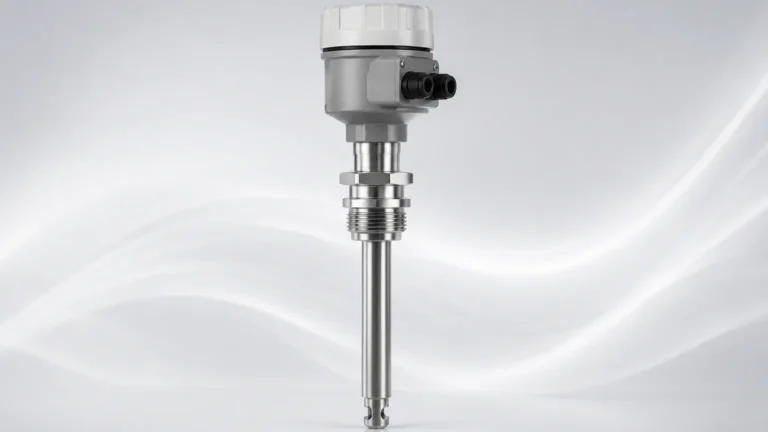
Manufacturers like Welk provide the hardware and software necessary to turn governance goals into measurable realities. By offering advanced radar, ultrasonic, and hydrostatic sensors, these stakeholders enable the real-time monitoring required for automated water reuse systems.
Technical Foundation: Level Measurement Principles
Before selecting instrumentation for a water reuse project, it is necessary to understand the physical principles governing these measurements. In water treatment and reuse, four primary technologies are standard.
1. Radar Level Measurement (FMCW)
Frequency Modulated Continuous Wave (FMCW) radar is the gold standard for non-contact level measurement. The sensor emits a continuous radar signal with a constantly changing frequency. The signal reflects off the liquid surface and is received by the antenna. The difference in frequency between the emitted and received signal is proportional to the distance.
* Advantage: Unaffected by temperature fluctuations, pressure, or vacuum. High-frequency 80 GHz radar can penetrate steam and foam more effectively than lower frequencies.
* Application: Large storage tanks and aggressive chemical reactors used in water purification.
2. Ultrasonic Level Measurement
Ultrasonic sensors work on the Time-of-Flight (ToF) principle. The transducer emits an ultrasonic pulse that travels through the air, hits the liquid surface, and returns. The distance is calculated based on the speed of sound.
* Advantage: Cost-effective and easy to install for standard water applications.
* Limitation: The speed of sound is affected by air temperature and gas composition, requiring temperature compensation for accuracy.
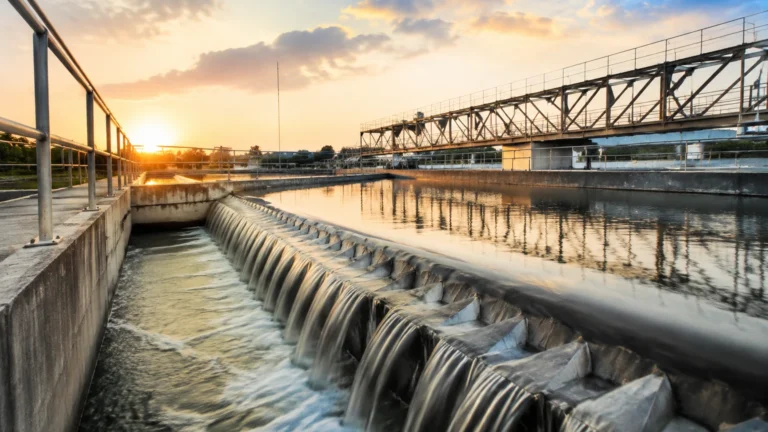
* Application: Open channel flow measurement and wastewater sumps.
3. Hydrostatic Pressure Measurement
This principle relies on the relationship between the height of a liquid column and the pressure it exerts at the base. A pressure transmitter at the bottom of a tank measures the "head pressure," which is then converted to a level reading based on the fluid's density.
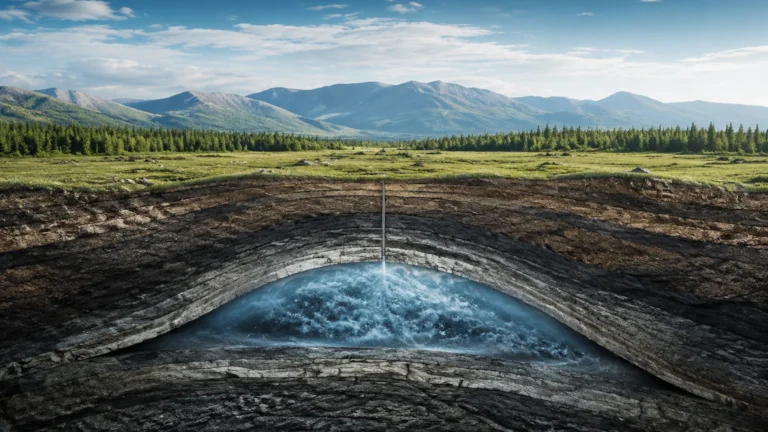
* Advantage: Extremely reliable for deep wells and vented tanks.
* Application: Ground water monitoring and deep equalization basins in treatment plants.
4. Magnetic Level Gauges
Magnetic gauges utilize a float containing a permanent magnet that moves with the liquid level. This magnet interacts with an external indicator (flaps or a needle) and can be paired with a reed chain transmitter for remote signaling.
* Advantage: Provides a clear visual indication without requiring power; highly resistant to high pressures.
* Application: Boiler feed water tanks and high-pressure separators in industrial reuse loops.
Selection Criteria for Water Reuse Instrumentation
When developing a water reuse governance framework stakeholders must agree on the technical specifications of the equipment to ensure data consistency. The following table compares common technologies used in these frameworks.
| Technology | Typical Accuracy | Max Range | Media Compatibility | Ideal Stakeholder Use Case |
| :— | :— | :— | :— | :— |
| 80GHz Radar | ±2 mm (0.08 in) | 120 m (394 ft) | Corrosive chemicals, Sludge | Industrial process automation |
| Ultrasonic | ±0.25% of range | 15 m (49 ft) | Clean water, Wastewater | Municipal open-channel monitoring |
| Hydrostatic | ±0.1% of span | 200 m (656 ft) | Clear liquids, Oils | Deep well and reservoir management |
| Magnetic Gauge | ±5 mm (0.2 in) | 6 m (20 ft) | High-pressure steam, Acids | On-site operator visual verification |
Installation and Engineering Considerations
To satisfy the data integrity requirements of a water reuse governance framework stakeholders strategy, proper installation is mandatory. Poorly installed sensors lead to "ghost echoes" or signal loss, which can compromise the entire governance audit trail.
Mounting and Positioning
For radar and ultrasonic sensors, the beam must have a clear path to the liquid surface. Obstructions such as ladders, agitators, or inflow pipes will cause false reflections. It is generally recommended to install the sensor at least 200 mm (8 inches) away from the tank wall to avoid interference.
Managing Turbulence and Foam
In water reuse, aeration tanks often involve significant turbulence and foam. Foam can absorb ultrasonic signals, leading to measurement failure. In these environments, high-frequency radar (80 GHz) is preferred because its shorter wavelength can better penetrate foam layers. Alternatively, a stilling well can be used to provide a calm surface for the measurement.
Environmental Protection
Since many water reuse facilities are outdoors, sensors must be rated for environmental exposure. IP68-rated housings are standard for submersible hydrostatic sensors, while NEMA 4X/IP67 housings are required for radar transmitters to protect against UV radiation and heavy rain.

Limitations and Challenges in Water Reuse Applications
While modern instrumentation is highly advanced, certain physical and chemical limitations must be acknowledged by all stakeholders:
1. Build-up and Scaling: In recycled water with high mineral content (hard water), scaling can occur on sensor faces. Non-contact radar is less susceptible to this than contact-based probes, but regular inspection is still required.
2. Dielectric Constant (Dk): Radar measurement depends on the reflectivity of the liquid, which is determined by its dielectric constant. While water has a high Dk (~80) and is easy to measure, some industrial solvents or oils in the reuse stream may have low Dk values, requiring more sensitive radar units.
3. Signal Latency: In fast-filling tanks, the update rate of the sensor must be high enough to prevent overfilling. Stakeholders must ensure that the 4-20mA or HART output is integrated into a high-speed control loop.
Data Integration for Stakeholder Transparency
The ultimate goal of a governance framework is transparency. Modern level meters from Welk support various communication protocols, including Modbus RTU, Profibus, and Foundation Fieldbus. By connecting these sensors to a centralized SCADA (Supervisory Control and Data Acquisition) system or a cloud-based IoT platform, stakeholders can access real-time data from any location.
This connectivity allows for:
* Automated Compliance Reporting: Generating weekly or monthly reports for regulatory bodies without manual data entry.
* Predictive Maintenance: Monitoring signal strength to predict when a sensor needs cleaning or recalibration.
* Resource Optimization: Balancing the supply of reclaimed water with the demand of industrial users in real-time.
Frequently Asked Questions (FAQ)
Q: Why is 80 GHz radar preferred over 26 GHz for water reuse?
A: 80 GHz radar has a narrower beam angle (typically 3° to 4°), which allows it to avoid internal tank obstructions and measure more accurately in narrow vessels or tanks with complex internal structures.
Q: Can ultrasonic sensors be used in chemical dosing tanks for water treatment?
A: Yes, provided the chemicals do not produce heavy vapors. If the chemical (like concentrated nitric acid) creates dense fumes, the speed of sound will change, leading to errors. In those cases, radar is a safer choice.
Q: How often should hydrostatic level transmitters be recalibrated?
A: For most water reuse applications, an annual calibration check is sufficient. However, if the sensor is used in a custody transfer application (where water is being sold between stakeholders), semi-annual calibration may be required by the governance framework.
Q: What is the maximum distance for a hydrostatic sensor in a deep well?
A: Welk provides hydrostatic sensors capable of measuring depths up to 200 meters (approx. 656 feet) with specialized vented cables to compensate for atmospheric pressure changes.
Conclusion
A comprehensive water reuse governance framework stakeholders approach relies heavily on the technical accuracy of the underlying infrastructure. By selecting the appropriate level measurement technology—whether it be radar for complex industrial processes or hydrostatic sensors for reservoir management—stakeholders can ensure a reliable supply of reclaimed water. For more information on specific instrument models and technical support, please refer to the Main Page to review product options and application support tailored to the needs of modern water management.
Download Water Reuse Governance Framework Stakeholders as a PDF