Suspended Solids Monitor
Suspended Solids Monitor
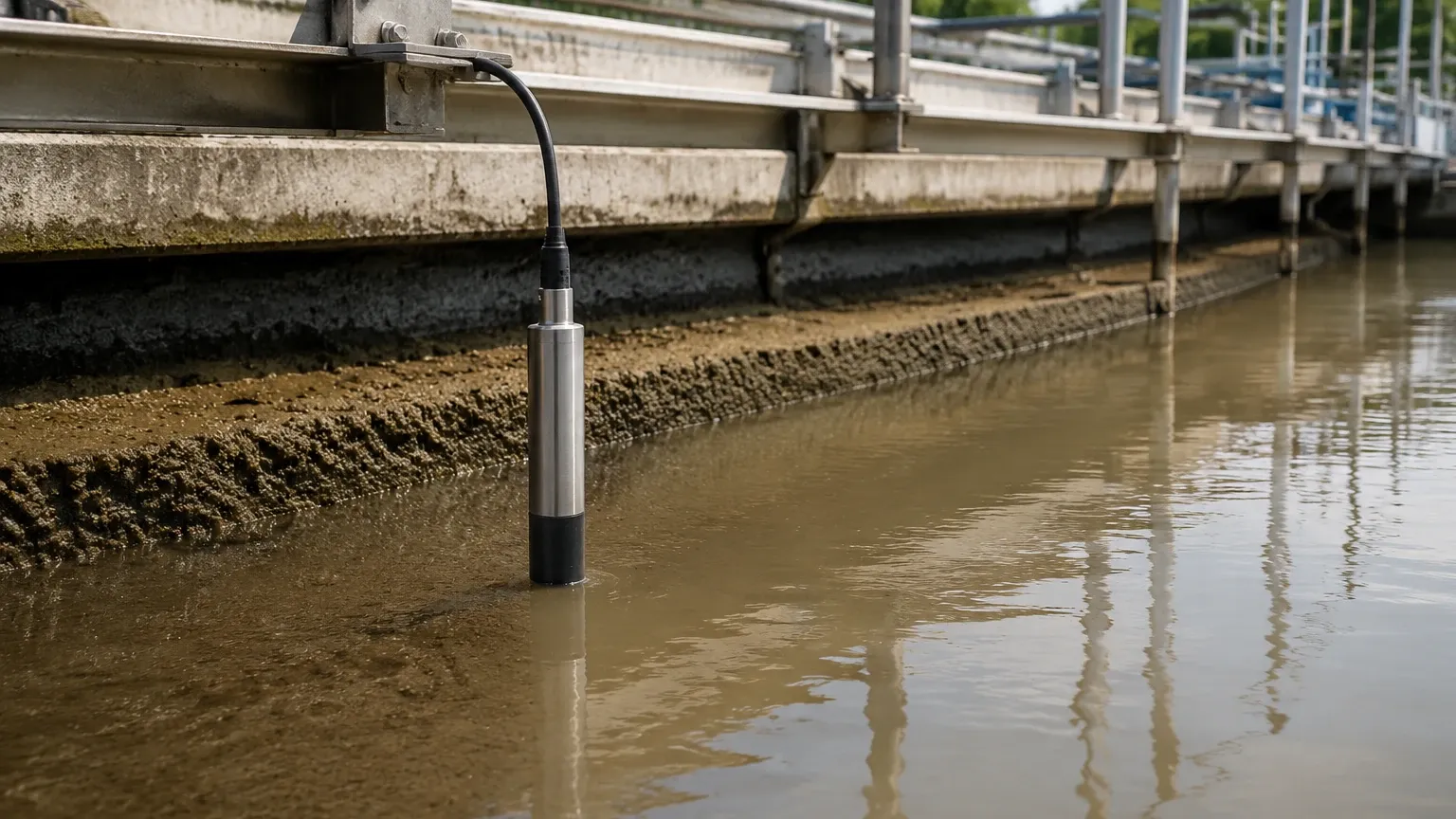
In industrial process control and wastewater management, the ability to quantify the concentration of undissolved particulate matter in a liquid is critical. A suspended solids monitor is an analytical instrument designed to provide real-time measurement of Total Suspended Solids (TSS). Unlike manual laboratory sampling, which provides a retrospective snapshot, online monitors enable automated dosing, process optimization, and immediate compliance alerts. This guide explores the underlying measurement principles, selection criteria, and practical engineering considerations for deploying these instruments in B2B environments.
Measurement Principles of Suspended Solids Monitors
Suspended solids monitors utilize different physical properties of particles to estimate their concentration. Because "suspended solids" is technically a gravimetric measurement (measured in mg/L or g/L via filtration and drying), electronic monitors must correlate optical or acoustic signals to these mass-based values.
Optical Scattering (Nephelometry)
Optical sensors emit a light beam (often infrared to minimize interference from ambient light) into the process fluid. When the light hits suspended particles, it scatters. Sensors positioned at specific angles—most commonly 90 degrees—measure the intensity of the scattered light. This method is highly sensitive and is typically used for low to medium concentrations, often referred to as turbidity monitoring.
Optical Absorption (Transmission)
For higher concentrations of solids where the fluid becomes opaque, scattering sensors may become saturated. Absorption sensors measure the attenuation of light as it passes through a fixed path length of the fluid. The decrease in light intensity, according to the Beer-Lambert law, correlates to the concentration of particles. This is the preferred method for sludge density and thickener underflow applications.
Ultrasonic Attenuation
Ultrasonic monitors transmit high-frequency sound waves through the medium. Particles in the fluid absorb and scatter the sound energy. By measuring the loss of signal (attenuation) or the backscattered echo, the instrument calculates the solids concentration. The primary advantage of ultrasonic technology is its ability to penetrate very high-density slurries where light cannot pass, and its relative immunity to the color of the liquid.
Microwave Phase Shift
In highly demanding industrial applications, microwave sensors measure the change in the dielectric constant and phase shift of microwaves passing through a pipe. This technology is virtually unaffected by particle size or color, making it suitable for consistent mass-flow measurements in chemical processing and mining.
Key Evaluation Criteria for Industrial Selection
Selecting the correct suspended solids monitor requires a detailed understanding of the process media. Engineers must evaluate several factors to ensure long-term accuracy and minimal maintenance. For a broader look at industrial measurement technologies, including level and flow integration, you may refer to the Main Page of our technical resource center.
Concentration Range
The most fundamental criterion is the expected range of solids.
- Low Range (0–1,000 mg/L): Best served by 90° scatter optical sensors.
- Medium Range (1,000–10,000 mg/L): Typically requires backscatter or multi-beam optical sensors.
- High Range (>10,000 mg/L or 1% to 10% solids): Requires absorption-based optical sensors or ultrasonic technology.
Particle Characteristics
The size, shape, and color of the suspended solids significantly impact optical sensors. If the particle size distribution changes frequently, optical monitors may require frequent re-calibration. If the fluid color changes (e.g., in textile or dye processes), infrared light sources or ultrasonic sensors are necessary to prevent false readings.
Process Environment
Consider the temperature and pressure of the installation point. Most standard sensors are rated for temperatures up to 50°C (122°F), but specialized high-temperature versions are available for industrial boilers or chemical reactors. Additionally, the presence of corrosive chemicals requires wetted materials such as PVC, PTFE, or high-grade stainless steel.
Practical Selection Table
| Technology | Typical Range | Best Use Case | Limitations |
| :— | :— | :— | :— |
| 90° Light Scatter | 0–1,000 mg/L | Potable water, final effluent | Sensitive to scaling and bubbles |
| Backscatter Optical | 0–5,000 mg/L | Aeration tanks, return sludge | Affected by extreme color changes |
| Light Absorption | 0–100 g/L | Sludge thickening, mining | Requires a fixed, clean optical path |
| Ultrasonic | 0–200 g/L | Primary sludge, heavy slurries | Heavily affected by entrained air/bubbles |
| Microwave | 2% – 50% solids | Pulp and paper, chemical mass | High initial cost; pipe-mount only |
Installation Considerations and Best Practices
Proper installation is often more important than the sensor technology itself. A poorly placed suspended solids monitor will provide inconsistent data regardless of its quality.
Flow Dynamics and Representative Sampling
The sensor must be placed where the fluid is well-mixed. Avoid areas of laminar flow where particles might settle at the bottom of a pipe or tank. In pipe installations, the sensor should ideally be placed in a vertical section with upward flow to ensure the pipe is always full and to minimize the accumulation of air bubbles.
Avoiding Entrained Air
Air bubbles are the enemy of both optical and ultrasonic monitors. Bubbles scatter light and reflect sound waves just like solid particles, leading to artificially high readings. Sensors should be installed away from pumps, weirs, or any point where splashing occurs. If bubbles are unavoidable, look for instruments with software-based "bubble rejection" algorithms.
Maintenance and Self-Cleaning
Biofouling and scaling are the most common causes of measurement drift. In wastewater applications, a biofilm can grow on the sensor lens within days. B2B users should prioritize sensors equipped with automatic cleaning systems:
- Mechanical Wipers: A rubber blade that physically wipes the lens at set intervals.
- Air Blast/Water Jet: Uses compressed air or high-pressure water to flush the sensor face.
- Ultrasonic Cleaning: High-frequency vibration of the sensor face to prevent particle adhesion.
Limitations and Common Risks
While modern suspended solids monitors are robust, they are not "set and forget" devices. Understanding their limitations prevents operational failures.
1. Calibration Drift: Unlike level meters that measure a physical distance, SS monitors measure a proxy. If the nature of the solids changes (e.g., a change in the chemical flocculant used), the relationship between the signal and the mass changes. Regular "grab sample" calibration is necessary.
2. Optical Coating: Even with wipers, some fats, oils, and greases (FOG) can create a film that the wiper cannot fully remove, requiring manual chemical cleaning.
3. Particle Size Sensitivity: Most optical sensors are calibrated to a specific particle size. If the process breaks down particles into smaller fragments, the surface area increases, which may cause the monitor to report a higher concentration even if the mass remains the same.
Frequently Asked Questions (FAQ)
Q: What is the difference between Turbidity and Total Suspended Solids (TSS)?
A: Turbidity is an optical property—how much light is scattered by a fluid. TSS is a weight-based measurement of the solids trapped by a filter. While they are related, they are not the same. A monitor measures turbidity or backscatter and uses a mathematical coefficient to estimate TSS.
Q: How often should I calibrate my suspended solids monitor?
A: For most industrial applications, a monthly validation against a laboratory grab sample is recommended. If the process is highly stable, this can be extended to quarterly. If the process is highly variable, weekly checks may be required during the first month of operation.
Q: Can these sensors measure dissolved solids (TDS)?
A: No. Suspended solids monitors detect physical particles. Dissolved solids (like salt in water) do not scatter light or sound in the same way and must be measured using conductivity or refractive index sensors.
Q: What is the maximum pipe size for an inline sensor?
A: Insertion-style sensors can be used in almost any pipe size, provided they reach the center of the flow. However, for absorption-style sensors that require a light path across the pipe, the limit is usually 200 mm to 300 mm (approx. 8 to 12 inches) before the signal becomes too weak.
Conclusion
Implementing a suspended solids monitor is a strategic move for any facility looking to improve process efficiency and ensure environmental compliance. By understanding the physics of light and sound interaction with particles, engineers can select a technology that balances accuracy with maintenance requirements. Whether monitoring the clarity of treated water or the density of industrial sludge, the right instrumentation provides the data necessary for automated, data-driven decision-making. For further technical specifications and product comparisons in the field of industrial measurement, visit the Main Page to explore our full range of solutions.