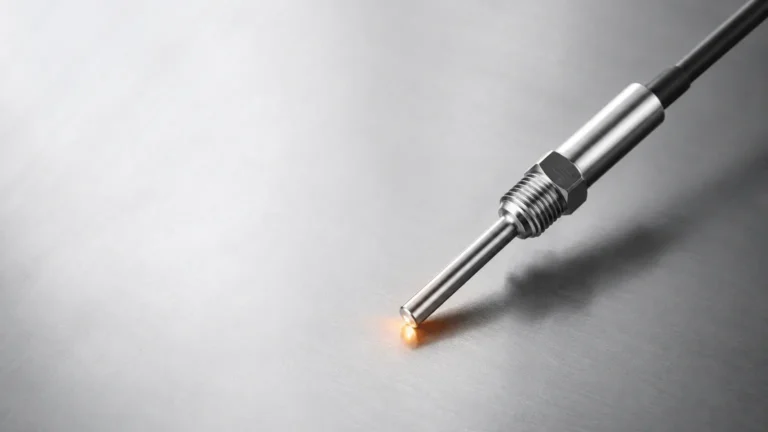
Process Analyzers for Chemical Industry
Process Analyzers for Chemical Industry
In the modern chemical processing landscape, the ability to monitor fluid dynamics, chemical composition, and storage volumes in real-time is essential for operational safety and economic efficiency. Process analyzers for chemical industry applications encompass a wide range of instrumentation designed to provide continuous data from within the heart of the production line. Among these, level measurement instruments serve as a fundamental pillar, ensuring that reactors, storage tanks, and mixing vessels operate within precise parameters.
Selecting the appropriate instrumentation requires a deep understanding of both the chemical properties of the media and the physical principles governing the measurement technology. This guide explores the primary technologies used in chemical process analysis, with a focus on level measurement solutions that ensure stability and accuracy in demanding environments.
Understanding the Role of Process Analyzers in Chemical Manufacturing
Process analyzers for chemical industry systems are integrated directly into the production stream to provide immediate feedback. Unlike laboratory analysis, which involves manual sampling and delayed results, in-line analyzers allow for automated control loops. This is critical for maintaining the stoichiometry of a reaction, preventing vessel overfills, and managing the inventory of hazardous reagents.
In the context of level measurement, these analyzers must withstand extreme conditions, including highly corrosive acids, high-pressure polymerization reactors, and volatile organic compounds (VOCs). The data provided by these instruments is used to calculate mass balance, monitor reaction rates, and ensure the safety of the plant and its personnel.
Core Measurement Principles for Level-Based Process Analysis
Before selecting a specific instrument, it is vital to understand the physics behind the measurement. Each technology interacts differently with the chemical media and the vessel environment.
Radar Level Measurement (FMCW and Pulse)
Radar level meters operate on the principle of time-of-flight using electromagnetic waves. Frequency Modulated Continuous Wave (FMCW) radar is particularly prevalent in the chemical industry. The instrument emits a continuous signal with a varying frequency; the difference between the emitted and received frequency is proportional to the distance to the liquid surface.
Because radar waves do not require a medium for travel, they are unaffected by vacuum, high pressure, or temperature fluctuations. Furthermore, the non-contact nature of radar makes it ideal for measuring aggressive chemicals where sensor degradation is a concern.
Ultrasonic Level Sensing
Ultrasonic sensors utilize sound waves to determine the distance to the product surface. The sensor emits an ultrasonic pulse that reflects off the liquid and returns to the transducer. The time taken for this round trip is used to calculate the level.
While cost-effective and reliable for many water-based chemical applications, ultrasonic technology is sensitive to the speed of sound, which varies with air temperature and gas composition. In chemical tanks with heavy vapor blankets or significant temperature gradients, compensation or alternative technologies may be required.
Hydrostatic Pressure Transmitters
Hydrostatic measurement relies on the principle that the pressure at the bottom of a vessel is directly proportional to the height of the liquid column above it, multiplied by the liquid's density. This is a contact measurement method where a pressure diaphragm is exposed to the liquid.
In the chemical industry, hydrostatic sensors are often used in atmospheric tanks. However, if the tank is pressurized, a differential pressure (DP) setup is required to subtract the top-side gas pressure from the total bottom pressure.
Magnetic Level Gauges
Magnetic level gauges utilize a float containing a permanent magnet that moves with the liquid level inside a bypass chamber. This magnet interacts with a series of bi-color flaps or a transmitter mounted outside the chamber. This provides a clear visual indication and an electronic signal without the risk of leaks associated with traditional sight glasses.
Selection Criteria: Choosing the Right Technology
When evaluating process analyzers for chemical industry use, engineers must consider several critical factors to ensure long-term reliability:
1. Chemical Compatibility: The wetted parts of the sensor (e.g., 316L stainless steel, PTFE, PVDF, or Hastelloy) must be resistant to the process media. For instance, hydrofluoric acid requires specialized plastic coatings or exotic alloys.
2. Process Conditions: High temperatures (exceeding 200°C) or high pressures (above 40 bar) often dictate the use of radar or magnetic gauges over ultrasonic or hydrostatic options.
3. Vessel Geometry: Internal obstructions like agitators, heating coils, or baffles can interfere with radar or ultrasonic signals. In such cases, guided wave radar (GWR) or stilling wells may be necessary.
4. Media Characteristics: The dielectric constant (εr) of the liquid is crucial for radar measurement. Low-dielectric liquids (like hydrocarbons) reflect less energy, requiring more sensitive high-frequency radar units.
Practical Selection Table for Chemical Applications
The following table provides a general comparison of common level measurement technologies used in chemical process analysis.
| Technology | Typical Accuracy | Max Temperature | Max Pressure | Best Use Case |
| :— | :— | :— | :— | :— |
| 80GHz Radar | ±1 mm | Up to 250°C | Up to 40 bar | Corrosive liquids, agitated tanks, small nozzles. |
| Ultrasonic | ±0.25% of range | Up to 80°C | Up to 3 bar | Water treatment, open sumps, non-volatile acids. |
| Hydrostatic | ±0.1% to 0.5% | Up to 100°C | Varies by sensor | Constant density liquids, vented storage tanks. |
| Magnetic Gauge | ±5 mm (visual) | Up to 400°C | Up to 160 bar | High-pressure boilers, toxic chemicals, visual backup. |
| Guided Wave Radar| ±2 mm | Up to 450°C | Up to 400 bar | Low dielectric liquids, interface measurement. |

Installation Guidelines for Reliable Data Acquisition
Proper installation is as critical as instrument selection. In the chemical industry, improper mounting can lead to signal loss or premature sensor failure.
* Nozzle Geometry: For radar and ultrasonic sensors, the nozzle should be as short and wide as possible to prevent "ringing" or false reflections from the nozzle walls. For 80GHz radar, smaller nozzles are permissible due to the narrow beam angle.
* Dead Zones: Every non-contact sensor has a "blocking distance" or dead zone near the sensor face where measurement is impossible. Ensure the sensor is mounted high enough that the maximum liquid level does not enter this zone.
* Agitation and Foam: In reactors with heavy agitation, using a stilling well can provide a calm surface for the sensor to measure. While radar can penetrate some foam, thick, dense foam may require a guided wave radar solution to ensure the signal reaches the liquid surface.
* Safety Certifications: Given the volatile nature of many chemical processes, instruments should carry appropriate ATEX, IECEx, or SIL (Safety Integrity Level) ratings to ensure they do not become an ignition source in hazardous areas.
Limitations and Common Risks in Chemical Environments
Despite advancements in technology, certain environmental factors can compromise the accuracy of process analyzers for chemical industry applications:
* Vapor and Condensation: While radar is generally immune, heavy condensation on an ultrasonic transducer face can attenuate the signal. Sensors with self-cleaning or specialized PTFE faces are often used to mitigate this.
* Density Fluctuations: Hydrostatic pressure sensors are highly accurate only if the liquid density remains constant. If the chemical composition or temperature changes significantly, the density shift will result in an erroneous level reading.
* Build-up and Scaling: In processes involving crystallization or sticky resins, material build-up on the sensor can occur. Non-contact radar is preferred here, as there is no probe for material to cling to.
* Dielectric Properties: For radar, if the dielectric constant of the liquid is very low (less than 1.4), the signal may pass through the liquid and reflect off the tank bottom instead. This requires specialized software settings or the use of guided wave radar.
Frequently Asked Questions (FAQ)
Q: Can I use ultrasonic sensors for measuring sulfuric acid?
A: Yes, provided the sensor is made of chemically resistant materials like PVDF. However, if the acid is concentrated and producing heavy fumes, radar may provide a more stable signal as sound waves are affected by vapor density.
Q: How does 80GHz radar differ from 26GHz radar in chemical tanks?
A: 80GHz radar has a much narrower beam angle (typically 3° to 8°), which allows it to avoid internal obstacles like agitators and ladders more easily than 26GHz radar. It also performs better in small vessels and with low-dielectric liquids.
Q: What is the benefit of a magnetic level gauge over a sight glass?
A: Sight glasses are prone to breaking and leaking, which is a major safety risk with toxic or flammable chemicals. Magnetic gauges are constructed from robust metal pressure chambers, providing a much higher safety factor while still offering visual level indication.
Q: Do these instruments require frequent calibration?
A: Most modern digital level meters are factory-calibrated and do not drift significantly. However, in regulated chemical industries, periodic verification (often annually) is required to comply with safety and quality standards.
Conclusion
Selecting the right process analyzers for chemical industry applications is a balance of technical capability, material science, and cost-effectiveness. By understanding the measurement principles and the specific challenges of the chemical environment, engineers can implement solutions that enhance both safety and productivity. For a comprehensive overview of available technologies and specialized instrumentation, professionals can visit the Main Page to review product options and application support.