Primary Samplers for Pressurized Process Flows
Primary Samplers for Pressurized Process Flows
In the landscape of industrial process automation, the ability to extract a representative sample from a closed, pressurized system is critical for maintaining product quality and ensuring the accuracy of secondary instrumentation. Primary samplers for pressurized process flows serve as the first point of contact between the bulk process stream and the analytical laboratory or online analyzer. These systems are engineered to overcome the physical challenges of high-pressure environments, where simple manual extraction is often impossible or dangerous.
For engineers managing complex fluid systems, sampling is not merely about taking a portion of the fluid; it is about ensuring that the sample accurately reflects the chemical and physical properties of the entire flow. This article explores the principles, selection criteria, and installation requirements for primary samplers in pressurized environments, providing a technical foundation for process optimization.
Principles of Sampling in Pressurized Systems
Before selecting a sampling system, it is essential to understand the underlying mechanics of how fluids behave under pressure within a conduit. Pressurized flows, whether liquid, gas, or multi-phase slurries, present unique challenges such as high velocity, potential for phase changes during pressure drops, and the risk of cavitation.
Isokinetic vs. Non-Isokinetic Sampling
In pressurized flows containing suspended solids or droplets (such as steam or slurry lines), isokinetic sampling is the gold standard. This principle dictates that the velocity of the fluid entering the sampling probe must be equal to the velocity of the bulk stream.
* Isokinetic: If the sampling velocity matches the stream velocity, the streamlines remain undisturbed, and the particle concentration in the sample matches the bulk flow.
* Non-Isokinetic: If the sampling velocity is higher or lower than the stream velocity, inertia causes particles to either bypass the probe or be over-represented, leading to skewed analytical data.
Pressure Reduction and Phase Preservation
Primary samplers for pressurized process flows must often incorporate a pressure reduction stage. However, a sudden drop in pressure can cause volatile components to "flash" into vapor or dissolved gases to come out of solution. To prevent this, samplers often utilize cooling jackets or capillary tubes to reduce pressure gradually while maintaining the sample in a liquid state for accurate analysis.
Relationship Between Sampling and Level Measurement
While primary samplers provide data on the composition of the fluid, they work in tandem with level measurement instruments to provide a complete picture of the process. For instance, in a high-pressure chemical reactor, a Main Page radar level meter tracks the volume of the contents, while the primary sampler confirms the concentration of the reactants.
In applications involving hydrostatic level transmitters, the accuracy of the level reading depends on the density of the fluid. If the process pressure or temperature changes, the density may shift. Primary samplers allow operators to verify the current density of the pressurized fluid, providing the necessary data to calibrate hydrostatic level sensors and ensure precise inventory management.
Key Evaluation Criteria for Primary Samplers
Selecting the correct primary sampler requires a detailed analysis of the process conditions. The following criteria are foundational for any engineering specification:
1. Pressure and Temperature Ratings
The sampler must be rated for the maximum allowable working pressure (MAWP) of the process line. In high-pressure applications (e.g., 40 bar to 200 bar / 580 psi to 2900 psi), forged bodies and specialized high-pressure seals are mandatory. Material selection, such as 316L Stainless Steel, Hastelloy, or Monel, must be chosen based on the corrosivity of the fluid at process temperatures.
2. Representative Sampling Method
Depending on the flow profile, different extraction methods may be required:
* Point Samplers: Extract from a single point in the pipe. These are suitable for well-mixed, single-phase liquids.
* Cross-Cut Samplers: Move a cutter across the entire stream. These are more common in gravity-fed systems but can be adapted for certain pressurized slurry applications.
* Bypass Loops (Fast Loops): A portion of the pressurized flow is diverted through a smaller diameter loop and returned to the main line. The sample is then taken from this high-velocity loop to minimize lag time.
3. Actuation and Automation
In modern industrial automation, manual sampling is often replaced by automated systems. Pneumatic or electric actuators can trigger the sampler at specific time intervals (time-proportional) or based on flow meter pulses (flow-proportional), ensuring a statistically significant composite sample.
Comparison of Sampler Types for Pressurized Flows
| Sampler Type | Typical Pressure Range | Best Use Case | Advantages | Limitations |
| :— | :— | :— | :— | :— |
| In-line Probe | 0 – 100 bar | Clean liquids, gases | Simple, low cost | Difficult to maintain under pressure |
| Bypass (Fast Loop) | 5 – 150 bar | Viscous or volatile fluids | High velocity, low lag | Requires high differential pressure |
| Piston-Type | 0 – 64 bar | Slurries, high-viscosity | No dead volume, self-cleaning | Limited by particle size |
| Isokinetic Probe | Variable | Steam, multi-phase flows | High accuracy for solids | Complex calibration and control |
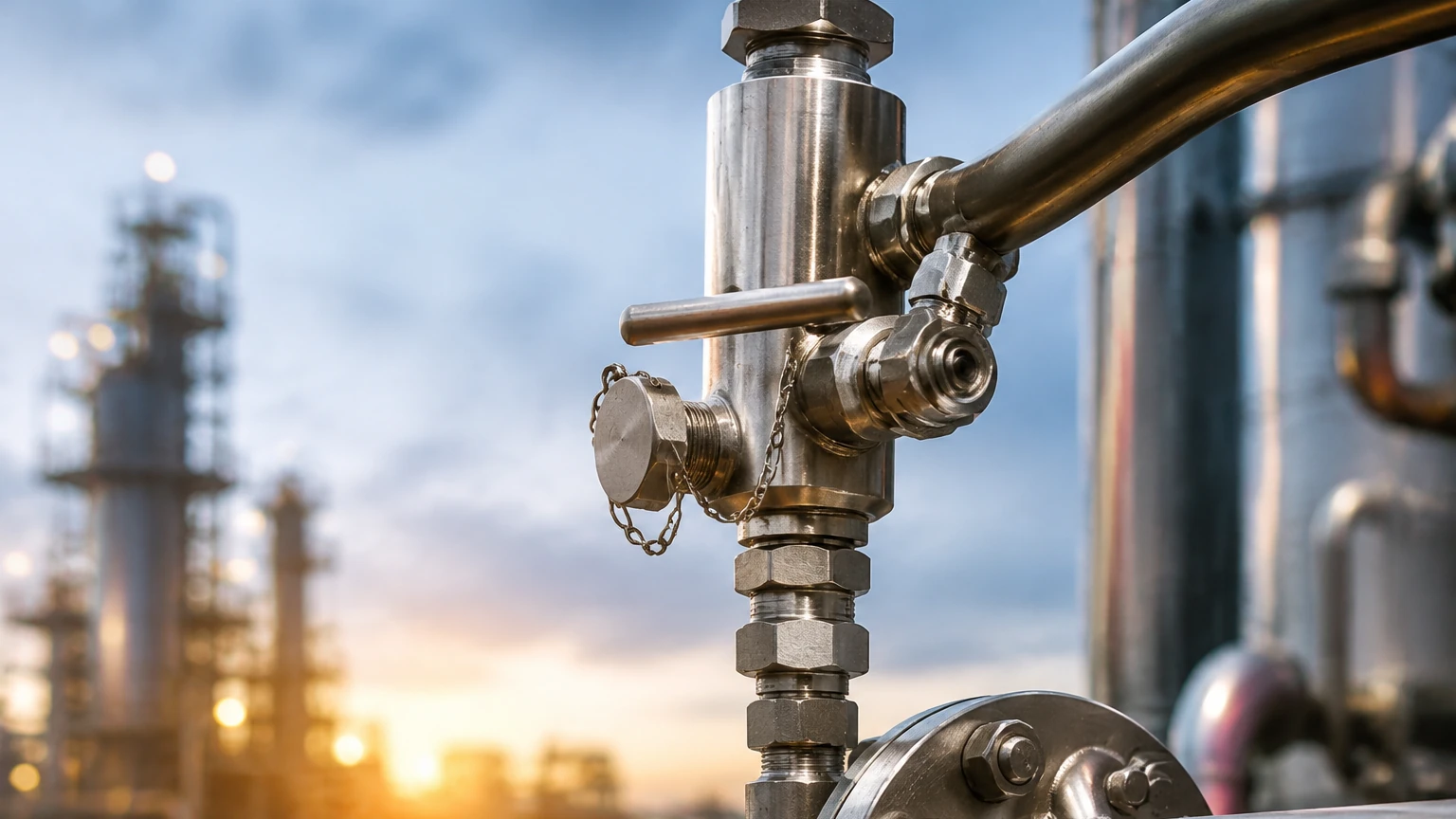
Installation Considerations
Proper installation is as critical as the selection of the sampler itself. Poorly placed primary samplers for pressurized process flows will yield inaccurate data regardless of the instrument's quality.
Location and Orientation
* Straight Pipe Run: Samplers should be installed in a straight section of pipe, ideally 10 pipe diameters downstream and 5 pipe diameters upstream from any bends, valves, or pumps to ensure a stable flow profile.
* Vertical vs. Horizontal: For pressurized liquids, vertical upward flow is preferred to ensure the pipe is always full. If horizontal installation is necessary, the probe should be inserted from the side (3 o'clock or 9 o'clock position) to avoid collecting sediment from the bottom or gases from the top.
Maintenance Access
Since primary samplers are mechanical devices subject to wear, they must be accessible. Isolation valves (double block and bleed) should be installed to allow the sampler to be removed or serviced without shutting down the entire pressurized process line.
Safety and Containment
Because the process is under pressure, the sampling station must include safety features such as:
* Pressure Relief Valves (PRV): To protect the sampling container from over-pressurization.
* Vent Systems: To safely exhaust gases to a flare or scrubber.
* Containment Cabinets: To protect operators from leaks or splashes of hazardous chemicals.
Common Risks and Limitations
Even with high-quality equipment, certain risks must be managed:
1. Dead Volume: This is the stagnant fluid trapped between the process line and the sample container. If not properly purged, the "old" fluid will contaminate the new sample. High-pressure systems should use "zero-dead-volume" valves.
2. Abrasive Wear: In pressurized slurry flows, the sampling probe is subject to high-velocity erosion. Hardened coatings or ceramic inserts may be necessary to extend the service life.
3. Seal Failure: High-pressure seals (O-rings or packing) are common failure points. Regular inspection intervals are required to prevent process leaks.
4. Sample Degradation: If the sample is not analyzed quickly or kept at process conditions, it may undergo chemical changes (e.g., polymerization or oxidation).
Frequently Asked Questions (FAQs)
Q: How do I determine the sampling frequency for a pressurized line?
A: Frequency is typically determined by the process variability. If the process is highly stable, time-proportional sampling (e.g., every 4 hours) may suffice. For volatile processes, flow-proportional sampling linked to a flow meter is recommended to ensure the sample represents the total volume produced.
Q: Can I use a primary sampler for both liquid and gas in the same line?
A: No. Liquid and gas sampling require different probe designs and pressure-reduction strategies. Multi-phase flows require specialized isokinetic samplers designed to capture both phases in their respective proportions.
Q: What is the maximum pressure a standard primary sampler can handle?
A: Standard industrial samplers often handle up to 64 bar (928 psi). For higher pressures, such as those found in oil and gas extraction or high-pressure synthesis, custom-engineered samplers rated for 300 bar (4350 psi) or more are required.
Conclusion and Next Steps
Implementing primary samplers for pressurized process flows is a technical necessity for industries prioritizing precision and safety. By understanding the principles of isokinetic extraction and the importance of pressure management, engineers can ensure that their analytical data is as reliable as their level measurement readings.
Before proceeding with an installation, project teams should confirm the following:
* The exact chemical composition and physical state of the fluid.
* The maximum and minimum operating pressures and temperatures.
* The required sample volume for laboratory analysis.
* The availability of utilities (compressed air or electricity) for automated actuation.
For more information on integrating sampling systems with industrial level measurement and control, consult technical resources at the Main Page to explore compatible instrumentation for your specific application.
Download Primary Samplers for Pressurized Process Flows as a PDF