Oxygen Permeation Measurement System
Oxygen Permeation Measurement System
In the landscape of industrial material science and quality assurance, the oxygen permeation measurement system serves as a critical tool for evaluating the barrier properties of films, foils, and finished packages. Often referred to as Oxygen Transmission Rate (OTR) testing, this process quantifies how much oxygen gas passes through a specific area of a barrier material over a defined period. For industries ranging from food and beverage to pharmaceuticals and organic electronics, understanding these permeation characteristics is essential for ensuring product shelf-life and preventing oxidative degradation.
While industrial facilities often focus on bulk processing and storage—utilizing tools found on the Main Page for level and inventory management—the integrity of the packaging materials themselves determines the ultimate success of the supply chain. This article provides a technical overview of oxygen permeation measurement systems, their operating principles, and the criteria for selecting the right instrumentation for process engineering applications.
Fundamental Principles of Oxygen Permeation Measurement
Oxygen permeation is a physical process where oxygen molecules migrate through a solid barrier. This occurs via a three-step mechanism: adsorption of the gas onto the high-concentration surface of the material, diffusion through the polymer matrix or substrate, and desorption from the low-concentration surface. An oxygen permeation measurement system is designed to simulate these conditions and measure the resulting flux.
The Coulometric Sensor Method (ASTM D3985)
The most widely recognized method in industrial testing is the coulometric sensor approach. In this configuration, the barrier material is mounted in a diffusion cell, effectively creating two chambers. One side (the upstream side) is exposed to a controlled concentration of oxygen, while the other side (the downstream side) is purged with an oxygen-free carrier gas, typically a mixture of nitrogen and hydrogen.
As oxygen molecules permeate through the sample, they are swept by the carrier gas to a coulometric sensor. This sensor contains a cathode and an anode where a chemical reaction occurs. The oxygen is reduced, generating an electrical current that is directly proportional to the amount of oxygen reaching the sensor per unit of time. This method is highly sensitive and is the standard for high-barrier materials.
The Differential Pressure Method
Another common approach involves creating a pressure gradient across the material. The upstream side is filled with oxygen at a specific pressure, while the downstream side is evacuated. As oxygen permeates through the film, the pressure in the downstream chamber increases. By measuring the rate of pressure rise, the system calculates the permeation rate. This method is often used for a wider variety of gases beyond just oxygen, though it may lack the extreme sensitivity required for ultra-high barrier materials.
Key Components of an Oxygen Permeation Measurement System
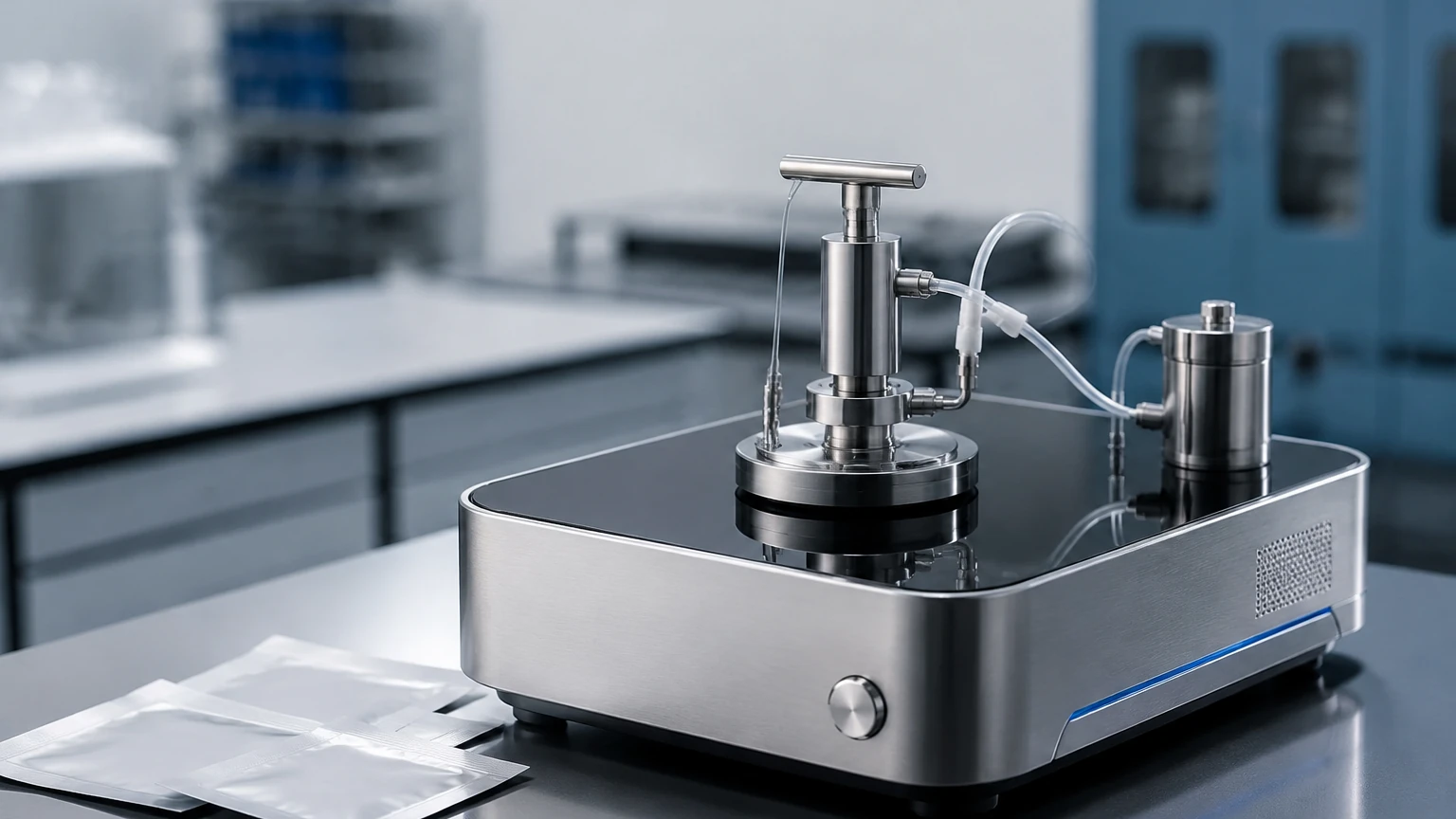
A professional-grade oxygen permeation measurement system is more than just a sensor; it is a controlled environment that ensures repeatability and accuracy. The following components are standard in high-performance units:
1. Diffusion Cells: These are precision-machined chambers where the sample is clamped. They must provide a perfect seal to prevent ambient oxygen ingress, which would skew results.
2. Temperature Control System: Permeation is highly temperature-dependent. Most systems include integrated Peltier elements or water jackets to maintain a constant temperature, typically ranging from 5°C to 50°C (41°F to 122°F).
3. Humidity Control (RH%): For many polymers, such as EVOH or nylon, oxygen barrier performance changes significantly with moisture. Advanced systems allow users to control the relative humidity on both sides of the film.
4. Flow Regulators: Precise mass flow controllers manage the delivery of the test gas and carrier gas, ensuring a stable baseline for the sensor.
5. Data Acquisition Software: This translates the raw electrical signal from the sensor into standardized units, such as cc/m²·day or cc/100in²·day, and provides real-time graphing of the permeation curve until equilibrium is reached.
Technical Selection Criteria for Industrial Applications
Selecting an oxygen permeation measurement system requires a thorough understanding of the materials being tested and the intended environment. Engineers should evaluate the following factors:
Detection Limit and Sensitivity
High-barrier materials used in electronics (like OLED encapsulation) require systems with detection limits as low as 5×10⁻⁴ cc/m²·day. Conversely, standard food packaging may only require a sensitivity of 0.01 cc/m²·day. Choosing a system with the appropriate sensitivity ensures that the equipment is neither under-specified for the task nor unnecessarily expensive.
Throughput and Number of Cells
Testing a single sample to equilibrium can take anywhere from several hours to several days, depending on the barrier thickness. Systems with multiple independent cells (e.g., 2-cell or 6-cell configurations) allow for simultaneous testing of replicates or different materials, which is vital for high-volume quality control labs.
Compliance with International Standards
To ensure that data is globally comparable, the system must adhere to established standards. The most common include:
* ASTM D3985: Standard Test Method for Oxygen Gas Transmission Rate Through Plastic Film and Sheeting Using a Coulometric Sensor.
* ISO 15105-2: Plastics — Film and sheeting — Determination of gas-transmission rate.
* ASTM F1927: Determination of Oxygen Gas Transmission Rate, Permeability and Permeance at Controlled Relative Humidity.
| Feature | Coulometric System | Pressure Differential System |
| :— | :— | :— |
| Primary Use | High-barrier films, food/pharma packaging | General gas permeation, research |
| Sensitivity | Extremely High (up to 0.0005 cc/m²/day) | Moderate |
| Gas Specificity | Oxygen specific | Multi-gas (O2, N2, CO2) |
| Standard Compliance | ASTM D3985, ISO 15105-2 | ISO 15105-1 |
Installation and Environmental Considerations
For an oxygen permeation measurement system to provide reliable data, the installation environment must be strictly controlled. The following factors are critical:
* Gas Purity: The carrier gas (usually Nitrogen) must be of high purity (99.999% or better). Any trace oxygen in the carrier gas will create a high background signal, reducing the system's sensitivity.
* Vibration and Stability: Sensors can be sensitive to mechanical vibrations. The system should be placed on a stable, level laboratory bench away from heavy industrial machinery.
* Ambient Temperature: While the system has internal temperature control, extreme fluctuations in the lab's ambient temperature can affect the electronics and gas regulators. A climate-controlled laboratory is recommended.
Common Risks and Mitigation in Permeation Testing
One of the most frequent risks in using an oxygen permeation measurement system is "edge leakage." This occurs when oxygen from the surrounding atmosphere leaks into the test cell around the edges of the sample. To mitigate this, many systems use a "gas-purged" seal or high-vacuum grease to ensure that the only oxygen reaching the sensor is that which has passed *through* the material.
Another risk is sensor exhaustion. Coulometric sensors are electrolytic and have a finite lifespan based on the total amount of oxygen they process. Testing very high-permeability materials (low barriers) frequently can deplete the sensor quickly. In such cases, using a system with a "shunting" or "dilution" mode can protect the sensor from over-exposure.
Relationship to Broader Industrial Measurement
In the context of industrial process control, oxygen permeation data is a precursor to operational decisions. For instance, if a chemical manufacturer determines that a specific storage liner has a higher-than-expected oxygen transmission rate, they may need to adjust their nitrogen blanketing protocols. This is where the integration of different measurement technologies becomes apparent. While the permeation system validates the material, instruments found on the Main Page of industrial suppliers—such as radar or ultrasonic level meters—ensure that the volume of the stored product is accurately monitored within those barriers.
Effective industrial management requires a holistic view: the oxygen permeation measurement system ensures the quality of the container, while level measurement instruments ensure the quantity and safety of the contents.
Frequently Asked Questions (FAQ)
Q: How long does a typical oxygen permeation test take?
A: The duration depends on the material's barrier properties. A thin, low-barrier film might reach equilibrium in 2–4 hours, whereas a thick, high-barrier foil laminate could take 48–72 hours.
Q: Can these systems test finished packages like bottles or pouches?
A: Yes, many systems offer specialized adapters. Instead of a flat film cell, the system can be connected to a package via tubing, allowing the carrier gas to circulate inside the bottle while the exterior is exposed to oxygen.
Q: Does humidity really affect oxygen permeation?
A: Absolutely. For materials like Ethylene Vinyl Alcohol (EVOH), high humidity can increase the oxygen transmission rate by a factor of ten or more. Testing at specific RH% levels is crucial for real-world application accuracy.
Q: What is the difference between OTR and Oxygen Permeability?
A: OTR (Oxygen Transmission Rate) is a measure of the gas passing through a specific thickness of a material. Oxygen Permeability is a material constant that factors out the thickness, allowing for the comparison of different materials regardless of their gauge.
By implementing a robust oxygen permeation measurement system, manufacturers can transition from reactive quality control to proactive material engineering, ensuring that every product reaches the consumer in optimal condition. For those looking to complement material testing with reliable process instrumentation, exploring the technical resources on the Main Page provides a path toward comprehensive industrial automation and monitoring.