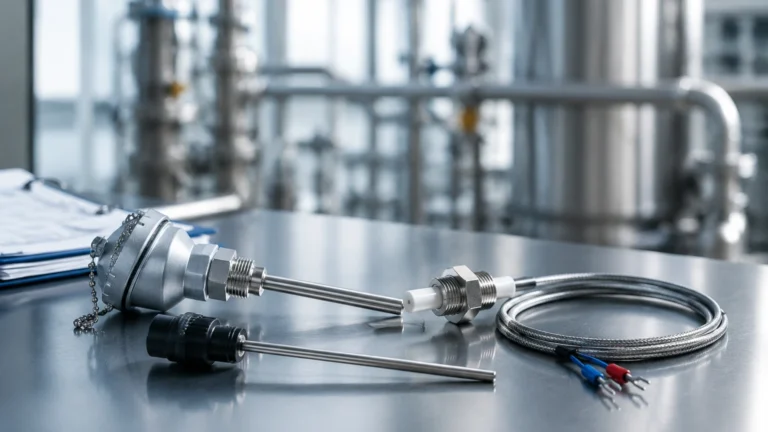
Gas Moisture Analyzer
Gas Moisture Analyzer
In industrial process control, the measurement of water vapor within gas streams is a critical parameter for ensuring product quality, protecting infrastructure from corrosion, and maintaining operational safety. A gas moisture analyzer is a precision instrument designed to quantify the amount of water vapor present in various gases, ranging from compressed air to high-purity specialty gases. Whether the application involves natural gas pipelines, semiconductor manufacturing, or petrochemical refining, understanding the moisture content—often expressed as dew point or parts per million (ppm)—is essential for process efficiency.
Moisture in gas systems is rarely a benign presence. In high-pressure environments, excess moisture can lead to the formation of hydrates, which can block pipelines. In chemical reactors, water vapor may act as a catalyst poison, degrading the efficiency of expensive chemical processes. Furthermore, in cryogenic applications, moisture can freeze, causing mechanical failure of valves and sensors. To mitigate these risks, engineers rely on various analytical technologies to provide real-time data.
Measurement Principles of Gas Moisture Analyzers
Selecting the appropriate gas moisture analyzer requires a deep understanding of the underlying measurement physics. Different technologies offer varying levels of sensitivity, response time, and resistance to contaminants.
Chilled Mirror Hygrometry
Chilled mirror technology is often considered the primary standard for moisture measurement due to its fundamental nature. The principle involves cooling a gold-plated or rhodium-plated mirror until condensation (dew or frost) begins to form on the surface. An optical system detects the onset of condensation, and the temperature of the mirror at that precise moment is recorded as the dew point.
* Advantages: Extremely high accuracy and repeatability; it is a fundamental measurement not requiring frequent recalibration.
* Limitations: High initial cost and sensitivity to mirror contamination from particulates or condensable hydrocarbons.
Capacitive (Aluminum Oxide) Sensors
Aluminum oxide (Al2O3) sensors are among the most common tools for industrial trace moisture measurement. These sensors consist of a porous layer of aluminum oxide sandwiched between a conductive base and a thin, permeable gold film. As gas passes through the sensor, water molecules are adsorbed into the oxide layer, changing its electrical capacitance. This change is proportional to the water vapor pressure.
* Advantages: Wide dynamic range (from -100°C to +20°C dew point), compact size, and relatively low cost.
* Limitations: Susceptible to "drift" over time, requiring periodic calibration, and can be damaged by liquid water slugs.
Tunable Diode Laser Absorption Spectroscopy (TDLAS)
TDLAS is a non-contact optical technology that has gained significant traction in the oil and gas industry. It works by emitting a laser beam at a specific wavelength that corresponds to the absorption line of water molecules. The amount of light absorbed as the beam passes through the gas sample is used to calculate the moisture concentration.
* Advantages: Very fast response times (seconds), no sensor contact with the process gas (reducing maintenance), and high resistance to corrosive contaminants like hydrogen sulfide (H2S).
* Limitations: Higher capital expenditure and potential interference from other gas components if the absorption lines overlap.
Electrolytic (Phosphorus Pentoxide) Sensors
This method utilizes a sensor coated with a thin film of phosphorus pentoxide (P2O5), which is highly hygroscopic. As gas flows over the sensor, the P2O5 absorbs the moisture. A voltage is applied to electrodes within the sensor, electrolyzing the water into hydrogen and oxygen. According to Faraday’s Law, the current required for electrolysis is directly proportional to the number of water molecules present.
* Advantages: Absolute measurement principle; excellent for inert gases and high-purity applications.
* Limitations: The sensor can be "blinded" by high concentrations of moisture and is sensitive to gases that react with P2O5, such as alcohols or ammonia.
Technical Selection Criteria
When evaluating a gas moisture analyzer for a specific B2B application, engineers must balance technical performance with the total cost of ownership. The following table provides a comparison of the most common technologies used in industrial settings.
| Technology | Typical Range (Dew Point) | Accuracy | Response Time | Common Applications |
| :— | :— | :— | :— | :— |
| Chilled Mirror | -90°C to +95°C | ±0.1°C to ±0.2°C | Moderate | Calibration labs, high-end R&D |
| Capacitive | -100°C to +20°C | ±2°C | Fast to Moderate | Compressed air, plastic drying |
| TDLAS | 1 ppm to 5% vol | ±1% of reading | Very Fast | Natural gas, refinery fuel gas |
| Electrolytic | 0.1 ppm to 1000 ppm | ±5% of reading | Moderate | Semiconductor, specialty gases |
Beyond the measurement range, factors such as operating pressure (measured in bar or MPa) and temperature (measured in °C) are vital. For instance, if a gas is measured at high pressure, the "pressure dew point" will be higher than the atmospheric dew point. It is essential to specify which value is required for the process safety parameters.
Installation and Sampling Considerations
The performance of a gas moisture analyzer is often limited by the quality of the sample conditioning system. Even the most accurate sensor will provide erroneous data if the sample reaching it is not representative of the process stream.
1. Sampling Lines: Use high-quality stainless steel (e.g., 316L) or PTFE tubing. Avoid rubber or standard plastic tubing, as these materials are permeable to atmospheric moisture and can outgas, leading to artificially high readings.
2. Filtration: Particulates and aerosols must be removed before the gas enters the analyzer. Coalescing filters are recommended if liquid droplets (oil or water) are suspected in the stream.
3. Pressure Regulation: Most sensors have a maximum operating pressure. If the process pressure exceeds this, a high-quality regulator must be used. Note that reducing the pressure will change the dew point, so calculations must be performed to correlate the reading back to process conditions.
4. Temperature Stability: Significant fluctuations in ambient temperature can cause moisture to condense in the sample lines. In such cases, heat-traced lines may be necessary to keep the gas temperature above the dew point.
Integration with Level Measurement Systems
In many industrial facilities, moisture analysis is performed in conjunction with level measurement. For example, in large storage tanks containing volatile chemicals or liquefied gases, monitoring the liquid level is only one part of the safety equation. The "blanket gas" (often nitrogen) used to prevent explosions must be kept dry to avoid corrosion of the tank's internal structure and the level sensing equipment itself.
Instruments such as radar level meters or magnetic level gauges are often installed alongside gas moisture analyzers to provide a holistic view of the vessel's status. For engineers looking to integrate these technologies, reviewing comprehensive product options and application support on the Main Page of specialized instrumentation providers can help in selecting compatible hardware for hazardous environments.
Common Risks and Limitations
While modern gas moisture analyzers are robust, they are not infallible. Users should be aware of the following risks:
* Cross-Sensitivity: In complex gas mixtures, other components may interfere with the moisture signal. For example, in TDLAS, high concentrations of CO2 can sometimes interfere with the water absorption line if the laser is not properly tuned.
* Sensor Saturation: If a trace moisture sensor (like Al2O3) is exposed to liquid water or very high humidity for an extended period, it may become saturated. Recovery can take hours or even days of purging with dry gas.
* Contamination: Oil mist from compressors is a frequent cause of sensor failure in compressed air systems. Once a sensor is coated in oil, its ability to adsorb water molecules is severely compromised.
Frequently Asked Questions (FAQ)
Q: How often should a gas moisture analyzer be calibrated?
A: This depends on the technology. Chilled mirror units may only need verification once a year. Capacitive sensors typically require factory calibration every 6 to 12 months due to natural aging and drift of the oxide layer.
Q: What is the difference between Dew Point and PPM?
A: Dew point is the temperature at which water vapor begins to condense into liquid. PPM (parts per million) is a ratio of the volume of water vapor to the total volume of gas. Dew point is pressure-dependent, whereas PPM by volume remains constant regardless of pressure changes.
Q: Can I use a moisture analyzer in hazardous areas?
A: Yes, but the instrument must be appropriately certified (e.g., ATEX, IECEx, or Class I Div 1/2). Many TDLAS and capacitive transmitters are available in explosion-proof or intrinsically safe configurations.
Q: Why is my moisture reading higher than expected?
A: The most common cause is a leak in the sampling system. Even a microscopic leak can allow atmospheric moisture (which is usually much higher than process moisture) to enter the sample stream. Ensure all fittings are tightened and use leak detection fluid on joints.
Final Confirmation for Project Engineering
Before finalizing the procurement of a gas moisture analyzer, project teams should confirm the following data points:
* Gas Composition: Are there corrosive elements (H2S, HCl) or condensable hydrocarbons present?
* Process Conditions: What are the minimum, normal, and maximum operating pressures and temperatures?
* Required Output: Does the control system require 4-20mA, Modbus RTU, or a simple visual display?
* Maintenance Access: Is the installation point accessible for routine sensor replacement or calibration?
By addressing these factors early in the design phase, industrial operators can ensure long-term reliability and accuracy in their moisture monitoring applications, complementing their existing level and flow control strategies.