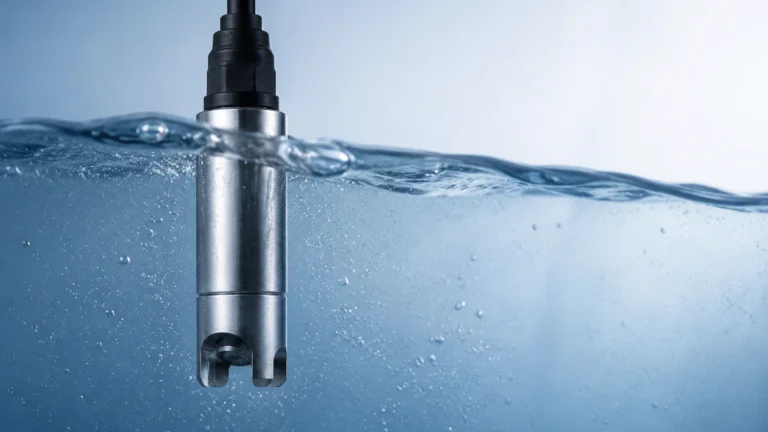
Pressure Measurement Instruments
Pressure Measurement Instruments
In industrial process automation, pressure measurement instruments serve as the foundational technology for monitoring both system safety and material inventory. While pressure measurement is a distinct discipline, it is inextricably linked to level measurement through the principle of hydrostatics. For engineers and plant operators, understanding how pressure correlates with fluid height is essential for selecting the correct instrumentation for water treatment, chemical processing, and oil and gas applications.
Industrial environments require robust solutions that can withstand corrosive media, extreme temperatures, and fluctuating atmospheric conditions. As a professional manufacturer, Welk provides a comprehensive suite of level and pressure-related instruments designed to meet these rigorous demands. This guide explores the fundamental principles of pressure-based measurement, the various types of instruments available, and the technical criteria necessary for successful deployment.
Fundamental Principles of Pressure Measurement
Before selecting an instrument, it is necessary to understand the physics governing pressure in a fluid column. In the context of level measurement, we primarily deal with hydrostatic pressure.
Hydrostatic Pressure Principle
Hydrostatic pressure is the pressure exerted by a fluid at equilibrium at a given point within the fluid, due to the force of gravity. The relationship is expressed by the formula:
P = ρ × g × h
Where:
* P is the hydrostatic pressure (Pa or bar).
* ρ (rho) is the density of the liquid (kg/m³).
* g is the acceleration due to gravity (approximately 9.81 m/s²).
* h is the height of the liquid column above the measurement point (m).
Because gravity is a constant, if the density of the liquid is known and remains stable, the pressure measured at the bottom of a tank is directly proportional to the liquid level. This allows pressure measurement instruments to function as highly accurate level sensors.
Gauge, Absolute, and Differential Pressure
Understanding the reference point of a measurement is critical for instrument selection:
1. Gauge Pressure: Measured relative to the local atmospheric pressure. This is the most common type used in vented or open-to-atmosphere tanks.
2. Absolute Pressure: Measured relative to a perfect vacuum. This is used in specialized vacuum processes or high-altitude applications where atmospheric pressure varies significantly.
3. Differential Pressure (DP): The difference between two pressure points. This is essential for level measurement in closed, pressurized vessels where the gas blanket pressure above the liquid must be subtracted from the total pressure at the bottom to isolate the hydrostatic head.
Types of Pressure Measurement Instruments for Level Control
Pressure-based level sensing is generally categorized by the physical construction of the sensor and how it interfaces with the process media.
1. Hydrostatic Level Transmitters (Submersible)
Submersible transmitters consist of a pressure sensor (usually piezoresistive or ceramic) housed in a stainless steel casing. The sensor is lowered into the liquid via a specialized cable that contains a vent tube. This tube allows the sensor to reference local atmospheric pressure, ensuring the measurement reflects only the liquid height.
* Best for: Deep wells, reservoirs, water towers, and open sumps.
* Advantage: Ease of installation; no need for tank wall penetrations.
2. Externally Mounted Pressure Transmitters
These instruments are mounted to the side or bottom of a tank via a threaded or flanged connection. They measure the pressure exerted by the liquid column against a diaphragm. For corrosive media, these diaphragms can be coated with PTFE or made from exotic alloys like Hastelloy.
* Best for: Process tanks, chemical storage, and food/beverage applications.
* Advantage: High accuracy and easy maintenance without emptying the tank (if isolation valves are used).
3. Differential Pressure (DP) Transmitters
DP transmitters utilize two sensing elements. In a pressurized tank, the "high-pressure" side is connected to the bottom of the tank, and the "low-pressure" side is connected to the top (the gas space). The transmitter calculates the difference, effectively canceling out the internal tank pressure and leaving only the hydrostatic pressure of the liquid.
* Best for: Boiler drums, pressurized chemical reactors, and liquefied gas storage.
* Advantage: The only reliable pressure-based method for closed, pressurized systems.
Technical Selection Criteria
Choosing the right pressure measurement instruments requires a detailed analysis of the application environment. Engineers should consult the Main Page of the manufacturer’s technical catalog to cross-reference these variables with specific model capabilities.
| Criteria | Consideration | Impact on Instrument Choice |
| :— | :— | :— |
| Media Density | Is the density constant or variable? | Variable density requires compensation or a different technology (like Radar). |
| Operating Temperature | Standard range is -20°C to +80°C. | High-temp applications require cooling fins or capillary seals. |
| Corrosiveness | Acids, bases, or hydrocarbons? | Requires specific diaphragm materials (316L SS, Ceramic, Tantalum). |
| Tank Type | Vented (Open) vs. Pressurized (Closed). | Vented uses Gauge pressure; Closed requires Differential Pressure. |
| Mounting Requirements | Threaded, Flanged, or Submersible? | Depends on existing tank nozzles or access points. |
| Output Signal | 4-20mA, HART, Modbus, or Profibus? | Must match the facility’s control system (PLC/DCS). |
Installation Considerations and Best Practices
Even the most accurate pressure measurement instruments will fail to provide reliable data if installed incorrectly. Follow these engineering guidelines for optimal performance:
Position and Orientation
* Avoid Turbulence: Do not install sensors near fill pipes or agitators. The kinetic energy of moving fluid can create localized pressure fluctuations (noise) that interfere with level readings.
* Stilling Wells: In turbulent tanks, use a stilling well (a perforated pipe) to protect the sensor and provide a stable liquid column for measurement.
* Zero Calibration: Always calibrate the "zero" point after installation. The weight of the fluid in impulse lines or the orientation of the diaphragm can cause a slight offset.
Protection from Environmental Factors
* Water Hammer: In piping systems, sudden valve closures can create massive pressure spikes. Use snubbers or siphons to protect the sensor diaphragm from physical damage.
* Venting: For submersible sensors, ensure the vent tube in the cable is not kinked or blocked. Use a desiccant filter at the end of the vent tube to prevent moisture from entering the sensor electronics.
* Temperature Gradients: If the transmitter is mounted externally in cold climates, heat tracing may be required to prevent the liquid in the impulse lines from freezing or becoming too viscous to transmit pressure accurately.

Limitations of Pressure-Based Measurement
While pressure measurement instruments are cost-effective and reliable, they are not universal solutions. Engineers must be aware of the following limitations:
1. Density Sensitivity: Since $P =
ho gh$, any change in the density ($
ho$) will result in a measurement error. If a tank is used for different chemicals or if the temperature causes significant expansion/contraction of the fluid, the level reading will drift unless the control system is programmed with density compensation.
2. Sediment and Clogging: In wastewater or slurries, solids can accumulate on the sensor diaphragm or clog impulse lines. Flush rings or non-clogging flush diaphragms are necessary in these scenarios.
3. Vacuum Sensitivity: Some thin-metal diaphragms can be damaged by vacuum conditions if they are not specifically rated for absolute pressure or vacuum service.
Frequently Asked Questions (FAQs)
Q: Can I use a standard pressure transmitter for level measurement in a sealed tank?
A: No. In a sealed tank, the pressure at the bottom is the sum of the liquid's hydrostatic pressure and the gas pressure above it. You must use a differential pressure transmitter to subtract the gas pressure, or the level reading will be incorrectly high.
Q: How often should pressure measurement instruments be calibrated?
A: For most industrial applications, an annual calibration check is recommended. However, in critical safety loops or highly corrosive environments, semi-annual checks may be necessary to account for diaphragm drift or wear.
Q: What is the difference between a pressure transmitter and a pressure switch?
A: A pressure transmitter provides a continuous signal (e.g., 4-20mA) representing the actual pressure value. A pressure switch is a discrete device that opens or closes an electrical circuit when a specific pressure threshold is reached, typically used for high/low-level alarms.
Q: Is hydrostatic pressure affected by the shape of the tank?
A: No. Hydrostatic pressure depends only on the vertical height of the liquid and its density. Whether the tank is a narrow cylinder or a wide sphere, the pressure at a depth of 5 meters (approx. 16.4 ft) will be the same, provided the fluid density is identical.
Conclusion
Pressure measurement instruments remain a cornerstone of industrial level sensing due to their mechanical simplicity and proven reliability. By understanding the relationship between pressure and fluid height, and by carefully considering media properties and tank dynamics, engineers can implement measurement solutions that provide years of accurate service.
For complex applications involving aggressive chemicals or pressurized vessels, selecting a manufacturer with a broad portfolio—including radar and ultrasonic alternatives—ensures that the chosen technology is the best fit for the specific process. For more detailed specifications on hydrostatic and differential pressure sensors, professionals should evaluate the technical documentation available on the Main Page to ensure compliance with local safety and accuracy standards.