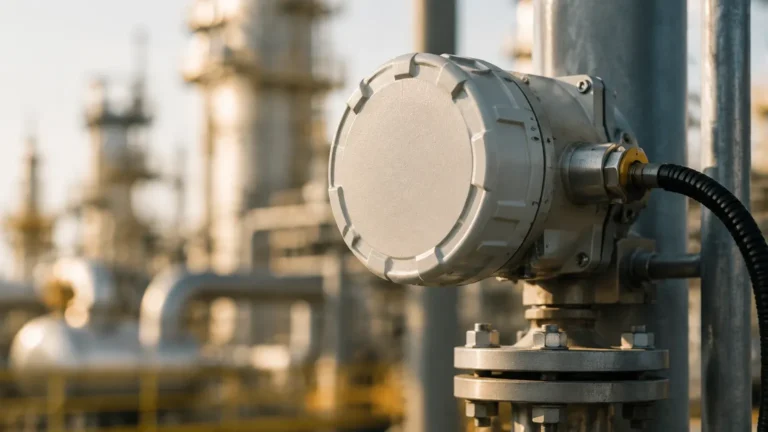
Percent Oxygen Analyzers
Percent Oxygen Analyzers
In the landscape of industrial process control, the precise measurement of gas concentrations is as critical as the monitoring of liquid levels and pressures. Percent oxygen analyzers represent a fundamental category of instrumentation used to quantify the volume of oxygen (O2) within a gas mixture, typically expressed as a percentage (0–25% or 0–100%). These devices are indispensable in applications ranging from combustion optimization and nitrogen blanketing to safety monitoring in confined spaces.
For engineers and plant managers already familiar with the precision required for level measurement, understanding the nuances of oxygen analysis is a natural extension of process safety and efficiency. This guide explores the underlying measurement principles, selection criteria, and practical installation considerations for percent oxygen analyzers in industrial environments.
Measurement Principles of Percent Oxygen Analyzers
Unlike level measurement, which relies on physical properties like dielectric constants or acoustic reflection, oxygen analysis utilizes the chemical or physical characteristics of the oxygen molecule itself. There are four primary technologies used in modern industrial analyzers.
1. Electrochemical (Galvanic) Sensors
Electrochemical sensors are perhaps the most common technology for percent-level oxygen measurement. These sensors operate similarly to a battery. They consist of a sensing electrode (cathode) and a counter electrode (anode) immersed in an electrolyte, separated from the gas sample by a semi-permeable membrane.
Oxygen diffuses through the membrane and is reduced at the cathode, while an oxidation reaction occurs at the anode (typically made of lead). This reaction generates an electrical current proportional to the partial pressure of oxygen in the gas sample.
* Advantages: Low initial cost, simple electronics, and portability.
* Limitations: The anode is consumed over time, giving the sensor a finite lifespan (typically 12 to 24 months). They are also sensitive to acid gases like CO2, which can shorten the life of the electrolyte.
2. Zirconia (Zirconium Oxide) Sensors
Zirconia sensors are solid-state devices that utilize a ceramic electrolyte. At high temperatures—typically above 600°C (1112°F)—zirconium oxide becomes a conductor of oxygen ions. The sensor features a platinum-coated ceramic cell with the process gas on one side and a reference gas (usually ambient air at 20.9% O2) on the other.
The difference in oxygen concentration creates a voltage (EMF) across the electrodes, governed by the Nernst equation. This technology is the standard for flue gas analysis and combustion control.
* Advantages: Extremely fast response time, high accuracy at high temperatures, and non-depleting.
* Limitations: Requires a heater to reach operating temperature, making it unsuitable for flammable gas mixtures unless flame arrestors are used. It can also be influenced by the presence of combustible gases (CO, H2), which will react with the oxygen on the sensor surface.
3. Paramagnetic Sensors
Oxygen is unique among common gases because it is paramagnetic—it is physically attracted into a magnetic field. Paramagnetic analyzers use a "dumbbell" sensor suspended in a non-uniform magnetic field. When oxygen enters the chamber, it is drawn toward the strongest part of the field, displacing the dumbbell. The movement of the dumbbell is measured optically and balanced by an electronic feedback loop.
* Advantages: Highly accurate, very stable, and the sensor does not wear out or deplete.
* Limitations: Very sensitive to vibration and tilt. The sample gas must be clean and dry to prevent damage to the delicate internal mechanisms.
4. Tunable Diode Laser Absorption Spectroscopy (TDLAS)
TDLAS is a modern, non-contact optical measurement technique. A laser is tuned to a specific absorption line of the oxygen molecule. The amount of light absorbed as the laser passes through the gas is directly proportional to the oxygen concentration.
* Advantages: Extremely fast (sub-second) response, no moving parts, and resistant to corrosive or high-temperature environments.
* Limitations: Higher initial capital expenditure and requires clear optical paths.
Industrial Applications and the Link to Level Measurement
While percent oxygen analyzers are distinct from level meters, they frequently operate in tandem within the same process loops.
Tank Blanketing and Inerting
In the chemical and oil and gas industries, storage tanks containing flammable liquids must be "blanketed" with an inert gas, usually nitrogen. This prevents the formation of an explosive atmosphere by keeping the oxygen level below the Limiting Oxygen Concentration (LOC).
While a radar or ultrasonic level meter monitors the volume of the liquid, a percent oxygen analyzer monitors the headspace. If the oxygen level rises—perhaps due to a leak or during the filling process—the analyzer triggers an increase in nitrogen flow. For more information on integrating these systems, you can Review product options and application support on our main site.
Combustion Efficiency
In industrial boilers and furnaces, the ratio of fuel to air is critical. Too little oxygen leads to incomplete combustion and hazardous CO emissions; too much oxygen wastes fuel by heating excess air. Zirconia-based percent oxygen analyzers provide real-time feedback to the burner control system to maintain the "sweet spot" of efficiency.
Confined Space Safety
In wastewater treatment plants, where Welk level sensors are often used in wet wells or digesters, oxygen analyzers serve a critical safety function. They ensure that the atmosphere remains breathable (approx. 20.9% O2) and alert personnel to oxygen-deficient environments caused by the displacement of air by gases like methane or hydrogen sulfide.
Selection Criteria for Percent Oxygen Analyzers
Selecting the right analyzer requires a thorough evaluation of the process conditions. The following table provides a comparison based on typical engineering requirements.
| Feature | Electrochemical | Zirconia | Paramagnetic | TDLAS |
| :— | :— | :— | :— | :— |
| Measurement Range | 0–100% | 0–25% (Typical) | 0–100% | 0–100% |
| Response Time (T90) | 10–30 seconds | < 2 seconds | 3–10 seconds | < 2 seconds |
| Operating Temp. | -20°C to 50°C | Up to 1400°C | 0°C to 50°C | Up to 600°C+ |
| Maintenance | High (Sensor swap) | Low (Calibration) | Medium (Cleaning) | Very Low |
| Interferences | CO2, H2S, Cl2 | Combustibles | Hydrocarbons | Dust/Opacity |
| Cost (Initial) | Low | Moderate | High | Very High |
Key Evaluation Questions
1. What is the background gas? If the gas contains corrosive elements like SO2 or HCl, electrochemical sensors may fail prematurely. If the gas is flammable, Zirconia sensors require explosion-proof housing.
2. Is the sample wet or dry? Most analyzers require a dry sample. If the gas is saturated, a sample conditioning system (chiller or permeation dryer) must be installed upstream of the analyzer.
3. What is the required accuracy? For safety/inerting, ±1% of full scale is often sufficient. For combustion or laboratory research, higher precision (±0.05%) may be required.
Installation Considerations
Proper installation is the most significant factor in analyzer reliability. Unlike a hydrostatic level transmitter that is submerged in the media, oxygen analyzers often require the gas to be brought to them.
Sample Extraction and Conditioning
In most B2B industrial applications, the analyzer is located in a control room or a protective enclosure. A sample probe extracts the gas from the process pipe. To protect the sensor:
* Filtration: Use a 0.5 to 2-micron filter to remove particulates.
* Pressure Regulation: Most sensors operate best at near-atmospheric pressure (approx. 101.3 kPa). If the process is pressurized, a regulator is necessary.
* Flow Control: A steady flow rate (typically 0.5 to 1.0 liters per minute) ensures consistent readings and prevents lag.
Calibration Requirements
All percent oxygen analyzers require periodic calibration.
* Zero Calibration: Using 100% Nitrogen (0% O2).
* Span Calibration: Using ambient air (20.9% O2) or a certified gas mixture (e.g., 80% O2 for medical applications).
Zirconia and Paramagnetic sensors are generally more stable, requiring calibration every 3–6 months. Electrochemical sensors may require monthly checks as the anode depletes.
Limitations and Common Risks
Engineers must be aware of the following risks when deploying percent oxygen analyzers:
1. Pressure Sensitivity: Most oxygen sensors are partial pressure devices. If the process pressure changes, the indicated percentage will change even if the actual concentration remains constant. Barometric pressure compensation is a necessary feature in high-precision units.
2. Cross-Sensitivity: In electrochemical sensors, the presence of "acid gases" (CO2, H2S) can neutralize the electrolyte. In paramagnetic sensors, gases like NO or NO2 are also slightly paramagnetic and can cause false high readings.
3. Temperature Drift: Sensors are sensitive to ambient temperature changes. While most modern units include internal thermistors for compensation, installing the analyzer in a temperature-controlled environment is always preferred.
4. Sensor Depletion: For galvanic sensors, there is no "warning" before the sensor fails other than a diminishing output signal. Implementing a scheduled replacement program is vital for safety-critical loops.
Frequently Asked Questions (FAQ)
Q: Can I use a percent oxygen analyzer to measure trace oxygen (ppm)?
No. Percent analyzers are designed for high concentrations. Measuring parts-per-million (ppm) levels requires specialized trace oxygen sensors with much higher sensitivity and different membrane configurations.
Q: How often should I replace an electrochemical oxygen sensor?
Most industrial-grade galvanic sensors last 12 to 24 months in clean air. However, exposure to high temperatures or corrosive gases can reduce this to less than 6 months.
Q: Is a Zirconia sensor safe for measuring oxygen in a hydrogen-rich atmosphere?
Only with extreme caution. Because Zirconia sensors operate at high temperatures, they can act as an ignition source. Furthermore, the oxygen will react with the hydrogen on the sensor surface, resulting in a reading of zero oxygen even if some is present.
Q: Why is my analyzer reading 20.9% in open air but failing to respond to the process gas?
This is often due to a blocked sample line or a saturated filter. If the pump cannot pull the process gas to the sensor, the sensor simply continues to measure the stagnant air trapped in the housing.
Conclusion
Percent oxygen analyzers are a cornerstone of industrial safety and process control. Whether you are managing a nitrogen blanketing system for a chemical storage farm or optimizing the fuel-to-air ratio in a massive utility boiler, choosing the right sensor technology is paramount. By understanding the chemical and physical principles of these devices—and recognizing how they complement other instrumentation like level meters—engineers can build more resilient and efficient systems.
For technical specifications on level measurement and integrated process solutions, visit our Main Page to explore our full range of industrial instrumentation.