Radar Level Transmitter Measure Using
Radar Level Transmitter Measure Using: A Technical Guide to Industrial Implementation
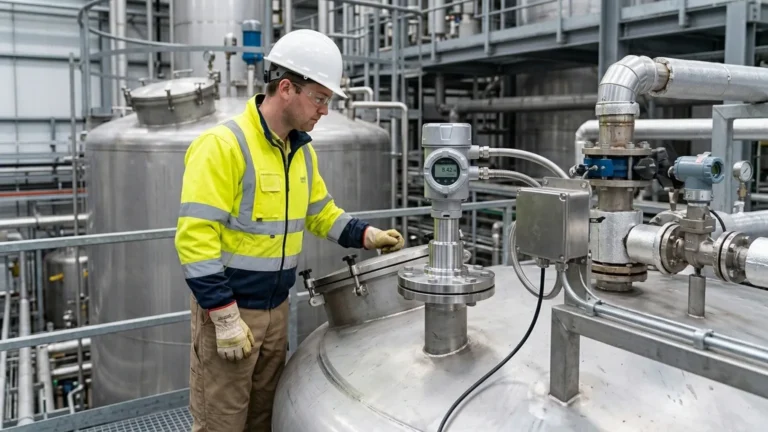
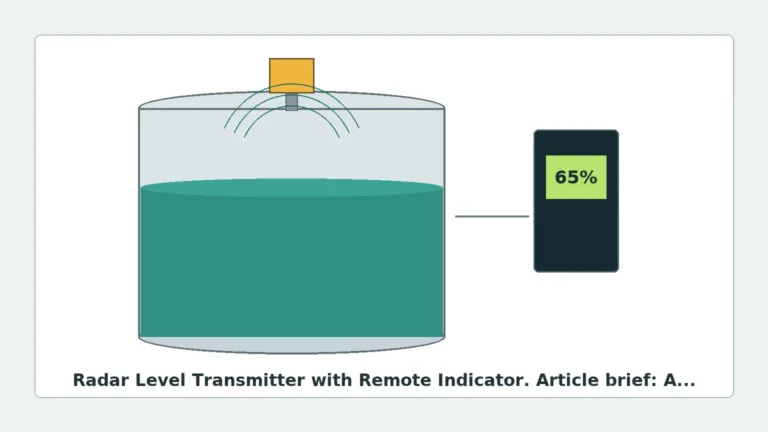
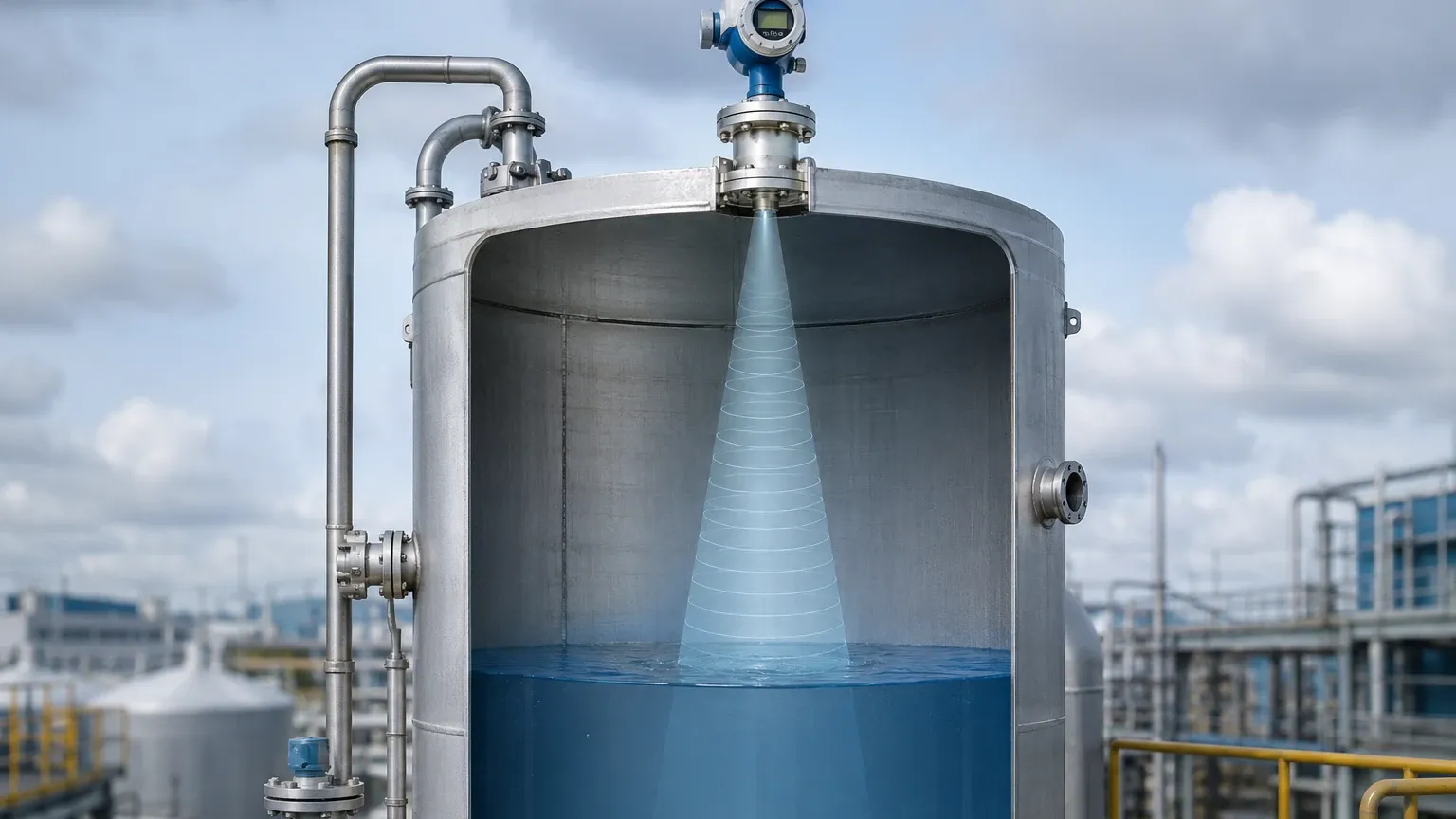
In modern industrial process control, the accuracy and reliability of level measurement are critical for safety, inventory management, and operational efficiency. Among the various technologies available, radar-based systems have emerged as a leading solution for challenging environments. A radar level transmitter measure using electromagnetic waves to determine the distance from the sensor to the surface of a material, providing a non-contact method that is largely unaffected by changes in temperature, pressure, or vapor space composition.
This guide explores the engineering principles behind Radar Level Meters, selection criteria for different industrial media, and the practical installation constraints necessary to ensure high-precision data in B2B applications.
1. Measurement Principles: How Radar Level Transmitters Measure
To understand how a radar level transmitter operates, one must first understand the behavior of microwaves in a process vessel. Radar sensors emit high-frequency electromagnetic waves, typically in the Gigahertz (GHz) range. These waves travel at the speed of light and are reflected back to the sensor when they encounter a change in the dielectric constant ($ε_r$) at the surface of the medium.
There are two primary methods by which a radar level transmitter measure using these signals: Pulse Radar and Frequency Modulated Continuous Wave (FMCW).
1.1 Pulse Radar (Time of Flight)
Pulse radar transmitters emit short bursts of microwave energy. The device measures the "Time of Flight" (ToF)—the time it takes for the pulse to travel to the surface and return to the receiver. Since the speed of light is constant, the distance is calculated using the formula:
*Distance = (Speed of Light × Time) / 2*
Pulse radar is often favored for its lower power consumption and is suitable for many standard liquid storage applications.
1.2 Frequency Modulated Continuous Wave (FMCW)
FMCW radar does not send pulses; instead, it emits a continuous signal with a frequency that varies over time (a frequency sweep). The transmitter receives the reflected signal and compares its current frequency with the frequency of the reflection. The frequency difference (Δf) is directly proportional to the distance. FMCW is generally more accurate than pulse radar, especially at short ranges or when measuring materials with low dielectric constants, making it the preferred choice for high-precision industrial automation.
2. Selection Criteria: 26GHz vs. 80GHz Technology
When selecting Radar Level Meters, the frequency of the signal is one of the most important technical specifications. Modern industrial standards typically differentiate between "High Frequency" (80GHz) and "Medium Frequency" (26GHz) systems.
| Feature | 26GHz Radar | 80GHz Radar |
| :— | :— | :— |
| Beam Angle | Wider (approx. 8°–12°) | Narrower (approx. 3°–4°) |
| Measurement Accuracy | ±3 mm to ±5 mm | ±1 mm |
| Vessel Constraints | Best for large tanks without obstructions | Ideal for narrow tanks or tanks with agitators |
| Dust/Vapor Resistance | High penetration capability | Higher sensitivity to heavy condensation |
| Antenna Size | Larger horn antennas required | Compact lens antennas |
Dielectric Constant (ε_r) Considerations
The ability of a radar signal to reflect depends on the dielectric constant of the medium.
- High ε_r (>10): Water-based liquids and acids provide strong reflections.
- Medium ε_r (3–10): Most oils and chemical solvents.
- Low ε_r (<3): Liquefied gases, hydrocarbons, and dry powders. These require high-sensitivity FMCW transmitters or Guided Wave Radar (GWR) to ensure signal stability.
3. Contact vs. Non-Contact Radar Systems
While non-contact radar is the industry standard for avoiding contamination and maintenance, certain applications require Guided Wave Radar (GWR).
* Non-Contact Radar: The sensor is mounted at the top of the tank and never touches the media. It is ideal for corrosive chemicals, high-temperature liquids, and hygienic applications in the food and beverage industry.
* Guided Wave Radar (Contact): A probe or cable guides the microwave signal directly to the surface. This is highly effective for low-dielectric liquids, foaming surfaces, or when the vessel has extremely complex internal geometries that would interfere with a free-space signal.
4. Installation Engineering and Constraints
Proper installation is paramount to preventing "false echoes"—reflections from internal tank structures rather than the material surface. Engineers should follow these factual boundaries during the design phase:
4.1 Nozzle Design
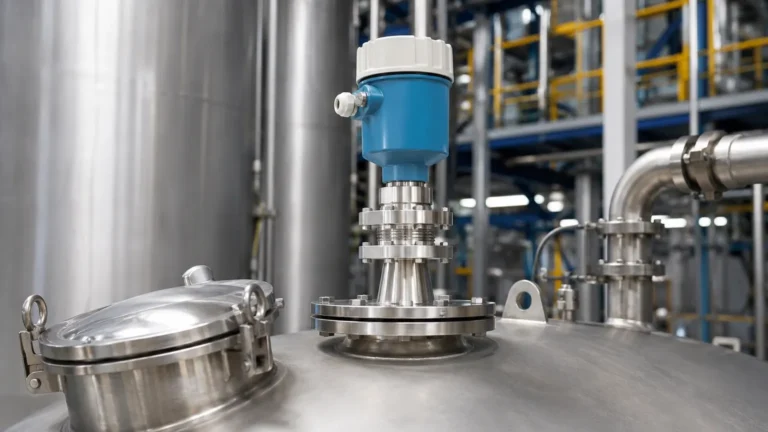
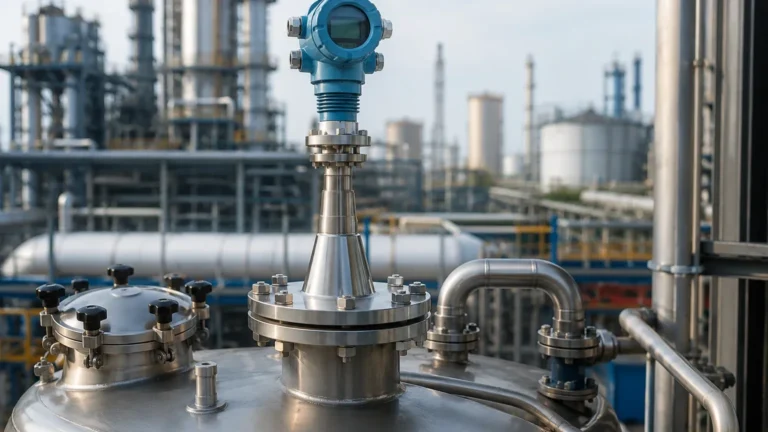
The mounting nozzle should be as short as possible. If the nozzle is too long or narrow, the radar signal may reflect off the nozzle walls before even entering the tank. For 80GHz transmitters, the narrow beam allows for longer nozzles, but for 26GHz units, the nozzle height should typically not exceed its diameter.
4.2 Positioning and Obstructions
* Avoid the Center: In dome-top or conical tanks, do not mount the radar in the center. The curved roof can act as a parabolic dish, focusing noise and false echoes back to the sensor.
* Clearance from Walls: Maintain a minimum distance from the tank wall (typically 200 mm to 500 mm / 8 in to 20 in) to prevent interference.
* Internal Obstructions: Avoid mounting directly above heating coils, ladders, or agitators. If an agitator is present, the transmitter's software must use "False Echo Suppression" to map out the static reflections from the blades.
4.3 Environmental Protection
In outdoor installations, a sunshade or protective housing is recommended to prevent extreme temperature fluctuations from affecting the electronics. In high-pressure applications, specialized process seals (such as PTFE or ceramic) are used to isolate the sensor electronics from the vessel atmosphere.
5. Industry-Specific Applications
5.1 Water and Wastewater Treatment
Radar level transmitters are used in open channels, wet wells, and chemical storage tanks (e.g., sodium hypochlorite). Because the measurement is non-contact, the sensors are not affected by the debris or corrosive gases commonly found in sewage treatment plants.
5.2 Chemical and Petrochemical
In the oil and gas sector, accurate inventory of hydrocarbons is essential. High-frequency radar can penetrate light foam and provides reliable data even in high-pressure storage spheres. For caustic chemicals, Welk provides radar meters with PTFE-coated antennas to ensure long-term durability.
5.3 Solids and Powders
Measuring the level of cement, grain, or plastic pellets in silos presents a challenge due to dust and uneven surfaces. 80GHz radar is particularly effective here, as the narrow beam can be aimed at the specific discharge point or slope of the material to provide an average level reading.
6. Maintenance and Troubleshooting
While radar level meters are largely maintenance-free due to the lack of moving parts, certain conditions can require attention:
1. Condensation/Build-up: Heavy condensation on the antenna can attenuate the signal. Selecting a transmitter with a parabolic or lens antenna made of non-stick materials like PTFE helps mitigate this.
2. Signal Loss: If the signal is lost, check if the dielectric constant of the medium has changed or if there is excessive foaming. Foam can sometimes absorb the radar signal entirely.
3. False Echoes: If the meter reports a constant level despite changes in the tank, the sensor may be locked onto a reflection from an internal pipe or ladder. Re-running the "mapping" or "suppression" cycle usually resolves this.
7. Frequently Asked Questions (FAQ)
Q: Can a radar level transmitter measure through a plastic tank lid?
A: Yes. Since plastic is non-conductive and has a low dielectric constant, microwaves can pass through it. This allows for measurement without cutting a hole in the tank, provided the plastic is not reinforced with metal fibers.
Q: How does heavy foam affect the measurement?
A: It depends on the foam density. Light, airy foam may be transparent to radar, while dense, wet foam may reflect the signal (measuring the top of the foam) or absorb it. In cases of heavy foam, Guided Wave Radar or specific low-frequency radar is often more reliable.
Q: What is the maximum range for industrial radar meters?
A: Modern high-frequency radar can measure distances up to 30 meters (approx. 100 ft) for liquids and up to 120 meters (approx. 393 ft) for solids in large silos, depending on the antenna configuration and the reflectivity of the material.
Conclusion
Selecting the right radar level transmitter measure using the appropriate frequency and antenna design is a balance of vessel geometry, media properties, and environmental conditions. By understanding the physics of microwave reflection and adhering to strict installation guidelines, industrial operators can achieve highly accurate, maintenance-free level monitoring. For complex applications involving high temperatures or low-dielectric materials, consulting with a professional manufacturer like Welk ensures that the selected instrumentation meets the rigorous demands of the process environment.